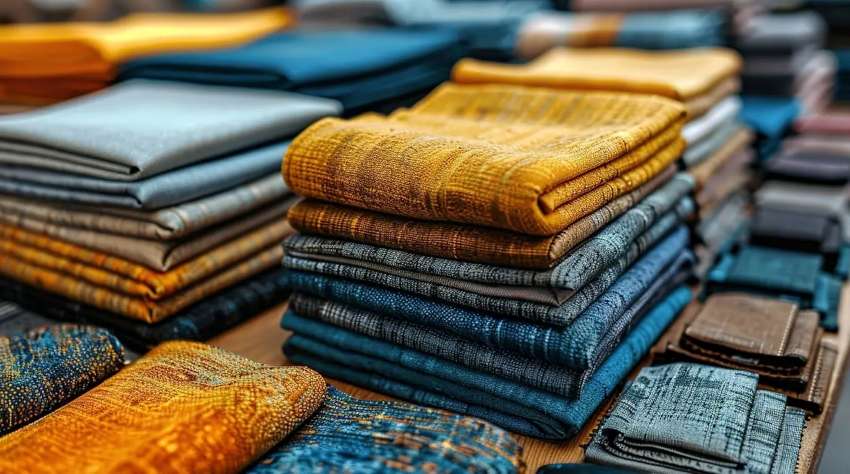
Egypt is one of the largest textile and apparel centers in the Middle East. The industry manufactures a variety of fabrics, garments, and knitted garments, bed linen and terry cloth products. Approximately 5,00,000 workers are employed in textiles and apparel -- a quarter of the total employment in manufacturing.
Taking labor costs into consideration, Egypt's textile and apparel products are not competitive when compared with China, Indonesia, Pakistan, Sri Lanka and Vietnam. Restrictions on imports have been sustained and some products have even been barred altogether. Aside from a few exceptions, imports of cotton fabrics and readymade textile products are prohibited.
Currently, there is a 150 per cent tariff on imports from the European Union. Although there are no quantitative restrictions on cotton yarn, the imported product is subject to a flat 30 per cent tariff, plus 10 per cent sales tax and a three per cent surcharge. The tariff charged on imported raw materials used in goods for exports is refunded to the importer through the drawback system.
High subsidies have led to wasteful use of extra long staple cotton. Egypt produces a variety of extra long, and medium-long staple cotton. While long staple production began to fall during the mid ’70s, the production of medium-long varieties increased.
- 1
- 2
- 3
- 4
- 5
- 6
- 7
- 8
- 9
- 10
The €11 bn deadlock, can Europe’s textile recycling catch up?
Europe is at a tipping point. Fast fashion consumption, led by rising incomes and a growing global middle class, has... Read more
From field to fiber, Bharat CottonNet is closing India’s cotton value gap
India’s cotton economy is entering a decisive phase of reform with the rollout of Bharat CottonNet 2026 along with the... Read more
US apparel imports drop 13.5% as Vietnam gains and China’s grip breaks
The US apparel sourcing market has entered 2026 with a sharp demand decline but an equally important shift in supplier... Read more
H&M finds growth below revenue line as margin discipline pays off
H&M Group’s latest quarter signals a decisive shift in global fast fashion: scale is no longer the primary reason for... Read more
As Europe cuts orders, India sees a rare export window post-FTA
The sharp dip in EU apparel imports is not, at first glance, the kind of headline exporters celebrate. January’s 15.48... Read more
The Death of the "Stockpile" Model: Inside the Digital Textile disrupt…
For decades, the global textile industry has been a game of high-stakes gambling: manufacture thousands of identical garments, ship them... Read more
Fuel crisis, rising costs the geopolitical shockwave hitting Indian textiles
The hum of textile machinery in Panipat has gone dead. Over 400 dyeing units have put their shutters, not because... Read more
Price wars, fast fashion, diamond money leads to Surat’s industrial shake-up
The sound of Surat’s diamond polishing wheels, once the city’s heartbeat, is fading. In its place, the relentless pulse of... Read more
India’s textile market nears Rs 15 lakh cr as domestic demand rewrites growth
India’s textile and apparel economy is no longer being driven merely by population growth or festive consumption cycles. It is... Read more
China Discounts, Bangladesh Bleeds: Inside Europe’s new apparel sourcing crisis
Europe’s fashion imports opened 2026 with a hard jolt. Fresh Eurostat-linked trade data for January shows the European Union’s apparel... Read more