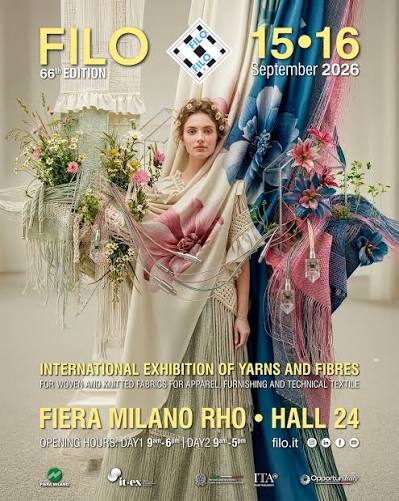
Navigating macroeconomic uncertainty, persistent raw material volatility, and fragile consumer sentiment, the 66th edition of Filo (September 15–16, 2026, at Fiera Milano Rho) established a decisive industrial turning point. The European textile-apparel sector is decisively shifting away from abstract green marketing toward hard industrial defense, measurable engineering, and intra-regional supply alliances.
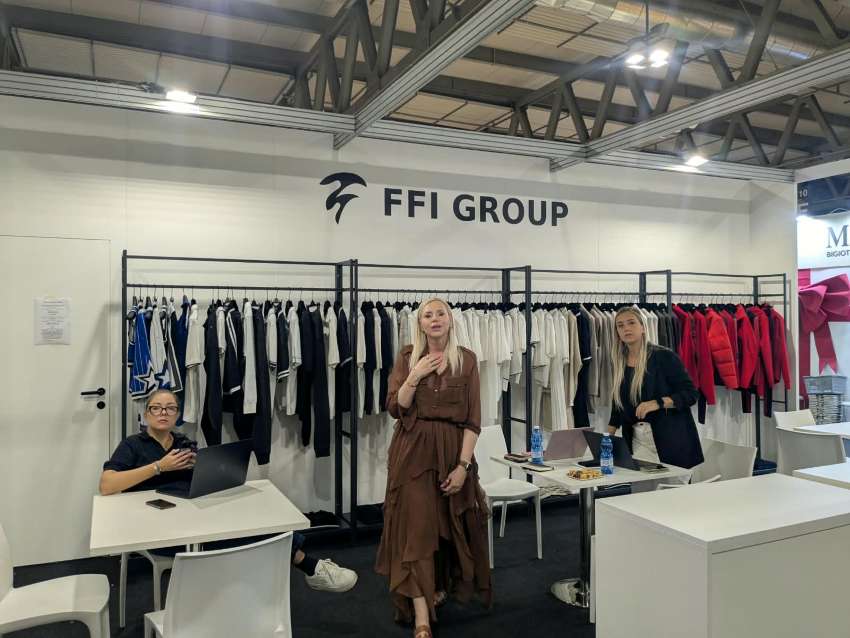
Co-located in Hall 24 with international leather salon Lineapelle, Filo 66 harnessed strategic spatial synergies to present an integrated sourcing hub spanning fibers, yarns, fabrics, technical materials, and trims.
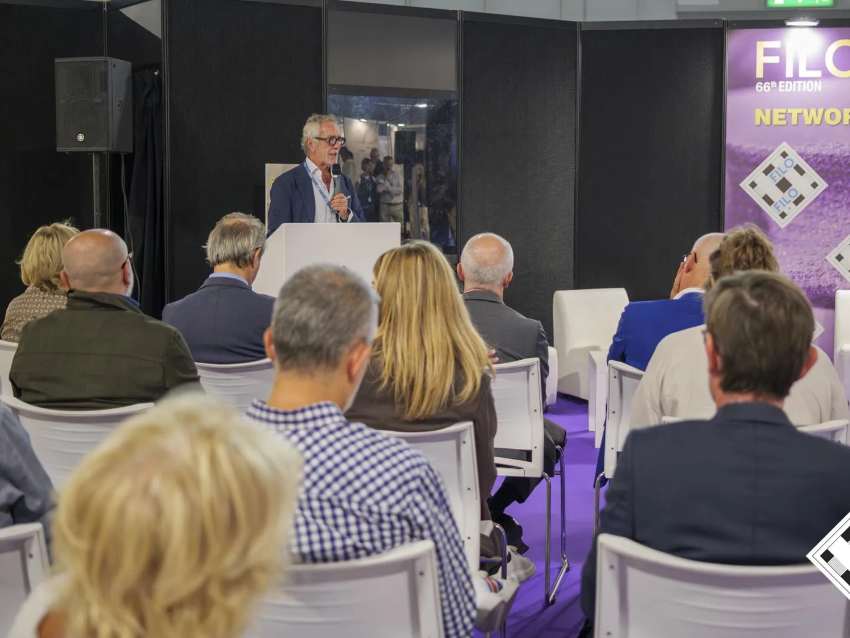
Opening the fair, Paolo Monfermoso, Head of Filo, addressed the industrial context,
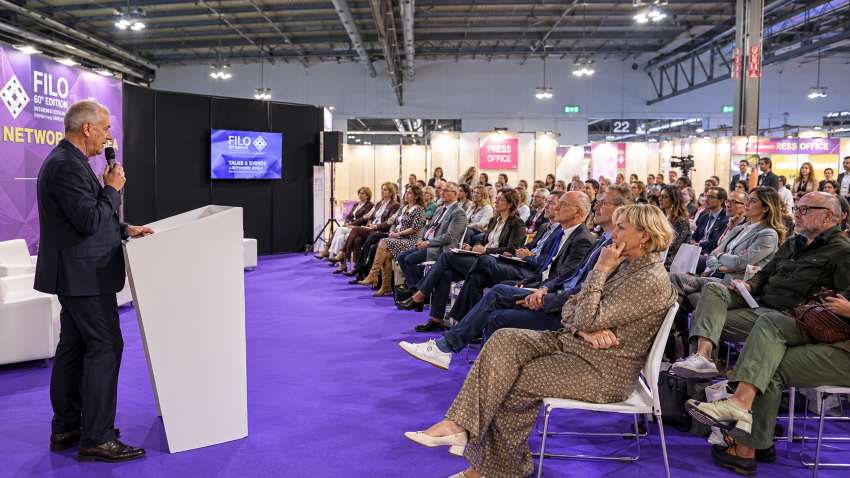
"Data and experts’ forecasts indicate that the sector continues to proceed with caution against a backdrop of an international political landscape that remains complicated and critical. Therefore, there is a great deal of interest in the proposals from the companies exhibiting at the 66th edition of Filo, since the response to market uncertainties can only be a greater effort to enhance quality and innovation of products."
High-end up-stream exhibitors and lots of decision makers global buyers
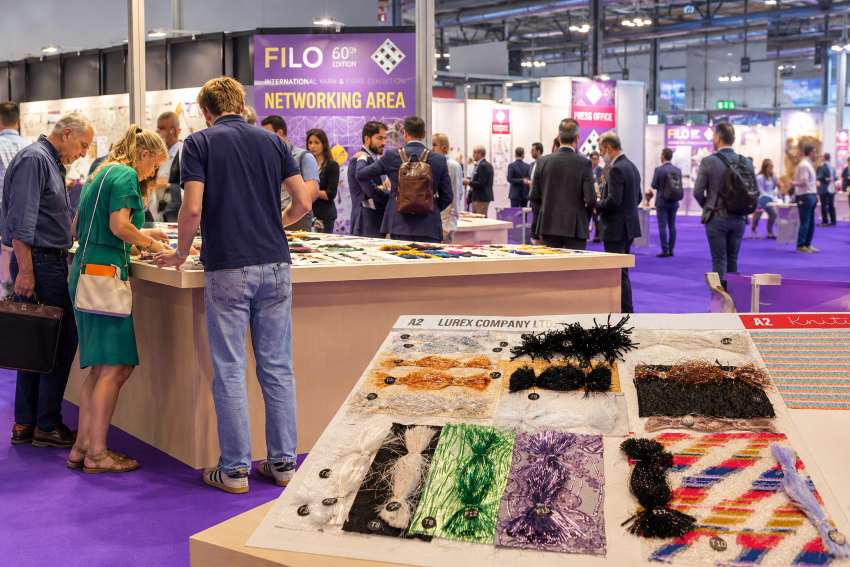
Organized biannually by AssoServizi Biella, Filo is the international business-to-business exhibition dedicated exclusively to top-tier yarns, fibers, dyes, and finishes engineered for high-end fashion, luxury knitwear, furnishing textiles, and technical applications. Operating as a targeted, highly specialized upstream salon, each edition brings together more than 90 exhibiting enterprises. Roughly 70% of participating companies represent the artisanal and industrial heritage of Italy; anchored in manufacturing hubs such as Biella, Prato, Varese, and Como, while the remaining 30% comprise premier international filatures and fiber producers from Turkey, Austria, Spain, Germany, and Switzerland, spanning spinning mills, texturizers, dyehouses, and fiber innovators.
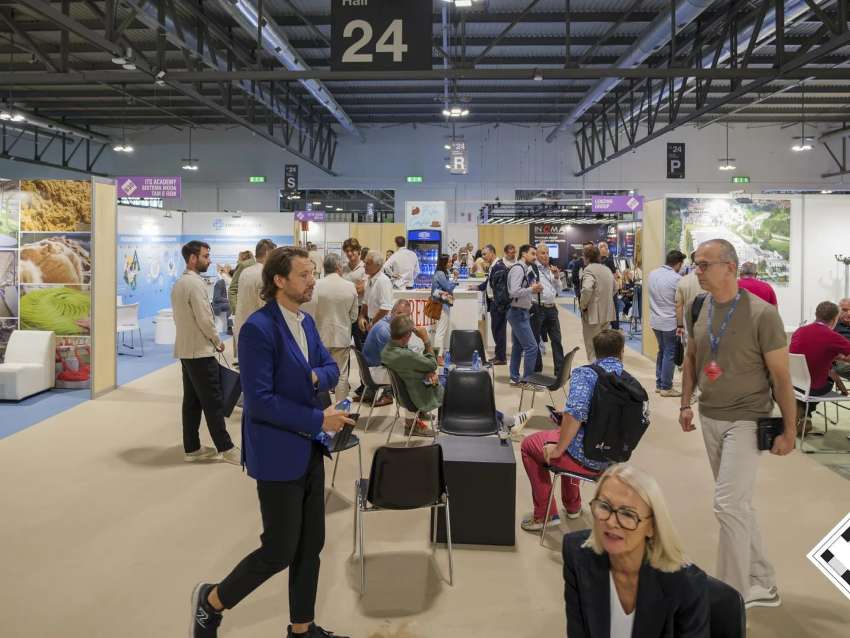
Buyer traffic across the two-day salon consistently draws specialized decision-makers, including fabric sourcing directors, luxury fashion house product developers, circular and flat knitters, technical weavers, and retail procurement teams. Internationalization was reinforced at Filo 66 through official trade delegations coordinated by the Italian Trade Agency (ITA), bringing vetted buyers from France, Spain, Portugal, the Netherlands, the United Kingdom, Turkey, and India. Concurrently, the Piedmont Region’s Integrated Supply Chain Project, funded under the PR FESR 2021-2027 framework and executed by Ceipiemonte—hosted "Buyers' Days," delivering more than 20 structured B2B sessions linking regional mills with international sourcing executives, alongside on-site factory study tours directly into the Biella industrial district.
Macro headwinds and the defense of manufacturing hubs
The opening symposium, “Weaving the Future: Balance for a Stronger, More Competitive Textile and Fashion Supply Chain,” directly tackled the economic pressures reshaping European manufacturing. Small and medium-sized enterprises represent roughly 99% of Italy’s €58.39 billion textile-apparel sector, and these specialized, family-owned spinning and finishing mills are absorbing disproportionate spikes in energy tariffs, raw material costs, and administrative compliance overhead. Downstream margin-squeezing increasingly threatens foundational craft skills and technical knowledge that cannot be easily replaced if facilities shutter, compelling fashion brands to transition from treating spinners and dyers as mere cost centers to actively co-investing in verified traceability.
At the same time, while European frameworks such as ESPR, the Digital Product Passport (DPP), and EPR advance, shifting implementation timelines and fragmented enforcement risk market paralysis. A severe regulatory gap persists on the continent, where European manufacturers deploy heavy capital to meet rigid sustainability metrics while cross-border ultra-fast fashion platforms import untraceable, low-cost goods with minimal friction. Addressing this imbalance requires engineering compliance directly into the weave construction—through mono-materials, bio-synthetics, and open technical specifications—rather than simply layering on administrative paperwork.
To hedge against these global vulnerabilities, cross-border European nearshoring is accelerating, particularly between Italian filatures and Portuguese and Spanish weavers. Iberian mills are actively expanding procurement of European-grown bast fibers, specifically industrial hemp (Cannabis sativa) and linen, to systematically de-risk their dependency on volatile overseas cotton markets, shorten delivery corridors, and build localized, low-carbon supply loops.
The Cultural Imperative: Upstream transparency and C.L.A.S.S.
Bridging mill reality with consumer awareness, C.L.A.S.S. hosted the pivotal panel “Trust is the New Luxury,” moderated by Giusy Bettoni previewing its upcoming InsideOut campaign to counter the erosion of trust caused by luxury supply chain scandals and hyper-fashion. The session united voices from every link of the value chain: Lenzing highlighted physical fiber markers and closed-loop cellulose verification, while Filatura Astro marked 70 years with zero-kilometer recycled cotton yarns dyed with pulverized cotton textile powder. Tintoria Ferraris positioned responsible finishing and social ethics as the core tactile signature of luxury, and Politecnico di Milano examined emerging design generations who demand authentic transparency, circular repair strategies, and verifiable supply chains over superficial brand claims.
Creative Direction: ‘Botanica’ and Open-Source weaving
The salon’s trend showcase, Made in Filo, moved past conceptual forecasting to present ‘Botanica’, a capsule of 58 fully reproducible fabric prototypes orchestrated by textile engineer and designer Rossano Bisio. Beginning with a generative AI prompt blending Renaissance aesthetics with digital botanical imagery, the concept yielded a disciplined six-tone palette that guided four months of loom development using exhibitors' yarns.
The prototypes spanned three distinct axes: Ibridata, emphasizing bio-synthetic performance with Spiber brewed protein jacquards and protective functional finishes; Spontanea, showcasing natural bast fibers alongside Indian hand-spun silk combined with Japanese paper yarns; and Espansa, featuring geometric architectures, dimensional inkjet printing on silk, and intricate tapestry weaves simulating television pixels. Circular mechanics were integrated throughout via 50% recycled denim yarns and waterless ozone wash treatments.
Physical De-Risking: MagnoLab’s pilot infrastructure
Addressing the bottleneck between laboratory development and scalable mill production, MagnoLab presented its collaborative model built by a network of more than 27 partner companies in Biella. Rather than acting as a digital platform or finished-goods manufacturer, the private consortium maintains a centralized facility equipped with operational pilot machinery spanning the entire industrial line: fiber opening, spinning, circular and flat knitting, weaving, and finishing.
By running real-world trials, MagnoLab has validated industrial yarns incorporating up to 60% recycled cotton and 70% recycled wool, while managing pilot lots to advance mechanical-chemical recovery for complex poly-cotton blends. This practical initiative directly addresses the market gap where technical recycling capabilities currently outpace brand-driven procurement.
Scientific Standardization: Città Studi Biella and Po.in.tex
Replacing empirical guesswork with verifiable metrics, Città Studi Biella and its managed textile innovation cluster, Po.in.tex, outlined the development of Red Lab (Recycling Laboratory). Operating under European research initiatives like RegioGreenTex and Future-Proof Textile, the upcoming laboratory is designed to provide the testing infrastructure needed to categorize post-consumer waste streams before mechanical sorting.
By generating rigorous physical and chemical data, the platform aims to establish standardized benchmarks that prevent downcycling, systematically directing recovered fibers into high-performance yarns, non-wovens, architectural insulation, and functional composites.
The pragmatic blueprint for European survival
By unifying physical pilot facilities, open-source technical specifications, and cross-border commercial alliances, Filo 66 affirmed that Europe’s textile sector is establishing a pragmatic, defensive roadmap for long-term viability. Through the convergence of reproducible loom engineering, verified fiber traceability, and collaborative district networks, the fair demonstrated that navigating global economic turbulence requires grounding the textile identity in verifiable industrial substance.