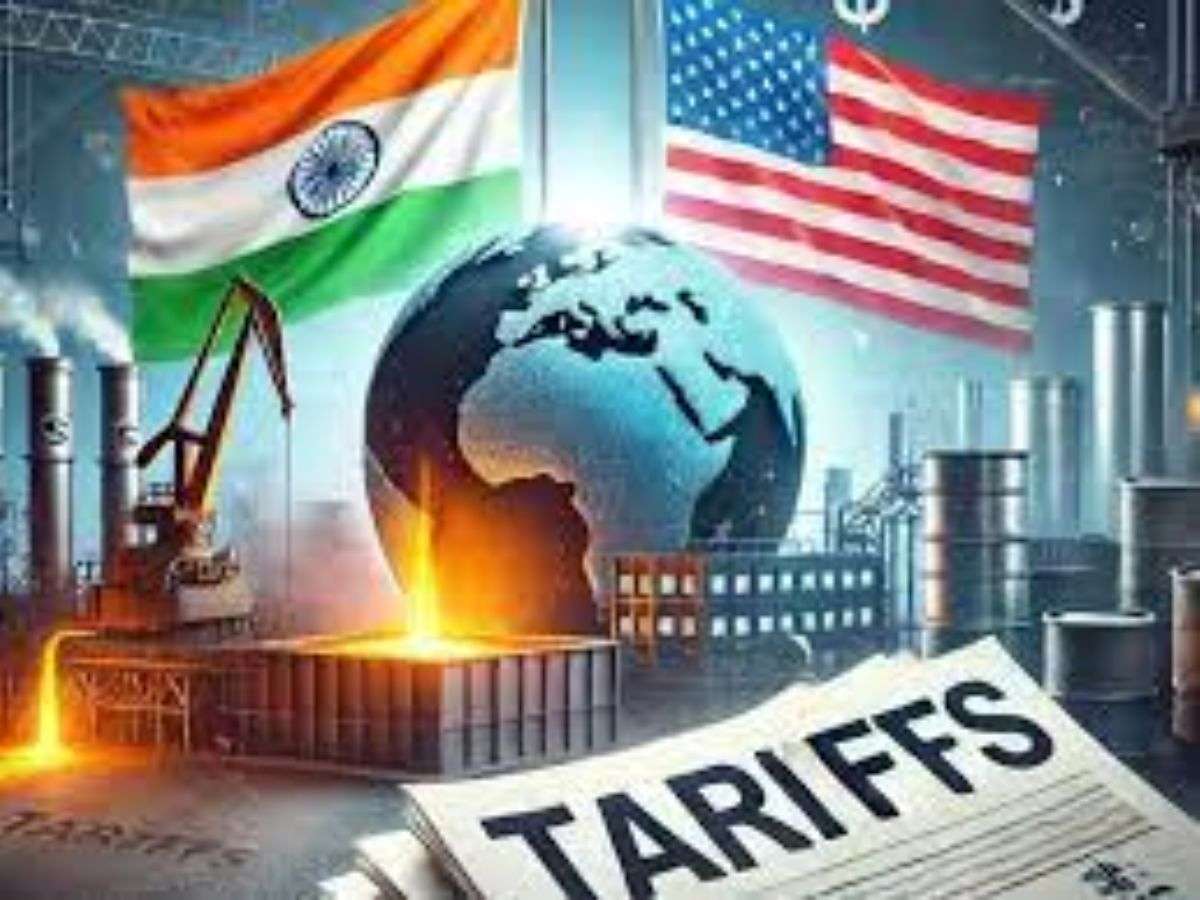
The enactment of the Lindsey O. Graham sanctioning Russia and Iran Act of 2026 in Washington has introduced a fresh fault line into India’s already pressured textile and apparel export economy. By creating a statutory mechanism for the US administration to impose retaliatory tariffs of up to 100 per cent on goods from countries purchasing Russian energy, the legislation raises a potentially material risk for Indian exporters.
The Confederation of Indian Textile Industry (CITI) has urged the Ministry of Commerce and Industry to engage urgently with Washington. The concern is straightforward: North America accounts for roughly a third of India’s textile and apparel exports, while the domestic industry is dominated by MSMEs operating on exceptionally thin margins.
The issue, therefore, is not simply another tariff dispute. It is whether India's labour-intensive apparel manufacturing base can absorb another cost shock without losing orders to competing Asian production centres.
Thin margins, little room
Indian apparel manufacturers typically operate on net margins of only 3-6 per cent. Their cost structures are already being squeezed by longer shipping routes around the Cape of Good Hope, geopolitical disruption in West Asia and sharply higher raw-material costs.
Raw cotton import outlays rose 57.17 per cent between April and August 2026. Adding a substantial US tariff to this equation would leave manufacturers with limited ability to absorb the increase without either cutting margins or raising prices. CITI chairman Ashwin Chandran has warned that additional tariffs would be difficult for the MSME-dominated sector to absorb and could severely affect India's ability to sell into its largest export market.
The greater vulnerability lies in the purchasing behaviour of global retailers. Apparel sourcing is highly price-sensitive and vendor switching is relatively easy. A duty-induced price differential can therefore accelerate procurement shifts towards Vietnam, Bangladesh or Pakistan.
Export split is widening
The tariff threat arrives as India's textile export basket is already becoming very polarised. Upstream textiles such as yarn, fabric and made-ups have shown resilience, while finished apparel where employment intensity and value addition are higher has declined.
Table: Indian textile exports in August 2025 and August 2026
|
Category |
August 2025 ($ bn) |
Aug 2026 ($ bn) |
Aug YoY |
|
Textiles: yarn, fabric, made-ups |
1.697 |
1.918 |
+13.03% |
|
Apparel: readymade garments |
1.235 |
1.201 |
-2.74% |
|
Total textile & apparel |
2.931 |
3.119 |
+6.39% |
|
T&A share in merchandise exports |
8.44% |
7.12% |
-132 bps |
CITI data shows total textile and apparel exports rising 6.39 per cent year-on-year to $3.119 billion in August 2026. Yet apparel shipments fell 2.74 per cent to $1.201 billion. Over April-August, apparel exports decline 9.10 per cent, pulling overall textile and apparel export growth into negative territory at 0.24 per cent. This difference matters because India's competitive ambition cannot rest indefinitely on exporting more upstream material while losing ground in finished garments.
Tirupur highlights the pressure
Tirupur highlights a clear picture of the problem. The cluster accounts for over half of India's knitwear shipments and contains a large base of mid-sized exporters working on fixed-price contracts with overseas retailers.
These manufacturers are simultaneously dealing with higher wages, expensive imported long-staple cotton and elevated ocean freight. A producer exporting a knitted shirt at around $4.20 a piece has little flexibility when the US landing cost rises because of additional duties.
The commercial consequence could be significant. If Indian merchandise becomes structurally more expensive than comparable products from duty-advantaged competitors, US buyers have a strong incentive to redistribute sourcing. For a cluster built around high volumes and relatively low margins, even a small deterioration in price competitiveness can have an outsized impact on capacity utilisation, inventory and employment.
FTAs cannot replace the US
India has begun widening its trade options. The India-UK Comprehensive Economic and Trade Agreement, effective July 15, 2026, and the prospective European Union trade framework can create additional market access. But diversification is not an overnight substitute for American demand.
CITI's position is that free-trade agreements offer considerable potential, but their benefits take time to materialise. That distinction is important. Market diversification can reduce concentration risk over the medium term, but exporters facing immediate tariff exposure need commercially viable orders today. This makes a predictable India-US trade framework more consequential. The opportunity extends beyond garments to synthetic fibres, technical textiles, recycled inputs and resilient supply chains.
Diplomacy is now an industrial-policy tool
The biggest lesson is that India's apparel export challenge is no longer confined to factory productivity or raw-material competitiveness. Geopolitics is determining the economics of individual export orders. The answer cannot be permanent tariff concessions or government support for every external shock. But neither can India's manufacturing ambitions be separated from the trade architecture governing access to its largest markets.
For New Delhi, the immediate priority is to keep the sanctions issue from becoming a wider trade barrier while pursuing a rules-based bilateral framework with Washington. For industry, the longer-term imperative is to reduce dependence on low-margin commodity apparel by moving towards higher-value garments, man-made fibres, technical textiles and integrated fibre-to-fashion capabilities.
India's textile sector has scale. What it lacks is sufficient margin resilience. A potential US tariff shock could expose that weakness faster than any domestic cost increase. The question, therefore, is not merely how India can sell more textiles abroad. It is whether the country can build an export model robust enough to remain competitive when geopolitics suddenly changes the price of access.