German textile designer Selina Reiterer and Greek architect Constantinos Miltiadis teamed up to create a range of touch-reactive children’s T-shirts that can be played like musical instruments, aptly calling the collection John Paul George & Me.
Each T-shirt represents a specific instrument – guitar, bass and drums – which together form a rock ensemble, the creators explain. By wearing clothes that produce sound by touch, children are immersed in an interactive game which encourages and stimulates their musical interest.
Similarly, Paris-based company The Faraday Project has released its first collection of high-end menswear made for the modern urban gentleman, featuring a lining which ‘protects every user from phone waves and NFC/RFID hacking’ of their credit cards and personal identification. The concept, its creators say, is about ‘data and health protection through style and elegance.’ They imagine their collection of Selvedge denim jeans, cotton chinos, blazers, shirts and French leather jackets as ‘the armour of the new urban pioneers.’
Another start-up, Canadian company FuelWear Clothing, has a heat-warming shirt that monitors body temperature, and heats up – or cools down – to keep the wearer comfortable in cold climates.
Even contemporary brands are entering the fray of intelligent apparel, as seen with Ralph Lauren’s PoloTech biometric smart shirt. Unveiled in 2014, this hi-tech incarnation of the brand’s classic polo is a compression shirt with biometric sensors knitted into the fabric to collect health information, much like a sophisticated fitness band or smart watch.

- 1
- 2
- 3
- 4
- 5
- 6
- 7
- 8
- 9
- 10
Global fashion bets big on India as consumer confidence leads world
Global fashion retailers are reassessing growth priorities as India moves away from the weaker consumer scenario prevailing across several mature... Read more
Turkiye’s textile crisis opens new frontiers for Egypt and South Asia
The suspension of production at Orta Anadolu’s spinning and weaving complex in Kayseri in mid-September, followed by its scheduled permanent... Read more
Europe cuts apparel volumes and prices, testing South Asian suppliers
European apparel sourcing entered 2026 under simultaneous volume and price pressure, forcing suppliers to absorb a decline that is reshaping... Read more
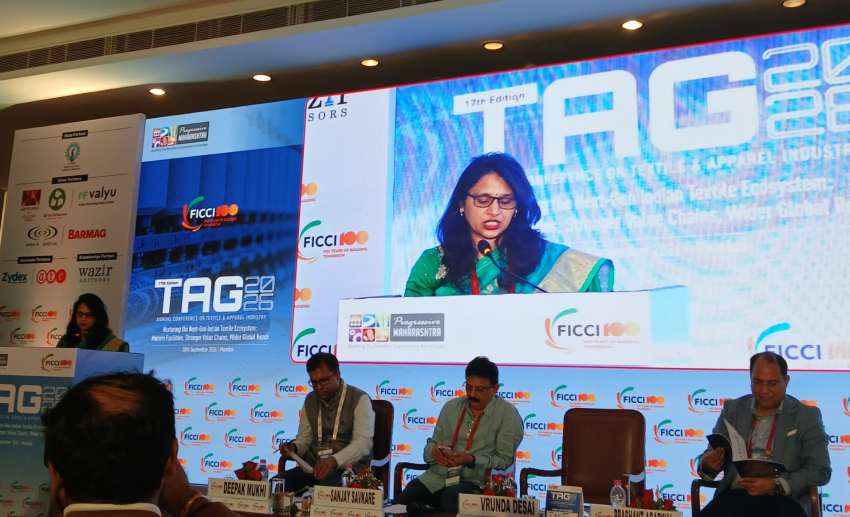
FICCI-TAG 2026: Mandatory reporting & Textile ID rolled out; Non-Compliance …
In a stern regulatory announcement aimed at creating a robust statistical backbone for India's textile sector, Textile Commissioner Vrunda Manohar... Read more
India’s apparel exporters face a new US tariff risk as margins shrink
The enactment of the Lindsey O. Graham sanctioning Russia and Iran Act of 2026 in Washington has introduced a fresh... Read more
Cellulosics challenge polyester dominance in global fibre market
The global textile raw-materials market has entered a phase where plant-based and regenerated cellulosic fibres have gain ground against fossil-fuel-derived... Read more
From cotton to MMF cost equation is rewriting global textile trade
The global textile and apparel trade has grown from $560 billion in 2006 to $914 billion in 2025, reveals the... Read more
Polyethylene stretch yarn challenges elastane’s hold on activewear
The global activewear, denim and intimate apparel markets have built a substantial business around stretch. But the same fibre combinations... Read more
Automation Meets Italian Design: FFI Srl unveils ‘Next-Gen Robotics’ to help bra…
At the recently concluded autumn edition of Ready to Show inside Hall 10 at Fiera Milano-Rho—staged alongside the Milano Fashion... Read more
From Dhaka to Milan: Mascom Composite backs Southern Europe’s sports and lifesty…
While the trade floor of Ready to Show Milano inside Hall 10 at Fiera Milano-Rho placed a heavy spotlight on... Read more