FW
Cotton, synthetic fiber prices surge in China amid rise in consumption, raw material costs
 The synthetic fiber and cotton industries have been witnessing a steady price since September. As per a CCF Group report, the polyester and cotton industries witnessed highest price rises during the period. The future indices of a few cotton varieties like the ZCE cotton futures rose by 22.4 per cent on October 11 compared with September 24. Prices of PTA and MEG varieties of polyester increased significantly, while that of China’s domestic and foreign cotton also surged prominently. Spandex prices remained stable after hitting a record high earlier this year.
Consumption boosts polyester prices
Rising consumption spurred global polyester prices. The market was also boosted by the reduced supply of PTA and MEG on account of dual control of energy consumption in China. Prices of PTA and MEG both rose to 500-600yuan/mt as crude oil and cotton prices surged and China introduced a dual control on energy consumption.
Cotton prices hike on higher seed prices
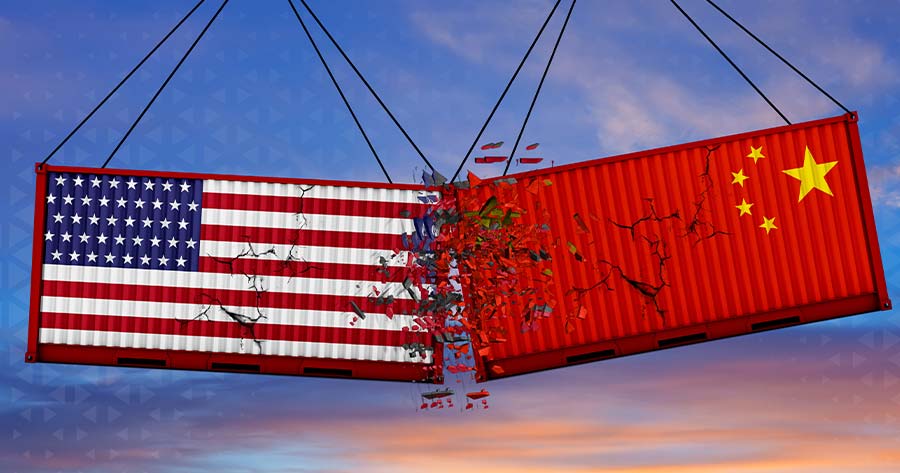
Driven by higher seed cotton prices in Xinjiang due to the harvest-rush, and rise of international cotton prices, cotton prices in China began to rise from September-end. Easing of relations between China and the United States and supply concerns caused by the rainfall in Texas and the hurricane in India, also boosted prices. China’s purchase of US cotton surged market prices of the yarn and cotton grey fabrics in China. Global supply chain concerns also surged during the period due to excessive rainfall in major cotton producing areas of US. In addition, Indian cotton production was impacted by the pest infestation and Hurricane Gulab.
Raw material costs drive VSF prices
Driven by a continued rise in raw material prices, VSF prices rose by the end of September. The prices also surged due to a decline in the operating rate of VSF plants amid short energy supply and continued increase of coal and caustic soda prices.
Spandex prices hit a new high
Spandex prices reached record heights of 106 per cent a year after the National Day holiday as new units of 100kt/year were launched in Q4. Currently, spandex prices in China have hit 13-year high, stabilizing prices for suppliers and reducing prices for some new units.
Filament makers catch up with upstream rise in costs
The prices of upstream CPL and nylon 6 HS chip prices were driven up by the quickly rising benzene cost and shutting down of a large number of nylon filament plants. Reluctant to sell at previously low prices, filament makers raised prices to catch up with upstream cost rise.
Domestic concentration in plant boosts acrylic fiber prices
Acrylic fiber prices also surged due to a gradual concentration in prices among the domestic acrylic fiber plants. Previously, based on Sinopec and Jilin Chemical Fiber, pricing right is currently based only on Jilin Chemical Fiber. Besides, producers are more willing to support prices leading to a surge in acrylic fiber prices.
A week before the National Day, prices in the cotton spinning and chemical fiber industry have also surged. These price increases are mainly attributed to two factors; cost concerns caused by the supply side, and current domestic dual control policy.
MySize teams up with Nautica to offer measurement solutions
MySize will offer its MySizeID app for Nautica in Turkey. MySize develops and creates innovative measurement solutions. m Nautica is a leading water-inspired global lifestyle brand including men’s, women’s and children’s apparel and accessories.
The app will be offered to Nautica customers in Turkey through the brand’s online retail e-commerce site. The nautical-influenced classic American sportswear brand is served well by reducing costs and maximising efficiencies by incorporating MySize into the supply chain. Nautica Turkey recognises the choppy waters of e-commerce and sees the MySizeID app as a tool to calm the storm. This is done by increasing buyers’ satisfaction and reducing costs for online retailers by standardising sizing and helping consumers find the right fit on any size chart. MySize’s patented algorithms and SDK decrease return rates from consumers and improve retailers’ bottom line.
MySize is focused on standardisation of sizing between brands in e-commerce. As it seeks to expand its offering to the other brands of the portfolio, it knows the data it collects introduces new and interesting opportunities towards growth. Nautica Turkey licensed production owner Eren Group is in partnership with the world-famous French Devanlay Group, providing additional opportunities for MySize to integrate with more brands in the portfolio.
Rise in Shahlon Silk’s Q2 income
For the second quarter Shahlon Silk Industries’ total income was Rs 79.1230 crores against Rs 39.6452 crores in the corresponding quarter of the previous year and Rs 51.5381 crores in the previous quarter. Net profit/loss was Rs 1.0337 crores against Rs 0.3859 crores in the corresponding quarter of the previous year and Rs 1.3593 crores in the previous quarter. Earnings Per Share (EPS) was Rs 0.58, against Rs 0.22 in the corresponding quarter of the previous year and Rs 0.76 in the previous quarter.
For the six month period, the company’s total income was Rs 130.6612 crores against Rs 50.1879 crores in the previous year. Net profit / loss was at Rs 0.3256 crores for the six month period compared to Rs 5.6967 crores in the previous year. Earnings Per Share stood at Rs 0.18 for the six month period against Rs 3.19 in the previous year.
Growing and developing on the foundations laid by a tightly knit family for more than 30 years, Shahlon is a leading Surat-based textile enterprise. Shahlon’s vision is to be a fully integrated textile enterprise. It has expanded into yarn marketing agency, texturising, twisting, sizing, yarn dyeing, weaving, finish fabrics and industrial infrastructure.
Canopy launches Circular Chic campaign to raise environment awareness
Environment NGO Canopy has launched the Circular Chic campaign to showcase real-life, low carbon alternatives for fashion fabrics, like viscose and rayon, and paper packaging, all of which are too often made by logging vital, high carbon forests
The campaign was incepted out of a necessity to raise awareness about the urgent need to transform the fashion and packaging industries’ supply chains. Currently, these supply chains are responsible for cutting down 3.2 billion trees a year, and in doing so, placing unsustainable stresses on the planet's climate and biodiversity.
Circular Chic features cutting-edge fashion and a diverse set of change makers who sit at the intersection of fashion and environmental activism —Arizona Muse, Emma Breschi, Candice Carty-Williams, Kelly Knox, Emma Slade Edmondson, Efe Efeturi, and Anna Shaffer. The imagery showcases fashion and packaging solutions that can be adopted and scaled today to save forests and address the interconnected crises of climate and biodiversity loss.
It’s estimated that in just one year, landfills accumulate 92 million tons of textile waste globally. That’s equivalent to a truck full of clothes being dumped in landfills every second. On the packaging side, every year hundreds of millions of tons of agricultural residue are burned, causing air pollution and choking some of the world's largest cities.
Bottega Veneta gets new creative director
Matthieu Blazy is the new creative director at Bottega Veneta. Matthieu Blazy a graduate of La Cambre in Brussels started his fashion career as men’s designer for Raf Simons, before joining Maison Martin Margiela to design the artisanal line and the women’s RTW show. In 2014, he became senior designer at Céline, before working again with Raf Simons at Calvin Klein from 2016 to 2019. A French and Belgian national, he will present his first collection for Bottega Veneta in February 2022.
Bottega Veneta is rooted in Italian culture yet maintains a truly global outlook. An inclusive brand with exclusive products Bottega Veneta is as much of a feeling as it is an aesthetic. Bottega Veneta which embodies the quintessence of understated and sophisticated luxury offers women and men bags, small leather goods, ready-to-wear, shoes, jewelry, furniture, fragrances, eyewear and accessories. Steeped in the traditions of Italian leather master craftsmen, Bottega Veneta has nurtured a new standard of luxury since its foundation in 1966. Bottega Veneta is run by the global luxury group, Kering, which also manages other brands in fashion, leather goods, jewelry and watches. Some of these are Gucci, Saint Laurent, Balenciaga and Alexander McQueen.
Ethiopia’s removal from AGOA may be West Africa’s gain
Ethiopia will no longer be eligible for benefits under the African Growth and Opportunity Act (AGOA). Ethiopia is home to one of Africa’s largest textile industries and this would threaten Ethiopia’s aspirations to become a light manufacturing hub and dent hard-won economic gains in a nation once a byword for hunger and poverty. Though Ethiopia is not a large global supplier, suspension of its US trade status would be yet another problem on the list for global fashion brands such as The Children’s Place, Tommy Hilfiger and Calvin Klein as Covid-19 disrupts manufacturing capacity, ports and supply chains.
The US has decided on removing Ethiopia from AGOA, citing Ethiopia’s failure to halt human rights violations. So US retailers sourcing from Ethiopia are likely to turn to other countries for their sourcing needs. West Africa, already a major producer of cotton, is a likely beneficiary of any sourcing shift (Benin, Ivory Coast and Burkina Faso respectively rank sixth, seventh, and eighth in the world in terms of cotton production). The sanctions placed on Ethiopia are likely to give West African nations new impetus to attract textile-related investment and improve transportation and logistics. They will be helped by the creation of the African Continental Free Trade Area (AfCFTA), which came into effect in January 2021 and has reduced tariffs up to 90 per cent on goods traded within the area.
Global Fashion Group partners Global Fashion Agenda for a sustainable future
Global Fashion Group (GFG) has entered into a partnership with Global Fashion Agenda (GFA). As the only strategic partner operating across Latin America, the CIS, Southeast Asia and Australia, GFG will help support GFA’s ambition in spearheading the fashion industry’s journey towards a more sustainable future. GFA is responsible for the Copenhagen Fashion Summit and thought leadership publications, including fashion on climate and fashion CEO agenda. GFG’s people and planet positive agenda illustrate the group’s journey and commitment to being a company that integrates sustainability into the core of its operations by applying the highest duty of care to its people all over the world and its supply chain.
GFG will also play an active role in the development of Global Fashion Agenda’s thought leadership platform and Fashion CEO agenda, alongside a number of other various fashion leaders from all aspects of the industry. The agenda aims at encouraging brands to implement circular design strategies into their production, including the insertion of used garments, resold pieces and recycled post-consumer textiles toward their supply chain.
Global Fashion Agenda strives to bring together partners that represent industry perspectives from across the world and from various parts of the supply chain. Global Fashion Group has demonstrated strong commitments to sustainability.
Bangladesh Denim Expo schedule for May 2022
Bangladesh Denim Expo will be held on May 10 and 11, 2022. With the realization of the importance of sustainability in the fashion industry, the third edition of Sustainable Apparel Forum (SAF) will be organized alongside the denim exposition. The previous edition of Bangladesh Denim Expo was in November 2019.
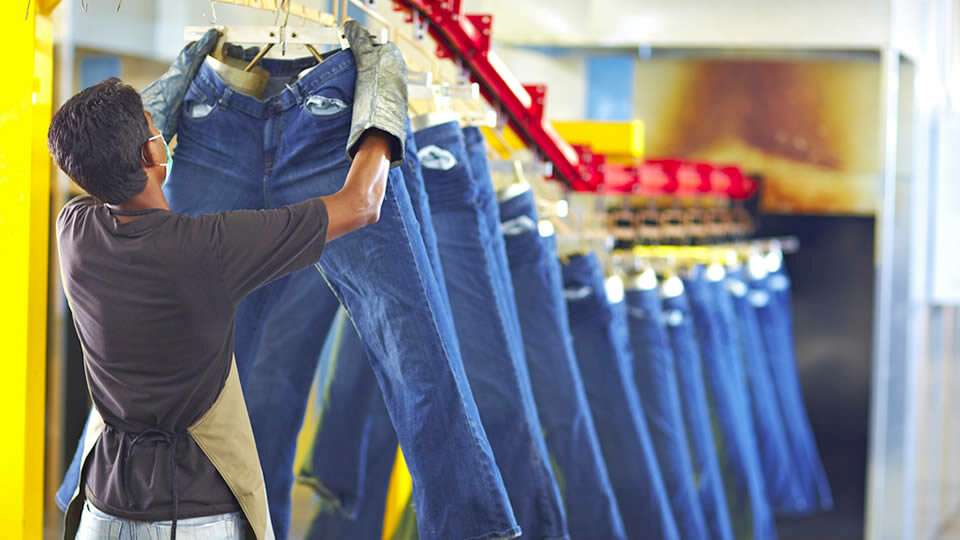
Denim offers Bangladesh great prospects as it holds future business possibilites. With huge demand from global retailers and brands, the country has established some 30 denim mills. These meet 40 per cent of the demand for denim fabrics from garment makers. The remaining demand is met through imports, mainly from China, India, Turkey and Pakistan. Bangladesh has overtaken China in denim supply to the EU countries because of quality products at competitive prices. Due to the focus on sustainability Bangladesh denim fabric makers have dramatically reduced water consumption over the last few years with the adoption of the latest technologies in production. The target is to reduce water consumption by 80 per cent in the denim making process.
Demand for denim is on the rise worldwide from both men and women. Annually 2.1 billion pieces of denim are sold globally. The denim sector is growing by 15 per cent year on year.
Australia may return to wool processing
Australia is mulling processing wool domestically. With over 90 per cent of Australia’s greasy wool exported to China, supply chain security is key for Australia’s wool future, says a Queensl and contry life report. China is a dominant player in early stage processing and can very much control that market. So there is an increasing appetite to do more processing in Australi, but money is an issue. In early October production in wool conversion plants were reduced by up to 40 per cent resulting in a sharp fall in the Australian wool market.
Those in the industry are now hoping the situation in China will encourage investment in more plants in Australia. The aim is to capture three value-adding steps in wool processing - scouring and carbonising, top-making, and yarn spinning and dying. This would need around 10 million kg of greasy wool a year, which can be bought on the Australian market. Last year, the Blackall-Tambo Regional Council commissioned economic consultants AEC to conduct a feasibility study into the proposed Blackall facility. It found it would create 88 full-time jobs during construction and 812 full-time jobs in the region once operational, including 270 directly associated with the scour. It also found the operation would generate $116.3 million in gross regional product per year.
As per Queensland Wool Processors, chaired by Central Queensland University chancellor John Abbott AM, it is using a feasibility study as the basis for claims it would capture three value-adding steps in wool processing - scouring and carbonising, top-making, and yarn spinning and dying.
In reality the idea of processing domestically has simply been a reaction to processing becoming more expensive in China. In the 80s there were many processors in Australia but eventually they got forced out because of competitive pressure from China. They couldn't compete with cheap Chinese labor and eventually China took over the game. Today, things have changed and China’s labor costs have risen and continue to rise.
Vietnam apparel units may not reopen soon, global brands to face the heat
The impact of prolonged factory shutdowns in Vietnam is likely to be worse than many apparel and footwear retailers have planned for and may last well into 2022, says Wall Street research firm BofA Securities. Recovery in Vietnam will be more gradual than retailers are anticipating and businesses are being too optimistic about turnaround times. Reopening of the economy in Southern Vietnam — where many apparel and footwear producers are housed — has been moving much slower than in the north.
Vietnam experienced a devastating surge in Covid cases in July and August, prompting another round of local lockdowns. The temporary pause to production dealt a blow to companies such as Adidas and Nike, which rely heavily on the region for manufacturing their sneakers and athletic apparel.
Businesses have since started to reopen but vaccination rates remain significantly lower compared with other countries. Current factory operation rules in Vietnam remain strict and very complicated, which could hinder employees’ ability to return to work. Several factors weigh against expectations for a fast resumption in production activities. These include the likely persistence of labor shortages, rising raw material costs and supply chain disruptions in many other parts of Asia.