FW
Nahar Spinning Mills Q2 sales up 55 per cent
For the second quarter Nahar Spinning Mills’ net sales rose 55.88 per cent. During the quarter, total expenses rose 16.74 per cent. Employee expense surged 42.33 per cent. Raw material cost increased 39.92 per cent. Nahar has chalked out an expansion and modernisation scheme involving a capital expenditure of Rs 369 crores for increasing spindlage capacity by 31200 spindles, a new air jet spinning unit and modernisation cum upgradation of the company's spinning units. It will be implemented in full by financial year 2023.
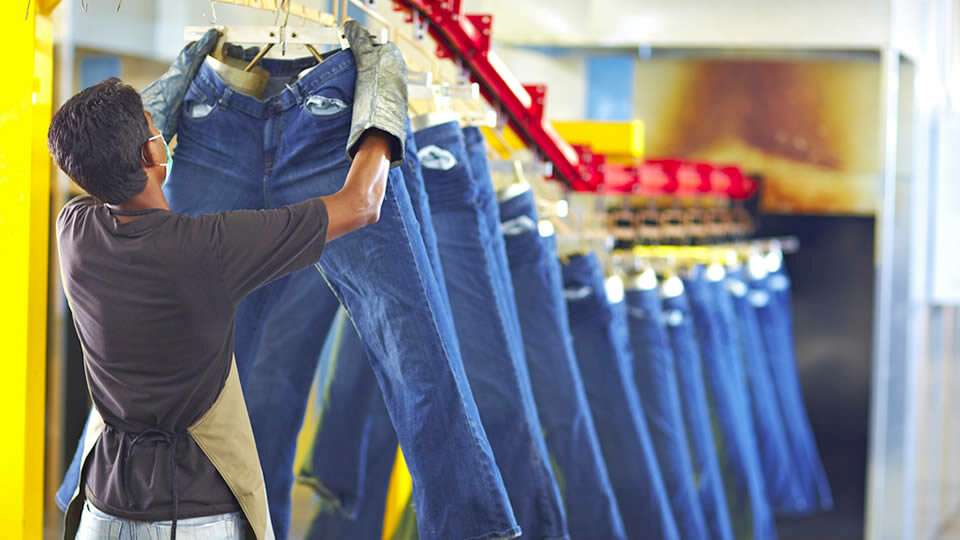
Nahar Spinning Mills is a textile company. Products include yarns and knitted garments. It is in the medium premium segment, which has few players. It produces around 40 million meters a year. It produces denims from 3 to 15 oz, catering to all segments. Among specialized products, there are 100 per cent Tencel, cotton viscose (stretch and non stretch), laser printed denims, reactive colored denims (stripes and checks), printed denims, peach denims, dobbies and knitted denims. It does 30 exports and 70 domestic.
In domestic market 30 per cent is for readymade garment manufacturers and retailers and the rest for the dealer segment. Nahar brings international trends to the domestic market. For instance trying to bring back pastel shades embellished with different coatings, textured denims, feather weight denims with super soft touch.
Indonesian textiles and apparel sector sees a drop
For the third quarter Indonesia’s textile and apparel industry contracted by -3.34 per cent year-on-year reveals Central Statistics Agency (BPS) data. In the first quarter the textile and apparel industry contracted by 13.28 per cent. In the second quarter there was a 4.54 per cent decline. As for last year, the textile industry contracted by 8.88 per cent. However, the Indonesian Textile Association (API) remains optimistic about a turnaround by the end of the year, driven by high demand and the recovering market. Even if this does not happen, the industry hopes to reduce the contraction rate compared to last year. Utilization began to improve in October 2021 and almost reached 80 per cent. The average utilization of the textile industry in September 2021 was at 72.31 per cent. In contrast, the apparel industry reached 84.83 per cent, and the leather, leather goods and footwear industry reached 80.18 per cent. The utilization dramatically improved between September to October. Improvement is also reflected in the achievement of Indonesia’s manufacturing purchasing managers' index, which reached 57.2 in October 2021.
In addition, Indonesia hopes to benefit from efforts to diversify supply chains and shift orders to Indonesia from other countries. Orders are also made in the long term, making it easier for business actors to design work plans.
Clariant Chemicals’Q2 sales up eight per cent
For the second quarter Clariant Chemicals’ sales rose eight per cent. The company reported sales of Rs 407.6 crores in the first half of 2021 as against Rs 309.8 crores for the corresponding half of the previous year.
Clariant is a focused, sustainable and innovative specialty chemical company based in Switzerland. It has with several external sustainability initiatives such as the Global Product Strategy and the United Nations Global Compact. Clariant is one of the top European chemical companies being part of the Dow Jones Sustainability Indices.
The company reports in three business areas: care chemicals, catalysis and natural resources. Clariant’s corporate strategy is based on five pillars: focus on innovation and R&D, add value with sustainability, reposition portfolio, intensify growth, and increase profitability.
Clariant’s listed entity in India, based in Mumbai, includes the pigments business, which deliver solutions for the emerging industry sectors in India. Clariant Chemicals is India’s leading specialty chemicals producer. Clariant has invested in a state-of-the-art regional innovation center in Mumbai, with an aim to co-create tailor-made solutions with customers for the industry. Effective cost management and resource optimization, with a better product portfolio, enabled the company to improve profitability.
Global luxury buying resumes
Global sales of personal luxury goods are expected to bounce back this year, says a study by consultancy firm Bain. It will be fueled further by domestic spending in the United States and China, particularly on high end shoes, leather goods and jewelry. Shoppers under 40 are expected to account for more than 60 per cent of luxury purchases this year and more than 70 per cent by 2025. Brands are attracting a new customer base with strong marketing and online campaigns, while existing customers are buying more.
Business in the US, which this year overtook Europe as the largest market, got a boost by early vaccination campaigns and a quick rebound in local consumption. Demand in China, the growth engine of the luxury industry, remained strong through October despite lockdowns in some areas, as the Chinese -- unable to travel abroad -- made purchases in their home market. In Europe, business is yet to return to pre-Covid levels, and may take until 2024 to do so, despite a pick-up in tourist activity over the summer. The largest players in the industry have already recovered strongly from the crisis, pushing well above 2019 levels of business as lockdowns ease and socialising resumes.
Daniel Lee and Bottega Veneta part ways
Daniel Lee and Bottega Veneta’s have parted ways. Bottega Veneta which embodies the quintessence of understated and sophisticated luxury offers women and men bags, small leather goods, ready-to-wear, shoes, jewelry, furniture, fragrances, eyewear and accessories. Steeped in the traditions of Italian leather master craftsmen, Bottega Veneta has nurtured a new standard of luxury since its foundation in 1966.
Daniel Lee was at the creative helm of the brand since July 2018. He provided Bottega Veneta with a fresh perspective and a new sense of modernity, while remaining respectful of the brand’s fifty-year heritage. The remarkable growth of the brand over the last three years bears testimony to the success of his creative work. His singular vision made the brand’s heritage relevant for today and put it back to the center of the fashion scene. He wrote an unique chapter in the long history of Bottega Veneta.
Bottega Veneta is run by the global luxury group, Kering, which also manages other brands in fashion, leather goods, jewelry and watches. Some of these are Gucci, Saint Laurent, Balenciaga and Alexander McQueen. By placing creativity at the heart of its strategy, Kering enables its houses to set new limits in terms of their creative expression while crafting tomorrow’s luxury in a sustainable and responsible way.
CCI gets price support for cotton
The Cotton Corporation of India (CCI) will get a committed price support for the cotton seasons from 2014-15 to 2020-21. In order to safeguard the interests of cotton farmers, price support operations will be conducted in the cotton years 2014-15 to 2020-21 as cotton prices touched MSP prices. Its implementation enhances the inclusiveness of cotton farmers in the economic activity of the country.
Price support operations help stabilize cotton prices and alleviate farmers’ distress. Around Rs 8,000 crores will be released for the current financial year through a supplementary provision, while the balance amount will be released in the next fiscal by budgetary provision. Expenditure will be incurred for reimbursing losses under MSP operations for cotton during the cotton season 2014-15 to 2020-21. MSP operations protect cotton farmers from distress sale during any adverse price situation.
During the global pandemic, in the last two cotton seasons, CCI procured around a third of the cotton production in the country and disbursed more than Rs 55,000 crores directly in the bank accounts of around 40 lakh farmers.
During the cotton season 2020-21, the area under cotton cultivation was 133 lakh hectares with an estimated production of 360 lakh bales, which account for around 25 per cent of total global cotton production.
Canada’s apparel imports down six per cent in September
Canada’s apparel imports fell 6.68 per cent in September 2021 compared to August 2021, reveals Statistics Canada. However, compared to September 2020, imports have gone up by 6.24 per cent. Of the top 10 apparel shippers to Canada, China, Vietnam, Bangladesh, Indonesia, India, Mexico and Sri Lanka remained positive on a year on year basis, while Cambodia, US and Italy couldn’t remain positive with their shipments.
Canadian apparel and textile importers and retailers are eager to connect with the world’s major apparel and textile manufacturers. Some of Canada’s brands are Aritzia, Le Chateau, Walmart-Canada, Jockey-Canada, Gildan, Canadian Goose and Roots.
Exporters from India have a huge scope for expansion and growth to fill the gaps in Canadian textile and apparel market including its FTA partners. Indian manufacturers have a great opportunity to interact directly with Canadian buyers and fashion and apparel experts. The total value of apparel production in Canada continues to decrease while apparel imports continue to increase. Since 2011, apparel imports have increased by 8.3 per cent annually. Between 2010 and 2014, the total number of establishments contracted by approximately 12 per cent. In 2015, approximately 20,000 employees were employed in the sector. Canada’s FTA with the United States, Mexico, Chile, Costa Rica and Honduras contain tariff preference level provisions for certain textile and apparel goods being imported or exported within the respective free trade zones.
Veocel adds fiber traceability system
Beauty brand Veocel has launched a fiber identification system. Recent years have witnessed an evolution within the beauty industry, from merely focusing on the quality of nonwovens fabric, to ensuring authenticity and transparency of fiber materials used in facial sheet masks. This will address the increasing need for transparency and traceability in materials used in beauty products. The fiber identification system is applicable to the skin fiber types under Veocel, which are ideal for use in facial sheet masks. Made in Austria, the fibers are of botanic origin, biodegradable and compostable.
The fiber identification system can identify fibers in the final products, providing quality control and authenticity assurance for brands against inferior counterfeit products. Products verified by the system also provide consumers with an added level of assurance and peace of mind that materials used in their beauty products are certified clean and made of genuine premium eco-friendly fibers.
Globally, strong growth is expected in the beauty segment, with the facial sheet mask market forecasted to reach 14 billion dollars by 2030. As consumers continue to look out for ways to lead a more sustainable lifestyle, the need for brands to provide product quality assurance and supply chain transparency is ever growing.
RSWM records Rs 44 crores Q2 profit
For the second quarter RSWM’s net profit was Rs 44.75 crores. The company continued to see the rallying effect of the positive sentiments and market recovery on the business in fiscal ’22, reflecting in the strong sales and profit results recorded in the first half of the year, despite the continued lockdown in the initial months of the first half of fiscal ’22.
RSWM is one of the largest manufacturers and exporters of synthetic and blended spun yarns from India. Within the group, yarn business witnessed a sudden demand surge in the second half. With the ease in restrictions, the denim business performed better with increasing demand from existing customers which continues to see an upward growth trend and reflects in the strong business performance of the group. RSWM plans a few critical structural changes, capacity building and allocation of funds for expansion of the denim fabric manufacturing capacity, cotton melange yarn manufacturing capacity and modernisation and balancing equipments across all units.
RSWM is looking forward to continued robust business performance in the third quarter. Despite the initial impact of local lockdowns and night curfews which impacted dispatches in the first quarter, consumer sentiments and market confidence improved due to increasing vaccination and operations at the manufacturing plants remained normal.
Puma’s second half output may be hit
Supply chain issues would mean a shortage of Puma products for the near future. Compounded by higher costs of raw materials, could feed through to higher prices in the second half of 2022.
The German sportswear company expects that factory closures, compounded by shipping constraints, will hit its product supplies. This is exacerbated by port congestion and a lack of shipping capacity. Puma also expects sales in China to continue to be impacted by lockdowns and consumer boycott of Western brands triggered earlier this year by a political row.
Factories in Vietnam, a major supplier to the footwear industry, were closed for nearly two and a half months due to Covid, though they are expected to resume full production by the end of November. Puma makes a third of its products in Vietnam. Puma’s third-quarter earnings confirm a brand in rude health in western markets. Sales fell 16 per cent in Greater China due to ongoing lockdowns there and the impact of a consumer boycott.
Puma increased its forecast for full-year currency-adjusted sales growth to at least 25 per cent from a previous outlook of at least 20 per cent and the company eventually hopes to double its annual sales to more than ten billion euros.