FW
Gilden Activewear to scale up manufacturing in Bangladesh
Gilden Activewear, a leading manufacturer of everyday basic apparel recently purchased a sizeable land in Bangladesh for its project to develop a large-scale vertically-integrated manufacturing unit in South-east Asia. The company’s plan includes development of a large multi-plant manufacturing complex including two large textile facilities and related sewing operations. Once fully operational, this complex is expected to provide capacity to service over $500 million in sales.
Over the next 24 months, the company plans to construct and develop the first textile facility at the complex. Initial production at the facility is expected to start in the latter part of 2021. With the completion of the land acquisition in Bangladesh for approximately $45 million in cash, the company has updated its capital expenditure projection to be approximately $175 million compared to its previous guidance of $125 million. Consequently, free cash flow generation for 2019 is now expected to be in the range of $300 to $350 million compared to $350 to $400 million previously.
Indonesia’s textile and clothing industry grows 18 per cent in Q1
Statistics from the Central Statistics Agency (BPS) reveals, the textile and apparel industry (T&C) in Indonesia grew significantly to 18.98 per cent in the first quarter of 2019, compared to the 7.46 per cent growth registered during the same period last year. Production of large and medium manufacturing industries (IBS) in the first quarter of 2019 rose by 4.45 percent compared to the same period last year.
The increase in IBS production was sustained by the production of the apparel industry sector which skyrocketed to 29.19 percent due to the abundance of orders, especially from the export market. High growth in the textile industry occurred mainly due to the existence of substantial investment in the upstream sector, especially rayon producers. This can be seen from the operation of PT Asia Pacific Rayon (APR) in Riau at the end of 2018, with an investment of Rp11 trillion. The plant adds a production capacity of 240 thousand tonne per year, half of which is oriented to the needs of the export market.
In addition, increasing supply from upstream also encourages performance to the downstream and intermediate industries, so that cumulatively the industry gets more excited. The control policy on imports carried out by the government since February 2017 also led to a decline in imports which reached 2.1 percent in the first quarter of 2019. Production also increased due to the support provided by various vocational education and training activities conducted by the Ministry of Industry.
LVMH collaborates with Rihanna for new fashion brand
Louis Vuitton owner LVMH will soon launch a new fashion brand with singer Rihanna. The brand-Fenty - after the "Umbrella" hitmaker's full name, Robyn Rihanna Fenty - will build on the singer's existing joint venture in cosmetics with LVMH to offer a full range of clothing, shoes and accessories.
Known for her bold fashion statements at red carpet events, Rihanna had already worked with other labels including sportswear brand Puma on collections under the Fenty name. These included pastel-coloured sneakers with large bows and cropped hoodies. The singer has collaborated with shoemaker Manolo Blahnik and has a lingerie range called Savage X Fenty.
Fenty Beauty, launched under LVMH's umbrella in September 2017, had reached nearly €500 million ($562 million) in sales by the end of 2018. Analysts attribute its success to an offering that included a very wide range of skin tones, catering to a more diverse audience than many make-up brands historically had.
Fashion brands’ sustainability initiatives make slow progress
A report by consultancy BCG reveals, even though fashion brands improved their environmental and social impact in 2018, their progress is slower than in the previous year. The report measured brands’ efforts to make and implement various commitments such as reducing carbon emissions and water use, boosting the use of sustainable materials, and paying fairer wages.
Fashion companies across the price spectrum, from fast-fashion giant H&M to luxury outfits such as Gucci owner Kering SA and LVMH, have announced new commitments on sustainability in recent years. Consumers and regulators alike are increasingly concerned about the costs of the fast-moving industry, whose carbon emissions are estimated to be more than those of all international flights and maritime shipping combined.
Outcry over some of the industry’s most visible excesses — such as high-end players destroying unsold stock to prevent selling at steep discounts — have led brands such as Burberry Group Plc to ramp up efforts on recycling and reusing materials. Kering is looking for ways to make raw materials such as cotton and cashmere more traceable so that it can impose more rigorous standards on its suppliers.
Surging demand for fashion — led by developing countries particularly China — means these changes are not enough to reduce brands’ environmental impact in absolute terms. One reason for slow growth is that many smaller bargain brands, as well as companies producing clothes sold informally in street markets, are yet to take steps on improving sustainability.
Philexport urges govt to revive law on local fabrics use
The Philippine Exporters Confederation (Philexport), has urged the government to revive a 2004 law on tropical fabrics that has not been implemented for more than a decade now. Also known as Republic Act 9242, the 2004 law required the government to use Philippine tropical fabrics—such as from abaca and pineapple—for the uniforms of government officials and employees.
The implementation of the law is only a baby step toward reviving the local textile industry, currently dominated by imports. The law’s implementation would translate to more than 1.3 million metric tonne of extracted tropical fabric, excluding cotton. Tropical fabrics are harvested from plants, which are then mixed with cotton in order to manufacturer textiles. These textiles are used to make garments.
A number of factors had played a part in the demise of the local textile industry, which is linked also to the fall of the local garment industry. These factors included the removal of quotas in textile and clothing trade, which scrapped the import quota allocated for these Philippine products since 1995.
Global denim fabric sales to increase by 4.7 CAGR by 2023
According to global market research firm Market Insights Reports, sales of the global denim fabric market are predicted to reach 9,130.1 million metres in 2023, with a CAGR of 4.7 percent. The global denim fabric market was valued at $19.70 billion in 2018 and will reach $25.40 billion by 2025, growing at a CAGR of 3.2 percent.
Global consumption of denim fabric between 2012 and 2016 increased at a compound annual growth rate of 4.77 percent due to a significant rise in its uses, indicating a brighter future for Bangladesh. Consumption was 6,618.1 million metres in 2016 against 5,493.7 million metres in 2012. Globally the denim fabric market was mainly driven by growing demand for clothing, household items and many other fields. In 2016, the market was led by China, India, Europe and North America. At present, the major manufacturers of denim fabric are concentrated in China and India.
Currently, Bangladesh has 30 denim mills with a capacity to produce 150 million yards of fabric a month. Local suppliers can meet only 40 percent of Bangladesh’s annual demand for denim fabric and the rest is met through imports from China, India and Pakistan. Last fiscal year, Bangladesh exported denim goods worth $3 billion. Bangladeshi entrepreneurs supply denim products to major global retailers, including Levi’s, Diesel, G-Star RAW, H&M, Uniqlo, Tesco, Wrangler, s.Oliver, Hugo Boss, Walmart and Gap.
Bangladesh: Trade subsides, deeper market engagement needed to go head
As per Zaidi Sattar, Chairman, Policy Research Institute of Bangladesh (PRI), the apparel sector in Bangladesh witnessed fastest growth compared to all other labour-intensive sectors as it creates a free trade channel for exports. Sattar was speaking at a conference styled “Bangladesh-Leveraging Growth Opportunities in the Neighbourhood”. The conference was jointly organised by PRI and the World Bank. According to Sattar, Bangladesh has comparative advantage in many other labour-intensive sectors, but the sectors were weighed down by tariff and non-tariff barriers. On the other hand, the government has been giving benefits in the form of tariffs on imports and subsidies on exports to the garment sector for quite some time.
Wahiduddin Mahmud, a noted economist, recommended developing a tax system for five years, which would be of great help to entrepreneurs. He also informed that the government is developing a business-friendly environment with a view to accelerating trade and investment.
Sanjay Kathuria, lead economist of the WB’s Dhaka office advised industry leaders to have deep engagement with regional and global markets to move to higher income brackets, as it will provide access to deep and elastic markets, technology, foreign direct investment and intra-firm trade.
Hong Kong, Taiwanese firms to move production out of China
Hong Kong and Taiwan businesses are planning to pull some of their production from China after the US administration announced that roughly $200 billion worth of Chinese-manufactured goods would receive a tariff increase to 25 percent from 10 percent. The new tariff rates went into effect May 10, after President Donald Trump announced the unexpected move five days earlier on Twitter. Thousands of Chinese products will be taxed at 25 percent, including furniture, telecom equipment, plastics, seafood, and auto parts.
Many of these products are made by Hong Kong and Taiwanese companies that for a long time have had manufacturing facilities in China, because of its cheap labor. Now, these companies are relocating some production to avoid the added costs related to US tariffs. Many tech manufacturers, such as suppliers to US tech giant Apple, have already made plans to move production to Vietnam, Malaysia, the Philippines, and elsewhere, from China, after U.S. tariffs were first announced in March 2018.
Taiwanese government will speed the process of helping Taiwanese companies return to the island, while setting the goal of signing a bilateral trade agreement with the United States. Majority of exports to the United States, now with products with the label ‘Made in China’, will soon be replaced by high-quality products that are ‘Made in Taiwan.’
Taiwan’s Ministry of Economic Affairs launched a “welcome back” program in January, which provides incentives for Taiwanese companies to return home, such as free rent for the first two years, favorable bank loans, and access to tax consultation.
Bangladesh to sustain apparel exports through FDI, mechanised production
"In the last five years, Bangladesh has emerged as one of the top exporters to the US and the European Union. The country, over the years, has made a deep-rooted impact by exporting a record value of denim to both these markets. As the statistics from the European Statistical Office reveal, Bangladesh exported 11.46 per cent more denim products in 2018 than in 2017. The total value of these exports was $1.65 billion with the country holding the highest market share of 29.12 per cent in Europe."
 In the last five years, Bangladesh has emerged as one of the top exporters to the US and the European Union. The country, over the years, has made a deep-rooted impact by exporting a record value of denim to both these markets. As the statistics from the European Statistical Office reveal, Bangladesh exported 11.46 per cent more denim products in 2018 than in 2017. The total value of these exports was $1.65 billion with the country holding the highest market share of 29.12 per cent in Europe.
What worked in Bangladesh’s favour are timely technological upgrades, strong backward linkage, especially fabrics and branding of products. The ongoing trade war between the US and China is also fuelling growth.
Technologies and value-added products to drive growth
Bangladeshi denim manufacturers have introduced latest washing and fabric technologies to improve the quality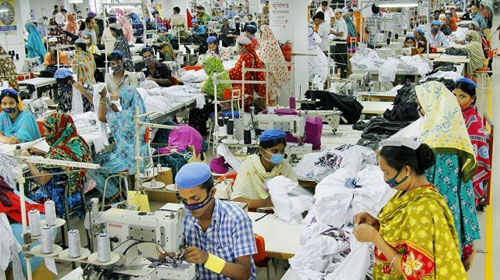 of their goods. For instance they now use laser technology to wash and design their denim instead of water and stone which increase the sustainability of their products.
Bangladesh manufacturers are offering a variety of value-added products, which along with a sense of safe workplace and sustainable act as catalyst to drive growth in the sector. Events like Bangladesh Denim Expo are also helping the country to grow and reach the desired level. Increased fabric manufacturing capacity and other backward linkage have helped the sector to grab a larger market share in the country which currently has 32 denim mills with a capacity of 450 million meters of fabrics per annum.
Diplomacy and negotiations for increasing apparel exports
The current market situation presents further opportunity to increase exports volumes. According to the Asian Development Bank estimates, Bangladesh is likely to earn an additional $200 million from apparel exports over the next two years. To achieve this, the country needs to develop apparel diplomacy and increase its negotiation capacity to improve trade facilities.
Competitive prices and a capacity to execute bulk orders are some of the major contributors to Bangladesh’s success in the export markets. However, the country may no longer benefit from low prices as its production costs have increased. To sustain growth, the country now needs to concentrate on technology-driven manufacturing. It can also attract foreign investments to acquire knowledge and create skilled workforce from the foreign companies.
The Bangladesh government should also provide subsidies in gas and electricity connections to increase its fabric production capacity. This will increase its competitiveness in the market.
EPCH opens lace center in AP
The Export Promotion Council for Handicrafts has set up a lace center in Andhra Pradesh. The center has have facilities such as exhibition halls, an auditorium, an open air theatre, meeting rooms, facilities for a craft bazaar, accommodation for buyers and designers besides an administrative set up etc. The objective is to help craftpersons, artisans, producers and exporters in the east and west Godavari region of Andhra Pradesh to develop new designs, adopt new production techniques of lace products, do marketing and exports through exhibitions and craft bazaars etc. This center will also enable the producing and exporting community to interact with foreign experts, designers and buyers with regard to product development and exports.
It is estimated that more than one lakh women artisans are involved in making lace products part time. More than 80 per cent lace exports from India originate from the east and west Godavari regions. EPCH has also taken various initiatives for enhancing the design and quality of lace and lace products by organising skill development programs in different segments such as stitching and garmenting, dyeing and capacity building and value added skills on crochet. India’s overall handicrafts exports have grown 15.46 per cent over last year.