FW
Fashion industry’s environmental impact, brands team up to chalk way forward
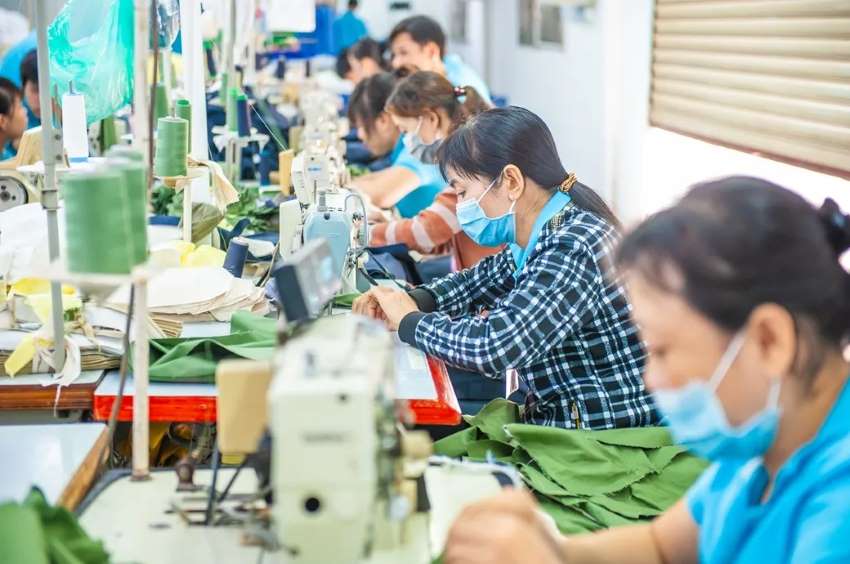
"A major source of environmental contamination, the global fashion industry, emits 10 per cent of the greenhouse emissions annually. Due to its long supply chain and energy-intensive production, the industry consumes more energy than aviation and shipping combined. As most of the clothing manufacturing is now undertaken in India and China, coal-fired power plants and GGEs predominate while employee rights are ignored."
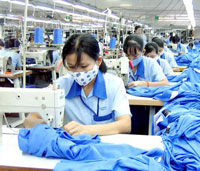 A major source of environmental contamination, the global fashion industry, emits 10 per cent of the greenhouse emissions annually. Due to its long supply chain and energy-intensive production, the industry consumes more energy than aviation and shipping combined. As most of the clothing manufacturing is now undertaken in India and China, coal-fired power plants and GGEs predominate while employee rights are ignored. Though the western companies outsourced jobs by moving their production to these companies, they also increased the impact of pollution and environment in these countries, threatening the health of local people.
As per Natural Resources Defense Council (NRDC), textile factories in China, which makes over 50 per cent of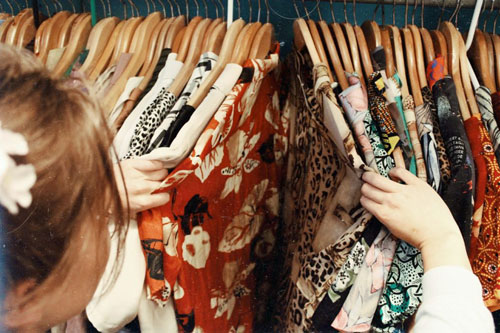 the world’s clothing also releases three billion ton of soot every year by burning coal, contaminating the air leading to respiratory and heart disease. Textile mills generate 20 per cent of the world’s industrial water pollution and use 20,000 chemicals, many of them carcinogenic. Textiles are the largest source of synthetic fibers in the oceans, micro-plastics get into the water system every time garments are washed; the UK House of Commons Environmental Audit Committee on fashion reports that “a single 6kg domestic wash has the potential to release as many as 700,000 fibers.”
Fast fashion causes immense damage
Different fabrics impact the environment at different levels. Synthetic fibers like polyester, made from crude oil (fossil fuel), produce higher levels of GGEs compared to natural materials. However, it can be recycled, is more stain-resistant, can be washed in cold water and dries quickly. Conventional cotton causes deforestation and loss of biodiversity, and is responsible for 18 per cent of all pesticides and 25 per cent of insecticides. Cotton also consumes around 2,700 liters (715 gallons) of water to make a single t-shirt.
The material also uses huge amounts of water for its dyeing process. According to the World Resources Institute, globally 5 trillion liters (1.3 trillion gallons) of water are used each year for fabric dyeing. The most polluting area of the apparel industry, fast fashion, produces 50 ‘cycles’of clothing every year. Increasing consumerism, this fad has led to huge amounts of waste and cause immense environmental damage. It needs to be stopped urgently.
Creating a holistic experience
The fashion industry, since long has been advocating strong measures to stop its damaging effects on the environment. Last year a group of organisations, under the umbrella of the United Nations Climate Change, created the Fashion Industry Charter for Climate Action (FICCA), launched at COP24 in Katowice, Poland, in December. The FICCA aims to reduce greenhouse gas emissions by 30 percent by 2020 and achieve zero emissions by 2050. Its 43 founding companies include brands like Adidas, Burberry, Esprit, Guess, Gap, H&M, Kering, Levis, Puma, PVH and Target.
To reduce the catastrophic impact of fashion, brands plan to review their production methods and water use, curtailing demand, moving from conventional to organic cotton and from virgin polyester to recycled polyethylene terephthalate (PET), collecting and recycling unwanted garments. In addition to these brands, governments should also introduce public information policies to make people aware of the environmental impact of living a certain way and introduce maintenance classes in schools. All product-based companies should make their consumers aware about the environmental impact of their products and methods, as well as the human cost. They also need to regulate their advertising campaigns.
To address this environmental catastrophe, brands need to create social justice and a holistic life experience in their countries. They also need to eliminate competition and conformity from their society, reject its focus on brand image and also curtail the tendency to imitate. The challenge of environmental pollution can be overcome by moving away from a life based on desires and cultivating the natural world and the art of living harmlessly. Brands also need to pressurise the government to halt this catastrophe before it gains mammoth proportions.
Clothes get personal with a new cloud-based platform
"McKinsey & Company in its State of Fashion 2019 report had stated the trend towards personalisation is gaining speed. Driven by the benefit of reduced lead times, this trend will be led by small-scale players and a new generation of customised clothing start-ups who will create a new definition of ‘made to measure’ by taking up on-demand production."
 McKinsey & Company in its State of Fashion 2019 report had stated the trend towards personalisation is gaining speed. Driven by the benefit of reduced lead times, this trend will be led by small-scale players and a new generation of customised clothing start-ups who will create a new definition of ‘made to measure’ by taking up on-demand production.
For personalised looks and fits
Céline Choussy, Chief Marketing and Communications Officer for Lectra says, personalisation could solve a host of challenges currently facing the apparel market. It could minimise returns and markdowns on inventory and stores, making it a profitable business. However, the current apparel industry is ill-quipped to capitalise on this opportunity. Built on a massive scale, most apparel chains do not have the set up for one-off garments.
To tackle this challenge Lectra developed a new cloud-based platform known as Fashion on Demand. The platform is designed to harness machine learning and the IoT to digitise and streamline everything from orders to cutting. It is suitable for businesses planning to create capsule collections through those ready to scale personalised offerings. With Made to Order package, brands can create small series of standard products. Made to Customise allows for customisation of patterns and design elements, and Made to Measure provides for truly personalised looks and fits.
Automated processes compensate human skills
The platform is designed to give the whole team visibility into the process and the right data to make decisions. The production process at this platform begins with the order manager, which can automatically pull orders from companies’ ERP systems and place them into the production queue. The materials manager then takes information either entered manually or through and ERP and creates editable markers, which are sent to the cutting machine. Finally, the system manager controls offloading, picking and bundling workflows to optimize efficiency, limiting the manpower needed in the cutting room.
The automated tasks compensate for skills like marker making. It gives fashion brands more confidence in their workflows besides providing them with a process security as it does not involve human intervention especially in matched fabrics. This also reduces human errors in the process takes non-values added tasks out of the operation.
Shorter lead times and quick alterations
Ultimately, automation shortens lead time and its digital processes also enable easy alternations. Through this platform, brands can also create small series, limited editions and quick assortments. It allows brands to be very reactive and adapt their collection to their consumers’ needs. This is exactly what makes personalisation effective for brands and increase the loyalty of their customers.
Fashion World Tokyo attracts over 800 exhibitors
Held from March 27 to 29, 2019, Fashion World Tokyo covered the whole fashion supply chain. The show attracted 813 exhibitors from 31 countries and regions, 17,103 trade visitors and 7,686 conference attendees. There were a lot of Asian clothing manufacturers. Among them were exhibitors from Bangladesh, China, Hong Kong, India, Japan, Nepal, Pakistan, Taiwan and Vietnam.
Launched in 2013, the event is the best gateway for international exhibitors to meet business buyers or partners not only from Japan but also from Asia and other areas of the world. With an increasing number of international visitors, the show is regarded as the Asian business hub of the fashion industry.
The Japanese fashion market is the world’s third biggest. The show gathers factories known for low cost, high quality, flexibility in order size and skilled craftsmanship. World’s leading apparel and textile factories chose to exhibit at Fashion World Tokyo to expand their business. A matching system enables both exhibitors and visitors to make appointments. This is a guided tour for visitors. Since it is extremely difficult to view every single exhibitor in detail during the show, the service is highly appreciated by many buyers. Some of those meetings ended up with on-site ordering.
India: Textile and apparel exports register marginal growth in FY19
As per the Confederation of Indian Textile Industry (CITI), India’s textiles and apparels exports in the fiscal 2019 grew 1.66 per cent to $35.969 billion as compared to $35.381 billion in the previous fiscal, mainly due to a sharp drop in the shipment of apparels. Export of textiles products grew by 6.19 per cent to $19.830 billion during the fiscal under review as compared to $18.674 billion a year ago. Apparels exports declined by 3.40 per cent to $16.138 billion as against $16.706 billion in the previous financial year
Amongst textile products, cotton yarn/fabrics/made-ups, handloom products continued to be the largest export earner with a growth of 9.22 per cent, man-made fabrics exports increased by 3.15 per cent to $$4.978 billion as against $4.824 billion in the previous fiscal.
The carpet segment registered a growth of 3.63 per cent to $1.481 billion as compared to $1.429 billion in fiscal 2018.Exports of textile products and apparel in March 2019 grew by 6.96 per cent to $3.550 billion as compared to $3.319 billion in March 2018.
However, the monthly index of industrial production (IIP) of textiles declined (y-o-y basis) in February 2019. Exports of apparels registered a positive growth y-o-y in March 2019 which shows a positive correlation with increase in IIP of apparels in February 2019.
Suppliers in a bind over Gap
Gap’s decision to bifurcate may prove challenging for suppliers. Companies that sell to both Old Navy and Gap might find themselves in a more competitive environment. The different directions being taken by the chains, with Gap closing stores and Old Navy expanding, could pose advantages and disadvantages. But suppliers can benefit from Old Navy’s independence and growth because they will have better order streams.
Gap has decided to create two independent publicly traded companies. One is Old Navy and the other is a yet-to-be-named company that will consist of the Gap brand, Athleta, Banana Republic, Intermix and Hill City. The spin-off is intended to enable each company to maximize focus and flexibility, align investments and incentives to meet its unique business needs and optimize its cost structure to deliver profitable growth. There are real benefits for both companies in sourcing, which have contributed to the reason they decided on the split. Old Navy’s business model and customers had increasingly diverged from the company’s specialty brands over time. So, Gap decided to create two separate companies with distinct financial profiles, tailored operating priorities and unique capital allocation strategies. Old Navy is Gap’s leading brand comprising 47 per cent of sales.
Russian demand for synthetic fabrics increases
In recent years, demand for synthetic fabrics in Russia has increased significantly. Imports account for around 90 per cent of the local market. Much of the products come from China. In value terms, imports are growing at ten to 12 per cent. The market currently varies in the range of 2,50,000 to 2,70,000 tons a year in volume terms and has big potential for further growth, thanks to its rich raw material base and a well-developed petrochemical industry.
The hope is that in the near future Russia will be capable of replacing up to 50 per cent of imported synthetic fibers with its own production. The raw material base for the establishment of such production exists. All that needs to be done is to add some missing components in these technological chains, which will allow Russia to produce synthetic fibers at a lower cost. Implementation of these plans will provide an opportunity for the launch of large-scale commercial production of innovative fabrics in Russia.
Several years ago, there were plans to build a facility for the production of polyester fibers, as well as other raw materials, which are used in domestic technical textile production. The project was to have the capacity to produce up to 1,75,000 tons of polyester fibers and 30,000 tons of textile PET granulate a year. However the project was dropped.
Pakistan hopes for a surge in textile exports
Pakistan is expecting textile exports to grow. The value added sector is operating at almost full capacity and many big players are in the process of expansion. There are multiple reasons for exuberance – currency devaluation, subsidy to textiles, and availability of energy at competitive rates. One big booster is improvement in perception. The overall image of the country is improving and the opening up of visa regimes is helping as well. Buyers are visiting and new orders are being placed.
With the tariff war between the US and China, and protests against low wages in Bangladesh, buyers are thinking of diversifying from these two markets. Pakistan has the opportunity to grab a bigger share. However, building the requisite backward linkages is required. Without enhanced cotton production, it is hard for the textile industry to reach its true potential. One of the reasons for the erosion in competitiveness is the fall in Pakistan’s cotton production. The seed industry needs to be regulated and serious consolidation is required to improve the yield. The other factor is to do away with price support to other crops such as sugarcane which has resulted in substitution of sugarcane for cotton. Another need is to find new markets.
Eco India focuses on Doodlage initiatives
The second season of Eco India – a collaboration between Scroll.in and DW, focuses on the initiatives by a Delhi-based fashion brand Doodlage which makes chic garments with scraps of waste cloth. Designing clothes out of scraps of fabric and second-hand garments, Doodlage’s creative team dreams up new designs and sells its wares in 30 shops and online.
Doodlage up cycles fabric waste that chokes landfills. It collects this waste from large fabric manufacturers to create fashion products. In this process, Doodlage also ends up generating waste. But unlike other brands, this waste is shredded to create new fabric that goes into home furnishings and bags. The brand, targeted at anyone between 18 and 45 years, makes ethical fashion for all.
Every week, Eco India – a sustainability magazine highlights Indian eco heroes, often regular citizens, environmental activists, organisations and even kids, addressing a pressing ecological issue in their community.
It brings stories, people, challenges and innovations that are changing India’s approach to environmental issues. With this local focus, EcoIndia puts a spotlight on India’s movement towards sustainable and ecological development – one person, city and region at a time. Some highlights include entrepreneurial solutions to metropolitan waste management, cleaning rivers and fighting noise pollution.
Each episode of the show also includes segments on European cities and sustainable practices that demonstrate how environmental preservation is truly a global issue and solutions require international cooperation
Leading Vietnamese brands to participate in Global Sources Fashion Show
Over 30 leading Vietnamese producers of garments, textiles, handicrafts and fashion accessories will showcase their products at Global Sources Fashion Show this year. The major goods to be displayed include apparel, fashion jewelry, underwear, swimwear, bags, luggage, scarves, footwear and fabrics.
The four-day show will feature verified suppliers from major fashion manufacturing hubs, including Vietnam, China, Hong Kong, Taiwan, the Republic of Korea, Bangladesh, India, Indonesia and the Philippines. Exhibitors from Vietnam include members of the Vietnam Textile and Apparel Association (VITAS), Vietnam National Textile and Garment Group, and Handicraft and Wood Industry Association of Ho Chi Minh City.
With over 1,800 booths, the fair is expected to welcome 12,000 buyers from 150 countries and territories, including the US, the European Union, Hong Kong, Japan, Brazil, Mexico, Middle East, and South Africa, among others. The one-stop sourcing show is expected to witness growing participation from branded firms, including more than 500 exhibitors worldwide promoting their own designs and brands.
The event will also feature fashion parades and industry-related conferences, according to the organiser Global Sources.
Global activewear grows at six per cent
The global activewear market is growing at a CAGR of 6.5 per cent. The market is helped by a global cultural shift toward health and fitness. Companies are favoring a casual dress code and consumers are demanding more comfortable clothing.
Women’s sports bras, vests and tank tops are becoming more acceptable for not just athletic activity but for daily wear. Spacer fabric plays an important role in creating padding and support. In the past, sports bras were made using a spacer fabric knitted in a uniform thickness, and would add additional padding for support or to create a push-up effect. With the new generation of spacer fabric technology – the sculpted spacer – manufacturers can knit in a way that corresponds to the natural size and shape of women’s bodies, enhancing comfort with form-fitting support. The curved spacer is also a manufacturer’s dream – rather than attaching padding after the sports bra is sewn, the sculpted spacer is sewn all at once, eliminating several steps of the production process.
Yoga pants and leggings are the quintessential athleisure garment, but they wouldn’t have reached their pinnacle of popularity if it weren’t for four-way stretch fabric. Compared to the two-way stretch, it can be stretched during exercise without exposing the wearer’s skin. Further, four-way stretch fabric provides excellent elasticity to protect and support the body, while also allowing freedom of movement.