FW
Plus size gets into mainstream retail in the US
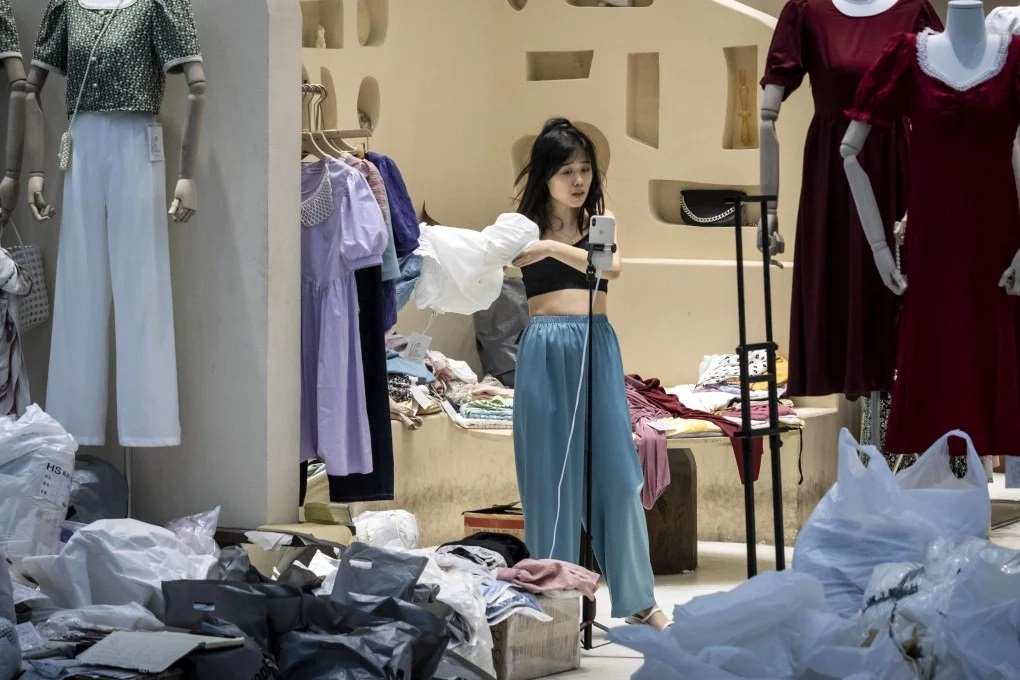
Retailers in the US are rolling out trendy plus-sized collections. They are dedicating more time and resources into developing plus-sized collections — a sign they are starting to see them as bigger potential revenue streams than they have in the past. They aim at giving plus-size customers the same trends, same colors, same wonderful print and patterns that are available in other women’s lines. The pieces have bright colors and prints, trendy cuts, and fun details, rather than the historical plus-sized collections from traditional retailers whose offerings don’t expand much beyond neutrals and basics.
Retailers are starting to increase the size spectrum of brands carried in-store and online. Mannequins with a variety of body shapes are being used to display clothing, so more women have another tool in-store to figure out what type of clothing will work with their body type. The point is to get the industry to stop thinking of plus size clothing as a separate entity. Traditional retailers risk falling even further out of touch with the plus-size market if they don’t give their plus-size lines the same attention, both in-stores and online, as other collections. So far traditional retailers were marketing plus size collections differently from other women’s apparel lines.
Asda’s brand George turns to recycled polyester
George will use only recycled polyester in its collections by 2025. The brand, which is the second largest clothing retailer in the UK, will further increase transparency around its supply chain by publishing a list of its second-tier apparel factories – those typically dyeing, printing and finishing garments – on its website, joining its existing list of first tier factories, where clothes are cut, sewn and trimmed.
George, the fashion and homewares arm of the supermarket Asda, will also extend its work on microfiber shedding. The retailer will also help its customers to understand more about the sustainability of their garments and how to reduce the environmental impact, with increased visibility of garment care and awareness of how they can repurpose, reuse or recycle old clothing. George has a zero-tolerance policy towards incineration and donates garments that cannot be sold to charitable organisations to be repurposed.
The products launching in the retailer’s spring/summer range include blouses and dresses made with fabric from recycled polyester clothing. George’s sustainability strategy builds on the work it has done to date and sets stretching targets and commitments to reduce the environmental and social impact of its products. Asda is currently performing tests to understand the extent of shedding from different fabrics.
Accord finds boilers unsafe in Bangladesh
Accord has found safety faults in many readymade garment factory boilers in Bangladesh. The platform of European brands and buyers inspected 35 boilers of 17 Accord-covered readymade garment factories and found faults in all the boilers. The boiler equipment at the factories was inadequate or defective. Four factories required immediate boiler shutdown due to critical safety findings.
The inspection identified calcium build-up, which reduces the capacity of the boiler and it can corrode the boiler wall, reduce efficiency, and lead to leakage and spray of boiling water. The inspection also found boiler components/parts missing such as no or inadequate pressure valves, no or inadequate pressure monitoring systems, faulty electrical wiring and incomplete or non-existent technical data sheets. Five boilers did not have the required certification of the Bangladesh Chief Inspector of Boilers and they had been produced by an uncertified manufacturer. Boilers that have not been produced, installed and maintained following international and Bangladesh boiler standards constitute a potential life and property threat hazard.
A group of five Accord engineers were trained by international boiler inspectors from Germany for the inspections. The boilers selected for inspection were a representative sample of different sizes, fuel supply, types and capacities of boilers used in garment factories in Bangladesh.
Yarn Expo spring edition sees 9 per cent increase in visitors
"This year’s Yarn Expo Spring saw a 9 per cent increase in visitors. The show welcomed 28,302 visitors from 87 countries and regions. Around 468 exhibitors from 12 countries & regions showcased their latest offerings at the show. The fair covered 26,000 sq. mt area at the National Exhibition and Convention Centre in Shanghai."
 This year’s Yarn Expo Spring saw a 9 per cent increase in visitors. The show welcomed 28,302 visitors from 87 countries and regions. Around 468 exhibitors from 12 countries & regions showcased their latest offerings at the show. The fair covered 26,000 sq. mt area at the National Exhibition and Convention Centre in Shanghai. Organised by Messe Frankfurt (HK) Ltd and the Sub-Council of Textile Industry, CCPIT, Yarn Expo Spring 2019 was held concurrently with Intertextile Shanghai Apparel Fabrics – Spring Edition, Intertextile Shanghai Home Textiles – Spring Edition, PH Value and the China International Fashion Fair (CHIC). Yarn Expo Spring.
Diverse products, innovations on display
Yarn Expo Spring offers a wide variety of products and innovations. “This attracts trade buyers from throughout the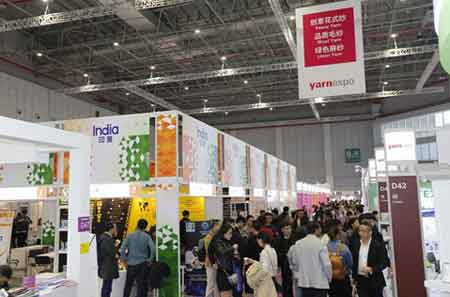 supply chain,” noted Wendy Wen, Senior General Manager of Messe Frankfurt (HK). She said they also witnessed more downstream buyers sourcing directly from exhibitors. “They recognise that the properties of yarns and fibres are essential for ensuring a high-quality end-use product.” The fair welcomed buyers from top brands such as Fila, Guess, Ralph Lauren, Jack Jones and Vero Moda, as well as Adastria, Itochu, Li-Ning, Maracaibo, s.Oliver and a buyer delegation from Korea.
Brands like Sankom, seeking a unique functional fibre, visit Yarn Expo to meet specific sourcing needs. This includes particular yarns or fibres needed to maximise efficiency or sustainability.
Exhibitor happy with the response
Ravindranathan Narayanasamy, Director, The Cotton Textiles Export Promotion Council (Texprocil), India Pavilion organizer said, “Visitors to Yarn Expo are very professional and match our exhibitors’ expectations. This edition also has a lot of new importers. We place a lot of value on this fair.” Manohar Samuel, Senior President (Marketing & Business Development), Grasim Industries leveraged this platform for its own innovation campaign and marketing story.
First time exhibitor Mohamed Al-Fayed, Commercial Director, Perfect Spinning Company, Egypt saw the fair “as a large market for sustainability.” He said, “Worldwide brands, seeking eco-friendly products are attending this fair. This proves beneficial to us.”
Visitors appreciate eco-friendly products
Like the exhibitors, visitors too appreciated the high quality of the show. “The quality and range of suppliers at Yarn Expo is quite high. I’ve already placed an order for 20 containers worth with one exhibitor. Yarn Expo benefits our business as all the major Chinese manufacturers are here, as well as those from Pakistan and India,” said “Asim Raza, Senior Manager, Yunus Textile Mills Ltd, Pakistan” Sebastian Jaramilo, Altex, Columbia, who was particularly looking for eco-friendly products said,” There are a lot of certifications such as BCI cotton available her. Many companies committed to environmentally-friendly policies are also attending this fair. I can meet new connections here, and also place onsite orders with my existing suppliers. So far, I’ve placed orders for 10 containers.”
The next Yarn Expo fair, the Autumn Edition, will be held from September 25 to 27, 2019, at the National Exhibition and Convention Center.
Delay in WTO reforms irks the US
"Dealing a huge blow to the WTO, President Donald Trump in August 2018 threatened to withdraw from the organisation if it fails to upgrade operations to reflect a modern, rapidly changing world. If this threat is executed by the WTO, it would not only impact multilateralism and global cooperation but also the entire international trading system."
 Dealing a huge blow to the WTO, President Donald Trump in August 2018 threatened to withdraw from the organisation if it fails to upgrade operations to reflect a modern, rapidly changing world. If this threat is executed by the WTO, it would not only impact multilateralism and global cooperation but also the entire international trading system.
The Geneva-based WTO facilitates trade deals and settles disputes to help producers of goods and services, exporters, and importers conduct their business. Its 164 members account for almost 98 per cent of all global trade. The organisation recently initiated several measures to boost developing economies through preferential trade policies. One of the reasons why the US plans to exit WTO is it loses all trade disputes settled by the body. The country wins all the lawsuits that are filed by it but loses around 90 per cent of the cases filed by other countries against its trade practices. These rulings threaten the country’s national sovereignty and ability to strictly implement its trade laws.
US’ refuses to nominate new judges to the WTO
The US has also accused the WTO of failing to keep up with changes in the global economy, with rapid growth in services and technology sectors difficult to regulate effectively. The country, which has the power to nominate judges at the WTO's final court of appeal, has refused to allow any new names to be put forward to decide disputes. As the term of several judges on the Appellate Body is likely to expire this year, the US’ refusal to nominate new names would leave less than three judges at the organisation, posing a serious existential threat before it.
Need for unanimous approval delays reforms
In November, the Chinese Ministry of Commerce proposed three fundamental principles and five proposals for reforming the WTO reform. Thus many parties seek reform in the WTO. However, none of them seek the same reform posing one of the biggest challenges to the organisation. Any major change needs unanimous approval from every member. A case in point is the Doha Round of Negotiations, a draft of WTO reforms that still has not been approved by the 164-member body, almost 18 years after first being proposed.
Intertextile Shanghai Home Textiles-spring edition sees a rise in visitor, exhibitor numbers
"The spring edition of Intertextile Shanghai Home Textiles effectively captured business during China’s peak sourcing season for home textile finished products. It attracted 25 per cent more exhibitors and 6.8 per cent more visitors than previous edition. The three-day show welcomed 22,296 visitors compared to 20,870 in 2018 from 60 countries and regions to connect with 291 exhibitors (2018: 232) from 10 countries and regions."
 The spring edition of Intertextile Shanghai Home Textiles effectively captured business during China’s peak sourcing season for home textile finished products. It attracted 25 per cent more exhibitors and 6.8 per cent more visitors than previous edition. The three-day show welcomed 22,296 visitors compared to 20,870 in 2018 from 60 countries and regions to connect with 291 exhibitors (2018: 232) from 10 countries and regions.
The show, organised by Messe Frankfurt (HK) Ltd; the Sub-Council of Textile Industry, CCPIT; and the China Home Textile Association (CHTA), exhibited a wide range of home textile products ranging from bed linen, pillows, mattresses, and cushions, toweling products to textile designs, machinery, silk products etc.
Fringe programs inspires the industry
The comprehensive fringe programme, one of the show’s highlights, continues to draw participants’ attention. This year, the show collaborated with Tmall, to connect the entire industry with innovative ideas. A series of seminars were organized to discuss the most debated topics, including domestic consumption upgrade, took place. Leading home textiles companies shared their thoughts on trends, automation solutions, application of new materials and other subjects, brining valuable insights to the attendees.
Exhibitors, buyers show optimism
The show received widespread appreciation from its exhibitors. As Barry Young, Managing Director, Jaspa Herington, Australia said “the company’s purpose was to meet new buyers and to represent our brands, and the fair is helpful for this.” Sachin Pahal, Anubhav Terry Craft India exhibited at the show because of its high visitor show. “There were serious buyers from Singapore and Latin America. They were all interested in importing our cotton towels,” said Pahal.
Much like the exhibitors, buyers too appreciated the show for its innovative products and ideas. As Mohamad Hammoud, Representative, Phoenix, UAE noted “Intertextile Shanghai has always been my first choice as it helps with my sourcing. This year, I am especially satisfied with the quality of the domestic companies here.” Dharia Farasram, Hwa Sung Trading Company, Korea, whose aim was to check Chinese production technique and services, was particularly impressed “with the latest product collection from fabrics and bedding products to textile machines,”
The next edition of Intertextile Shanghai Home Textiles Autumn Edition will be held from August 28 to 31, 2019.
Smart clothing that functions even in water
Scientists in Korea have developed a textile-based display technology that is washable and does not require an external power source, paving the way for smart clothes. Polymer solar cells have been one of the most promising elements for next-generation power source, especially for wearable and optoelectronic applications because they can provide stable power without an external power source, while organic light emitting diodes can be driven with milliwatts.
However, the problem was that they are both vulnerable to external moisture and oxygen. The conventional encapsulation barrier is sufficient for normal environments. But it loses its characteristics in aqueous environments, such as water. It limits the commercialisation of wearing displays that must operate even on rainy days or after washing. To tackle this issue, the team employed a washable encapsulation barrier that can protect the device without losing its characteristics after washing through atomic layer deposition and spin coating. The encapsulated device exhibited no deterioration in properties over 30 days even after being subject to both bending stress and washing. Since it uses a less stressful textile, compared to conventional wearable electronic devices that use traditional plastic substrates, this technology can accelerate the commercialization of wearing electronic devices.
PolyU showcases 12 collections at PolyU Intimate Fashion Show
The Hong Kong Polytechnic University (PolyU) showcased the creativity and talents of 12 graduating students at the PolyU Intimate Fashion Show held on March 20, 2019 at the Kai Tak Cruise Terminal, Kowloon Bay. The 12 collections were designed and produced by the students majoring in Intimate Apparel and Activewear under the University’s Institute of Textiles and Clothing (ITC), with raw materials sponsored by intimate apparel manufacturers and suppliers.
Four well known personalities from the fashion industry were part of the panel of judges to shortlist the six finalists who were awarded the opportunity to showcase the full set of their design collections at the PolyU Fashion Show scheduled in June this year.
Indian apparel exports up seven per cent in 2019
Indian apparel exports increased seven per cent in February 2019 compared to February 2018. Textile and apparel exports in February 2019 grew three per cent.
Indian exports of manmade yarn/fab/made-ups fell two per cent in February 2019 compared to February 2019. Jute exports (including floor coverings) fell ten per cent. Carpet and handicraft exports too fell three per cent each. India’s share in world trade in textile and clothing is estimated to be 4.95 per cent. With these exports, India is ranked second among suppliers in the world. The stressed advance ratio of textile sub-sector has been improving continuously. From 23.70 per cent in September 2017, the stressed advance ratio of the textile sector has come down to 18.70 per cent in September 2018. The old duty drawback rate which was very attractive came to an end in September 2017. Because of this attractive scheme, Indian exporters advanced their delivery schedules to avail of the duty drawback scheme. Consequently, textile and apparel exports skyrocketed in September 2017. Exports, in September 2018, declined sharply. From that level, however, exports are normalizing which is believed to continue in future as well to end the current financial year flat.
India and the US engage in tit for tat tariff war
The US decision to withdraw GSP preferences to India has come about as a result of the change in foreign direct investment rules in India. The tightened norms that came into effect on February 1 place several restrictions on e-commerce companies, including Walmart and Amazon. Walmart has a reputation of killing small retail businesses with ultra-low prices, a concern that probably influenced India’s decision to tighten FDI rules. While the FDI policy might be irreversible, economic diplomacy can still defuse the situation and prevent the removal of the GSP benefits.
Tensions escalated when India, in response to America’s 25 per cent tariff hikes on steel and 10 per cent levies on aluminium, immediately accused it of unfair trade practices, and, seeking to signal a muscular approach, threatened retaliatory tariffs on US imports.
India’s GSP status came under review after the US medical and dairy industries complained that India was not providing them equitable and reasonable access to its market. India’s use of price control measures against imported drugs and medical devices has grown noticeably. Cardiac stents were put under price controls in February 2016 and knee implants attracted similar action in August 2017, after which trade margins for many medical devices are sought to be capped. US manufacturers complain that in doing so, India has meted out differential treatment to them vis-à-vis domestic players.