FW
Unfazed by global competition local brands dominate interior Chinese market
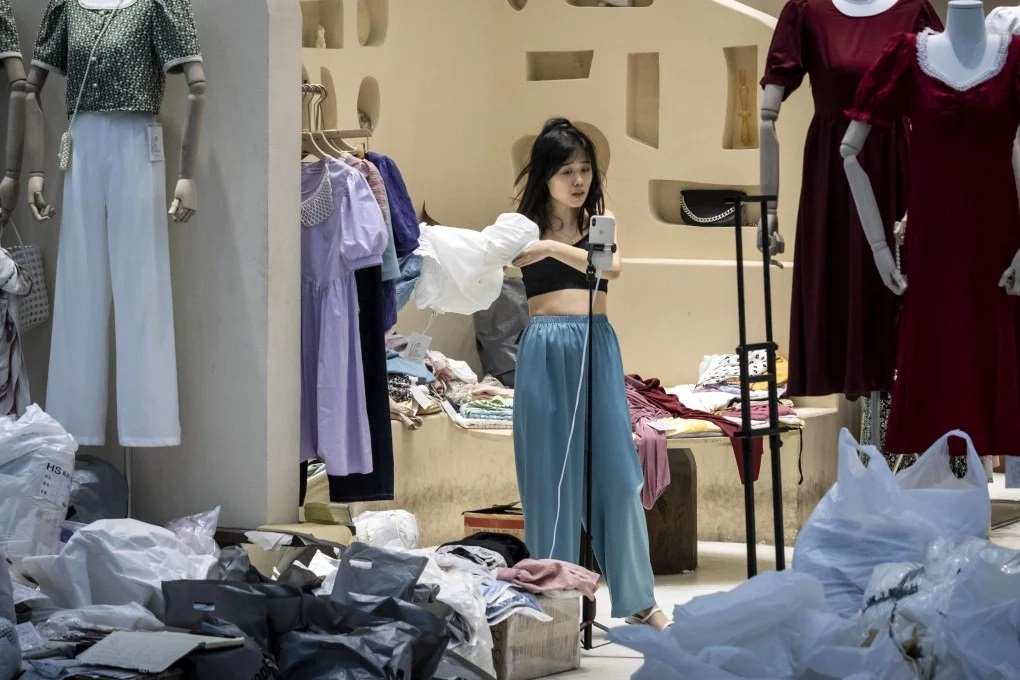
"Fashion brands like H&M and Zara might dominate the global market but penetrating the low cost clothing market in the Taobao villages’ of China is tough for them. The clothing brands operating here are fully domestic. International brands, inspite of their aggressive marketing have failed to make inroads into this market as people living in these parts of China, have never heard of them."
 Fashion brands like H&M and Zara might dominate the global market but penetrating the low cost clothing market in the Taobao villages’ of China is tough for them. The clothing brands operating here are fully domestic. International brands, inspite of their aggressive marketing have failed to make inroads into this market as people living in these parts of China, have never heard of them.
Wholesale clothing factories, traditionally dealing in low-cost apparel, were concentrated in Zhejiang, Fujian and around Guangdong in the Pearl River Delta. These factories would offload their nameless, brand-less, largely design-less goods to small vendors who would truck them around the country to sell at wholesale clothing markets. All this changed with the rise of Taobao: the platform that unlocked the ability of Chinese consumers.
Focusing on core competencies
According to Alibaba’s research arm, AliResearch, 10 per cent households in these Taobao villages run stores,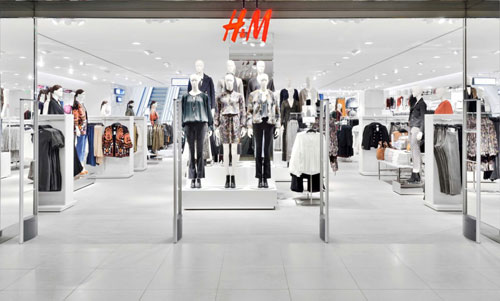 with their total annual online revenue reaching at least 10 million yuan (about US $1.5 million). There are currently more than 1,000 such villages in China.
These villages focus on a niche category. Hongxing, in China’s eastern Jiangxi province, makes jackets, with 420 companies in a village devoted to manufacturing and distributing puffy outerwear to Chinese consumers. Every year, the village makes 2.5 billion yuan (US $360.2 million) in revenue from jackets, more than 1 billion yuan (US$144 million) of which comes from Taobao sales.
Traditionally, low-cost Chinese brands won market share by covering the country’s shopping centres and high streets with thousands of brick and mortar stores — still a viable strategy for major players such as the aforementioned Metersbonwe (the founder of which, Zhou Chengjian, has a net worth estimated at US$1.4 billion (by Forbes), Bosideng (founded by Gao Dekang, (who Forbes estimates is currently worth $1.7 billion), plus Ochirly and Five Plus, both owned by Guangzhou-based Trendy Group (founded by Jacky Xu, whose current net worth sits at $1.3 billion).
Local manufacturers have an edge
International mass-market players haven’t been able to gain a foothold among many young Chinese consumers. This is partly due to the first-mover advantage of local brands manufacturing cut-price fashion with remarkable turnaround speeds, but also because China’s post-90s generation don’t necessarily care where affordable clothing comes from — unlike Chinese luxury consumers who place a premium on "made in Europe" luxury. Another problem with these companies is that they didn’t focus on their e-commerce operations even as China’s online apparel market boomed. Their e-commerce sales lagged behind the anticipated 2018 China average online retail spend of 33.6 percent.
As Jason Yu says, China’s low-cost apparel manufacturers currently face the choice of either upgrading to domestic brand status, downgrading to sell their wares on the lowest-tier e-commerce platforms, or shutting down their operations altogether. More complex is the fate of global players, most of whom seem destined to play second fiddle to domestic giants in China’s mass-market apparel sector. Any thought of dominating the kingdom seems to be a like ‘boiling the ocean.’
Burberry gets involved in Afghan cashmere production
Burberry aims at providing a boost to the cashmere industry in Afghanistan. The British luxury fashion brand is trying to promote sustainable agricultural practices. While nearly 95 per cent of the country’s goats are cashmere producing, just 30 per cent are currently farmed for cashmere. Burberry wants that to change.
Afghanistan is the world’s third largest cashmere producer after China and Mongolia. Afghan cashmere is of a significantly higher quality than Iranian cashmere. In Afghanistan, cashmere fiber production is still part of the country’s rural traditions, meshing in some regions with an ancient, rarely changed lifestyle. Many Afghan goat herders have limited understanding about the potential and true value of cashmere, and the project is aiming at addressing such challenges by working with local herders to create community-owned collective action organisations and provide them with the necessary knowledge, technical skills, essential services and access to markets to support sustainable farming and economic development.
By doing so, the overall objective of the project is improving cashmere quality and yield as well as the yield of herders’ goats overall, including meat and dairy production – which in turn would allow herders to obtain a higher value for their goats. A training program will be introduced for herders, on how to safely remove cashmere fibers from the goats.
IFC launches textile project in Pakistan
The International Finance Corporation (IFC) has undertaken an initiative aimed at supporting Pakistan’s textile industry’s efforts to reduce energy consumption with a view to improving sustainability. This will help Pakistan’s textile industry, especially the clothing sector, to resolve energy-related and environmental issues. Advisory services will be provided to the textile sector in Pakistan. Seminars and training workshops for industry stakeholders will be held for letting them know how to reduce energy consumption and achieve sustainability. The IFC has already done this in Bangladesh.
Another issue that remains to be tackled is how to enhance the productivity of the industry. Small and medium entrepreneurs, who account for 95 per cent of the garment industry, need upgraded technology. Pakistan garment sector’s productivity is at least 30 per cent less than that of Bangladesh.
Marketing is another problem faced by the country’s textile and garment sector. More investment and a well-conceived and well-planned marketing strategy are needed to showcase products globally. In this respect Pakistan is far behind Bangladesh and other competitors such as India and China.
Currently, Pakistan’s textile and clothing industry delivers 57 per cent of the country’s total exports. But raw cotton, cotton yarn and cotton cloth exports have shown negative growth of between 18 per cent and 62 per cent.
Faisalabad, Pakistan’s Manchester faces a crisis, workers rally against new taxes
"The textile industry in Faisalabad, known as the little Manchester of Pakistan, has been facing a severe financial crisis ever since the federal government announced its 2019-20 budget. The government has imposed a 17 per cent sales tax on the textile sector, which resulted in several processing units going on strikes and refusing to corporate with other stakeholders in the industry. Around 100 out of the total 150 units of the processing industry have been dysfunctional since the last 12 days."
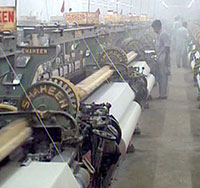 The textile industry in Faisalabad, known as the little Manchester of Pakistan, has been facing a severe financial crisis ever since the federal government announced its 2019-20 budget. The government has imposed a 17 per cent sales tax on the textile sector, which resulted in several processing units going on strikes and refusing to corporate with other stakeholders in the industry. Around 100 out of the total 150 units of the processing industry have been dysfunctional since the last 12 days. This closure has not only disrupted the entire processing chain but also forced several weaving and power loom business to shut down.
Power loom businesses take initiatives to restore businesses
Power loom businesses in Pakistan are highly unorganised with the sectors scattered in different parts of the city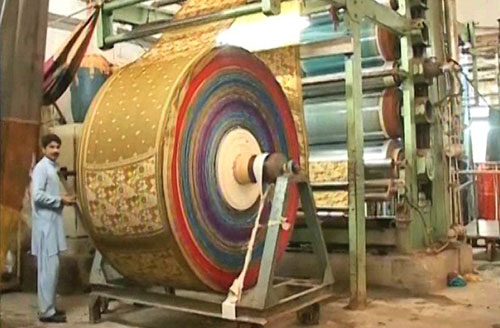 such as Ghulam Abad, Sidhu Pora, Jhan Road, Thikriwala, and Baowala, etc. They hire laborers on a daily basis. The closure of these units has therefore left, several laborers without a job. The closure of many processing, weaving and sizing units too has deprived many laborers of their wages.
These workers have now started taking initiatives to restore work in these factories. Under the leadership of Labor Leader Latif Ansari, the workers recently organised a protest camp to demand their jobs back from these factories. Most of these workers are already under severe financial pressure as they are the only bread winners of their houses. They have to pay heavy utility bills besides bearing the increasing costs of edibles and daily consumptions. The therefore believe that the government should take more initiatives for the betterment of the factory bazaars.
Traders follow
Recently, traders of around eight bazaars also announced their decision to go on a strike against the imposition of the sales tax and the condition of mandatory CNICs for business. Aslam Bhali, the Chairperson of the Traders Association says, these small shopkeepers cannot deal with such financial hurdles as they are already struggling to find good customers.
WTO to decide on US tariffs
The World Trade Organization (WTO) has agreed to hear grievances from a number of countries over new US steel and aluminium tariffs, as well as complaints from Washington over retaliatory duties. The Dispute Settlement Body (DSB) of WTO approved the constitution of panels to review US decision to hit a long line of countries with tariffs of 25 per cent on steel and ten per cent on aluminium.
Earlier, the European Union, China, Canada, Norway, Mexico, and Russia had confirmed they would escalate their disputes by starting adjudication proceedings, while the US wants dispute panels against Canada, China and the EU. The Dispute Settlement Body will create separate panels for the complaints by the European Union, China, Canada, Mexico, Norway and Russia, after the US said it would not agree to a single panel to hear all of them. A seventh request from Turkey for a panel will be discussed during a meeting later.
The DSB also agreed for a panel which will review certain Chinese measures pertaining to the protection of intellectual property rights as demanded by the US. While imposing the tariffs, the US justified it and said it’s a matter of national security. Exporter countries say the United States should compensate them for the damage, and have imposed their own tariffs in response.
Turkey apparel exports up four per cent
Turkey’s readymade clothing and apparel exports rose 4.6 per cent in the first 10 months of the year compared to the same period previous year. The aim is to reach $18 billion at the end of 2018 and $19 billion at the end of 2019. The apparel sector contributes 10.7 per cent to Turkey’s overall exports and 13.1 per cent to industrial exports.
The EU is the biggest market for Turkey’s ready-to-wear and apparel sector. This is followed by Germany, Spain, Britain, the Netherlands, France, Iraq, the US, Italy, Denmark and Israel.
As for other markets, there was a 48 per cent increase in exports to Russia, one of Turkey’s largest trading partners, followed by a 30 per cent increase in exports to China, the world’s largest ready-to-wear supplier. Exports to Qatar rose by 102.4 per cent, by 65 per cent to Libya, 50 per cent to Slovakia, 40 per cent to Serbia, 35 per cent to Egypt, 28 per cent to Romania, 25 per cent to Albania and 24 per cent to Kazakhstan.
Turkey’s readymade clothing and apparel sector, which has assumed the role of a pioneer, does value added exports and contributes to employment and exports.
Texprocil presents annual exports awards
The Cotton Textiles Export Promotion Council (Texprocil) presented 56 awards across 32 categories to 36 companies this year. Smriti Zubin Irani, Minister for Textiles, presented the awards in Mumbai. The criteria laid down for selecting the winners included their export performance for the year 2017-18 with the weightage on percentage increase in their total export, breakthrough in the market and focus on product development etc. This year a category on generating highest employment was also added.
Top players received accolades in different categories. Vardhman Textiles was honored with six different awards while Trident and Welspun each got four awards. In the category ‘Other Fabrics’ including embroidered lace etc, Atlas Exports got gold and Alok Industries achieved silver.
Special achievement awards were given to GTN Textiles for yarn; Paramount Textile Mills for fabrics and Premier Fine Linens for madeups. Globe Cotyarn got the gold award for the highest employment generation as did BVM Overseas, the yarn division of Sintex Industries. It is pertinent to mention that 22 out of 36 award winning companies this year received the awards last year as well.
Texprocil has a membership of around 3,000 companies spread across major textile clusters in India.
Myanmar hosts workshop on fair practices in apparel segment
A workshop on how to effectively implement global framework agreements (GFAs) in the textile and garment industry of Myanmar took place recently. The aim was to ensure that under GFAs workers’ rights are respected in the supply chain at all global operations of multinational companies.
More than 60 per cent participants were young trade unionists. The workshop included a presentation on GFA brands in the textile and garment sector and the importance of signing an agreement with multinational companies as a means to build better industrial relations.
Participants discussed how they could use global framework agreements for organizing and how to apply brands’ leverage for workers’ rights under any rights violations. The participants continued with mapping of multinational companies in the textile and garment sectors, and looked at ways of overcoming the difficulties of organizing a new workplace.
Trade unionists raised questions on gender discrimination, outsourcing of some jobs, the differences on rights in an agreement and in reality, violations against unionization, fair wages and fair treatment under a GFA. An attorney from Myanmar gave a talk on workers’ rights violations in Myanmar, legal rights and implementation. Participants closed the workshop with new organizing plans under GFAs and future mapping ideas.
December denim show in London
Denim Première Vision will be held in London on December 5 and 6, 2018. The show will welcome 89 exhibitors, compared to 80 a year ago. Among the companies present will be:, Advance Denim, Albiate 1830, Artistic Denim Mills, Artistic Fabrics and Garment Industries, Artistic Milliners, Arvind, Berto, Bossa Denim, Calik Denim, Kurabo, Kuroki and Raymond UCO Denim.
The spring/summer 2020 season will be divided into four fashion themes, discover, care and share, performance perspective and personalization. The first day will be dedicated to conferences on topics related to fashion, while the second will focus on eco-responsible denim. In addition to round tables on respectful denim, a smart library will show samples and innovations of selected exhibitors and a smart wardrobe will present finished products conceived thanks to eco-responsible materials and production processes.
Following the launch of the Première Vision Marketplace, its market space for fabric samples, in the latest edition of Première Vision Paris in September, the team responsible for this pole will be available to give information to exhibitors and buyers about the tool. This marketplace will welcome the suppliers of the leather sector next February and the exhibitors of the denim sector in June. Manufacturers of textile accessories will join them in September.
Pakistan opens door to Afghan cotton
Pakistan has allowed the import of cotton from Afghanistan/ Central Asian states via the land route. The objective is to bridge the demand and supply gap in the textile sector. The textile industry of Pakistan consumes around 12 to 15 million bales of cotton per annum.
The cotton imports will be subject to all sanitary and phytosanitary regulations. A permanent quarantine facility will be set up for cotton imported through the land route. Cotton is a sensitive crop. It attracts a variety of pests and a fumigation process is a must to counter such threats.
Meanwhile Pakistan will withdraw sales tax and customs duty on imports of cotton. This is to encourage value addition, reduce the cost of doing business and bridge the gap between production and consumption.
Pakistan has been a net cotton importer since 2001. The country produces short to medium staple length cotton which implies that long and extra long staple cotton has to be imported for production of finer yarn counts for subsequent transformation into high value added finished products. Import of cotton remained duty free till zero per cent slab was abolished in 2014-15 and customs duty of one per cent was imposed along with a five per cent sales tax.