

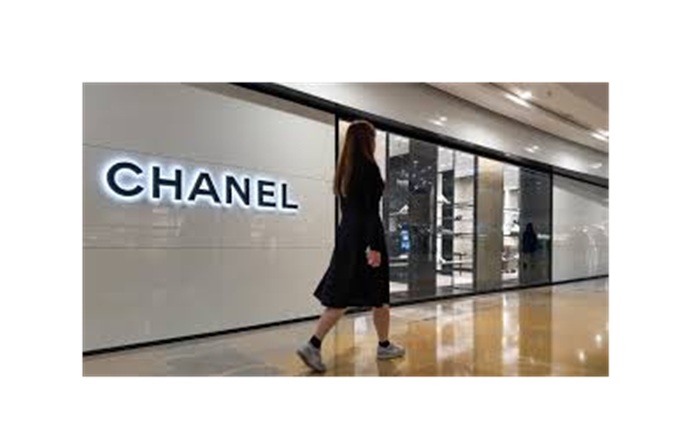
The global luxury hierarchy has been quietly rewritten, and not by sales alone. In Q1 2026, Chanel rose to the top of the Lyst Index for the first time in its history, along with Dior debuting at No. 3. This is not a routine reshuffle; it is the outcome of a shift in how ‘brand heat’ is measured, monetised and sustained in a digitally mediated market.
New currency of luxury, from sales to signal
Lyst’s methodological overhaul marks a decisive break from legacy metrics rooted in sell-through and inventory velocity. The new framework, centred on desire, demand and discovery boosts cultural relevance into a quantifiable commercial driver. In this system, visibility across AI-powered search ecosystems, creator networks and secondary marketplaces becomes as critical as boutique performance.
Chanel’s rise exemplifies this transition. Demand for its reinterpreted Maxi Flap bag, combined with a 45 per cent increase in interest around vintage tailoring, reflects a consumer no longer shopping by logo alone. Instead, purchasing decisions are being filtered through aesthetic alignment, what the product signals within a broader cultural narrative. Luxury, in effect, has become a language, and brands are now judged on fluency rather than scale.
Table: Reading the leaderboard
|
Rank |
Brand |
Movement |
Key driver |
|
1 |
Chanel |
New Entry |
Cultural dominance & pricing power |
|
2 |
Saint Laurent |
-1 |
Consistent creative leadership |
|
3 |
Dior |
New Entry |
High-profile couture events |
|
4 |
Miu Miu |
-2 |
Gen Z community conversation |
|
5 |
Gucci |
+4 |
Creative reset momentum |
|
6 |
Ralph Lauren |
-2 |
Heritage demand stabilization |
|
7 |
Prada |
-2 |
Product lifecycle longevity |
|
8 |
Coach |
-2 |
Accessible luxury resilience |
|
9 |
Burberry |
-1 |
Outdoor & utility trends |
|
10 |
COS |
-7 |
High-street saturation |
What stands out is not just who leads, but why. The top tier is dominated by maisons that have mastered cultural storytelling at scale. Chanel and Dior are no longer just selling products; they are orchestrating narratives that travel seamlessly across digital and physical ecosystems. Meanwhile, the volatility in the mid-tier signals a deeper stress. COS’ sharp fall alongside softness across the ‘premium essentials’ category, suggests that minimalism without narrative is losing traction. In a market driven by expressive consumption, neutrality has become commercially fragile.
Creative direction as a growth driver
Among the movers, Gucci’s climb to No. 5 is particularly instructive. Its post-reset momentum, punctuated by a double-digit spike in demand following its Milan showcase, reinforces a critical insight: creative direction is once again a primary growth lever. In a market saturated with product, differentiation now hinges on point of view.
This has broader implications. The cyclical nature of fashion leadership is being compressed, with brands able to gain or lose relevance within a single season. The velocity of digital amplification has shortened the feedback loop between runway and revenue.
The Zara playbook, where speed meets culture
If luxury is redefining aspiration, high street is redefining agility. Zara emerged as the quarter’s breakout player by aligning itself with cultural flashpoints rather than seasonal calendars. Its collaboration with Bad Bunny triggered a 300 per cent spike in searches for men’s leather within 48 hours, an outcome that underscores the power of cultural adjacency.
Zara’s strategy effectively decouples price from perceived value. By embedding itself in high-visibility cultural moments and leveraging rapid-response supply chains, it competes not on cost, but on relevance. The coexistence of a viral sub-$5 tote and a Chanel investment bag within the same trend cycle illustrates a fragmented but opportunity-rich market where storytelling trumps price hierarchy.
The squeeze in the middle
The data points to an increasingly polarised market. At one end, ultra-luxury players like Chanel and Dior are pushing pricing boundaries while reinforcing exclusivity. At the other, culturally agile high-street brands are capturing attention through speed and accessibility. Caught in between is the $200-$800 segment, where differentiation is eroding. Without either the cachet of heritage luxury or the immediacy of fast fashion, these brands face a diminishing share of cultural relevance. The implication is clear: the middle is no longer a safe zone, it is a strategic void.
Opportunity in the $1,000-$2,000 Gap
Yet within this disruption lies a clear whitespace. As top-tier brands escalate prices, a gap is emerging for labels that can deliver investment-grade quality at relatively accessible luxury price points. Brands like Saint Laurent and Miu Miu have already begun to capitalise on this by cultivating tightly knit brand tribes, communities that engage beyond transactions and remain resilient across cycles. This community-driven model may well define the next phase of growth. In an attention economy, loyalty is no longer built through ubiquity, but through belonging.
Chanel’s strategic play
At the centre of this transformation sits Chanel, a privately held powerhouse that continues to set the industry’s strategic tempo. Its focus on ultra-exclusivity, manifested through controlled distribution, price increase and experiential retail has allowed it to maintain both scarcity and desirability.
Crucially, Chanel’s strength lies in its ability to bridge heritage and contemporaneity. Founded by Coco Chanel in 1910, the maison has evolved from a symbol of timeless elegance into a masterclass in cultural engineering. Its dominance today is not just a function of legacy, but of its ability to continuously reinterpret that legacy for a digitally native audience.
The Q1 2026 Lyst Index signals more than a reshuffling of ranks, it marks the institutionalisation of a new retail logic. Brand heat is no longer a byproduct of success; it is the engine itself. In this paradigm, the winners will be those who can convert fleeting attention into sustained desire, and desire into measurable demand. For the global fashion industry, the message is unequivocal: relevance is now the most valuable currency. Everything else follows.











