


FW
Asia-Pacific blended fibers market to reach 9 million tons by 2024
"A new business intelligence report by Global Market Insights titled ‘Blended Fibers Market Research Report’ provides comprehensive market analysis with future prospects to 2024. The report predicts the blended fibers market in the Asia Pacific region will be over 9 million ton by 2024. This is driven by growing demand for attractive and corrosion resistant home furnishing products. Surge in demand for handcrafted products coupled with home décor including wall hangings, bed linen products and rugs & carpets will further boost demand."
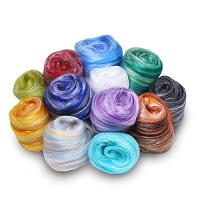 A new business intelligence report by Global Market Insights titled ‘Blended Fibers Market Research Report’ provides comprehensive market analysis with future prospects to 2024. The report predicts the blended fibers market in the Asia Pacific region will be over 9 million ton by 2024. This is driven by growing demand for attractive and corrosion resistant home furnishing products. Surge in demand for handcrafted products coupled with home décor including wall hangings, bed linen products and rugs & carpets will further boost demand.
Blended Fibers Market in recent years has emerged as a niche business catering to some of most pivotal verticals. The industry encompasses companies attempting to recreate fibers that would have minimal impact on the environment. A recent instance of this is the launch of EcoVero, a viscose fiber with low environment impact.
Reycling, upcyling to eliminate waste
As environmental safety is taking precedence over industrial processes, companies are opting for recycling and upcycling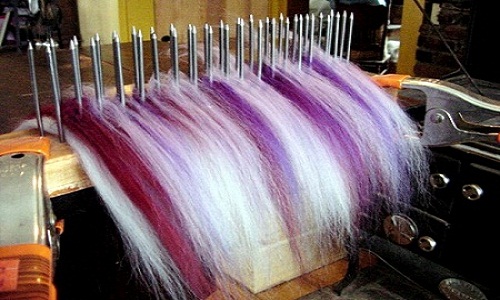 waste for fabric production. Seaqual, the joint venture formed by three prominent companies, recently announced its debut fiber sale that was generated by upcycling plastic waste. This waste was collected on oceanic grounds and is then extracted with the help of 400 partner fishing boats. In essence, with every kilogram of fiber that Seaqual produces, a kilogram of waste is eliminated from the sea.
Low carbon emission yarns save natural resources
Seaqual's yarns can be used as it is or blended with natural fibers for swimwear, denims, ready-to-wear, and sportswear. Despite the fact that these fibers exhibit properties similar to polyester fibers, they save around 50 per cent energy, have 50 per cent lower carbon emission, and reduces water consumption of 40 per cent
$300 billion textile exports by 2024-25
Driven by its massively growing textile and home furnishings sector, India has been touted to emerge as one of the most promising avenues for blended fibers in forthcoming years. In fact, the market is one of India's largest export contributors with around 13 per cent of overall exports in India credited to the textiles sector. The government plans to launch a new textile policy that aims to accomplish a benchmark of $300 billion worth of textile exports by 2024-025. This would significantly impact the share of the regional blended fibers market.
Major growth drivers
The blended fiber yarn market, last year, witnessed a couple of rather pivotal incidences that would have a commendable influence on future Indian market trends in the years to come. These include:
Sutlej Textiles and Industries (STIL), one of most prominent participants of blended fibers market, recently acquired the design and distribution unit and the brand name of the Pennsylvania-based American Silk Mills (ASM). This acquisition is likely to strengthen Sutlej's home textiles portfolio.
Welspun launched its newest collection at Heimtextil India, including quilts, towels, duvet covers, bed sheets, curtains, carpets, rugs, bedspreads, bathrobes, and bath mats. Welspun's initiative is also expected to influence other leaders in the home textiles and interior decor sectors to launch their fabric collections and conform to latest consumer demands.
As research unearth age-old, conventional as well as newer innovations in fiber technology, blended fibers market outlook is likely to witness a dynamic transformation in the years ahead. Incorporating the environment-friendly factor in textile production will also generate a plethora of opportunities for companies.
China to host Yarn Expo in March
Yarn Expo will take place in China from March 12 to 14, 2019. This is a fair for exhibitors to establish their brands, introduce their latest products, and reveal new innovations to their targeted audience. The fair responds to visitor interest by presenting an array of high-quality exhibitors from a variety of countries and regions, including China, Egypt, France, Hong Kong, India, Indonesia, Korea, Pakistan, Singapore, Turkey, Uzbekistan and Vietnam.
Yarn Expo is recognised for its diversity of suppliers, meaning that visitors can do all of their sourcing needs in one place. With more industry buyers sourcing synthetic, fancy and specialty yarns and chemical fibers, the Fancy Yarn Zone will feature almost 50 prominent yarn suppliers from all around the world.
Countries such as Egypt, India, Turkey and Vietnam will present high-quality natural yarns and fibers, including high-end European linen and cotton, as well as an array of eco-fibers and carbon fibers for visitors seeking sustainable, light-weight materials.
Following a year of fluctuating demands and trends in the textile industry, especially in China and the Asia-Pacific region, it’s more important than ever for suppliers to continuously innovate and produce strong products in order to survive in the uncertainty of the recent economic climate.
Microplastic particles released while washing clothes pollute oceans
There is a search for alternatives to petroleum-derived fibers like polyester and acrylic. Natural fibers like cotton and wool have been losing market share to synthetics for some time but the tide is turning.
Currently two-thirds of new clothing is made from synthetic fibers and washing these clothes is significantly contributing to plastic pollution in oceans, with each polyester garment shedding thousands of microplastic particles adding up to tons of ocean plastic pollution over time.
Microplastic fibers carry chemical endocrine disruptors that influence hormone functions and chronic disease. Microplastics in the oceans predominantly come from machine-washed synthetic textiles. The last two decades have seen an escalation in synthetic fiber production along with fast fashion supply chains driving consumption to double.
Progressive retail fashion businesses are now including sustainability and transparency targets in their strategic planning. A sustainable clothing approach includes the realization that less shopping and washing makes household economic and ecological sense.
Growing concern about plastic in our environment sees natural-fiber industries poised for resurgence if they demonstrate eco-credentials to discerning customers. But while technological recycling solutions are emerging, issues include difficulties in separating blended fibers and downgraded quality of reprocessed natural fibers. As the world’s largest natural fiber industry, cotton carries some historical baggage.
Year 2019 to be positive for US retail
American apparel companies are benefiting from retail revival, as well as from cost savings initiatives and acquisition synergies. The positive outlook for the US retail industry reflects increasing topline growth and operating profits, as companies’ investments in e-commerce and in-store shopping experience continue to gain traction. Growth is also getting a boost from a strong macro-economic environment, which will drive consumer spending.
Retail operating income is expected to grow five per cent to six per cent in 2019. Sales growth is predicted to range from 4.5 per cent to 5.5 per cent. Reduced inventories and improved lead times have helped stabilize merchandise margins. Air freight demand has slowed as companies have increased lead times on import orders, allowing them to opt for cheaper ocean cargo.
Operating income for discounters and warehouse retailers is forecast to increase about 2.4 per cent in 2019 after a strong gain in 2018. Among apparel firms, nearly all rated companies will show some form of profit growth in 2019, with the majority exceeding six per cent growth. More companies are seeing the benefits of cost-saving initiatives, acquisition synergies, restructurings, reduced inventory and clearance activity.
UK apparel brands plan to minimize waste
UK consumers are purchasing new clothing at a faster rate than their counterparts in mainland Europe. The average household generates more than 35 kg waste clothing annually, with 85 per cent being sent to landfill. The Sustainable Clothing Action Plan (SCAP) was founded in 2012 in a bid to help big-name fashion brands minimise their waste, water and carbon footprints while sourcing more sustainable materials.
More than 80 companies have signed up to the plan to date, including ASOS, Next and Primark. By selecting more sustainably-produced fibers such as cotton and viscose, SCAP signatories have reduced the lifetime water footprint per ton of clothing they produce by 15 per cent. The signatories have also reduced their collective carbon footprint by 11.9 per cent and have made moves to become more resource-efficient, such as redesigning their approach to pattern cutting or donating factory offcuts to be upcycled.
On a global scale, the fashion industry is now estimated to be producing more than 100 billion garments and 20 billion shoes per year. The sector currently accounts for ten per cent of global carbon emissions and employs around one in every seven people worldwide, with the majority of employees being women working in garment factories.
Taiwan companies scoring in smart textiles segment
Taiwanese manufacturers are developing smart textiles, incorporating devices for temperature control, heart monitoring or position finding. Taiwan is one of the world’s top producers of functional textiles. In order to sustain the nation’s position, producers are investing in modern equipment and innovations, new capacities as well as research and development.
Textile producers in Taiwan are investing in Vietnam. Far Eastern New Century (FENC), the largest textile producer in Taiwan, has enlarged its facilities for PET (polyethylene terephthalate) and terephthalic acid (PTA) needed for the production of synthetic fibers. In Taiwan where FENC has been producing spun bonded fabrics made of polyester in a joint venture with the German company Freudenberg for the Asian market since 1987 the company is increasing its capacities as well. FENC bought two new plants from a US enterprise thus reducing the risk of potential trade restrictions and improving the chances to benefit from free trade agreements.
Textile companies based in Taiwan are often family operated and it is in Taiwan that purchasing and marketing decisions and research and development decisions are made. Demand for functional garments has risen in the sports, leisure and shoe industries. Other sectors like the automotive and medical sectors as well as construction materials and agricultural means have also recorded an increased use.
Textile Exchange opens public stakeholder draft consultation for RDS
Public stakeholder draft consultation for the Responsible Down Standard (RDS) has been opened by Textile Exchange. The standard has been under review for the past year and the International Working Group has presented a list of proposed changes for public review. These changes include a number of recommendations to strengthen the standard in areas that include training requirements, documentation and management systems, and ensuring best practices in animal welfare.
The RDS was originally released in 2014 and has catalysed brands and retailers to align demand around a common set of animal welfare principles. The RDS strictly prohibits live-plucking and force-feeding, alongside holistic requirements such as access to feed and water, proper handling, access to veterinary care and other key elements that ensure the animals are respected. The review included feedback and expertise from a wide range of stakeholders, including animal welfare organisations like Four Paws, RSPCA and Humane Society International.
SPESA, the sewn products event to take place in January
The SPESA (Sewn Products Equipment and Suppliers of the Americas) conference will be held on February 27, 2019. Attendees will have the opportunity to learn about the current and future state of sewn products industry from leaders on the frontline of manufacturing. The one-day event will see three panel discussions to address the top areas of technology advancements in manufacturing, including micro-factories, automation, and software connectivity.
Every major manufacturer, brand, and retailer in the textile industry has to deal with speed-to-market, reshoring, quality control, and improving supply chains. The event will tackle these topics with the best experts in the industry.
SPESA will be held in conjunction with the 2019 edition of Techtextil North America, the trade fair for technical textiles and nonwovens. This event will have a session on Industry 4.0, which will discuss the barriers, solutions, and current trends of automation and data exchange in moving towards a smart textile supply chain.
This co-location furthers the relationship between the technical textile and sewn products industries. As these two industries continue to evolve and innovate, the companies in each face similar challenges and the solutions are increasingly dependent on collaboration and the incorporation of new technologies and processes throughout the supply chain.
Pure London adopts a new re-edited layout
Pure London will be held from February 10 to 12, 2019. Visitors will be treated to a re-edited layout and a surge of new British and international brands who have signed up to showcase their autumn/winter collections. The strongest growth from overseas brands comes from France, Turkey and Greece.
The floorplan re-edit will freshen up the show, offer new discoveries, and give the space new life. Pure London’s strongest sector growth area is the newly created Gen Z section encapsulating the energy and mood of young fashion and set to burst with of-the-minute, trend-led, street style and unisex collections.
Spill The Tea’s collection will see an injection of new fabrics while graphics fuse rave, eastern vibes and 90s themes along with a smattering of angels, cats and internet meme culture. Sera Ulger enables a unique attitude for the sassy girl it designs for. The collections’ prints are inspired through colors and the vibrancy of the fish world, which are hand painted in-house and designed on to their signature styles including their jumpsuits.
Pure London is the UK’s leading trade fashion buying event, covering women’s wear, men’s wear, footwear, accessories and young fashion. The show offers buyers from UK and international independents, multiples, department stores, etailers and mail order the opportunity to discover collections launching for the season ahead, attend catwalk shows and hear from their peers and other industry experts in valuable seminars and workshops.
Malaysian clothing imports up 425 per cent
Malaysian clothing imports surged by 425 per cent in the seven years to 2017. Further import growth is likely as a result of increases in clothing sales in the domestic market -- in line with rising personal disposable incomes--as the government moves towards its goal of achieving high income status by 2020.
Another factor which is likely to contribute to growth in clothing industry is the age profile of the population which is young. The young tend to be much more fashion conscious than their elders and spend more money on clothing. One of the reasons for the surge in imports in recent years is the fact that clothing production has been rising at a much slower pace. This reflects a number of factors, including rising production costs, a general lack of skilled personnel, a high dependency on imported raw materials and, not least, competition from lower cost suppliers--especially those based in low cost producing countries in Asia. Exports have also been growing at a slower pace.
Further significant rise in clothing imports would provide opportunities for several of Malaysia’s key supplying countries. Among these are Cambodia, Indonesia, Thailand and Vietnam, which benefit from free trade with Malaysia through membership of the Association of Southeast Asian Nations (Asean).











