


FW
4th Intex South Asia gets an overwhelming response with over 3,500 attendees
"The 4th edition of Intex South Asia, held from November 14 to 16, 2018, at the Sirimavo Bandaranaike Memorial Exhibition Centre (BMICH) in Colombo, Sri Lanka, showcased a wide range of innovative yarns, apparel and denim fabrics, clothing accessories and allied services. The show was jointly inaugurated by Taranjit Singh Sandhu, India’s High Commissioner to Sri Lanka as chief guest and Indira Malwatte, Chairperson & CEO, Sri Lanka Export Development Board (EDB) as guest of honour. Tan Yang Thai, High Commissioner of Malaysia in Sri Lanka and Sharad Amalean, Chairman, Joint Apparel Association Forum (JAAF) were the special guests at the event."
 The 4th edition of Intex South Asia, held from November 14 to 16, 2018, at the Sirimavo Bandaranaike Memorial Exhibition Centre (BMICH) in Colombo, Sri Lanka, showcased a wide range of innovative yarns, apparel and denim fabrics, clothing accessories and allied services. The show was jointly inaugurated by Taranjit Singh Sandhu, India’s High Commissioner to Sri Lanka as chief guest and Indira Malwatte, Chairperson & CEO, Sri Lanka Export Development Board (EDB) as guest of honour. Tan Yang Thai, High Commissioner of Malaysia in Sri Lanka and Sharad Amalean, Chairman, Joint Apparel Association Forum (JAAF) were the special guests at the event. The opening ceremony was attended by many diplomats, representatives of government bodies, heads of several trade bodies & chambers of commerce, industry leaders, delegates from several countries as well as electronic and print media of Sri Lanka and South Asia.
Sharad Amalean, while addressing in the inaugural session, said, “The reason for having Intex in Sri Lanka is, because it is a neutral ground in terms of the hub that is being created in textile industry in this region. So with advancement of digital platforms across the world, it’s important that the supply chain is being supportive in this region and this exhibition contributes for us to become faster, meaningful and relevant in the industry.
Strong line up of exhibitors spells success
The largest trade fair of its kind in the region, Intex South Asia welcomed over 200 leading and quality textile suppliers from India, Sri Lanka, Pakistan, Bangladesh, China, Taiwan, Hong Kong, Indonesia, Korea, Switzerland, Australia, etc. There were country pavilions from India with 45 companies and Taiwan with 12 companies organised by Federation of Indian Export Organisations (FIEO) and Taiwan Textile Federation (TTF) respectively.
This edition also saw the arrival of confirmed buyer delegations/groups from India, Taiwan, Nigeria and United Arab Emirates at the show. Overall, the show was attended by over 3,500 leading apparel exporters, sourcing offices, brands & retailers, indenting agents, e-tailers and others from over 18 countries and regions.
Focus on Textile 4.0 concept
A panel discussion on ‘Textile 4.0 – South Asia Dialogue’ highlighting the upcoming industry trends was organised alongside Fashion Fiesta at the event. The panel discussion was moderated by Rahul Mehta, President, CMAI and & Past President, International Apparel Federation and on the panel were Aroon Hirdaramani, Head of Future Leaders, Joint Apparel Association Forum of Sri Lanka& Director, Hiradamani Group; Ujwal Lahoti, Chairman, TEXPROCIL & Managing Director of Lahoti Overseas (India); Furqan Ahmed, Director, MN Textiles (Pakistan) and Md. Golam Saroar, Managing Director & CEO, Bengal Hurricane Group (Bangladesh) who presented their views on the challenges and future of the textiles & apparel industry of South Asia and how they see 4.0 concept could be implemented in their respective countries and businesses.
The Fashion Fiesta included a special dance performance by Sway Dance Group of Sri Lanka and series of fashion shows that unveiled the creativity and design in textiles presented by Taiwan Textile Federation, The Woolmark Company, Sri Lanka Textile & Apparel Institute and a special sequence to highlight and promote apparel brands made in Sri Lanka by the Sri Lanka Apparel Brands Association (SLABA).
Showcasing innovations and future trends
At the Interactive Business Forum held on the second day, Sarah Schlenger, Research & Development (R&D) Commercialisation Manager-USA, The Woolmark Company(TWC) presented the use of merino wool in today’s fashion garments such as active wear, athleisure, eveningwear and TWC’s focus on innovation related to product development from as well as fashion trends/forecast for 2019/2020. The second session was presented by Shafiq Ahmad, Country Manager-Pakistan, Better Cotton Initiative(BCI) who gave valuable insights on ‘Future Proofing for Business – The Sustainable Way’, the role and commitment of BCI towards sustainability and Global brands associated with sustainable cotton sourcing.
With Accord closing operations, Bangladesh workers could face a bleak future
"Working conditions for garment workers in Bangladesh are likely to turn bleak as the High Court of Bangladesh will soon give its judgment on the closure of Dhaka office of Accord on Fire and Building Safety and evict its inspectors. Established after the 2012 collapse of Rana Plaza, Accord is a legally-binding agreement among brands, retailers, and trade unions designed to build a safe Bangladeshi garment industry. The agreement, over the past five years, has been instrumental in forcing improvements in the factories that supply its signatory companies, which include H&M, Arcadia Group (owner of Topshop), and Inditex (owner of Zara). Though not perfect, Accord has been effective enough to be renewed this year for another five-year term."
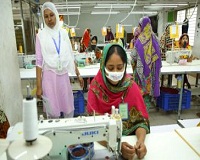 Working conditions for garment workers in Bangladesh are likely to turn bleak as the High Court of Bangladesh will soon give its judgment on the closure of Dhaka office of Accord on Fire and Building Safety and evict its inspectors. Established after the 2012 collapse of Rana Plaza, Accord is a legally-binding agreement among brands, retailers, and trade unions designed to build a safe Bangladeshi garment industry. The agreement, over the past five years, has been instrumental in forcing improvements in the factories that supply its signatory companies, which include H&M, Arcadia Group (owner of Topshop), and Inditex (owner of Zara). Though not perfect, Accord has been effective enough to be renewed this year for another five-year term.
Government inspection to fall short of Accord
Earlier this year, factory owners in Bangladesh advocated the government to takeover the compliance process as its initial term was set to expire. This resulted in a fierce government crackdown on garment worker activities which continued as government, workers, and factory owners renegotiated the country’s paltry minimum wage.
However, a government-directed inspection regime is likely to be far short of The Accord’s efforts. The Accord is a legally binding agreement which has the ability to force compliance at both ends of the supply chain. It can not only ensure that factories improve conditions, but that brands support these often-costly improvements and discontinue sourcing from factories that remain subpar. Clean Clothes Campaign is urging The Accord’s signatory companies to stipulate that upcoming orders are contingent on The Accord office remaining open, and its inspectors continuing their work.
Accord supporters ignore subcontracting
Some brands like Esprit also believe activism in key market countries could make the Bangladesh brand toxic to consumers in spite of the tremendous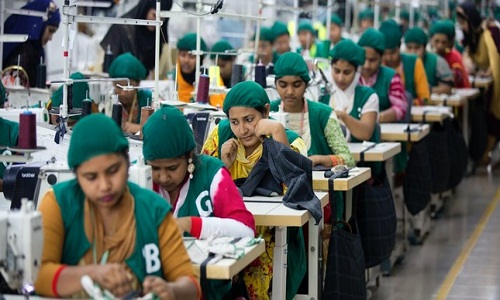 improvements it has achieved in recent years. Factory owners, however, believe that no brand which sources substantially from Bangladesh can afford to shift quantities overnight. These factory owners are aware that western brands, who reiterate their commitment to The Accord’s principals, often turn a blind-eye to subcontracting. These factory owners are aware of things happening around them yet turn a blind eye as the fast fashion business model relies on it.
An honest conversation needed
Though Center for Business and Human Rights wants The Accord office in Bangladesh to remain open, and for its inspectors to continue doing their work, the Accord is likely to fade away sooner or later. There, therefore needs to be an honest conversation about how clothes in Bangladesh are being made, and what it will cost the brands—and, by extension, consumers.
India to produce 36 million bales of cotton in 2018-19
As per estimates from the Cotton Advisory Board, India is likely to produce 36 million bales of cotton during the 2018-19 compared to 37 million bales in the previous year. Drought and uneven rainfall in Gujarat and Maharashtra is likely to pull down the average yield. So far, cotton prices have softened. After touching Rs 136 per kg (Sankar-6 variety), the price has eased to Rs 124 per kg. On the other hand, robust demand for yarn both in domestic and international markets has supported yarn prices. A 35 per cent jump expected in yarn exports between April and October from a year ago and a 25 per cent growth in overall textile exports will bolster yarn prices in the near term. Stable demand and production would kick in benefits of operating leverage too. This should help sustain operating margins
The problem of Chinese cotton subsidies
China’s subsidies in cotton and manmade fiber have created havoc. Chinese subsidies in 2018 represented nearly 72 per cent of all subsidies provided to cotton farmers worldwide. Overproduction in China forced Turkey to spend badly needed funds to support cotton growers. Even the African Franc Zone which is poverty stricken had to spend an estimated $81 million to promote cotton production.
Twenty-five million bales or more of cotton are produced annually because of the Chinese subsidies and if these subsidies did not exist global prices would have advanced and cotton prices would have been able to benefit from expanding cotton use as emerging market economies expand.
Instead growers outside of China suffered as China caused havoc with global supply and demand. The US has failed to challenge China at the WTO on its cotton subsidy level. This appears tied to China’s role as one of the largest cotton importers.
China is re-emerging as a major consumer of US cotton after years of stockpiling the fiber. The world’s most populous nation has purchased futures contracts covering more than 3,61,000 bales of US cotton for 2020. That is enough to make 400 million T-shirts. China has never booked this much cotton so far in advance at this time of the year since 1998.
Fashion profiling helps understand voters mindset
Fashion profiling is the practice of classifying and targeting individuals based on their brand preferences. Fashion profiling uses data analysis to identify the way brands are perceived. It assesses value systems and goals and priorities via the clothes people wear. Clothing preferences were a key metric for Cambridge Analytica, whose business was constructing and selling voter profiles drawn from Facebook data.
Preferences in clothing and music are leading indicators of political leaning. Fashion data was regularly mined by political candidates during the 2016 US elections. Purchases made through each candidate’s online store were used to identify potential issues that could galvanise a voter. For example, if an individual bought an infant onesie from Hillary Clinton’s campaign website, it was a clue that said person might be influenced by e-mails about maternal health. If someone bought a beer mug from Rand Paul, he or she might respond to e-mails about saving manufacturing in America. Personal data, given incrementally to products and platforms over years, can be used to manipulate individuals in unanticipated and potentially damaging ways.
Consumers may not be conscious of the narratives embedded in their branding. Most Instagram shoppers and selfie-takers are more concerned with credit card theft than being victims of targeted yet subtle political messaging.
Uniqlo named world’s simplest fashion brand
When it comes to fashion Uniqlo has been named the world’s simplest fashion brand by Siegel+Gale. Siegel+Gale ranks companies for delivering on their promise of simple, clear, and intuitive experiences.
Uniqlo was named the world’s simplest fashion brand due to its philosophy of simplicity, quality and longevity, which resonates around the world. Topping the overall ranking was Netflix, followed by German discount supermarket Aldi, then Google, Lidl and Carrefour. Siegel+Gale’s study reaffirms an increasing demand for transparent, direct, simple experiences that make peoples’ lives easier.
British retailer Marks & Spencer was ranked 77th, followed by department store chain Debenhams at 85, while sportswear brand Under Armour was 87th, and Topshop was ranked in the 94th place. Other key findings were that 55 per cent of people are willing to pay more for simpler experiences, while 64 per cent of people are more likely to recommend a brand that delivers simple experiences. The simplest global brands have outperformed the average of the major indexes by 679 per cent since 2009. The top performers in the study operate in crowded, highly competitive marketplaces. Their ability to consistently deliver their brands with simple, compelling experiences sets them apart. Companies will benefit greatly by keeping it simple for customers. Or suffer the consequences.
India: Sri Mahasakthi Mills to invest Rs 25 crore on apparel manufacturing
Sri Mahasakthi Mills, a leading company in spinning and other diversified industries, is planning to invest Rs 25 crore on manufacturing of apparels. The company will initiate a garment manufacturing unit in Ethiopia next year. As of now, it has the production capacity of 80,000 pieces per month in India. In garments, the company works for both the export and domestic markets. Some of its top clients are Arvind, Lifestyle, etc. The company is also exploring international buyers for tie ups. It currently produces 100 per cent knitted garments like t-shirts, briefs, etc.
Sri Lanka looks to obtain GSP+ concessions on Indonesian fabric
As per Sri Lanka Apparel Exporters’ Association (SLAEA) chairman Felix Fernando, Sri Lankan Embassy to the European Union (EU) in Brussels recently submitted a proposal to obtain GSP+ concessions on fabric imported from Indonesia. Sri Lanka was hopeful that agreements to obtain GSP+ concessions for South Korean and Indonesian fabric could be signed by the end of 2018. At the moment, apparel manufacturers could only get GSP+ concessions on fabric woven in Sri Lanka, the EU and SAARC countries.
According to the Central Bank, from January to September 2018, Sri Lanka imported textiles and textile articles worth $2 billion, up 4.7 per cent against the same period last year. The country has a great opportunity to expand its apparel exports, as China is expected to leave a $50 billion vacuum in the global apparel market from next year.
According to Joint Apparel Association Forum data, apparel exports to China were worth $60.2 million, contributing to only 1 per cent of total apparel exports from Sri Lanka. Exports to China in 2016 were $66 million.
Indian silk exports touch $123.05 million between Apr-Sep 2018.
Exports of silk and silk products from India reached $255.93 million in 2017-18 and $123.05 million between Apr-Sep 2018. The silk products exported include: natural silk yarns, fabrics, made-ups, readymade garments, silk carpets and silk waste.
Silk readymade garments formed the largest share of exports at $81.63 million, followed by fabrics and madeups at $27.34 million and silk waste at $10.70 million. Other products made up the rest of export earnings. In FY 2017-18 top five importers of silk carpet were the US ($1.40 million), UAE ($0.95 million), Belgium ($0.13 million), Germany ($0.04 million) and Italy ($0.03 million). Exports of silk waste stood at $15.69 million in 2017-18. India enjoys a unique global position in terms of production of all commercially useful varieties of silk. India is the second largest producer of silk. Sericulture provided employment to over 8.6 million people in India during 2017- 18.
Lacoste bans the use of mohair in its collection
After PETA Asia’s investigation of the mohair industry revealed abuse and exploitation of angora goats, Lacoste has decided to totally ban the material. PETA’s first-of-its-kind video exposé of angora goat farms in South Africa, the world’s top mohair producer, has pulled back the curtain on the violent industry, showing workers dragging, roughly handling, throwing around, mutilating, and even cutting the throats of fully conscious goats, some of whom cried out.
Lacoste joins an ever-growing list of brands/retailers including ASOS, Marks & Spencer, John Lewis, H&M, and, most recently, Notonthehighstreet – that have made this compassionate move. To date, over 330 brands have committed to a ban, proving that cruelty to animals is not in fashion. Famous for its crocodile logo and boasting 1,200 shops and 10,600 outlets spread across 120 countries, Lacoste had also previously committed to angora and fur bans.











