FW
ERP technologies boost textile industry
Traditional manufacturing industries are turning to highly automated production modes, like intelligent and efficient textile technology, to enhance efficiency. Through ERP (Enterprise Resource Planning), smart production line is able to automatically control, measure and associate all production processes, with the advantages of costs saving, high efficiency and one-stop management for internal resources.
As most traditional enterprises still use tangible documents to exchange internal information, ERP helps enterprises set up an information system by sharing of data. It effectively ensures the accuracy, completion and immediacy of data. It also consolidates the overall process of purchase, production, orders, sales, transportation and storage, achieving a dynamic balance among different sections of business operations.
With different fabrics and structures as compared to traditional knitwear, functional knitted garments may have more elements that could affect the wearing experience. Ensuring full function while maximizing comfort is the key consideration in functional knitwear development.
With continuous and rapid developments in digital printing technology, digital printing design has become an up-and-coming trend. Digital printing allows flexibility in production, complexity in design, shorter production lead times and energy conservation and green production. Making full use of the Internet in traditional textile and garment production and management processes can greatly enhance competitiveness.
Intertextile Shanghai Apparel Fabrics: Past participants return for spring edition
Intertextile Shanghai Apparel Fabrics is the world’s largest apparel fabrics and accessories Fairs. It is held biannually in March (Spring Edition) and October (Autumn Edition). Its popularity can be gauged from the fact that in the upcoming edition many of the biggest names are set to return following strong responses at last year’s two fairs and reports of continued strong demand in China.
The distinctive product zones that have been well-appreciated by exhibitors return again, with the International Hall featuring All About Sustainability, Functional Lab, Premium Wool Zone and Verve for Design. Besides, Accessories Vision and Beyond Denim will also be there. The Premium Wool Zone perhaps best encapsulates the benefits of exhibiting at the Fair for high-end overseas suppliers. Many exhibitors at the last edition reported growth remained strong in China and orders were still being placed at the Fair including Harrisons of Edinburgh who returns this March.
Many exhibitors in the Premium Wool Zone last year emphasised differences in consumer preferences around wool products in China, making the Fair vital to understand the market’s needs. Some of the wool and cashmere fabrics exhibitors from Peru and the UK have already confirmed to partake in the Fair. They include Aris Industrial, Beijing Vitality Textiles, Harrisons of Edinburgh, Huddersfield Fine Worsteds, Loa Hai Shing, Merino Brothers and Scabal.
While the Premium Wool Zone has been a mainstay for a number of years, Beyond Denim is a relative newcomer reflecting its growing importance in the industry. This edition’s Beyond Denim is expected to see 100 exhibitors from China and abroad.
Again, some of the industry’s leading producers will feature here such as Orta Anadolu from Turkey, China’s Advance Denim, Changzhou Henglun Textile, Jiangsu Zhongheng Dyeing & Finishing, Knit Denim Hengliang Textile and Prosperity Textile, while from Pakistan Diamond Denim by Sapphire, Diamond Fabrics and Indigo Textile are amongst those exhibiting.
Inditex reaffirms support to Water.org
Recently, Inditex chairman and CEO Pablo Isla met film star Matt Damon and Gary White, co-founders of Water.org, an international organisation the mission of which is to provide safe water and sanitation to people in need. He reaffirmed the Spanish apparel retail giant's commitment to Water.org that carries out water projects in countries such as Bangladesh and Cambodia.
With the goal of directly improving the health of more than 160,000 people, Inditex provided an initial €3.7 million to support projects in Bangladesh and Cambodia in late 2015. Water.org is a hugely effective vehicle to deliver change around the critical issue of water management particularly in vulnerable regions. After reviewing the progress and success during the first year working together, Damon and White thanked Inditex for its support. Work has been done to support the successful implementation of WaterCredit that brings small, affordable loans to those who need access to financing and expert resources to make household water and sanitation solutions a reality.
Progress in Bangladesh includes identifying and partnering with several micro-finance institutions and training their loan officers to market and support these life-changing loans. On the other hand in Cambodia, more than 6,000 people have gained critical access to safe water and/or improved sanitation. The work being done through Water.org's New Ventures Fund which is a principal source of innovation funding was also discussed.
Inditex has earmarked one-quarter of its contribution to Water.org to researching new resources and approaches designed to combat the world's water crisis. The World Economic Forum has deemed water management one of the world's biggest problems, one which already affects more than 660 million people worldwide.
Gap publishes supplier list
Gap has disclosed the list of factories from which it sources shoes and clothing. There are 885 such factories in roughly 30 countries, including China, Bangladesh, Sri Lanka and Guatemala. Other firms that recently made similar disclosures include Marks & Spencer and Dutch clothing chain C&A.
This is a significant step forward for transparency in supply chain management. Full disclosure of suppliers allows civil society groups to monitor and rapidly alert brands to any human rights violations at individual locations as well as keep tabs on attempts by factories to use unlicensed subcontractors.
The issue of subcontractors remains an ongoing concern with Gap as cost pressures at the company grow in the face of stagnating sales. Fast fashion competitors like H&M and Zara have demonstrated an ability to place smaller orders and change up styles to be more fashionable in as little as five weeks. Gap has announced a new product operating model to increase speed, predictability and responsiveness in a bid to replicate the success of its rivals.
Calls for apparel industry reform have grown louder in the wake of the 2013 Rana Plaza disaster in Bangladesh, which killed 1,138 workers. Although Gap was not named as one of the western firms sourcing clothing from the factory, some of the factories it contracts with have been accused of child labor and other violations over the past several years.
Bengaluru to host first GreenStitched Film Festival on sustainable fashion
Bengaluru will host the first GreenStitched Film Festival featuring a day-long screening of documentaries on sustainable fashion on February 18. The event, supported by National Institute of Fashion Technology (NIFT) Bengaluru, will be held at its auditorium in HSR Layout.
The fashion industry is the second most polluting industry next only to oil. Still awareness on the environmental and social impacts of this 1.2 trillion dollar industry is lacking. Through the GreenStitched Film Festival (GFF), the organizers aims to bridge this gap and will invite students, academia, industry professionals and anyone curious to be a part of it.
The audience will also get to interact with the directors and people associated with the films being screened. Sustainability is at the forefront of fashion industry. By supporting an event like the GreenStitched Film Festival, NIFT Bengaluru is involving the academic and industry community to understand the nuances surrounding sustainable fashion,” feels Professor Shivalingam, Director of NIFT Bengaluru.
Indian cotton prices rises during peak cotton arrival season
Prices of Indian cotton saw an unusual rise during the current peak arrival season. While, cotton production all over the world was on the rise, the situation in India is getting serious attention due to steady rise prices. Spot prices of Sankar-6 and MCU-5 varieties range from about Rs 42,500 and 44,000 respectively per candy.
Currently, it is the peak arrival season of cotton in India but arrivals have been lagging behind what it was during the same period last season. While flowering was not good, weather could not be blamed as it has been reasonable for cotton during the growing season. The volatility has been attributed primarily to trading issues and Indian government’s recent banknote demonetisation policy.
A few from cotton marketing, purchasing and spinning expressed the same reasons for sudden increase in cotton prices. The general manager of a 65,000 ring spindle mill in South India stated that his company procures about 40,000 bales (170 Kgs each) of cotton each year at an overall price tag of about Rs 60 crores (Rs 600 million). The variation of about Rs 1000 per candy in a day can result in lot of economic upsets for mills in India. Since December, the price has increased by about Rupees 4,000 per candy.
Arrivals have been about 150,000 bales per day (1.5 lakhs bales per day), which is less by 50,000 during the peak arrival timeframe. Normally, the arrivals are about 200,000 bales per day (2 lakhs bales per day). The view from spinning mills is that yarn prices are stable and there is demand for yarns and made-up goods such as bedspreads in export markets. This increases the demand for cotton and hence there is increase in the price of cotton.
Cashmere gets a luxe twist as brands create niche collections
Designers are raising the bar for luxury cashmere. Barrie, one of Scotland’s most highly regarded and historic cashmere manufacturers makes pieces for iconic houses such as Chanel, Hermès, Dior, and Yves Saint Laurent, while also creating beautifully designed knits under its own label. For S/S 2017 Barrie’s collection is all about playful colors and prints, showcasing pieces that are sporty and fun. Lightweight sweater dresses, shorts and tanks are offered in easy-to-wear geometric stripes, and cardigans–cropped, hip-length, and floor-length–are accentuated with rows of soft-knit tassels in rainbow hues.
Similarly, Belgian knitwear label Tuinch focuses on structure and creating architectural pieces that are both innovative and timeless. Tuinch uses cashmere from Kashmir and Tibet to create chic knits. This season, the collection has high-waisted, form-fitting cashmere bell bottoms, a floor-length sweater dress with an open back and slim silhouette, a chunky, boxy turtleneck with exaggerated, roomy sleeves, and a gorgeously theatrical boat neck pullover with asymmetrical detailing at the cuffs–one encircled with rings of fabric, the other a dramatic bell sleeve.
Knitwear designer Sally LaPointe creates modern garments highlighted with sumptuous and unexpected details. A tailored cropped turtleneck and trousers combo shimmers with rhinestone motifs at the collar and ankles, while sporty, loose-fitting hoodies in neutral blacks and grays are dressed up with fur detailing on the shoulders and sleeves.
CAI forecast for 2016-17 cotton marginally higher than previous year
The Cotton Association of India (CAI) has projected cotton crop for 2016-17 season at 341 lakh bales of 170 kg each. This would be 1 per cent higher than previous year. The projected balance sheet drawn by the CAI has estimated total cotton supply for the cotton season 2016-17 at 404 lakh bales while the domestic consumption is estimated at 290 lakh bales thus leaving an available surplus of 114 lakh bales.
Nayan Mirani, President, CAI says, cotton arrivals during the ongoing 2016-17 crop year are estimated lower than the same period last year due to holding back of seed cotton by farmers mainly on liquidity issues. The CAI has released its December estimate of the cotton crop for the 2016-17 season beginning from October 1. This should, however, rectify in a few days once arrivals improve, he said.
Prices of Kapas touched Rs 5,700 per quintal last week. Mirani says, the crop by itself is higher than the previous year at 341 lakh bales. Since the arrivals have not yet picked up, farmers are in a position to demand higher rates. Once arrivals improve, prices should decline. The current production estimate of CAI is slightly higher that the last year’s estimate of 337 lakh bales.
Mirani, who took over as the new president of the association, said he would strive to address trader issues and work towards uniform trade practices across the country. According to industry experts, the methods of trading have changed over the years especially after trade has moved upcountry in hinterlands from metros.
US out of TPP, Australia, New Zealand to pursue 'TPP 12 minus one'
"President Trump took first step towards implementing his economic agenda --- signing an executive action removing the US from a free trade deal Trans-Pacific Partnership (TPP). This was one of Trump’s core campaign promises. The accord negotiated by the Bush and Obama administrations has been held. The Obama Administration had pushed for the 12-country regional free trade agreement, arguing it was a vital national security priority to compete with a rising China."

President Trump took first step towards implementing his economic agenda --- signing an executive action removing the US from a free trade deal Trans-Pacific Partnership (TPP). This was one of Trump’s core campaign promises. The accord negotiated by the Bush and Obama administrations has been held. The Obama Administration had pushed for the 12-country regional free trade agreement, arguing it was a vital national security priority to compete with a rising China.
TPP a non starter from the beginning
Trump’s decision not to join the TPP was expected as during his election campaign he railed against international trade deals, blaming them for job losses and focusing anger in the industrial heartland.

TPP negotiations had begun almost 10 years ago and designed to create major changes in the economies of the 12 signatory countries. The countries involved previously made up 40 per cent of the world economy. The agreement began as almost casual negotiations between New Zealand, Brunei, Singapore and Chile but rapidly expanded. The final agreement was signed by Brunei, Canada, Chile, Japan, Malaysia, Mexico, New Zealand, Peru, Singapore, United States, Vietnam and Australia. Each country needed to pass and ratify associated legislation for the partnership to begin.
What’s in it for fashion companies
A number of footwear and apparel brand and organisations, including the Footwear Distributors & Retailers of America and the American Apparel & Footwear Association as well as brands, such as Nike, New Balance, Gap, and Hanes, have been opposing TPP. These parties have cited the TPP's promise to eliminate more than 18,000 taxes and other trade barriers, strengthen ties among member countries and increase economic growth. According to Matt Priest, President, Footwear Distributors & Retailers of America, the TPP was all about the inclusion of Vietnam, a hub of shoe manufacturing, and that’s where lies the interest of American companies. If there are any better trade pacts to fructify tie-up with Vietnam, we would be keen to scrap the TPP. Agreeing on the same, Julia K. Hughes, President, US Fashion Industry Association, echoed this notion, that free trade agreements are important to our sector.
TPP-12 minus one the next step…
However, even though the US is out of the treaty others are promising to go ahead with the deal. Australia and New Zealand say they are hopeful of pressing ahead with the Trans Pacific Partnership trade deal, despite America's formal withdrawal. Australia has already devised a name for a possible new agreement: TPP 12 Minus One. The US-led, 12-nation agreement was set to cover 40 per cent of the world's economic output. Australian Trade Minister Steve Ciobo said on Tuesday it would require "a little bit of elbow grease" to orchestrate a plan B with the remaining TPP members, including Japan, Mexico and Canada, but goodwill remained to "capture the gains" made under the agreement.
Ciobo says he had conversations with Canada, Mexico, Japan, New Zealand, Singapore, Malaysia about the deal. "I know that there's been conversations that have been had with Chile and with Peru. So there's quite a number of countries that have an interest in looking to see if we can make a TPP 12 minus one work," he said. Ciobo also said the original architecture of the TPP was designed to enable other countries to join. So Indonesia has expressed a possible interest and there would be scope for China if they are able to reformulate it to be a TPP 12 minus one for countries like Indonesia or China or indeed other countries to consider joining and to join in order to get the benefits that flow as a consequence.
New Zealand Prime Minister Bill English too has said he is hopeful of keeping a free trade deal alive with remaining members of the TPP agreement, while the country's trade minister Todd McClay expected TPP ministers would meet in the coming months to navigate a way forward.
Meanwhile China, which was left out of the TPP deal, has its eye on its own regional trade pacts. It has suggested a Free Trade Area of the Asia Pacific and is supportive of the Regional Comprehensive Economic Partnership (RCEP), which could see a free trade deal between countries including Australia, China, India, Japan, South Korea and New Zealand.
Turkish textile industry finding its feet amid challenges
"Contributing 7 per cent to the country’s GDP, and consisting of more than 55,000 textile and clothing companies that provide two million textile jobs, Turkish textile industry has come off age. In 2015, textiles and clothing products accounted for 19.2 per cent of Turkey’s total exports. With textile industry being largely cotton-based, Turkey is the world’s third-largest cotton importer, as domestic output is not sufficient to meet demand. Having said that, cotton production in Turkey is slated to rise by 15 per cent this year, growing to 425,000 hectares of planting area and 650,000 tonne of total cotton production."
Contributing 7 per cent to the country’s GDP, and consisting of more than 55,000 textile and clothing companies that provide two million textile jobs, Turkish textile industry has come off age. In 2015, textiles and clothing products accounted for 19.2 per cent of Turkey’s total exports. With textile industry being largely cotton-based, Turkey is the world’s third-largest cotton importer, as domestic output is not sufficient to meet demand. Having said that, cotton production in Turkey is slated to rise by 15 per cent this year, growing to 425,000 hectares of planting area and 650,000 tonne of total cotton production.
Global uncertainties a fear
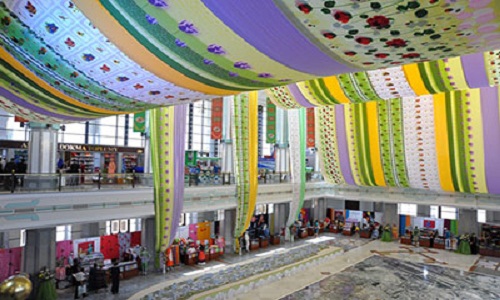
The EU has now become Turkey’s top export partner with a share of 48.1 per cent of Turkish exports. However, the looming threat of Brexit may change that. Also, with Donald Trump as President of the US a lot is expected to change for Turkey’s textile industry but how exactly it will change remains uncertain. Many textile and fabric manufacturers in Turkey fear the Trump administration may place hefty tariffs on goods imported to the US from Turkey, but whether or not this will become reality remains unclear as of yet.
Meanwhile Turkey itself is facing upheaval and threats to public safety. In 2016, Turkey experienced multiple ISIS-related bombings and terrorist attacks, the most widely reported one being the attack on Istanbul’s Ataturk Airport in June 2016. This increase in terrorism is causing many Western clients and consumers to avoid doing business in Turkey. Turkey has lost its traditional markets in the region for its exports—Yemen, Iraq, and Syria—to civil war and other political and humanitarian crises.
Russia was once also a large market for Turkish textiles but Russia-Turkey relations have been on the decline since November 2015 when Turkey shot down a Russian jet; in retaliation Russia imposed economic sanctions on Turkey. Though the economic damage to the textile market—and numerous other markets—has already been done, the two countries have since worked together to try and rebuild their partnership.
Impact of Syrian crisis
Syria was once an important supplier of raw materials for Turkish textiles, but the Syrian crisis has drastically changed this. The economy and most industrial production markets in Syria have been decimated. The Islamic State now reportedly controls Syria’s cotton production and supply and Turkey officially refuses to accept imports of ISIL-controlled cotton. As Syria has traditionally been one of Turkey’s main suppliers of raw cotton, this is negatively impacting Turkey’s textile industry and forcing them to look for other ethical but high-priced sources of cotton.
Additionally, Turkey is now home to more than 2.5 million Syrian refugees. More than 660,000 school-age Syrian children in Turkey are not in school; a large percentage of these children are illegally working textile jobs in order to help provide for their families and make ends meet.
Positive steps towards improvement
Currently, Turkey does not recognise Syrian refugees as refugees; it instead puts them under ‘temporary protection’, which offers them more rights than traditional refugee status but for a shorter period of time. The Turkish government claims that it is taking steps towards better protecting Syrians in Turkey, particularly children, and are putting measures in place to punish companies that exploit unregistered or underage refugees for labour.
Turkey is also expected to increase its cotton production this year, which will put it on track to become less dependent on external sources of cotton, saving the textile and apparel industry both money and ethical dilemmas. Working to improve relations with Russia will also boost the textile industry.
The Turkish Government’s ‘Turquality’ programme is also expected to help boost the textile and apparel market in the country. The programme is intended to provide subsidies to companies and manufacturers in order to assist with marketing and strategic positioning of products.