FW
SITEX 2024: Indian textile machinery is leaving an indelible mark on the global stage
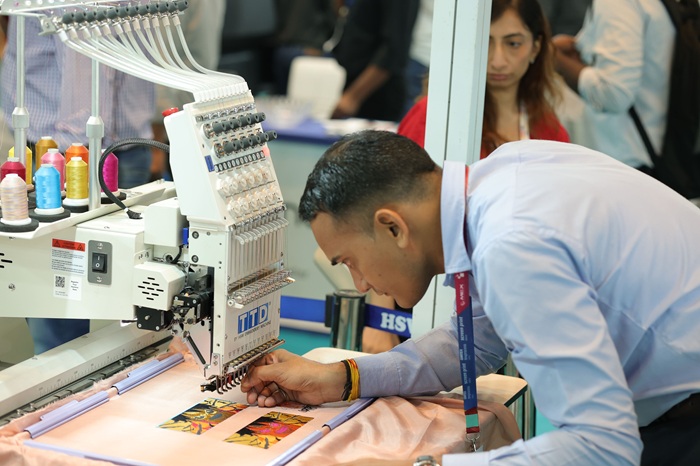
India's textile industry is embracing a paradigm shift, seamlessly weaving technology and sustainability into its fabric. At the Surat International Textiles Exhibition (SITEX 2024), SP Verma, Additional Textile Commissioner of the Government of India, unveiled an impressive narrative. India annually produces high-tech textile machinery worth Rs 14,000 crore, with 35% being globally exported, aligning with Prime Minister Narendra Modi's vision to elevate India into a textile manufacturing powerhouse.
Verma underscored the pivotal role of young talent in this transformation, urging manufacturers to harness their dynamism for employment generation. Setting an ambitious target, he aimed to achieve Modi's dream of textile machinery self-sufficiency by 2030, urging innovation and collaboration with an environmental conscience.
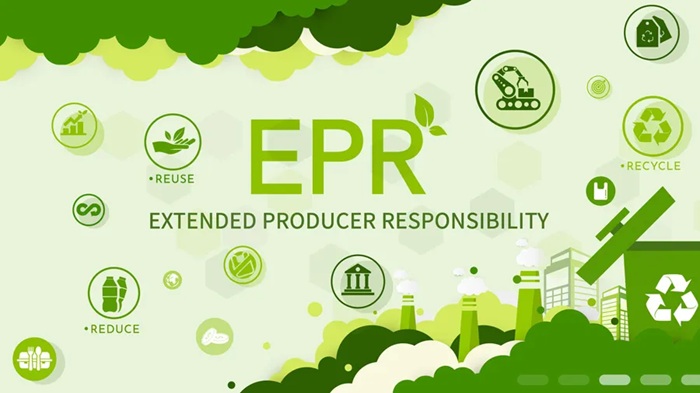
Surat echoed this commitment by becoming India's first city to implement Environmental, Social, and Governance (ESG) norms in its textile cluster. Verma urged industrialists to embrace sustainability, aligning with the Ministry of Textiles' green initiatives. The announcement of the 'Bharat Tex' initiative further emphasized a dedicated platform for promoting sustainable practices.
Surjit Singh Mahajan, Chief Guest at SITEX 2024, praised Surat's textile revolution, emphasizing its global recognition and significant contribution to India's GDP. Ramesh Vaghasia, President of SGCCI, echoed the industry's commitment to sustainability, unveiling a partnership with the Global Net for Zero organization to guide South Gujarat industries towards achieving net zero emissions. The Indian textile narrative is evolving, seamlessly merging innovation, youth empowerment, and sustainability into its intricate design.
Apparel Group launches 350 stores in 2023
Dubai-based fashion and lifestyle retail conglomerate Apparel Group launched 350 new stores across international locations in 2023.
Besides, the group forged new alliances with several high-profile brands such as Foret Essentials, Allo Beirut, Asica, Babies & More, Bcbgmaxazria, Ben Sherman, Brunomagli, Clarks, Daiso Japan, FLO, Firehouse Subs, Forever New, Martha Stewart, Project Chaiwala, and Sur La Table.
The group also reiterated its commitment to the environment during the year by engaging in ESG-linked financing arrangements with Emirates Islamic and Emirates NBD. It integrated its sustainability goals with financial strategy.
In 2024, the group aims to focus on being innovative, adopting sustainable practices and delivering exceptional value to customers, says Neeraj Teckchandani, CEO.
Transforming global textile alliances: India's journey to ESG excellence
In a groundbreaking shift, India's textile industry has embraced Environmental, Social, and Governance (ESG) practices, responding to global concerns about sustainability and responsible business. Over the past decade, heightened awareness of climate change and social issues has propelled India's textile sector, known for its rich heritage, to the forefront of sustainable sourcing.
Indian textile players and the government have implemented measures such as sustainable farming, reduced chemical use, and investments in renewable energy, contributing significantly to ESG goals. Eco-friendly dyes and innovative technologies are minimizing the industry's ecological footprint, meeting both buyer demands and environmental responsibilities.
The industry's commitment to social sustainability is evident in improved labor conditions, skill development, and ethical practices. International buyers sourcing from India are now prioritizing fair wages and safe working conditions, aligning with the nation's emphasis on inclusive growth and community welfare.
Transparency and governance have been enhanced through traceability tools and certifications, with the government introducing initiatives like the Global Organic Textile Standard. This commitment to ethical practices ensures good governance in international partnerships.
The Government of India has introduced various schemes like SAC, TUFS, SAMARTH, NCEF, and others to promote ESG in the textile industry. Despite commendable progress, challenges like water scarcity and the widespread adoption of ethical practices persist, presenting opportunities for innovation and investment.
The ongoing collaboration between international textile buyers and India's textile sector showcases the industry's potential to thrive while remaining environmentally conscious and socially responsible. Bharat Tex 2024 emerges as a transformative platform, bridging the gap between ESG commitments and industry initiatives. With dedicated pavilions and knowledge sessions on sustainability, recycling, and high-level deliberations, the event signifies collaborative progress, ensuring a future where commerce harmonizes with environmental consciousness and social responsibility.
India's textile industry poised for global triumph
India's textile industry stands at the brink of a transformative era, poised to redefine the global textile landscape. With a rich historical legacy and a promising future trajectory, the sector's evolution promises innovation, sustainability, traceability, and seamless global supply chain integration.
As the world's largest producer of cotton, silk, and jute, coupled with being the second-largest producer of chemical fibers, India has solidified its position as a reliable sourcing base for global brands and retailers. The industry spans from traditional handlooms to technologically advanced manufacturing units, encompassing textiles, apparel, home textiles, and technical textiles.
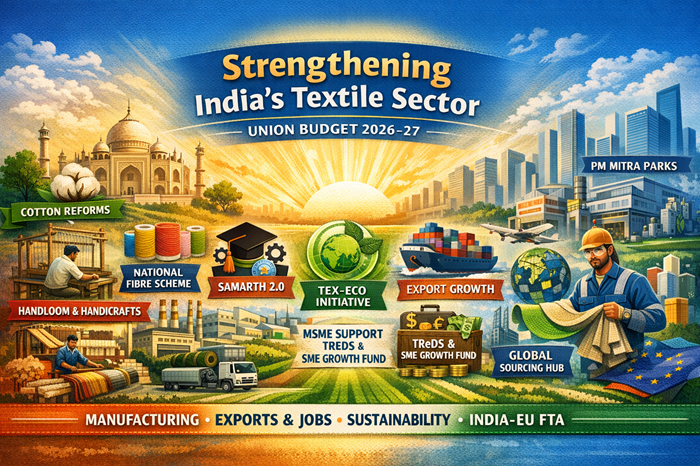
The Indian textile industry is on the verge of a paradigm shift, guided by Prime Minister Narendra Modi's visionary 5F framework—Farm to Fibre to Factory to Fashion to Foreign. This comprehensive approach emphasizes the integration of every production stage, from raw material cultivation to presenting finished products globally. The 'Factory to Fashion' facet underscores the modernization of manufacturing processes, utilizing technology for efficiency and quality, with a focus on innovation and skill development.
India is gearing up to present a formidable challenge on the global stage, showcasing a potent blend of craftsmanship, technological advancements, and a renewed commitment to sustainability. Recognized for uniqueness, quality, and ethically sourced raw materials, Indian textiles are carving a niche in international markets.
The industry, valued at USD 154 billion, is a significant contributor to India's GDP and a major employer. Government initiatives, including the Production Linked Incentive scheme and the National Technical Textiles Mission, aim to boost growth, create employment, and promote sustainability. Initiatives like 'Vocal for Local' and 'Make in India Make for the World' empower MSMEs, further propelling industry growth.
As a testament to India's prowess, a Consortium of 11 Export Promotion Councils will organize Bharat Tex 2024, the largest global textile event, showcasing every aspect of the textile value chain with a focus on global quality and standards. With transformative technologies, sustainability, and skill development at the forefront, India is set to emerge as the leading global textile hub, blending tradition with innovation and shaping a distinctive global identity.
The convergence of tradition and technology positions India as a beacon in the global textile manufacturing landscape, captivating the world with its vibrant threads of tradition, innovation, and sustainability.
Tommy Hilfiger to participate in Redress Design Award 2024
Tommy Hilfiger plans to collaborate with the Hong Kong-based company Redress to participate in the leading sustainable design competition, Redress Design Award 2024.
The brand will team up with the first-place winner of the Redress Design Award 2024 on a sustainable retail design project for retail. Besides offering an invaluable learning experience, the project will expand the brand’s knowledge of sustainable fashion. It will educate designers and consumers on accelerating their transition to circular fashion.
The award will be sponsored by the Government of the Hong Kong Special Administrative Region (HKSAR), through Create Hong Kong (CreateHK).
Christina Dean, Founder of Redress, says, circular fashion needs to be accelerated to ensure the industry’s survival without damaging the earth.
Under its ‘Wastes Nothing and Welcomes All’ slogan, PVH Corp.-owned Tommy Hilfiger has introduced several initiatives to make fashion more sustainable and inclusive.
Knitwear dominates Bangladesh RMG exports in 2023
Knitwear items totaled 47 per cent of Bangladesh’s total RMG exports in 2023.
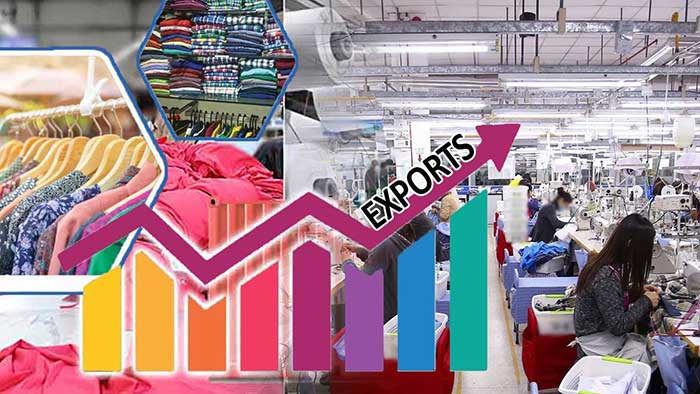
The country recorded earnings worth $26.55 billion from export of knitwear items during the year while $24.71 billion were generated from the export of woven garments. In total, Bangladesh’s earnings from RMG exports totaled $45.70 billion against total export earnings of $54.70 billion.
The rise in knitwear exports is attributed to the strong backward linkage, the sector’s capacity to ensure quick delivery of products, and the government's policy support, etc.
Besides changing patterns in fashion and acceleration of delivery services, the government’s support in the form of cash incentives and utilities also helped entrepreneurs invest in the segment, say exporters
Exporters of woven garments however, faced absence of backward linkages and longer lead times. According to Fazlee Shamim Ehsan, Vice President, BKMEA, majority of the segment’s demand for raw material like fabric is met through imports.
These exporters need huge investments along with simplified banking procedures to enable them to invest in the woven backward linkage, he adds.
H&M to invest in offshore wind project in Bangladesh
Swedish fast fashion retailer, H&M Group plans to invest in a large-scale offshore wind project being developed by Copenhagen Infrastructure Partners in Bangladesh.
With a planned capacity of about 500 MW, the project is set to be the first utility-scale offshore installation in Bangladesh. It would supply 40 per cent of the country’s power by 2041. Once completed, the installation would cut the country’s annual emissions by a projected 725,000 metric tonne.
H&M will collaborate with Danish retailer Bestseller for the $100 million project being funded by Copenhagen Infrastructure Partners and Global Fashion Agenda. The project is likely to begin operations by 2028.
As per a part of its Green Fashion Initiative, H&M has till date funded 17 projects aimed at reducing 190,000 metric tonne of carbon emissions annually.
In November 2023, the company collaborated with DBS bank to create a financing program to offer loans on favorable terms to suppliers aiming to displace fossil fuels.
In 2023, H&M teamed up with one of its manufacturers in India, Raj Woollen to install solar panels, energy-efficient motors and water conservation technologies across the country. In 2022, the company reduced the number of suppliers using on-site coal boilers from 90 in 2021 to 70 in 2022.
Mango to open four new stores in Washington DC
European fashion brand Mango plans to open to four new stores in Washington DC in 2024.
These stores will be located in Tysons Corner Center, Pentagon City Mall, Westfield Montgomery in Bethesda, and at 950 F St., Washington, DC. Besides, the brand will also open another store in the King of Prussia Mall in Pennsylvania.
Spread across 4,300 sq ft, the Tysons Corner Center store will sell the brand’s womenswear range. All of these four stores will be based on the brand’s new concept called, ‘New Med’ that reflects a Mediterranean home with its soft shades and neutral hues combined with traditional, handcrafted, sustainable, and natural materials, such as ceramic, tuff, wood, marble, esparto grass and leather.
Barcelona-based fast fashion brand Mango forayed into the US market in 2006. The brand has stores across New York, Florida, Georgia and California. As a part of its larger US expansion plan, it plans to set up more stores in Washington DC and Pennsylvania.
Introduce support measures for spinning segment, urges CITI
Rakesh Mehra, Chairman, Confederation of Indian Textile industry (CITI), has urged the government to introduce financial support measures to elevate the stress on working capital in India’s spinning segment. Mehra also urged for prevention of job losses in the sector, sustaining market share, and achieving envisaged export targets.
India’s spinning segment has been hit by the prolonged Ukraine-Russia conflict, the recent Israel-Hamas war, an 11 per cent import duty on cotton and issues related to Quality Control Orders on man-made fibers.
Capacity utilisation in the segment has dropped by almost 70 per cent, adds Mehra.
The government should extend the one-year moratorium for repayment of the principal amount, and convert three-year loans under Emergency Credit Line Guarantee Scheme (ECLGS) into six-year term loans, he adds further.
Until now, the textile industry has received funds worth Rs 16,920 crore under the ECLGS. These constitute approximately 6 per cent of the total disbursement of Rs 2.82 lakh crore.
However, the 50 per cent decline in cotton yarn exports, has caused a severe crisis in the spinning segment with cotton textile exports dropping by 23 per cent and total textile and clothing products exports dropping by 18 per cent during FY2022-23, notes Mehra.
Pakistan to be the 4th largest exhibitor at Heimtextil Frankfurt 2024
With a representation of over 272 companies, Pakistan is set to be fourth largest exhibiting country at Heimtextil Frankfurt 2024.
Around 58 Pakistani companies are slated to exhibit at the event under the auspices of the Trade Development Authority of Pakistan. These companies will showcase an eclectic mix of products ranging from luxurious bed linens to kitchen textiles and towels. Some of the prominent Pakistani companies scheduled to attend the trade show include Sadaqat Ltd, Lucky Textile Mills, Alkaram Textile Mills, and Orients Textile Mills.
An ultimate destination for the industry’s demand for interior textiles, design and trends, Heimtextil Frankfurt serves as the launchpad for the forthcoming season. It also serves as a platform to provide valuable insights to attendees. In 2023, the exhibition was attended by a diverse mix of visitors, with exhibitors form Pakistan making a notable presence at the show.