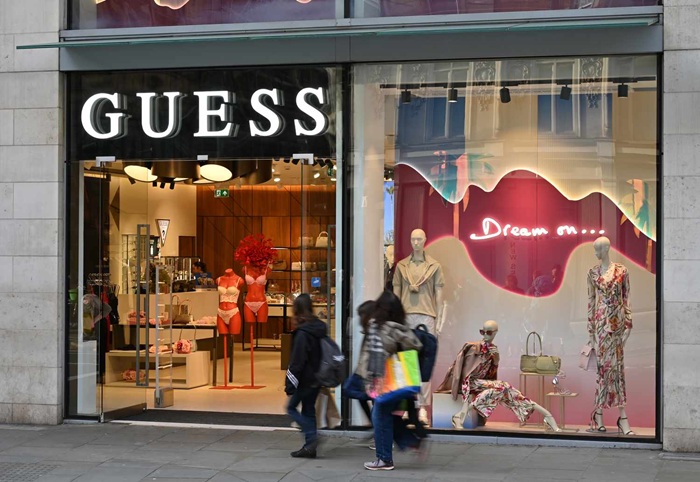
For more than two decades, Guess? Inc., the emblem of ‘accessible American cool’, maintained an ambitious footprint in China. At its peak, the brand operated over 250 stores across mainland China, including a prominent digital presence on Tmall. But by March 31, 2026, Guess? Inc. will complete a full withdrawal from direct operations, closing every physical store and digital flagship. The decision underscores a stark reality: the brand’s iconic style struggled to resonate with modern Chinese consumers, resulting in a fiscal performance that few could ignore. In the second quarter of fiscal 2026, Guess? Inc.’s Asia segment reported an operating margin of negative 6.8 per cent, reflecting the consequences of an unfavorable business mix and eroding footfalls.
The perils of middle-market positioning
Experts point to the brand’s entrapment in a middle ground a pricing and positioning conundrum that left it exposed on all sides. Guess’s sub-600 yuan price points were undercut by the rapid agility of domestic competitors, from Shein to the so-called ‘Douyin white-label army’, capable of translating global fashion trends into locally made apparel within two weeks. At the same time, Guess lacked the aspirational pull of affordable luxury peers like Sandro and Maje, whose carefully curated social media presence has turned them into lifestyle markers for urban professionals.
The following table illustrates how different market segments performed in China in 2025, emphasizing the widening gap between nimble fast-fashion disruptors, mid-market legacy brands, and the resilient affordable luxury segment:
Table: China fashion market segmentation (2026)
|
Segment |
Players |
Price range (CNY) |
Market sentiment |
|
Ultra-Fast Fashion |
Shein, Douyin White-labels |
50-250 |
Dominant (Agility-driven) |
|
Mass Market (Mid) |
Guess, UR, Peacebird |
300-800 |
Contracting (Price War) |
|
Affordable Luxury |
SANDRO, Maje, Ganni |
1,500-3,500 |
Resilient (Social Value) |
|
Hard Luxury |
LVMH, Hermès, Chanel |
10,000+ |
High Growth (VHNWIs) |
While ultra-fast fashion commands volume through speed and trend replication, mid-market players like Guess are increasingly caught in a declining zone. Affordable luxury, benefiting from social media validation and aspirational positioning, remains insulated from the price pressures that erode the margins of mass-market brands.
The rise of quiet luxury
The Guess predicament is not merely financial; it is aesthetic. Globally recognized for its overt sensuality and body-conscious silhouettes, the brand’s DNA collided with a distinctly different Chinese taste. Over the past decade, consumers have gravitated toward quiet luxury relaxed, minimalist, and functional designs that prioritize understatement over overt sex appeal. Guess’s signature denim campaigns, historically celebrated for their bold imagery, suddenly felt out of step with the evolving market.
Rebranding was a binary trap, say retail strategist. Move toward minimalism and you lose the very 'Guess-ness' that justifies the price premium. Stay sexy and you remain a niche player in a market that has moved on to understated chic. This cultural disconnect increased the operational challenges, leaving Guess exposed both in stores and online.
Privatization and the asset-light shift
The China exit coincides with Guess? Inc.’s privatization in January 2026, a $1.4 billion transaction led by Authentic Brands Group (ABG). ABG, now holding a 51 per cent stake in Guess’s intellectual property, is executing its hallmark asset-light strategy: licensing brand operations to local partners while retaining high-margin royalty streams. By offloading the high fixed costs of direct retail, the brand can preserve market presence without the operational drag of owning and managing physical locations.
ABG has deployed this model successfully before. After Forever 21’s 2019 withdrawal from China, ABG reintroduced the brand through licensing agreements that emphasized e-commerce and selective pop-ups, preserving brand equity while minimizing capital exposure. The Guess strategy mirrors this approach, signaling confidence in the brand’s intellectual property but recognition that local expertise is critical to navigate China’s digital-first retail landscape, where online channels now generate approximately 60% of apparel revenue.
Western brands and the waning edge of americana
Guess is part of a growing cohort of Western brands struggling to maintain relevance in China. Names like Old Navy, TopShop, and Gap have similarly faltered, revealing a fundamental truth: national origin no longer guarantees competitive advantage. Recent surveys suggest that 90 per cent of young Chinese consumers hold positive perceptions of domestic brands, aligning with the Guochao movement a cultural and consumer shift favoring homegrown labels. Success now hinges on product innovation, local relevance, and digital fluency rather than brand heritage or foreign mystique.
Legacy, scale, and the new global outlook
Founded in 1981 by the Marciano brothers, Guess? Inc. transformed denim into a lifestyle symbol through iconic black-and-white advertising campaigns. Today, under ABG ownership, the company generates roughly $6 billion in global retail-equivalent sales. While Europe and the Americas remain strongholds, China represents a cautionary tale. Moving forward, Guess’s international strategy emphasizes licensing over direct ownership, asset-light operations over fixed-cost exposure, and selective cultural alignment over global homogenization. In doing so, the brand hopes to preserve its global relevance without repeating the missteps of its China experiment.