FW
Asia, Europe drive thriving luxury
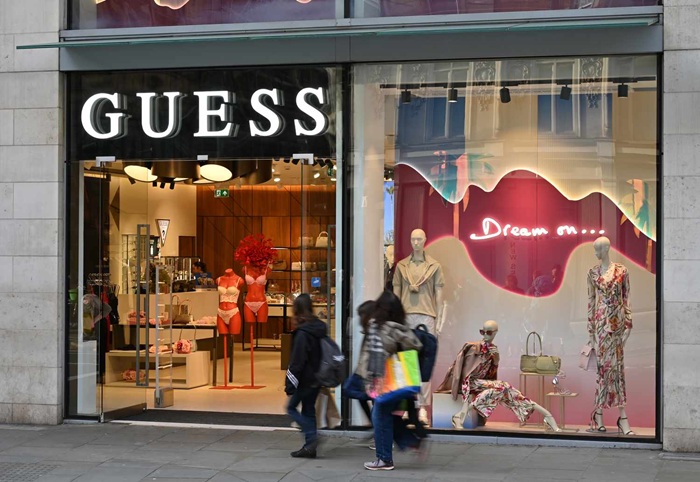
The global luxury market is expected to see strong growth of 5 to 12 percent in 2023, driven by post-pandemic demand, according to a report by Bain and Altagamma. Valued between €360 and €380 billion this year, the market is predicted to reach €530 to €570 billion by 2030.
Asia and Europe will fuel this growth, while the US faces a slowdown due to inflation and recession, impacting aspirational luxury spending. China's luxury market is rebounding, with Hong Kong and Macau experiencing a surge in spending by Chinese tourists. Luxury brands are capitalizing on this by hosting exhibitions and collaborating with local talent.
Southeast Asia is also witnessing strong growth, thanks to Russian tourists, Chinese consumers, and increased demand for jewelry and watches. Japan is identified as a rising star, with both local customers and inbound tourists showing a strong interest in popular accessories. In contrast, the US luxury market has plateaued, prompting brands to rethink their strategies.
Affluent Americans are increasingly buying luxury goods abroad due to wider price differences. While areas like New York and California regain popularity, destinations like Hawaii and Las Vegas are yet to fully recover to pre-pandemic levels.
Nike stresses on gender inequality issues in global sports

Perhaps, gender inequality in modern society is most apparent in the sports segment with girls not given the same encouragement as men to retain their interest in sports as a young adult. There is a strong need to educate parents, coaches, and training institutes with the kind of knowledge and experience that can not only help make sport fun for girls but also give them a better financial future.
Nike as one of the world's biggest brands of sports shoes, clothes, and equipment has launched many programs and released guides over the last few years on coaching girls and keeping them motivated in sports all through life and this is slowly making headway globally. A recent US meeting of the CNBC CEO Council that brings together global decision-makers across industries had Nike’s CEO John Donahoe stressing on the fact that employing more female coaches in various sports segments would encourage more young girls to participate and be retained against the many odds of playing active sports through adulthood.
Hiring more women coaches will retain girls in sports
As per Aspen Institute’s Project Play - a global nonprofit organization for creating an equitable society, strongly backed by Nike – many young girls are giving up on active sports as they become teenagers since they are not given the same kind of coaching opportunities as men and no one to understand their needs as almost 75 per cent of youth head coaches are men.
Puberty changes a girl's body and mind and hinders a more sustainable relationship with active sports and female coaches would be positive role models to encourage them achieve their true potential. While for boys, puberty is just the opposite as they gain more muscle mass and become stronger and command more respect among peer groups when they excel in active sports.
“Most young people rarely, if ever, get the opportunity to be coached by a woman. This is a miss for all. To get girls active and invite them into a lifetime of sport, they have to see it to believe it – and that starts with more female coaches,” Vanessa Garcia-Brito, Vice president and Chief Social and Community Impact Officer, Nike explains.
Programs to encourage women in sports
Nike’s Aspen Institute Made to Play Coaching Girls Guide report says in some parts of the world, girls are dropping out of sports at twice the rate of boys for easily addressable reasons that can be prevented if there are female coaches to help them keep playing and get better with practice. It’s not just Asian countries with gender inequality issues, even in the US they get fewer sports opportunities than boys with barriers such as lack of experienced women coaches and sophisticated sports-specific apparel and equipment. Hiring women coaches globally in the sports segment is currently critical as personal needs such as reaching puberty, wearing fitted proper sports bras, societal issues, and gender biases are best understood by women for women.
Nike recently launched a program called ‘Coaching HER’ with the University of Minnesota’s Tucker Center for Research on Girls and Women in Sports, is a digital online coaching institute that will help coaches of all genders to improve their understanding of gendered bias and discrimination.
The maximum drop-off from games for girls globally occurs in the pre-teen and teenage years of 11 to 17, where they are most pressured to conform to social identities, whereas this is the age when boys learn to better themselves and excel in their favorite sport. With global giants like Nike having already addressed this global issue, other sport giants are expected to follow suit and rid the world of this menace of gender inequality in the sports arena.
ChatGPT inching its way to become an all-rounder assistant in fashion

In April 2023, Zalando SE, the German online platform for fashion and lifestyle, operating in over 25 European markets including the UK, announced it will soon launch a ChatGPT-powered personal shopping assistant designed to help customers find the exact product that would suit their sense of style through Zalando’s massive portfolio of brands and products. Available on their app and web platforms, the first beta version will be enabled for select customers, with support in both English and German. This will be available in Germany, Ireland, UK and Austria.
Technology to help make right fashion choice
This technology will introduce a new way to discover Zalando’s assortment and provide customers more intuitive fashion inspiration. For instance, a Zalando shopper can ask, “What should I wear to office’s Christmas party at Berlin, knowing that the entire board of directors will be present?” The ChatGPT-powered personal shopping assistant can understand the event is a formal one, picking up the cue from “entire board of directors” that it is at the height of winter in Berlin as it is a Christmas party and will send out a textual recommendation of what the selection of clothing and accessories could be. This could be combined in the future with customer preferences, such as brands they follow and products available in their sizes, to deliver a more personalised selection of products.
Of course, Zalando is not a pioneer as Adidas, long before had introduced AI-powered platform Findmine to automatically generate complete recommended outfits when customers browsed an individual product. After leveraging the Findmine solution, Adidas merchandisers experienced 95 per cent drop in the time spent on its online 'Complete the Look' recommendation feature and increased the number of items included in outfits for customers by 960 per cent.
Versatile software a winner
ChatGPT seems to be empowered to possess all that is required to be a personal shopping assistant and much more. Indeed, the world of fashion can see ChatGPT as their partner now. Recently, Tian Su, VP Personalization and Recommendation at Zalando had said, “We are excited to be experimenting with ChatGPT to help our valued customers discover even more fashion they will love. This is just the beginning; we are committed to understanding our customers' needs and preferences even better, and we are eager to explore the potential that ChatGPT can bring to their shopping journey. As we continue testing and introducing new solutions, our focus remains on learning how our customers want to interact with our fashion assistant to provide them with the best possible experience."
The level of ChatGPT’s depth of personalisation is extraordinary. It uses data on current fashion trends, styles and individual preferences with the help of collaborative filtering that enables it to put forth a set of explained recommendations that are friendly to read and makes sense even budget-wise, should the customer’s input include a budget. The outcome is a highly-rewarding bespoke shopping journey in minimum time spent.
Retail uses
While the big news item is Zalando’s personal shopping assistant, ChatGPT can do much more for retail businesses. It can help with a successful product launch, analyse customer feedback, reviews and social media conversations, competitor analysis, social media engagement, upselling and cross-selling during customer interactions, trend forecasting and providing localization and language support for global brands.
The obvious versatility of this software can only provide a more refined, better informed environment for businesses to make the right decision to be competitive and stay relevant in an ever-changing fashion world.
Hong Kong Investors Eye FTA with Bangladesh
In a highly anticipated seminar titled "Investment Opportunities in the EPZs and EZ of BEPZA, Bangladesh," jointly organized by the Bangladesh Export Processing Zones Authority (BEPZA) and the Hong Kong Exporters' Association (HKEA), Hong Kong investors expressed their enthusiasm for the upcoming Free Trade Agreement (FTA) between Bangladesh and Hong Kong Special Administrative Region (SAR), China.
The event took place on June 20 at the InterContinental Grand Stanford Hotel in Hong Kong. Renowned Hong Kong investors, with years of experience investing in Bangladesh, shared their business insights during the seminar. They highlighted Bangladesh's favorable factors such as its abundant and cost-effective labor force, diligent workforce, infrastructure development, and competitive manufacturing costs, making it an attractive investment destination compared to countries like Myanmar, Cambodia, and Vietnam.
The seminar featured esteemed guests including AbulKalam Mohammad ZiaurRahman, Executive Chairman of BEPZA, who served as the chief guest, and IsratAra, Consul General of Bangladesh, who attended as a special guest. The Consul General provided updates on the ongoing initiatives to establish trade-related agreements between Bangladesh and Hong Kong.
The seminar drew more than 200 attendees, including officials from the Hong Kong Trade Development Council (HKTDC) and representatives from major business chambers, showcasing the keen interest of Hong Kong investors in exploring opportunities in Bangladesh.
Behno's Bags: Artisans Unite, Expanding in India
In a recent homecoming, Behno, the international handbag label headquartered in New York with manufacturing units across India, has launched its retail operations in India. Founder ShivamPunjya, who shuttles between Mumbai and New York, leads a nomadic life while staying rooted in India, where his heart and creations find their inspiration.
Behno's bags tell stories through their intricate tie knots, representing the union of artisanal communities striving for a better world. Shivam explains that "Behno" comes from the word "behen" (sister), reflecting the camaraderie among women working in factories. Katrina Kaif, a global icon and advocate of mindful consumption, has recently become an investor and brand ambassador for Behno.
The bags, available in a kaleidoscope of colors, now carry her seal of approval. Shivam praises Katrina's interest in sustainability and her willingness to be intimately involved, including providing references for photoshoots. Shivam's journey began in 2013 during his research on public policies in India, where he collaborated extensively with women in Jaipur and Hyderabad.
The tragic Rana Plaza incident in Bangladesh further spurred his dedication to making a difference. Inspired by his family's advice, he chose to take action, leading to the birth of Behno's ethical and empowering approach to fashion.
Uzbekistan's Knitted Product Exports Skyrocket
In the first four months of 2023, Uzbekistan's knitted product exports surged to 21,800 tons, fetching an impressive $102.9 million, reports Trend. This represents a noteworthy increase of $12.2 million compared to the same period last year.
Among the top importers of Uzbek knitted products, Russia secured the leading spot with imports valued at $32.8 million, followed closely by Kyrgyzstan at $28.7 million. Italy ranked third, importing goods worth $17.2 million, with Azerbaijan ($6.2 million), Belarus ($5.5 million), Armenia ($3.8 million), and Poland ($3.3 million) also making substantial purchases.
Renowned as a global powerhouse in the production of natural textile fibers, cotton yarn, and knitwear, Uzbekistan boasts an impressive textile sector with over 7,000 operational enterprises. The nation's firm position as a key player in the industry is further solidified by its status as a leading cotton exporter worldwide.
Uzbekistan actively seeks foreign investment to propel its textile sector's growth and development, recognizing the immense potential it holds for expansion
Trade fair boosts India-USA textiles
US and India drive global textile trade. Octavia Exposium LLC's Global Textile Trade Fair (GTTF) bolsters bilateral trade, with the second edition witnessing tripled participation. Indian companies establish US subsidiaries for efficient delivery and customer support.
Recent events like PM MITRA Textile parks and Indian Americans' invitation to President Biden's welcome for PM Modi signal collaboration opportunities in tech, trade, education, and clean energy. GTTF connects 120 Indian manufacturers with 2,000+ American textile businesses at Atlanta's America's Mart, showcasing latest Indian products with affordable rates and premium quality.
Indian companies excel in fashion, design, patterns, and logistics, boosting the thriving US textile industry. India emerges as a suitable replacement for products sourced from Bangladesh or China by 34,000 US motels, offering efficiency, competitive pricing, and supplier commitment.
Inditex exiting Myanmar amid rights violations
Inditex, the owner of Zara, is undergoing a "phased exit" from Myanmar in response to global trade union IndustriALL's call for disinvestment. As part of this process, the company will reduce its contracted manufacturers in the country. Myanmar has been embroiled in a violent civil war between the military and armed ethnic groups and anti-coup protestors since 2021.
The move follows Inditex's involvement with Hosheng (Myanmar) Garment Company, where seven union workers were fired for demanding a wage increase. Five of them were subsequently arrested. The junta's heavy-handed tactics have resulted in the arrest of over 300 union members and activists, effectively erasing the freedom of association.
The European Union has called for the release of the workers and urged adherence to fundamental human rights. Inditex stated that the events at Hosheng violated its supplier code of conduct.
Other fashion companies, including Aldi South, C&A, Mango, Primark, Marks & Spencer, Tesco, Fast Retailing, and RyohinKeikaku, have also exited or are in the process of exiting Myanmar.
Southeast Asia's garment trade declines
Garment and footwear trade between Southeast Asia and the United States is declining due to high inflation, casting a gloomy shadow over the industry. Recent analysis of U.S. customs data indicates a 20% to 30% drop in the value of apparel and footwear shipments from Cambodia, Bangladesh, Myanmar, and Vietnam during the initial four months of this year.
Exports to the European Union are also showing signs of slowing, with Bangladesh experiencing a 3% decline in garment exports and Cambodia witnessing a slight dip. Although Vietnam initially saw growth in garment exports to the EU, the latest figures for April demonstrate a significant decrease compared to the previous month.
The decline comes after a strong recovery in shipments following the pandemic, but Southeast Asian nations heavily reliant on garments, footwear, and travel goods, such as Cambodia, have faced an overall 30% export decrease during the first four months of this year. Industry insiders attribute this decline to inflation and the economic repercussions of Russia's invasion of Ukraine.
Additionally, the failure of the U.S. Congress to renew the Generalized System of Preferences, which offers duty-free access to certain goods, has affected exports of travel goods. Despite stable employment figures thanks to new investors, ongoing uncertainties and the clearance of retail backlogs contribute to a cautious outlook for the rest of 2023.
Fashion companies are grappling with a challenging sourcing environment due to shrinking demand caused by inflation and reduced consumer spending. Many U.S. fashion companies have responded by cutting sourcing orders and reducing inventory, resulting in a decline in trade volume.
Ongoing trade tensions, including the continuation of tariffs on Chinese exports, further compound the challenges faced by U.S. brands. In response, fashion companies are prioritizing sourcing flexibility and diversifying their supply base. While they consider near shoring in the West, Southeast Asian countries remain attractive despite the difficulties of finding new production capabilities.
India: UK removes duty benefits, concerns rise
The UK's removal of duty benefits for Indian garment exporters under the new Developing Countries Trading Scheme (DCTS), replacing the previous Generalised Scheme of Preferences (GSP), raises concerns amidst sluggish global demand. Industry officials argue this withdrawal is reasonable, considering the potential benefits of future Free Trade Agreements (FTAs).
The withdrawal of duty benefits under the DCTS adds to the challenges faced by the Indian garment industry due to weak global demand. While Indian industry organizations support the decision, exporters worry about the impact until an India-UK FTA takes effect. Previously, as a member of the European Union, the UK provided GSP benefits to Least Developed Countries (LDCs).
However, post-Brexit, the UK introduced the separate DCTS scheme, particularly affecting labor-intensive sectors like textiles and leather. Indian textile exporters are expected to receive duty benefits through the ongoing FTA negotiations with the UK, explaining India's removal from the LDC list. The negotiations, which began in January 2021 and completed ten rounds by June, aim for a swift conclusion.
Certain Indian exports exceeding the specified limit in the UK market make them ineligible for GSP benefits. However, sectors like metals will continue to receive benefits. The timing of benefit withdrawal is significant, as developed countries, including Europe and the US, face high inflation from supply chain disruptions due to the Russia-Ukraine war, reducing demand for garments and textiles. Exporters from Ludhiana note cautiousness from global brands in making new purchases.
With the UK's withdrawal of duty benefits coinciding with sluggish international demand, exporters face challenges until the India-UK FTA is finalized. The timeline for signing and implementing the agreement remains uncertain despite ten rounds of negotiations.