FW
Pakistan hopes for a surge in textile exports
Pakistan is expecting textile exports to grow. The value added sector is operating at almost full capacity and many big players are in the process of expansion. There are multiple reasons for exuberance – currency devaluation, subsidy to textiles, and availability of energy at competitive rates. One big booster is improvement in perception. The overall image of the country is improving and the opening up of visa regimes is helping as well. Buyers are visiting and new orders are being placed.
With the tariff war between the US and China, and protests against low wages in Bangladesh, buyers are thinking of diversifying from these two markets. Pakistan has the opportunity to grab a bigger share. However, building the requisite backward linkages is required. Without enhanced cotton production, it is hard for the textile industry to reach its true potential. One of the reasons for the erosion in competitiveness is the fall in Pakistan’s cotton production. The seed industry needs to be regulated and serious consolidation is required to improve the yield. The other factor is to do away with price support to other crops such as sugarcane which has resulted in substitution of sugarcane for cotton. Another need is to find new markets.
Eco India focuses on Doodlage initiatives
The second season of Eco India – a collaboration between Scroll.in and DW, focuses on the initiatives by a Delhi-based fashion brand Doodlage which makes chic garments with scraps of waste cloth. Designing clothes out of scraps of fabric and second-hand garments, Doodlage’s creative team dreams up new designs and sells its wares in 30 shops and online.
Doodlage up cycles fabric waste that chokes landfills. It collects this waste from large fabric manufacturers to create fashion products. In this process, Doodlage also ends up generating waste. But unlike other brands, this waste is shredded to create new fabric that goes into home furnishings and bags. The brand, targeted at anyone between 18 and 45 years, makes ethical fashion for all.
Every week, Eco India – a sustainability magazine highlights Indian eco heroes, often regular citizens, environmental activists, organisations and even kids, addressing a pressing ecological issue in their community.
It brings stories, people, challenges and innovations that are changing India’s approach to environmental issues. With this local focus, EcoIndia puts a spotlight on India’s movement towards sustainable and ecological development – one person, city and region at a time. Some highlights include entrepreneurial solutions to metropolitan waste management, cleaning rivers and fighting noise pollution.
Each episode of the show also includes segments on European cities and sustainable practices that demonstrate how environmental preservation is truly a global issue and solutions require international cooperation
Leading Vietnamese brands to participate in Global Sources Fashion Show
Over 30 leading Vietnamese producers of garments, textiles, handicrafts and fashion accessories will showcase their products at Global Sources Fashion Show this year. The major goods to be displayed include apparel, fashion jewelry, underwear, swimwear, bags, luggage, scarves, footwear and fabrics.
The four-day show will feature verified suppliers from major fashion manufacturing hubs, including Vietnam, China, Hong Kong, Taiwan, the Republic of Korea, Bangladesh, India, Indonesia and the Philippines. Exhibitors from Vietnam include members of the Vietnam Textile and Apparel Association (VITAS), Vietnam National Textile and Garment Group, and Handicraft and Wood Industry Association of Ho Chi Minh City.
With over 1,800 booths, the fair is expected to welcome 12,000 buyers from 150 countries and territories, including the US, the European Union, Hong Kong, Japan, Brazil, Mexico, Middle East, and South Africa, among others. The one-stop sourcing show is expected to witness growing participation from branded firms, including more than 500 exhibitors worldwide promoting their own designs and brands.
The event will also feature fashion parades and industry-related conferences, according to the organiser Global Sources.
Global activewear grows at six per cent
The global activewear market is growing at a CAGR of 6.5 per cent. The market is helped by a global cultural shift toward health and fitness. Companies are favoring a casual dress code and consumers are demanding more comfortable clothing.
Women’s sports bras, vests and tank tops are becoming more acceptable for not just athletic activity but for daily wear. Spacer fabric plays an important role in creating padding and support. In the past, sports bras were made using a spacer fabric knitted in a uniform thickness, and would add additional padding for support or to create a push-up effect. With the new generation of spacer fabric technology – the sculpted spacer – manufacturers can knit in a way that corresponds to the natural size and shape of women’s bodies, enhancing comfort with form-fitting support. The curved spacer is also a manufacturer’s dream – rather than attaching padding after the sports bra is sewn, the sculpted spacer is sewn all at once, eliminating several steps of the production process.
Yoga pants and leggings are the quintessential athleisure garment, but they wouldn’t have reached their pinnacle of popularity if it weren’t for four-way stretch fabric. Compared to the two-way stretch, it can be stretched during exercise without exposing the wearer’s skin. Further, four-way stretch fabric provides excellent elasticity to protect and support the body, while also allowing freedom of movement.
Birla Cellulose focuses on innovations in women’s apparels
Birla Cellulose hosted a Hub Development meet with brand Liva at Bhagalpur. The meet focused on the growth of the hub through innovations in saris, dress materials in stoles. This meet takes forward Liva’s initiative of providing innovation, technical, product and marketing solutions for the value chain, buyers, exporters and brands across the country.
The objective of the meet was to create awareness about emerging trends in women’s apparel, changing needs of consumer and growing environmental concerns. It also aimed to highlight opportunities for yarn partners and weavers to grow their business with Liva. Buyers representing prominent brands were present for the conclave.
The meet showcased innovative ranges of yarns, fabrics and saris by Liva’s esteemed partners. These products were appreciated for their superior hand feel and luxurious softness. Partners of the event were particularly excited about the possibilities of innovation in the segment besides processing and marketing support by Birla Cellulose.
Birla Cellulose aims to support the sustainability movement in India. Now, with the entry of Liva, saree too is set to be more sustainable with use of technologically enhanced eco-friendly fabrics.
Bangladesh knitwear does value addition
Gross value addition from Bangladesh’s readymade garment sector was 63.23 per cent in the first half of the current financial year. Value addition is calculated considering the import price of raw materials including cotton, synthetic/viscose fiber, synthetic/mixed yarn, cotton yarn and textile fabrics and accessories. Import price of raw materials in the July-December period of fiscal ’19 was 36.77 per cent of total export earnings from the readymade garment sector in the period. Thus, raw materials prices were 36.77 per cent of the total value of readymade garment exports.
Local value addition is estimated at 63.23 per cent. This can reach up to 75 per cent if the textile sector can produce high quality fabrics. The country’s knitwear sector is making a more than 80 per cent value addition. So the woven sector has to concentrate on developing fabrics. The import value of raw materials in fiscal ’18 was 39.06 per cent of the total export earnings from the readymade garment sector and the local value addition was 60.94 per cent. The local value addition from the readymade garment sector has remained static between 60 per cent to 63 per cent in the past six years. Total export earnings from the readymade garment sector during October to December of fiscal ’19 increased by 8.56 per cent as compared to the previous quarter.
Worker abuses rife at PVH factories in Ethiopia
Worker abuses have been detected at factories in Ethiopia that supply brands like Tommy Hilfiger and Calvin Klein. Ethiopian workers who make clothes for their high-street stores routinely face verbal abuse and discrimination. Workers in PVH supplier factories in Ethiopia are forced to do unpaid overtime and lose pay for drinking water at their work stations. Hiring managers at one factory felt the stomachs of job applicants to see if they were pregnant.
PVH, which runs Tommy Hilfiger and Calvin Klein, is one of the world’s top clothing companies, with about a million garment workers in its supply chain. PVH has helped finance the flagship manufacturing hub in the Ethiopian town of Hawassa.
One of the poorest nations in Africa, Ethiopia is pushing to switch its economic focus from agriculture to manufacturing, in the face of increased scrutiny over labor conditions and rates of pay in the supply chains of global fashion brands. As labor, raw material and tax costs rise in Asian factories, Ethiopia is seeking to offer a cheaper alternative, attracting big brands such as US chain Gap and Sweden’s H&M. Ethiopia does not have a minimum wage but companies sourcing from Ethiopia have a code of conduct prohibiting abuse.
Ryan Stanley bags AATCC Future Leaders Award
The AATCC Future Leaders Award was presented to Ryan Stanley on April 11, 2019 at the International Conference held in Fort Worth, TX, USA. The Future Leaders Award recognises promising young professionals in the fields of textiles, apparel, and related material sciences. These award recipients are determined by each AATCC Interest Group.
The award includes a framed certificate signed by the AATCC president and the Interest Group (IG) chairs and a special pin. Stanley has been a member of AATCC since 2011. He is senior director of color at PVH Corp. in New York, USA. Prior to this, he served as exploratory colorist with Under Armour. Stanley held numerous roles in color management for Archroma/Clariant from 2004-2014, including marketing and formulations manager and production manager.
Stanley attended the University of North Carolina—Charlotte, In North Carolina, USA. He has been a voting member on the AATCC Color Measurement Test Method Committee since 2011. He currently serves a member of the Fashion Institute of Technology Advisory Board.
Secondhand clothes become fashionable in the US market
Not so long ago, buying secondhand clothes was considered low-class. These were bought in either charity shops of thrift stores at reduced prices. However, things changed with the resale market for secondhand fashion in the United States growing 21 times faster than retail sales of new clothing over the past three years. The market is currently worth $24 billion and expected to reach $51 billion by the middle of the next decade.
 Not so long ago, buying secondhand clothes was considered low-class. These were bought in either charity shops of thrift stores at reduced prices. However, things changed with the resale market for secondhand fashion in the United States growing 21 times faster than retail sales of new clothing over the past three years. The market is currently worth $24 billion and expected to reach $51 billion by the middle of the next decade.
Gen Z consumers to drive most growth
Neil Saunders, GlobalData Managing Director & Lead Market Analyst for fashion resale website thredUP’s 2019 Resale Report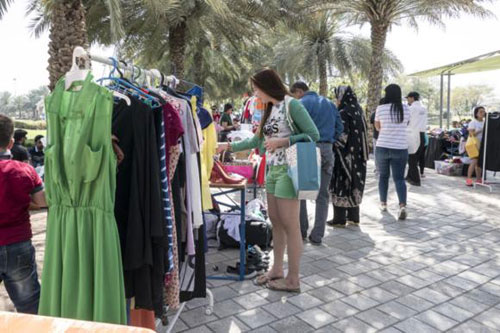 expects this growth to continue as the market meets its consumers’ preferences for variety, value, and sustainability. As per the research, a consistent proportion of shoppers buy secondhand clothes at all price levels. In the luxury retail segment, around 26 per cent buy resale items, in the mid-market around 25 per cent opt for second-hand clothes while at the discount end 22 per cent consumers buy second-hand clothes.
Millennials are most likely to buy second-hand clothes, followed by boomers – with 33 per cent and 31 per cent respectively buying secondhand. On the other hand, only 16 per cent of Gen Z and 20 per cent of Gen X consumers prefer buying second-hand clothes.
But it’s the Gen Z which is expected to drive the most growth. One in three people aged 18-24 are forecast to buy secondhand items this year, making them the resale world’s biggest fans.
E-commerce boom fuels interest
The growing interest in secondhand is being driven the e-commerce boom which allows people to buy and sell second hands at the click of a button. This phenomenon has also given rise to a new niche of micro-retailers that deal exclusively on the internet. These retailers not only sell items they own, but also buying them from other sources like eBay, Houzz and Etsy.
Another factor driving growth is the rise of the conscious consumer. As per ThredUP, around 72 per cent consumers are more likely to buy from environmentally friendly sources. However, as sustainable fashion is expensive, the secondhand sector offers them purchase of eco-friendly products at affordable rates. Known to be one of the biggest polluting industries, the fashion sector not only consumes vast amounts of resources but also generates around 20 per cent of the world’s wastewater. The sector is expected to be responsible for 25 per cent of the global carbon budget by 2050.
New strategies to survive the retail revolution
An industry suffering at the hands of the secondhand sector is the retail sector. As shoppers now prefer to buy online, at a time and in a place that suits them, stores are witnessing declining footfall. These retailers now need to formulate new strategies to survive in the competitive market. This however, might not be overtly difficult as 87 per cent of senior retail executives in the thredUP research expressed their desire to be involved in reselling secondhand fashion by 2020.
Berlin Conference initiates dialogue between sustainable textile innovators
The Fashionsustain Berlin conference, to be held in Frankfurt am Main, brings together pioneers of sustainable textile innovations to initiate a dialogue between them. The conference combines the creative thinking of its birthplace with an international speaker line-up. The first keynote “Sustainable innovation –a matter of survival” will be by Micke Magnusson, founder of the Swedish start-up we are Spindye, and serves as a wake-up call for the industry.
The round table will focus on the influence of trends on new business practices: “Trendsetting change makers – Is fashion leading the way for sustainable innovation?” The panel will be moderated by Max Gilgenmann, Content Director of Neonyt.
The panel titled “Synthetic change makers – What does the future of man-made fibres look like?” will explore alternative fibre production and recycling methods. Taking part in the discussion panel will be industry pioneers such as Austrian fibre manufacturer Lenzing, British recycling company Perpetual Global, Swiss specialty chemicals company Clariant and Thai chemical company Indorama.
Fibre producer Lenzing, knitting machine manufacturer Santoni and producer of footwear components Procalçado S.A. will present the innovation roadshow entitled “The future of eco-conscious footwear manufacturing”, supported by Messe Frankfurt’s Texpertise Network. It will present the sustainable production process of a shoe, showing how a sustainability transformation of the fashion and textile industry can already become a reality today. The panel will be moderated by Marte Hentschel, founder of Sourcebook, the B2B network for the fashion industry.