


FW
Fashion for Good to include Reformation in its new collection
Reformation will be one of six sustainable brands to be included in Fashion for Good’s new capsule collection focused on transparent brands, called “Naked.” Reformation launched denim in 2017. The brand uses dead stock and surplus denim fabrics, as well as new fabrications with sustainable fibers like Tencel Lyocell for its women’s jeans collection. Along with public tours of its LA facility, the brand provides a transparent view of its production through open progress reports and RefScale, which measures how much carbon dioxide, water and waste is saved by purchasing a Reformation garment.
The Amsterdam-based interactive museum is the first dedicated to sustainable fashion innovation. The carefully curated selection of brands—Reformation, A.BCH, Allbirds, ASKET, la fille d’O and Swedish Stockings—will be featured in the museum’s contemporary retail space. Some of these brands are exclusively sold at Fashion for Good, including Reformation, sneaker brand Allbirds and circular fashion label A.BCH, which are making their Netherlands debut.
India: Leading knitwear exporting centre, Tirupur wants knitwear board
Tirupur hopes to be the headquarters of a board for knitwear. This is expected to help in getting on-ground inputs about what is going on in the industry and would aid in the development of all stakeholders. Exporters also want relaxed credit and loan mechanisms.
Apart from these two major concerns, the Tirupur garment sector has also been pressing for the establishment of labor-supportive infrastructure such as housing colonies and a research and development park. Decent housing for migrant labor is expected to help them focus on the work and also attract more people from all corners of the country. Since two-thirds of the industry consists of small and medium scale units, which cannot afford to have their own research wing, it would make them competitive if there is a central pool of R&D talents from which they can pay and take designs from.
Tirupur, India’s leading exporter of knitwear, contributes around 50 per cent of the country’s knitwear exports. Around 20,000 production units – including micro, small and medium scale enterprises – function in Tirupur, employing nearly seven lakh people directly. However, an industrial cluster that was once growing at 20 per cent saw negative growth in 2017 for the first time in a decade due to demonetization and the roll out of GST.
German brands want innovative mills
Quality, price, service and a steady flow of innovations are among the top four traits denim brands in Germany look for in mill partnerships. Brands favor mills with lineages of quality, service and innovation. Among the reasons brands cut ties with mills are bad quality, delivery delays, unreliability, high prices and lack of sustainability, followed by high minimum orders, lack of innovation and bad service.
Sustainability is becoming increasingly important to denim brands. If possible, they pay attention to social and environmental factors when selecting denim fabrics. Recycled denim is especially an area of growing importance. Consumers in Germany are willing to pay a significantly higher price for denim made in a sustainable way.
Transparency and function are part of the package. Retailers believe labels that name the fabric producer can serve as an argument for higher prices. Jeans boasting functional features can command far higher prices. Women’s skinny jeans and straight fits are expected to gain momentum as well as cropped jeans and high-waisted jeans. However, destroyed/repaired, bleached or raw denim for women are expected to decline.
The quantity of women’s jeans in the German market is expected to decline 34 per cent by 2020 and that of men’s is expected to increase 33 per cent.
Sustainability and business work in tandem in Bangladesh RMG units
Readymade garment factories in Bangladesh have a similar story to tell when it comes to negotiating with western brands. When a sourcing department from a brand arrives to negotiate with a factory, the unit owner might point out that it practises sustainable methods of production and that the extra costs of doing so should be factored into end prices accordingly. In many cases, the sourcing department will reject such considerations outright. Sustainable production and best practice are viewed as a given.
There is a different message from the sustainability department of a brand. Such departments might require a supplier factory to implement certain sustainability practices, make them aware of the price implications of implementing the practices, and explain that these pricing issues will be dealt with by the sourcing department; often, the sustainability team is not authorised to discuss pricing.
Such a lack of coordination leads to confusion and frustration for factory owners. Brands recognise that operating in a sustainable manner goes hand in hand with business success. It is for this reason that sustainability teams have grown rapidly with brands in recent years. Even smaller brands with limited resources have invested in this and employ in-house and external sustainability consultants. The area where change needs to take place is in joining the dots.
EU signs economic pact with Japan
The EU and Japan have entered into an economic agreement. This is the largest bilateral trade deal ever made by the EU in terms of market size and will be the largest zone of free trade created in history. It drastically reduces tariffs between the EU and Japan, paving the way for simpler and faster trade between the two, and therefore an increase in volume.
Japan and the EU – and Germany, in particular – are export-driven economies and advocates of open trade. So the new economic agreement is seen as strongly reaffirming the rules-based international trading system. The EU-Japan deal will emphasise on Japan’s commitment to free trade and give a further thrust to the Comprehensive and Progressive Agreement for Trans-Pacific Partnership (CPTPP), which rose from the ashes of the TPP after the US withdrawal.
The EU-Japan economic agreement will ultimately remove 97 per cent of tariffs that Japan applies to European goods and 99 per cent of those applied by the EU. EU companies will save on duties which they currently pay when exporting to Japan. A number of longstanding regulatory barriers, for example on car exports, will also be removed. As Japan will scrap duties on agricultural products, Europeans stand to gain most from exports of consumer products, such as cheese, pork, and wines.
London Fashion Week to showcase four Hong Kong designer labels
Four leading Hong Kong fashion designer labels will present their works at London Fashion Week Autumn/Winter 2019, showcasing Hong Kong's fashion creativity to industry elites and style influencers from around the world. The presentation is a part of the Fashion Hong Kong promotion campaign organised by the Hong Kong Trade Development Council (HKTDC).
Incorporating various elements like: art installations, drama and performance art, the presentation will showcase the multi-faceted creativity of Hong Kong designers. Visitors can review the four labels' new collections and meet the designers in person. The event will give the designers a chance to network with industry players from around the world.
Each of the four Hong Kong fashion designers has a unique style. They are Doris Kath Chan (brand name: Doriskath), Cynthia Mak (brand name: House OF V), Polly Ho (brand name: Loom Loop) and Yeung Chin (brand name: Yeung Chin).
Fashion Hong Kong comprises a series of international promotions organised by the HKTDC to raise the global profile of Hong Kong fashion designers and labels. Since 2015, Fashion Hong Kong has actively participated in international fashion weeks and renowned events to showcase the city's unique, diverse designs. The campaign has covered New York, London, Copenhagen, Tokyo and Shanghai. This is the second year for Fashion Hong Kong to take the city's brands to London Fashion Week.
Bangladesh apparel exporters want cash incentives
Apparel exporters in Bangladesh want time to implement the new wage structure. They say if they are not given cash incentives many entrepreneurs would be ruined in implementing the new wages and workers would be jobless. They have asked for a 20 per cent cash incentive.
In the 2019 financial year, the government cut source tax on export earnings twice in export-oriented sectors, including the apparel sector, and lowered the source tax on expert proceeds to 0.25 per cent from one per cent for the financial year.
The apparel sector would be the key beneficiary of the tax cut as the sector alone accounts for 83 per cent of the total exports of the country. Apparel exporters want a four per cent cash incentive on exports to new markets. Export-oriented industries also enjoy tax exemption on the import of raw materials in the 2016-2017 financial year under the bonded warehouse facility. They also avail of duty cuts against the import of inputs such as fabrics, yarn and accessories.
Other than the cash incentive, cuts in source tax and bonded warehouse facility, the apparel sector enjoys a reduced rate of corporate tax and a waiver on value added tax on utilities.
IFS: 16 designers to showcase at UK show
International Fashion Showcase (IFS) has selected 16 designers from across the globe who will showcase a series of compelling installations to represent their respective country. The designers will explore politics, sustainability, identity and heritage and show their latest designs in immersive environments.
The countries represented are Bangladesh, Brazil, Canada, Colombia, India, Georgia, Italy, Kenya, Lebanon, Lithuania, Netherlands, Rwanda, South Africa, Sri Lanka, Uruguay and Vietnam.
The collections presented will offer a balanced mix of women’s wear and menswear exploring topical but universally shared issues and present new ideas and solutions that are shaping fashion globally. These designers will be supported through a bespoke online program, which will cover all aspects of business development from branding to sales and production to sustainability. This tailored cultural residency and business skills training will give the emerging designers the professional support that is often difficult to access, provided by some of the UK’s leading fashion and creative experts.
International Fashion Showcase nurtures and presents work from the best up-and-coming fashion talent from around the world. IFS will be held a as part of London Fashion Week, February 15 to 19, 2019. The exhibition is a key part of London Fashion Week, giving both the public and industry professionals the opportunity to discover emerging fashion from Africa, North and South America, Asia and Europe and to celebrate its global relevance.
Archroma to share space with Carlin at Premier Vision Paris
Archroma and Carlin will share a booth at Premiere Vision Paris, February 12 to 14, 2019. This will allow visitors to enjoy a full consultation from color trends to color inspiration to color implementation from the first mood board all the way into production.
Closing the loop from forecast to insight, visitors at the booth will also have the opportunity to check which colors are currently trending in the textile industry, with Archroma’s booklet, which compiles the top 10 selling colors of Color Atlas references that are currently being selected and in-use. Visitors at the booth will also be able to explore Carlin’s take on naturality and ethics.
The Carlin-Archroma collaboration is unique in that it allows the color dreams of designers and stylists to come to life uncompromised into the collection they bring to the shops. Archroma is a global leader in color and specialty chemicals. Carlin, based France, is known for its trend-oriented expertise from brand strategy and collection design to color creation and trend forecasting. Carlin serves famous brands in the fashion, cosmetic and sportswear industry.
Carlin and Archroma have developed the booth on the theme ‘Insolence’ and decided to make it the inspiration of their shared booth, with its bold red, green and blue colors.
Indian fashion comes of age as growth graph keeps moving north
"As per The State of Fashion 2019, a survey issued by McKinsey & Company, a global management consultancy firm, India is likely to become a centrepoint for the fashion industry this year as its strengthening manufacturing sector and burgeoning middle class will create a whole new class of consumers.The fastest growing major economy in the world, India is predicted to grow at 8 per cent a year between 2018 and 2022. The middle class will expand by 19.4 per cent a year over the same period, outpacing China, Mexico and Brazil. As a result, India is set to move from being an increasingly important sourcing hub to one of the most attractive consumer markets outside the western world."
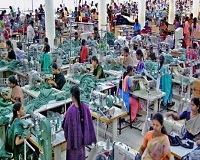 As per The State of Fashion 2019, a survey issued by McKinsey & Company, a global management consultancy firm, India is likely to become a centrepoint for the fashion industry this year as its strengthening manufacturing sector and burgeoning middle class will create a whole new class of consumers.
India to grow at 8 per cent, inspires global designers
The fastest growing major economy in the world, India is predicted to grow at 8 per cent a year between 2018 and 2022. The middle class will expand by 19.4 per cent a year over the same period, outpacing China, Mexico and Brazil. As a result, India is set to move from being an increasingly important sourcing hub to one of the most attractive consumer markets outside the western world. As McKinsey’s FashionScope reveals, India’s apparel market will be worth $59.3 billion in 2022, making it the sixth-largest in the world, and comparable to the UK ($65 billion) and Germany ($63 billion).
India continues to inspire Western designers, who pay tribute to the Indian weave which is a unique mix of vivid colors, silks, motifs and silhouettes. International labels like Emilio Pucci, Christian Dior, Missoni and Christian Labotin are mersmerised by the Indian textile production and have reinterpreted India’s exquisite repertoire of imagery.
Domestic market offers multiple benefits
As per the The State of Fashion 2019 report, over 300 international fashion brands are expected to open stores in the country in the next two years. Many of these have plans to enter new markets while others plan to expand existing operations.
The report says, the Indian market offers great promise despite structural challenges that include inequality, infrastructure and market fragmentation. There are signs of improvement in terms of infrastructure with luxury malls popping up more frequently.
The supply side of the industry is robust and growth of textile and apparel exports is expected to accelerate. The country is endowed with huge stock of raw material such as cotton wool, silk and jute which enable participation in the entire fashion value chain.
Western brands woo Indian designers
And it is a fact that Western fashion brands woo Indian designers. It started to become a trend when in 2011 with Paco Rabanne asking Manish Arora to be the creative director of a chic women’s wear collection based on ancient know-how. Today, there is an extraordinary generation of Indian fashion designers who are pulling those unique inherited techniques into cutting-edge visions of beauty. The Indian fashion scene is vibrant and dynamic.
Given all these considerations, investing in India’s expanding apparel market could be a clever move as a burgeoning middle class is keen to demonstrate an unprecedented “desire” to express their identity through fashion.











