

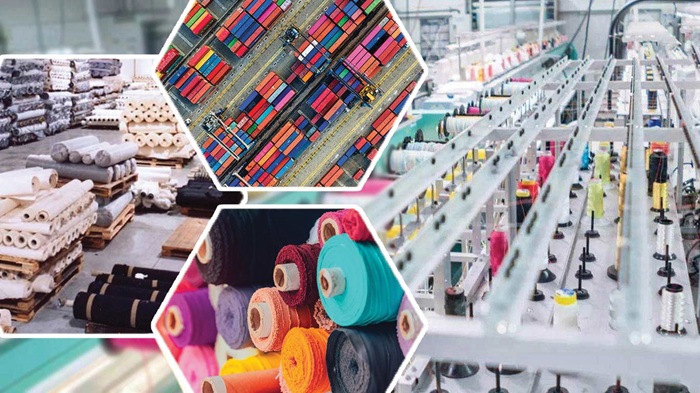
Europe’s textile and apparel sector, long seen as a benchmark for craftsmanship and industrial depth, is slipping into a prolonged slowdown. The latest EURATEX data signals a third consecutive year of decline, with industry leaders warning of a steady erosion in global competitiveness. The numbers still project scale and relevance. The sector generates over €166 billion in turnover and supports roughly 1.2 million jobs across 200,000 companies. Yet beneath that scale, the fundamentals are weakening, with production, turnover and employment all trending downward in tandem.
Table: The numbers unveil the truth
|
Indicators (2025 forecast) |
Textile sector change |
Clothing sector change |
|
Production |
-1.80% |
-4.50% |
|
Turnover |
-2.00% |
-1.80% |
|
Employment |
-4.80% |
-1.80% |
Note: Data derived from EURATEX Economic Update 2026/Key Indicators Chart
The data reflects a broad-based narrowing but the difference between textiles and clothing is telling. Apparel manufacturing is taking a sharper production hit, with a projected 4.5 per cent decline in 2025 following an even steeper fall the previous year. This signals not just cyclical weakness but a relocation of fashion manufacturing away from Europe. Textiles, meanwhile, show deeper stress on employment, suggesting that upstream manufacturing, often more energy-intensive is bearing the brunt of cost pressures. The simultaneous decline in turnover confirms that demand recovery has not kept pace with rising input costs, reducing margins across the value chain.
Apparel takes the hardest blow
The clothing segment has emerged as the weakest link in the ecosystem. After a near 7 per cent drop in production in 2024, the continued slide into 2025 underscores a sustained loss of manufacturing relevance. This is less about demand disappearing and more about demand being fulfilled elsewhere. European brands continue to sell, but production is increasingly offshored, particularly to Asia, where cost structures remain lower. A perfect storm builds
At the heart of the downturn lies the simultaneous pressures that are proving difficult to offset. The rise of large-scale digital marketplaces has intensified price competition, with low-cost imports entering Europe at volumes domestic manufacturers struggle to match. These platforms operate with cost advantages that European producers, bound by stricter labour and environmental standards cannot replicate without sacrificing margins.
Energy costs have emerged as another decisive factor. Textile production, especially in upstream processes like spinning and weaving, is energy-intensive. Persistently high power costs across Europe have widened the gap with competing manufacturing hubs, making locally produced fabrics less competitive even before they reach garment factories.
Overlaying this is increasing regulatory framework. While Europe’s push toward sustainability and circularity is globally influential, the compliance burden is disproportionately heavy on small and mid-sized firms. For many SMEs, agility is being replaced by administrative strain, limiting their ability to respond to market shifts. Demand-side weakness compounds the problem. A cooling global economy has reduced consumption, leaving brands with excess inventory and lower appetite for higher-cost European sourcing.
Ripples across manufacturing ecosystem
What’s more the implications extend well beyond apparel retail. Europe’s textile base underpins multiple industrial ecosystems, from healthcare to mobility.
Technical textiles are critical in sectors such as protective equipment, automotive manufacturing and construction. The decline in domestic capacity raises questions about autonomy, particularly at a time when supply chain resilience has become a policy priority.
Equally significant is the impact on Europe’s circular economy ambitions. Localised production is essential for scaling recycling, reuse and closed-loop manufacturing. As production moves offshore, the feasibility of these sustainability goals becomes more complex and potentially more carbon-intensive.
The policy clock is ticking
Industry leaders are now calling for higher policy intervention, with a clear timeline in mind. EURATEX has urged the European Commission and member states to implement tangible support measures before the end of 2026. Proposals such as an Industrial Accelerator Act and deeper energy market reforms are in discussion, but the industry’s message is that timelines may not align with business realities. Many firms, particularly smaller manufacturers, are already operating at the edge of viability.
The warning from Brussels is stark. Without rapid action to rebalance cost structures and ensure a level competitive playing field, production will continue to migrate, dependencies will deepen and Europe’s textile identity could fade. In that scenario, ‘Made in Europe’ risks becoming less a marker of industrial strength and more a legacy label of a once-dominant manufacturing base.











