


FW
China-Africa FTA to boost global trade
Industry leaders have suggested that China and African countries, represented by African Union, should launch a feasibility study on free trade and investment facilitation negotiation to completing the detailed text of their investment plan before their next summit, and guarantee high-level standards for trade and investment facilitation by 2025.
The recent developments in Africa and the rest of the world could prompt China and Africa to consider more ambitious trade and investment plans. Early this year, African leaders met in Rwanda and signed the agreement for establishing the African Continental FTA, which is a landmark pact that could promote African integration amid the de-globalisation, isolationist, protectionist policies being adopted and the bullying tactics used by certain economies. If China and the African countries keep sending such positive trade and economic signals by inking an FTA, they would inject new vitality into the global economy. Such an FTA would be a concrete step toward achieving the goal of mutual prosperity by institutionalising Sino-African economic activities.
Accord signatories terminate business with two Bangladeshi companies
Accord has cut ties with Super knitting & Dying Mills and all factories which are part of Supertex Group, that supply to US retailers Sears and Macy’s. Super Knitting was a signatory of the European retailer-based Bangladesh Accord for Fire and Building Safety and it failed to adhere to the outlined safety requirements. The decision will be remain effective for 18 months during which time the factories will be illegible for to re-qualify.
Super knitting & Dying Mills was inspected by the Accord for structural, fire and electrical safety in April 2014. After many attempts by the Accord staff the factory failed to make adequate progress in CAP implementation. Another company to have its business terminated, as a part of a raft of terminations in August, is SB Knitex. The company was inspected by the Accord for structural safety in June 2016 and for fire and electrical safety in November 2016. After many attempts by the Accord staff the factory failed to submit a Corrective Action Plan.
Gap Inc faces challenging times ahead
"Following a strong industry retail report of growth of 6.6 per cent and 6.4 per cent in June and July versus the previous year, and stellar results posted other leading like Urban Outfitters, much was expected from the company Gap Inc. However, the performance of the brand Gap left much to be desired. Gap Inc’s comparable sales increased only 2 per cent as against the expected 1.5 per cent, while comparable sales of the Gap as a brand fell 5 per cent against the expected decline of 2.3 per cent. However, the growth of company was led by Old Navy, followed by Banana Republic as these brands performed in-line with estimates. As per analysis of Forbes, the following factors may influence the brand’s future performance:"
 Following a strong industry retail report of growth of 6.6 per cent and 6.4 per cent in June and July versus the previous year, and stellar results posted other leading like Urban Outfitters, much was expected from the company Gap Inc. However, the performance of the brand Gap left much to be desired. Gap Inc’s comparable sales increased only 2 per cent as against the expected 1.5 per cent, while comparable sales of the Gap as a brand fell 5 per cent against the expected decline of 2.3 per cent. However, the growth of company was led by Old Navy, followed by Banana Republic as these brands performed in-line with estimates. As per analysis of Forbes, the following factors may influence the brand’s future performance:
Accelerating store openings
Gap has speeded up Old Navy store openings. The brand opened over 30 stores in FY 2017, and 28 in H1 2018,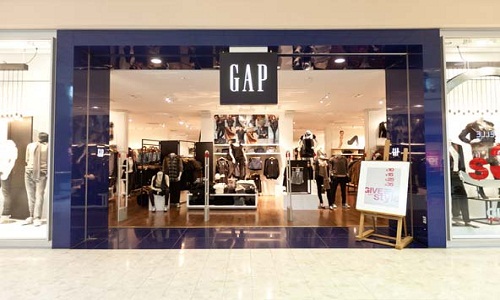 along with 85 remodels. The performance of these stores is exceeding expectations and remodels are outperforming the fleet by an average spread of five comp points. The company further plans to double store openings as compared to FY 2017, which should help increase revenues.
Introduction of plus collection
Old Navy will launch its plus collection, which was previously available only online, in 75 select stores. The women’s plus-size market is growing at a higher rate than the overall apparel market. According to NPD, even with just the online business, Old Navy falls within the top 10 women’s plus-size brands and the expansion of the category in the stores represents a significant growth opportunity.
Focus on Athleta and Old Navy
Sales in the activewear category increased 2 per cent, valuing the market at roughly $48 billion in 2017. The brand registered a double-digit growth in its second quarter and the momentum is expected to continue through FY 2018. The company expects its future store openings to be focused on Athleta and Old Navy, with closures weighted toward Gap and the Banana Republic.
Excess inventory impacts margins
The company was saddled with excess inventory in the first quarter, which consequently impacted its sales from this brand as well as its ability to optimise its margins. The overall gross margins of the company fell by 10 basis points in the quarter, after a 20 basis point decline in Q1. Looking ahead, the company has cut 30 per cent styles heading into the second half of the financial year, which should help to improve the performance.
Improvement in online business
The company has one online platform for all its brands, ensuring customers can purchase items for in one place. This also ensures recognition for its new brands which would not have been possible if they had had a separate web presence. An upshot of this is that the company was able to deliver strong growth from its online and mobile channels in the second quarter, and is on track to garner over $3.5 billion in digital sales this year.
Gap Inc. is increasing store count of Athleta, Old Navy, and the factory and outlets at the Banana Republic and Gap. Consequently, in the first half, the company opened 60 stores, largely Old Navy and Athleta, and closed 38 stores, primarily Gap and Banana Republic.
India: Weavers accuse TRU of ignoring ITC
Industrialists in the powerloom weaving sector have accused the Tax Research Unit (TRU) under the Union ministry of finance of denying the utilisation of accumulated input tax credit (ITC). TRU had thus superseded the decision taken by the GST Council to allow refund of ITC on fabrics in its 28th meeting on July 21, 2018. The meeting decided to allow refund of accumulated ITC because of inverted duty structure on the MMF fabrics, which attracts 5 per cent GST. It was also decided that the ITC shall be allowed only with the prospective effect on the purchase made after the issuance of the notification.
Weavers say, a meeting was held under the Chairmanship of Finance Minister Piyush Goyal along with Revenue Secretary Hasmukh Adhia, Textile Minister Smriti Irani and members of the textile industry from Surat on July 20. The meeting unanimously decided not to refund the accumulated credit of the past period, but income tax would be levied on the credit amount up to July 2018. The refund of accumulated ITC would be allowed on the inputs after August 1.
Jack & Jones to go back to denim manufacturing
Jack & Jones, which in its last 18 years, has progressed from a premium denim brand to one of the Europe’s leading producers of menswear, is planning to restart manufacturing denims. The brand recently modernised its logo and includes the ampersand formed by two Js – and communication materials emphasise the four brand values: Masculine, Social, Refresh, Craftsmen. The primary color of the logo is blue. The brand conducted extensive consumer research for reviving its identity. It set up an internal taskforce team consisting of people with different skills and competencies. It also hired an agency to implement its ideas.
Other initiatives that the brand include plus-size collections and collections for boys aged 08-16 years. The latter is known as Jack & Jones Junior. It further plans to develop its business on several parameters in the years to come
Bangaldesh: Trade unions missing in RMG factories
In Bangladesh’s readymade garment sector, 97.5 per cent of the factories do not have trade unions. Workers’ organisations continue to remain either weak or non-functional in garment factories.
Of the factories, about 50 per cent are found to be small, 42.5 per cent are medium and 7.4 per cent are large. One-third of parliament members are garment owners. Workers are subjected to rough behavior by top management.
The country’s garment sector has done exceptionally well in the post-Rana Plaza period but garment owners have to be pro-active to do better. Among the future challenges is achieving the 50 billion dollar export target by 2021. Factory owners say, they are under pressure in the face of global competition. They say 70 per cent of their profit is taken away by the brands. They say that though trade union activities in the garment sector are discouraged, workers’ welfare committees in factories work to protect the interests of workers. They say, post-Rana Plaza expenses were involved in making factories compliant, while now owners are trying to convert them into green factories. But factory owners concede that workers should be given most credit for the success of the country’s garment sector.
Vietnam’s exports to South Korea up 24 per cent
For the first seven months of 2018, Vietnam’s garment and textile exports to South Korea rose by 24.8 per cent year on year. July alone saw a 24.1 per cent increase from earnings made in June. The rise was 24 per cent from what it was in July 2017. The tax benefits from the Vietnam-South Korea FTA have further created a favorable environment for Vietnam to enter the market of South Korea.
South Korea will contribute to Vietnam’s goal of becoming an industrialized economy by lifting bilateral trade to 100 billion dollars by 2020. Trade between Vietnam and South Korea has risen rapidly since a free trade agreement between the two took effect in December 2015. In 2017, South Korea replaced the United States as Vietnam’s second largest trading partner, after China. It is also the largest source of foreign direct investment in the Southeast Asian economy.
Bilateral trade rose 51 per cent last year. Vietnam exports mainly garments, cell phones and seafood to South Korea, while its key imports include electronic components, machinery, fabrics and plastics. The countries will work toward reducing Vietnam’s deficit in bilateral trade.
Growing global competition affecting India’s textiles exports
India’s textile and clothing industry has entered a phase of stress and duress with increasing global competition from peer countries such as Vietnam, Bangladesh, China and Pakistan. India’s export competitiveness has been further eroded by increasing cotton prices and a free fall in the currencies of Turkey and Pakistan versus the dollar.
Countries like Cambodia, Myanmar, Ethiopia and Kenya export apparels to the US and EU riding on benefits like lower industrial wages and nil duty under GSP or AGOA agreements. With no concessions over duty on imports of apparel, India is facing a double whammy, with increasing cotton prices, and thus yarn/fabric costs, which make India’s exports uncompetitive for most international buyers.
The response, increasing the minimum support price for cotton by almost 30 per cent to 35 per cent, made the cost of essential textile inputs such as yarns and fabrics more expensive pro rata. The current slowdown started nearly a year and a half back, with a decline in the productivity of India’s textile and clothing sector.
Demonetisation had far-reaching consequences. The move impacted the already tight cash flow of the textile and clothing industry, especially small and medium units. GST disrupted sectoral balances and made Indian yarn and fabric products uncompetitive with the imports, especially fabrics from China and garments from Sri Lanka and Bangladesh.
India reviews trade treaties with Singapore
India and Singapore are reviewing their free trade agreement. The aim is to promote commercial ties between the countries. The countries had recently signed the second protocol to amend the pact, officially dubbed as the Comprehensive Economic Cooperation Agreement (CECA). This agreement, which has liberalised rules for trade in goods and services, came into force in August 2005 and the first review was concluded in October 2007 and the second one in June this year.
In an FTA review, two trading partners look to further relax rules to increase trade. Both India and Singapore are part of the proposed mega trade deal RCEP (Regional Comprehensive Economic Partnership). This is a 16-nation grouping. The group is negotiating a comprehensive free trade agreement since November 2012. RCEP comprises 10 Asean members as well as Japan, Korea, China, India, Australia and New Zealand.
The Asia Pacific is being rated as the most dynamic growth region of the world. Over 8,000 Indian companies are based in Singapore with many having set up regional headquarters with operations across the region. Singapore is a natural springboard for Indian businesses to leap into the Asean and the broader East Asian regions. These professionals are deeply familiar and connected with India. They can act as a great bridge between the two countries.
Bangladesh: Moving away from LDC may mean loss of benefits
If Bangladesh were to graduate to the league of a developing nation, it could lose the trade benefits that it had been enjoying so far as a least developed country. This could have a direct bearing on the country’s biggest foreign currency earner, the readymade garment industry.
As such, the country is going full throttle in pushing for free trade agreements with export destinations like the EU, Canada, Japan and China. It already seems to have made headway in garnering GSP status from Japan, which has reportedly assured that it will ensure duty-free facility for imports from Bangladesh, a move being viewed as a big commitment from a country where Bangladesh is eyeing to expand its apparel exports.
Bangladesh’s apparel exports to Japan rose 13.73 per cent compared to the previous year’s earnings. Overall export earnings from Japan have risen 11.73 per cent. Japan is a high-potential market for Bangladesh products and very soon it is expected to be a large export destination for Bangladesh’s goods, especially apparel and leather. The country’s earnings from exports to Japan are expected to reach two billion dollars over the next two to three years.
The European Union too has reiterated its commitment to ensure tariff-free trade benefits for Bangladesh.











