FW
US’ import of athletic footwear declines 28.2 per cent in 2020
US’ imports of athletic footwear decreased by -28.2 per cent y-o-y to 201 million pairs in 2020, falling for the second consecutive year after four years of growth. In value terms, athletic footwear imports declined remarkably from $4.3 billion in 2019 to $3.2 billion last year. Index Box reports, US’ imports of athletic footwear increased from $531 million to $3.2 billion in the past decade. US mainly imported footwear from Vietnam, China and Indonesia, accounting for 94 per cent of American imports. In value terms, Indonesia recorded the highest growth rate of exports to the US among the largest suppliers.
In volume terms, US’ athletic footwear imports increased from 39 million pairs in 2010 to 201 million pairs in 2020. The nation’s overseas athletic footwear suppliers included Vietnam, China and Indonesia, which together accounted for 94 per cent of total imports. These countries were followed by Cambodia, which accounted for a further 4.4 per cent.
In value terms, Vietnam was the largest supplier, comprising 58 per cent of total imports. The second position was occupied by China with a 25 per cent share of the total imports, followed by Indonesia, with a 13 per cent share.
Chemical protective market to grow at 9.1 CAGR from 2021-26
The 72nd issue of the Performance Apparel Market report from Textile Intelligence predicts, chemical protective clothing market will grow at a CAGR of 9.1 per cent from 2021-26. This forecast is based partly on expectations of rapid industrialization in many parts of the world and partly on expectations of significant growth in the number of life-threatening incidents involving hazardous materials, including chemical, biological, radiation and nuclear (CBRN) emergencies, outbreaks of disease and industrial accidents.
Another major factor driving the strong forecast is continuing pandemic and increased pressure on employers to provide suitable personal protective equipment (PPE) to workers. Transportation of hazardous materials is also boosting the growth of this market. In the US alone, there were 71 injuries and deaths as a result of the transportation of hazardous materials in 2020.
UN Global Compact Platform names H&M amongst top 40 global sustainable brands
H&M Group was chosen one of the 40 global leading companies across the world by the United Nations Global Compact Platform. As per a Textile Today report, through its participation in UN Global Compact action platforms, H&M Group will work with other businesses, Global Compact local networks, leading experts, civil society, governments and UN partners, to solve complex and interconnected issues and innovate around the sustainable development goals.
The group has been a signatory of the UN Global Compact since 2001. The strategic policy initiative aids businesses committed to aligning their operations and strategies with 10 universally accepted principles concerning human rights, labor, environment and anti-corruption. Panelists explore how social dialogue can be deployed to shore up resilience to future crises and what possible measures can be explored to ensure that global supply chains help drive development and contribute to decent work.
Isko introduces R-Two 50+ range of denim fabrics
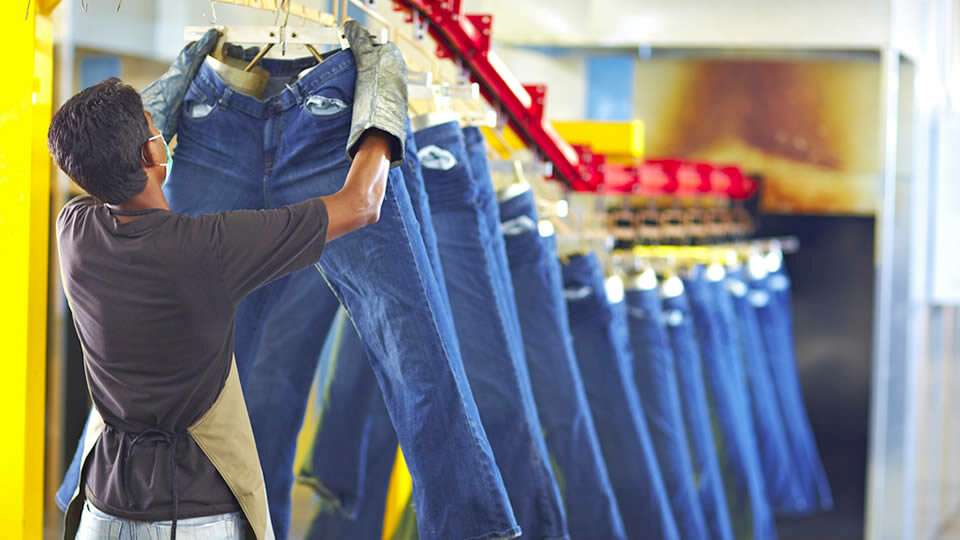
Premium denim ingredient brand Isko™ has introduced R-Two™50+.range of fabrics for creating stunning, high-quality denims that are less harmful to the natural world. The R-Two™50+ denim fabric reduces carbon emissions by as much as 45 per cent and water usage by as much as 65 per cent. It uses an exclusive yarn spinning technology, patented by Isko to reduce reliance on natural resources.
The technology makes the fabrics beautiful, stronger and more durable. They have excellent shape recovery, a soft cotton hand feel and dry up to 20 per cent more quickly. R-Two50+ fabrics have Global Recycled Standard (GRS) certification, which provides standardized verification for recycled materials. They aim to lead the way in best practices, increasing transparency and responsibility, empowering the entire supply chain, and helping brands to meet their low-impact targets.
Isko is also the first in the fashion market to achieve an ESG (Environmental, Social, and Governance) scoring, which measures companies’ sustainability and societal impact.
Reopening of western markets boosts Bangladesh’s leather exports
The reopening of Western markets led to leather exports from Bangladesh exceeding pre-pandemic levels in the first quarter of the current fiscal year. Bangladesh’s leather and leather products’ exports increased 21 per cent to $271.34 million from July to September this year, up from $225.15 million in the same period last fiscal, says Export Promotion Bureau (EPB). As per a Daily Star report, receipts were 6.66 per cent higher than $254.39 million recorded in the same three-month period of FY2019-20.
Mohammed Nazmul Hassan Sohail, Managing Director, Leatherex Footwear Industries says easing of lockdowns in key markets has pushed up demand for leather footwear and goods. And as Rubina Akhter Munni, Owner, Design by Rubina, a leather product manufacturer adds, she is receiving queries from buyers from home and abroad.
Increase trade with Bangladesh, urges BGMEA to Australia, US, Brazil
Bangladesh Garment Manufacturers and Exporters Association (BGMEA) has urged the US, Australia and Brazil to step up trade with the nation. At an international webinar organized by six Australian universities, BGMEA urged Australia to continue duty benefits post LDC graduation. Faruque Hassan, President, BGMEA delivered a keynote speech on “Apparel Industry- Competitiveness beyond COVID-19” at the webinar and highlighted the tremendous progress made by ready-made garments industry in workplace safety, sustainability and ethical manufacturing.
He assan talked about declining prices in global apparel market which has posed a major challenge for the industry, especially when the sector is struggling to turn around from impacts of the pandemic. He also urged buyers and retailers to be more empathetic and rational in pricing so that a secured global market could be built where workplace and jobs would be safer and sustainable.
Further during a call with Richard Rosenthal, CEO, Tailor Vintage, Hassan urged brands and buyers in the US to source more garments, including non-cotton and high-end apparel products from Bangladesh. He also highlighted the future priorities of the apparel industry, especially an increased focus on the non-cotton and high-end product segment.
On October 7, Brazil’s ambassador in Bangladesh and BGMEA discussed benefits of duty-free access to ready-made garments in Brazil. Hassan pointed out Bangladesh is willing to import more cotton from Brazil for its ready-made garment industry and requested the Brazilian ambassador’s cooperation to make it a reality.
Apparel brands hit by a 10-year high rise in cotton prices
Already troubled by increased transit times, factory shutdowns and other rising costs across the supply chains, apparel brands have now being hit by 10-year high rise in cotton prices. Extreme weather, such as droughts and heat waves have wiped out cotton crops across the US. In India, a poor monsoon season threatens the country’s cotton output. According to Bureau of Labor Statistics’ Consumer Price Index, apparel prices have increased 4.2 per cent year over year as of August.
As per a pymnts.com report, though prices remain below the height of over $2 seen in 2011, companies are planning new strategies to offset the resultant losses. Last week, Levi Strauss & Co negotiated most of its product costs through the first half of 2022 at very low single-digit inflation. For the second half of the year, the company anticipates prices to rise by mid-single-digits. This can be offset by increasing product prices which the company already implemented earlier this year.
Other apparel brands are yet to comment on the rising cotton prices, But, many of them are expected announce their quarterly earnings in coming weeks. This will give investors and analysts a better sense of how they’re managing, though, analysts at Goldman Sachs say it may take a while for rising cotton costs to show up on retailers’ income statements, given the timing of contracted cotton purchases.
Textile and apparel imports by EU-27 increase year-on-year in July
The textile and apparel imports by EU-27 countries increased year-on-year and month-on-month in July. However, they still remained lower compared to 2019. As per a CCF Group report, EU-27’s imports from Turkey, China, Bangladesh, India, Indonesia, Pakistan and Vietnam accounted for more than 70 per cent of its total exports.
In January-July, imports from these markets increased 18.5 per cent year-on-year to 5.03 million ton. Imports in July increased 5.7 per cent to 732,000 tons year-on-year and 5.7 per cent month-on-month It showed although EU-27 textile and apparel imports performed well in January-July and imports volume have recovered to pre-COVID level, imports remained significantly lower than pre-COVID levels in July.
Imports from Bangladesh, China and Indonesia fell sharply in July compared with the same period in 2019, while those from Vietnam declined slightly, and the imports from India, Pakistan and Turkey showed growth, especially the Pakistan. From the month-on-month growth, the imports Indonesia, Vietnam and Turkey declined, while other markets increased to varying degrees.
Surat mill owners call for shutting down of units in November
Several mill owners in Surat have proposed shutting down dyeing and printing mills in the city for the whole of November, revealed t members of the South Gujarat Textile Processing Association (SGPTA) in a meeting.
JitubhaiVakhariya, President, SGTPA said, the mill owners suggested to keep the factories shut for a month, due to a rise in the prices of colors, chemicals and coal. Textile traders are not agreeing to hike the charges of dyeing and printing.
In Surat, weavers sell grey fabric to the textile traders who then send them to the mills for dyeing, printing and finishing. The boilers in dyeing and printing units generate steam using coal, majority of which is imported.
However, shortage of coal has led to a threefold increase in prices of colors and chemicals, following which the textile mill owners carried out a meeting with the SGTPA and requested to keep the dyeing and printing mills closed for a month from 1 November.
As per the industry, coal imported from Indonesia is mostly used by the industry in Surat than lignite coal. Around 15 days ago, the price of imported coal was Rs. 4,000 to Rs. 5,000 per tonne, which has now reached Rs. 14,000 to Rs. 15,000 per tonne. Generally, around 30 to 35 tonnes of coal is used in the textile industry in a day to generate steam.
Industry is also facing short supply of colors and chemicals, some of which are imported from China. For example, the price of Hydo, which was available at Rs. 60 per kg, has increased to Rs. 200, while that of formic acid has increased from Rs. 32 per kg to Rs. 150 per kg.
Premium Group announces new trade show formats
For the first physical Frankfurt Fashion Week in January 2022, Premium Group has announced a new B2C format known as The Group for the show. It has also announced upgraded versions for its Premium and Seek trade show formats.
Premium and Seek, which will take place from January 18 to 20, are to be given a new look in Frankfurt: with more space, new areas and shorter distances, the organizers want to give visitors a "completely new trade fair experience."
The new format of the show known as The Ground is intended as a fashion festival aimed at young end consumers. Responsible for the event concept, alongside Premium bosses Anita Tillmann and JörgArntz or the Premium Group team, is B2C expert Kai Zollhöfer, who was also responsible for the concept of the Bread & Butter by Zalando public event.
The 3-day event, from January 18-20, 2022 is designed to give brands the opportunity to exhibit purpose-driven stories and products, interactively. In addition to the thematic focus on fashion, brands from the fields of wellbeing, beauty, mobility and technology will also present innovative products and solutions.