FW
CCI partners Chinese designer to launch 2019/20 Uniform Collection
Cotton Council International (CCI) partnered Chinese designer, Liu Wei, who specialises in using new technical fabrics, to launch the 2019/20 Cotton USA Uniform Collection during Beijing Fashion Week. Under the theme “With You,” Liu Wei has combined US cotton and green technology fabrics to interpret China’s professional uniform trends. The fashion show at China Fashion Week included 100 sets of professional uniforms featuring functional performance covering six professions: airlines, logistics, retail, formal business wear, civil servant and technicist. Some 800 participants watched the show.
After the fashion show, more than 200 representatives from 50 companies actively exchanged information and ideas on the challenges and opportunities in the Chinese uniform industry. Participants included: Beijing Yunyi Times Clothing Co; Haitian Materials Technology Co; Shandong Daiyin Group Renault Apparel etc. Following the launch of the uniform collections, a weeklong display and business meeting space was set up at Liuwei Studio to provide a cooperation platform and business discussion space for the uniform supply chain.
As an extension of the uniform project, Cotton USA will also strategically cooperate with Shanghai Occupational Uniform Expo in April to make a bigger impact throughout the uniform supply chain.
Europe remains Tirupur’s focus
Europe is the key market for Tirupur. The EU and the US, together, constitute 70 per cent of the market for knitwear exporters. Tirupur boasts of a Rs 46,000 crore annual apparel business and houses the entire ecosystem that supports the industry. In the five years between 2012 and 2017, annual exports increased from Rs 10,500 crores to Rs 26,000 crores. The knitwear industry in Tirupur is largely in the micro, small and medium enterprises segment. However, its profile is witnessing gradual changes. Of the 1500-odd direct exporters, the number of exporting units with more than a Rs 100 crore turnover is more than what it was a few years ago and there are at least 20 units with more than a Rs 500 crore turnover.
Yet, all has not been well for the last three years. Export growth is not up to the expected level, investments have been need-based, and there is a struggle to be price-competitive. The incentives that the industry received before implementation of GST through different schemes worked out to nearly 13.2 per cent. This was reduced to 5.7 per cent after GST.
The inherent strengths of Tirupur, and its focus on efficiency and technology, have helped it sustain exports for the last two years.
Bangladesh apparel exports grow as leather and jute exports decline
As per Export Promotion Bureau data, export earnings in the first nine months (July to March) of the financial year were around $31 billion. The figure exceeded the projection of $28.83 billion by 7.2 percent and the exports of the same period last fiscal year by 12.57 percent. Total exports in the fiscal will beat estimate if growth continues, however, challenges for exporters remain.
Many of them are “facing existential crisis” due to higher interest rate on loans from the World Bank and a drop in commodity prices in the global market. Growth in exports has been helped by earnings from the apparel sector as usual. Bangladesh exported garments worth around $26 billion in the first three quarters of the fiscal year, marking a 13.65 percent growth.
Leather and jute exports, however, missed targets. Bangladesh exported leather goods worth over $771 million in July-March period against $848 million earnings in the same time last fiscal year. Exports of jute and jute products dropped to $628 million from last year’s $818 million a fall of 23 percent.
Sustainability, social issues score high among GenZ consumers
 Sustainability and transparency, the two watchwords of the millennials, are now been actively taken up by the Gen Z. New and friendly brands of this generation are creating sustainable, authentic and transparent products and services that address the concerns and aspirations of Gen Z and build trust for the future.
The 2018 “Report on Young People and Social Change’ by DoSomething Strategic, a social impact consultancy names Patagonia as a top purpose-driven brand. The brand, not only encouraged customers to repair their old apparels instead of discarding them but also created a marketplace for reselling pre-worn clothes. The company also created a digital platform to connect its consumers to causes. This has doubled its revenue in the last eight years.
Elisabeth Best, Manager-Sustainability Management, the global nonprofit Business for Social Responsibility’s (BSR), notes millennials and GenZ consumers are creating demand for sustainable products. A survey by Cone Communications, reveals around 94 per cent of the Gen Z shoppers believe companies should address urgent social and environmental issue as against 87 percent of Millennials.
Seeking value for money
A Cotton Incorporated Lifestyle Monitor™ Survey highlighted, around 36 per cent of consumers are likely to pay full price for a clothing item made in a sustainable or environmentally friendly manner. This figure increases to 39 per cent of millennials and 40 per cent of GenZ shoppers.
Gen Z, those born between 1996 and 2010, make up a quarter of the US population. Their purchasing power, as per a study by the IBM Institute for Business Value, is around $44 billion. They’re expected to account for 40 percent of all consumers by 2020.
Honesty, authenticity from brands score high
Born as digital natives, GenZ consumers were raised during the era of non-stop social media, where memes are presented as facts and intentionally fabricated news stories have run rampant. UK-based Sustainly, a sustainability consultancy, says the young people of this generation demand honesty and authenticity from brands because they’ve “come of age in this crisis of trust.
Monitor™ Research studies show, despite their young age, GenZ consumers prefer clothes made of natural fibers such as cotton, wool, etc. (38 percent). Another 38 per cent prefer sustainable clothing. The Monitor™ survey reveals that around 75 per cent of Gen Z consumers site cotton as their favorite fabric as it is sustainable and trustworthy.
Interest in social issues
The Gen Z consumers are also interested in social and environmental issues. As the Monitor™ research shows water quality tops the list for 91 percent of Gen Z consumers. This is followed by concerns with global warming and climate change (91 percent), loss of rural farmland (91 percent), extinction of animals and/or plants (91 percent), and the depletion of natural resources such as oil or minerals (82 percent).
A survey by Greenmatch, a renewable energy consulting agency has shown, 72 per cent of Gen Z respondents were willing to spend more money on goods and services produced in a sustainable fashion. Almost half (49 per cent) stopped purchasing or boycotted a brand because they stood for something or behaved in a way that is against their values.
Young people align with brands that reflect their values. As the DoSomething Strategic survey noted more than half of the 13-to-25 year olds surveyed are influenced by a brand’s reputation and values. And nearly 30 percent actively seek out socially or environmentally responsible brands.
The survey advises brands to balance profits and purpose. This can only happen if they remain as committed to doing good as they are to increasing their sales.
New markets, technological innovations to boost India’s apparel exports
"An analysis of the macro-trends and proprietary data of 100 top apparel exporters in India reveals, export value and shipments from major markets like the UAE have consistently fallen during the year. A report by US-based Drip Capital, a major provider of trade finance for SMEs in the sector, notes demand from key importers has declined over the last few months."
 An analysis of the macro-trends and proprietary data of 100 top apparel exporters in India reveals, export value and shipments from major markets like the UAE have consistently fallen during the year. A report by US-based Drip Capital, a major provider of trade finance for SMEs in the sector, notes demand from key importers has declined over the last few months. This decline, starting last year with new manufacturing zones coming up in free market zones, surpasses the increase in exports to India’s largest markets, the US and the EU.
Decline worries apparel exporters
This decline has flagged concerns among Indian apparel exporters, the major foreign exchange earner for the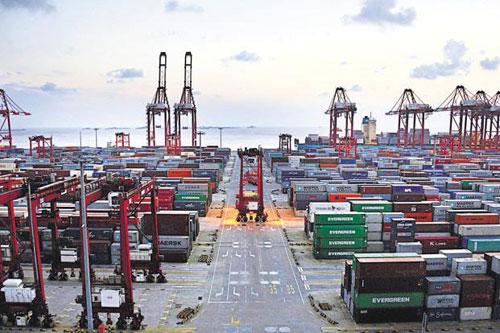 country. As an ICRA report published earlier this month pointed out, negative growth of 4-5 per cent registered in 2018-19 may also continue in the next financial year. Adding to the woes, Drip capital report also emphasises on the complaints made by the United States to the World Trade Organization (WTO) against India's export incentive schemes, which Washington holds responsible for unfair market practices. This further shrouds the future of apparel exporters with uncertainty, translating into stagnation for the overall sector.
India loses market share
With Bangladesh and Vietnam establishing themselves as two of the most developing nations, China continues to lose its share with a majority of its jobs percolating down the value chain. Rising imports from these nations have also eaten away at the competitiveness of smaller domestic players and the government raised import duties on more than 330 textile items in 2018.
Drip Capital’s report also emphasises on the need for immediate policy changes and interventions to give the sector a boost. It recommends expansion of both the Credit Link Capital Subsidy Scheme for Technology Upgradation, as well as the Technology Upgradation Fund Scheme to incentivise apparel exporters to push exporters to adopt higher technology.
The Federation of Indian Export Organisations (FIEO) has also reiterated this demand for urgent and immediate action on falling exports including augmenting the flow of credit and better fiscal support. It has identified four new markets that show high potential for future growth: United Kingdom, Chile, Israel, and Japan. Identifying products with high growth potential besides exploiting technological innovations will enable exports to further enhance their efficiency margins.
HKTDC to organise four major international trade fairs in April
"Hong Kong Trade Development Council (HKTDC) is hosting four major international trade fairs this April. The Houseware Fair and the International Home Textiles and Furnishings Fair will be held from April 20-23 April, 2019 at the Hong Kong Convention and Exhibition Centre (HKCEC). This will be followed by the Gifts & Premium Fair from April 27-30, 2019 also at the HKCEC, and the International Printing & Packaging Fair, jointly organised with CIEC Exhibition Co (HK) at the AsiaWorld-Expo."
 Hong Kong Trade Development Council (HKTDC) is hosting four major international trade fairs this April. The Houseware Fair and the International Home Textiles and Furnishings Fair will be held from April 20-23 April, 2019 at the Hong Kong Convention and Exhibition Centre (HKCEC). This will be followed by the Gifts & Premium Fair from April 27-30, 2019 also at the HKCEC, and the International Printing & Packaging Fair, jointly organised with CIEC Exhibition Co (HK) at the AsiaWorld-Expo.
The Houseware Fair will feature 2,160 exhibitors from 27 countries and regions, while the concurrent Home Textiles Fair will bring together about 310 exhibitors from seven countries and regions. The Gifts & Premium Fair will attract 4,380 exhibitors from 30 countries. The Printing & Packaging Fair will welcome nearly 500 exhibitors from six countries and regions. In addition, the HKTDC will organise 300 buying missions, comprising more than 14,600 companies from around the world, to visit the fairs.
Startup Zones to promote innovations
With an aim to promote entrepreneurial innovation and the sustained development of corporations, the HKTDC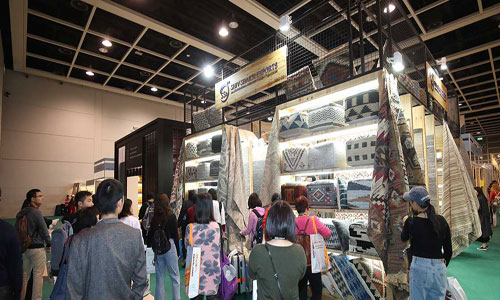 will also set up Startup Zones at these events.
This year's Houseware Fair will have 28 start-ups from Hong Kong, Mainland China, Indonesia and the Philippines. While the Gifts & Premium Fair will have 34 start-ups from Hong Kong, mainland China, Indonesia, the Philippines, the Netherlands and Taiwan will be on site.
This main theme of the Houseware Fair is L.I.F.E. - representing which means Lifestyle, Interior, Feast and Enrich. The ‘Lifestyle’ segment will cover dining, home decor and eco-friendly houseware products. The Candles and Scenes zone will debut at the ‘Interior’ segment. The ‘Feast’ theme will feature an array of cooking and dining tools, while ‘Enrich’ will spotlight such quality-of-life-enhancing products such as pet supplies, baby products, gardening supplies, and beauty and healthcare products.
To highlight these four themes, HKTDC has teamed up with WGSN, a world-renowned trend forecasting authority, to set up an on-site display featuring new concepts and highlighting key lifestyle and interior trends for Spring/Summer 2020.
Home textile and beauty products on display
The Home Textiles Fair will have multiple zones including those presented by three of India's largest chambers of commerce for the textiles industry - the Handloom Export Promotion Council (HEPC), Export Promotion Council for Handicrafts (EPCH) and the Carpet Export Promotion Council (CEPC). These pavilions will be dedicated to fine home textiles products from across South Asia. The Gifts & Premium Fair will launch the World of Beauty, Fitness & Well-being zone featuring around 40 exhibitors from the mainland, Hong Kong, Taiwan, Korea, India and New Zealand. The Hall of Fine Designs Zone, on the other hand, will display more than 140 brands from around the world. In addition, the Hong Kong Exporters' Association, the co-organiser of the fair, will present a pavilion with three zones - Isle of Originality, Brand Oasis and Smart Design HK - featuring more than 170 quality Hong Kong gift exporters.
Eco-friendly products and materials in focus
The Hong Kong International Printing & Packaging Fair will feature four major thematic zones: De Luxe, Green Printing & Packaging Solutions, Printing & Packaging Solutions for Fashion & Accessories and Innovative Retail Display Solutions. It will also mark the debut of the World of Advertising and Signs zone to showcase creative visual communication and promotion approaches. The fair will also organise a series of seminars including sessions entitled "Embrace Opportunities in Greater Bay Area: Certification and Training Services in Hong Kong's Graphic Arts Industries" and "New Development and Application of Wide Gamut Colour Printing".
Tommy Hilfiger to focus on next gen retail experience
Tommy Hilfiger is now looking at next generation retail experiences and partnerships to stay ahead of today’s continuously changing shopping habits and preferences. The brand will reshape its retail landscape in North America by closing the New York City Fifth Avenue TH store and the TH store on Collins Avenue in Miami, Florida. Leveraging its store-of-the-future concepts rolled out in the global retail landscape, it will develop and test new modular, digitally infused retail concepts in the continue.
The brand also plans to expand once the agreement between PVH Corp and Dickson Concepts to reacquire the license for the TH brand in Central and South East Asia, closes. The transaction is aligned with PVH’s strategy of gaining more direct control over its brands, including the acquisition of licensed businesses.
Indonesia: Jiangsu Lianfa Textile to launch factory next year
Jiangsu Lianfa Textile, listed on the Shenzhen Stock Exchange, plans to launch its factory next year with an investment of between 5 and 6 trillion rupiah ($350 million and $422 million). The factory, in Indonesia’s Central Java province, will produce yarn for shirt-making, reducing the cost of yarn imports by $1 billion for Indonesian shirtmakers and helping them produce final goods such as fabrics and shirts more speedily for the US market.
Textile exports contributed $13.8 billion last year, or about 2 per cent of Indonesia’s GDP. It created around 3 million new jobs. The country aims to grow its textiles exports this year to $15 billion for the US, Japanese and European markets.Among other things, companies in Indonesia must pay a high minimum wage and commit to high severance payments.
Montex stenters makes a mark in technical textiles segment
Montex stenters have earned their leading position in the technical textiles market due to their overall robustness, reliability and economy. Technical textiles are a key pillar of Montex’s production program. Polyester warp knits, as well as woven materials, are also continuously pre-treated and finished on Montex stenters by leading Tier I suppliers of seating materials to the automotive industry.
Diverse end-products can be successfully finished on Montex stenters as well as with Montex coating units. Recent Monforts Montex stenter installations in Europe, for example, are dedicated to the production of wide-width digital printing substrates, to high volume automotive fabrics and to heavy duty filter media, to name just three advanced technical materials. Three Montex stenters have just been installed at the plant of a leading finisher of substrates for digital printing substrates in Germany – two of them in extra-wide widths of 5.4 meters – for drying after both washing and coating processes.
The ability to thermally-set PTFE fabrics without oil greasing in the stenter chain and in the width adjustment is meanwhile particularly appreciated by manufacturers of filter media using Montex stenters. This protects workers and the environment from harmful oil vapors and keeps the filter material clean. The emphasis for these manufacturers is not just on quality standards but also on precise control and guaranteed reproducibility.
Benninger to present latest developments at ITMA
At this year's ITMA in Barcelona, Benninger will present its latest developments including the Benninger-Küsters CPB dyeing centre for knitwear and woven fabrics - the only salt-free cold dyeing process; the Tempacta washing steamer for knitted fabrics with freshwater supply that is controlled by the degree of contamination; the Trikoflex drum washing machine that is available up to a working width of 5400 mm. In addition, a specially developed expander roller for sensitive fabrics will also be exhibited.
Benninger is celebrating its 160th anniversary IN 2019. The company, for the last 160, has continuously reiterated its commitment to textiles and responsibility towards sustainable textile production. Its consistent innovation and the continuous improvement and further development of our products, processes and services, has enabled it develop resource-efficient textile finishing plants.