FW
Adidas to produce 11 million pairs of shoes in 2019
Adidas plans to double its production of shoes containing recycled plastic waste, from five million to 11 million pairs of shoes in 2019. The brand intercepts plastic waste on beaches before it reaches the oceans in collaboration with environmental organisation Parley for the Oceans. This upcycled plastic waste is then made into a yarn which becomes a key component of the upper material of Adidas footwear. In 2018, the brand saved more than 40 tonnes of plastic waste in its offices, retail stores, warehouses and distribution centres worldwide and replaced it with more sustainable solutions.
Adidas recently signed the Climate Protection Charter for the Fashion Industry at the UN Climate Change Conference in Poland, and agreed to reduce greenhouse gas emissions by 30 per cent in 2030. Adidas is also committed to using only recycled polyester in every product and on every application where a product exists by 2024.
CPTPP opens up new markets for members as US looks to join back
"The anticipated impact of the CPTPP will be immense, as slashed tariffs encourage significant shifts in global supply chains. Its high-standard provisions on the digital economy, investment, financial services, labor and the environment establish new "rules of the road" that will have a broad country-specific and collective impact. CPTPP includes high-standard chapters covering customs and trade facilitation, standards and technical barriers to trade, investment, services, intellectual property, e-commerce, government procurement, SOEs; labor, environment, regulatory coherence, transparency and more."
 The anticipated impact of the CPTPP will be immense, as slashed tariffs encourage significant shifts in global supply chains. Its high-standard provisions on the digital economy, investment, financial services, labor and the environment establish new "rules of the road" that will have a broad country-specific and collective impact. CPTPP includes high-standard chapters covering customs and trade facilitation, standards and technical barriers to trade, investment, services, intellectual property, e-commerce, government procurement, SOEs; labor, environment, regulatory coherence, transparency and more.
Impact on various countries
As the CPTPP opens new markets and, in some cases, imposes new rules on domestic treatment of data, intellectual property, labor rights, and more, each country has a unique set of economic and political circumstances to consider. Some of these impacts on the following countries will include:
Australia: The CPTPP will help support Australian businesses to grow and see annual benefits of up to [AUD]$15.6 billion to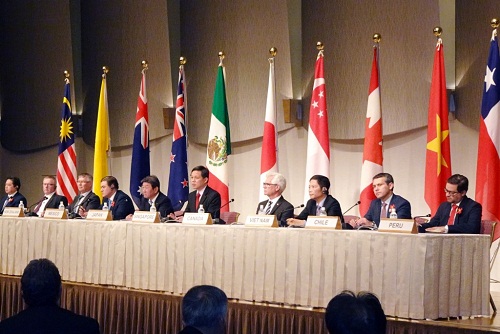 the national economy by 2030. However, despite these anticipated benefits, some economists estimate the ultimate real national income boost to be just 0.5 percent by 2030—the lowest of all Parties..
Canada: The CPTPP represents a significant opportunity for Canada to diversify its trade links and build stronger export markets in Asia. The country’s food and agriculture industry in particular is poised to benefit, gaining preferential access where it currently faces high tariffs, such as in Japan, Vietnam and Malaysia. Overall, Canada's GDP gains are estimated at $4.2 billion, higher than under the TPP, because it is no longer competing with the United States under the same agreement.
Japan: The CPTPP serves to set a floor for the anticipated US-Japan FTA negotiations, and could also give Japan leverage in the midst of other ongoing negotiations, including those for the Regional Comprehensive Economic Partnership (RCEP).
Mexico: The CPTPP allows Mexico to have FTAs with six additional Asia-Pacific nations, including Australia, Brunei Darussalam, Malaysia, New Zealand, Singapore and Vietnam. Its transparent membership process could allow Mexico to exploit new trade and investment relationships with other Asian countries and Latin American neighbors. Mexico will benefit not only from non-tariff barriers with its CPTPP partners, but also from wide treaty coverage and strict protections in several areas, such as digital trade, regulatory coherence, intellectual property rights (IPR), SOEs, services, labor and environment, transparency and corruption.
Other countries, including Colombia, Indonesia, the Philippines, South Korea, Taiwan, Thailand, and the United Kingdom, have indicated varying degrees of interest in joining the Agreement.
US to rejoin agreement
Following the US midterm elections on November 6, 2018, where Democrats attained a majority in the House of Representatives, it is possible that trade policy priorities will shift slightly. However, the speed with which the United States could potentially join the CPTPP, seek to improve the agreement, or consider other options would depend on the terms and conditions of its accession.
Using the agreement to mitigate economic impact
With the US-China trade war escalating, some CPTPP members may use the agreement to mitigate some potential economic impact. For example, Vietnam's economy is highly dependent on exports, a quarter of which go to China. Demand may slip, especially for those goods which are re- exported to the United States. The CPTPP, then, will open up new export markets and other opportunities.
Global Britain vision to focus on India-UK relationship post Brexit
"However, the present India-UK trade relationship does not look particularly special. In 2016, the UK was the fifth-largest export destination for Indian exports, behind the USA, the UAE, Hong Kong and China. It accounted for only 3.3 percent of Indian exports, valued at $8.66 billion (€7.6 billion). This is miniscule in comparison to the almost 16 per cent of Indian goods exported to other EU countries. In terms of imports, the UK is not a significant exporter for the Indian market and overall, it barely scrapes into India's top 20 trade partners."
 Once the UK manages to cast off the EU's yoke, it will be able to strike its own trade deals with countries around the world. This inevitably places India high up on its wish list.
UK, a miniscule part of India’s exports
However, the present India-UK trade relationship does not look particularly special. In 2016, the UK was the fifth-largest export destination for Indian exports, behind the USA, the UAE, Hong Kong and China. It accounted for only 3.3 percent of Indian exports, valued at $8.66 billion (€7.6 billion). This is miniscule in comparison to the almost 16 per cent of Indian goods exported to other EU countries. In terms of imports, the UK is not a significant exporter for the Indian market and overall, it barely scrapes into India's top 20 trade partners.
Yet, according to Kevin McCole, COO, UK India Business Council, this is not the full picture of the economic relationship between the countries. While India-UK trade relationship "is not as strong as it could be," the key to the overall relationship is the bilateral ties which include the level of investment from both countries into each other, and the level of shared innovation and research projects companies and institutions from the countries work on.
EU eager for a trade deal with India
McCole points out, growth in trade and investment between Britain and India will be driven by the tech sector. The EU has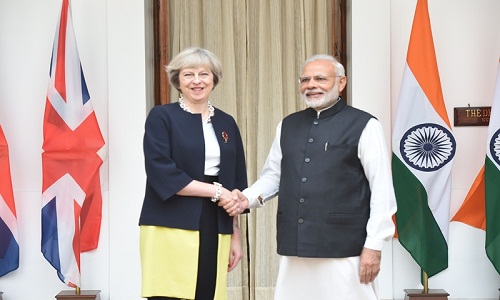 been in negotiations with India over a trade deal since 2007. While little progress has have been made since the Brexit vote, the EU is still eager for a deal. It believes that there is plenty of room to expand trade and investment relations and make them more fruitful.
The business sentiment within India is not as anti-Brexit. Shortly after the 2016 Brexit vote, the Federation of Indian Chambers of Commerce & Industry (FICCI) conducted a survey of 45 Indian companies that do business in the UK. While 28 per cent said Brexit would have a negative impact on their business within the UK, 41 per cent said it would be either good for business or would make no difference. Similarly, 48 per cent said their primary reason for being in the UK was the UK market, rather than access to the EU market as a whole. This is a view that certainly can be found within some of India's major export areas. Clothes and textiles are one such area, accounting for a whopping 13 per cent of all Indian exports. The EU is the largest apparel market for India, with the UK taking in the biggest share of that and accounting for more than 10 percent of all Indian exports in apparel.
Yet as appealing as the advancement of UK-India business ties are to Brexit-supporting politicians or to those businesses with a particularly strong India-UK basis, they can hardly be seen in isolation from the central question currently gripping the entire Brexit debate.
Vintage show at Pitti Filati showcases innovations in knitting yarn
Pitti Filati is on till January 25, 2019. This is a trade show for the knitting yarn industry, showcasing spring/summer 2020 trends and collections to industry buyers. The main markets covered by the event, besides Italy, are the UK, France, Germany, the US, Switzerland, Spain, Russia, Turkey, Japan, the Netherlands, China, Belgium, Sweden, South Korea and Hong Kong.
Techno-Luxury, a section where rare and hi-tech materials blend is showcasing the combining of both rare fabrics, like cashmere, and polyamide and polyester yarns. Participants are Italian warp knit and circular knit stretch fabric specialists. CustomEasy is a knitwear capsule collection resulting from the synergy between various players at Pitti Filati.
A debate focused on supply chain management and sustainable development, on workers’ rights and growth in the regions involved in the textile industry supply chain. Pitti Filati is highlighting for the first time vintage apparel, accessories and design objects. A special layout punctuated by illuminated frames is accompanying visitors as they discover a new perspective on vintage.
Revenues of the Italian yarn industry were up 2.7 per cent in 2018. Bucking the trend of the last few years, exports grew again, rising by 3.6 per cent though imports were slightly down.
Trade war, global uncertainties affect Hong Kong Fashion Week
Hong Kong Fashion Week was held January 14 to 17, 2019. Hong Kong Fashion Week is held every January and July as a trade show for women’s wear, men’s wear, children’s wear, lingerie, swimwear, evening wear, handbags, shoes, accessories, fabrics, buttons and labels. In this edition, the mood was subdued as exhibitors were facing uncertainties from the ongoing trade conflict between the United States and China as well as rapid changes in sourcing and retail models.
While US buyers were not as abundant as in the past, there were a number of attendees from Europe, Indonesia and Australia who roamed one vast hall filled with sparkling evening gowns, scads of sweaters, beaded handbags, rows of denim and pint-sized clothing for children. US tariffs on Chinese goods had affected buyers’ confidence levels in placing orders with Chinese factories. They were turning to sourcing from Vietnam.
Last year, the show added a corporate fashion and uniform zone, popular for its offerings of stylish and tailored company uniforms. That section was back this year as were sections for fashionable sportswear, thermal clothing, bridal and evening wear, intimate wear and swimwear.
One of the few exhibitors from India was Only For U Designs, showing colorful tunic tops. Usually some 25 Indian companies exhibit at the show.
Korea faces growing deficit
Korea’s trade deficit continued to expand in 2018. In 2018 import value of textiles and apparel into Korea was up by 12.11 per cent and export value was up by 2.25 per cent. Trade between Korea and Vietnam increased but the import and export textile and apparel share of China dropped.
Textile and apparel exports of Korea are dominated by 60 codes (knitted or crocheted fabrics), 54 codes (manmade filaments) and 55 codes (manmade staple fiber). In 2018, export value of 60 codes (knitted or crocheted fabrics) fell 4.12 per cent year on year. Export value of most major export varieties increased, and export of 55 codes (manmade staple fiber) moved up by 15.97 per cent.
Korea’s export volume to Vietnam increased 3.9 per cent year on year and to the US moved up by 11.25 per cent. As for Korea’s imports of textile and apparel, China was the largest source of imports, accounting for 37 per cent, up by 6.91 per cent year on year. Vietnam’s share increased 23.25 per cent. The share of Indonesia, India, Myanmar and other countries also moved up. China’s market share has been decreasing year on year, while that of India and some Southeast Asian countries such as Vietnam is growing rapidly.
Global economic growth to be steady in 2019-20
The global economy is expected to grow at a steady pace of around three per cent in 2019 and 2020. Risks include escalation of trade policy disputes, financial instabilities linked to elevated levels of debt and rising climate risks.
Growth in East Asia is projected to be moderate 5.8 per cent in 2018 to 5.6 per cent in 2019 and 5.5 per cent in 2020. Private consumption will remain the key driver of growth, supported by healthy job creation, rising incomes and moderate inflationary pressures. In most countries, infrastructure investment is also expected to remain strong as they focus on expanding productive capacity and easing structural bottlenecks. The region’s export growth, however, is likely to slow, amid a softening of the global electronics cycle and elevated trade tensions.
In China, growth is projected to remain solid, but will moderate from 6.6 per cent in 2018 to 6.3 per cent in 2019. The imposition of tariffs by the United States will dampen exports, while ongoing economic rebalancing measures will weigh on industrial sectors with excess capacity. The Indian economy is expected to expand by 7.6 per cent and 7.4 per cent in 2019 and 2020, respectively, underpinned by robust private consumption, a more expansionary fiscal stance and benefits from previous reforms.
Cotton growers may benefit from Bayer-Monsanto merger
German-based Bayer has taken over US seeds group Monsanto. The integration of Monsanto into Bayer is creating tremendous innovation and tailored solutions for the agriculture industry as a whole, including of course cotton growers.
Bayer’s move to combine its crop chemicals business with Monsanto’s industry-leading seeds business is the latest in a series of major agrochemicals tie-ups. The deal creates the world’s largest integrated pesticides and seedscompany but would limit the number of competitors selling herbicides and seeds in Europe. There are concerns the proposed acquisition could reduce competition in a number of different markets resulting in higher prices, lower quality, less choice and less innovation.
The breeding, biotechnology and digital advancements of Monsanto, combined with the broad crop protection and seed treatment portfolio of Bayer, may support the cotton industry globally.
Bayer has a keen focus on delivering increased yield, fiber quality, disease resistance, and product choices that work across a diverse set of environmental conditions. Additionally, Bayer will continue to engage, listen, promote, and partner in key supply chain initiatives for cotton fiber.
Bayer has a plan to create combined offerings of seeds and pesticides with the help of new digital farming tools, which include sensors, software and precision machines.
Brazil enters Chinese cotton market
Chinese tariffs on imports of cotton from the US have been extremely destructive to the US cotton market. Cotton is a big money-making product for the United States, which exports almost all its domestic crop and is the largest cotton exporter in the world. Its biggest market area is Latin America, where cotton gets shipped to Central America to be spun into yarn and then made into fabric for clothes that come back to the United States. The country’s second-largest cotton export area is northeast Asia.
With tariffs making US cotton cost more, Chinese cotton importers are looking to other countries—including Brazil, Australia and India—to fill their needs at a lower cost. Brazil is the country that everyone is expecting China to buy from. Brazil is preferred because, like the United States, it uses machines rather than hand labor to harvest its cotton, resulting in less debris in the picked cotton.
Brazil is trying to gain more market share in China by upping its cotton production by 19 per cent. For the 2018-2019 crop season, the country is expected to harvest 11 million bales of cotton. The tariff problem comes at a bad time because China will probably have to import more cotton this year than in previous years. China’s cotton inventory last year was less than 6.5 million tons, which is half the reserve it had in 2014.
CEO agenda launched at WEF meet, sets the roadmap for sustainable fashion
"A new research from UNFCCC reveals, greenhouse gas emissions from textile production currently amount to 1.2 billion tons annually. This is more than the emissions of all international flights and maritime shipping combined. The fashion industry has increasingly been working on issues such as chemicals, circularity and equality but must also further address its impact on climate change."
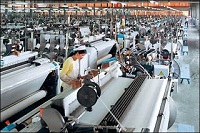 A new research from UNFCCC reveals, greenhouse gas emissions from textile production currently amount to 1.2 billion tons annually. This is more than the emissions of all international flights and maritime shipping combined. The fashion industry has increasingly been working on issues such as chemicals, circularity and equality but must also further address its impact on climate change.
At the World Economic Forum’s Annual Meeting, Global Fashion Agenda released the CEO Agenda 2019. Developed in collaboration with leading fashion players Asos, Bestseller, H&M group, Kering, Li & Fung, Nike, PVH Corp., Sustainable Apparel Coalition and Target, the CEO Agenda 2019 reflects global developments, highlighting climate change as a core priority.
Contributing to the development of the local fashion industry
The release event in Davos was attended by CEOs from fashion and interconnected industries who discussed ways to make fashion more sustainable at an accelerated pace. This would require a collaborative effort across the value chain and engaging in a dialogue with external stakeholders, who play an integral role in creating this change.
The CEO Agenda contributes to development of the Davos fashion industry as a major contributor to the global sustainability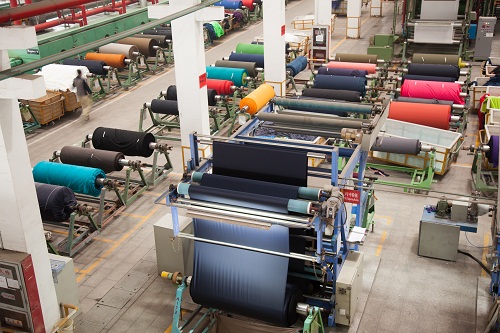 agenda. To achieve this, fashion companies need to future-proof their businesses. Social and environmental issues such as climate change, microfibre pollution, growing population and automation are likely to affect the future business model of the industry. According to projections from the Pulse of the Fashion Industry 2018 report, co-authored by Global Fashion Agenda and The Boston Consulting Group, fashion brands, by investing in sustainability, will be able to reduce their social and environmental footprint whilst improving their bottom line, with a potential increase in EBIT margins.
COA Agenda sets sustainability goals
The CEO Agenda has become a reference point for implementing sustainability measures, guiding corporate strategies, policymaking and investments. While many CEOs are already stepping up their work to address these shifts, half of the industry is yet to take action on sustainability. This will require top-level engagement from fashion brand CEOs, who can lead the transformation of not only their own companies but also the entire industry. The CEO Agenda 2019 details eight priorities for CEOs in fashion industry. Of these four core priorities for immediate implementation include:
• Supply chain traceability
• Combating climate change
• Efficient use of water, energy and chemicals
• Respectful and secure work environments
The remaining four transformational priorities for fundamental change are:
• Sustainable material mix
• Circular fashion system
• Promotion of better wage systems
• Fourth industrial revolution