FW
US wants Bangladesh to focus on labour rights
The United States wants Bangladesh to resolve long-standing labor rights concerns so that it can focus on preparing for a future as a middle income country and, eventually, a developed country. Bangladesh is preparing to graduate from least developed country status in 2024. Its readymade garment sector is much safer than in 2013 when the Rana Plaza disaster occurred. Dramatic improvements are taking place that are bringing the sector up to world-class standards.
However, there is still work to be done on factory and building safety. Efforts need to continue to ensure remediated factories stay safe, and that new workers are properly trained on safety practices. Bangladesh has improved labor safety and standards. Child labor is being weeded from hazardous jobs. Labor laws are being made worker-friendly. The country is now very proactive, candid and open in terms of having discussions over labor issues.
Safety in the workplace has become a major priority in Bangladesh. A training program has been launched for some eight lakh readymade garment workers. This training is expected to contribute greatly to that goal as both workers and employers will benefit from improved safety practices. A well-coordinated approach will be taken to address emerging labor standards.
Scientists develop new method to make super elastic fibre
EPFL scientists have devised a fast and simple way to make super-elastic, multi-material, high-performance fibers. These fibers have been used as sensors on robotic fingers and clothing. They are made of elastomer and can incorporate materials like electrodes and nanocomposite polymers. The fibers can detect even the slightest pressure and strain and can withstand deformation of close to 500 per cent before recovering their initial shape. All this makes them perfect for applications in smart clothing and prostheses, and for creating artificial nerves for robots.
The fibers were developed at EPFL's Laboratory of Photonic Materials and Fiber Devices (FIMAP), headed by Fabien Sorin at the School of Engineering. The scientists used a thermal drawing process, which is the standard process for optical-fiber manufacturing. They started by creating a macroscopic preform with the various fiber components arranged in a carefully designed 3D pattern. They then heated the preform and stretched it out, like melted plastic, to make fibers of a few hundred microns in diameter. The end result was a set of fibers with an extremely complicated microarchitecture and advanced properties.
Trade ties: A balancing act for two global economies
"The US has been the undisputed leader in trade negotiations. Notably, so as it governs the world’s biggest share of exports of services. US exports more services than it imports from the rest of the world, a $230 billion surplus. Let’s take a look at how the entire calculation works. Apple pays its subcontractor in China, Foxconn, about $10 for product assembly, with parts shipped from multiple nations. Foxconn ships the assembled iPhone to the US at an invoice value of around $220-$210 for imported parts, $10 for assembly. This is recorded as US import from China although only $10 of the trade value was added there."
 The US has been the undisputed leader in trade negotiations. Notably, so as it governs the world’s biggest share of exports of services. US exports more services than it imports from the rest of the world, a $230 billion surplus. Let’s take a look at how the entire calculation works. Apple pays its subcontractor in China, Foxconn, about $10 for product assembly, with parts shipped from multiple nations. Foxconn ships the assembled iPhone to the US at an invoice value of around $220-$210 for imported parts, $10 for assembly. This is recorded as US import from China although only $10 of the trade value was added there. The iPhone’s $649 retail value minus $220 equaling Apple’s $429 gross margin appears nowhere in trade data. The Chinese value-added $10 component is worth $150 million – 4.5 per cent of 15 million iPhones worth $3.3 billion.
Indeed, China has a principal role in the US merchandise deficit. Combining goods & services, China accounts for 59 per cent of the US trade deficit: $337 billion for China compared with $566 for the world as a whole. Tens of millions of Chinese workers slog for less than $5 per hour on behalf of the US consumers, making low-tech products, while a few million Americans in skilled jobs earn $35 or more per hour to develop aircraft and financial packages or produce soybean and pork.
Trade deficit
The US has been running deficits against the rest of the world for decades. The deficit with the world is $566 billion. In goods, that growing deficit is $796 billion, although in services the US posts a surplus, also growing, of $230 billion. Imports from China amount to $524 billion, or 18 per cent of the US’ total imports of $2,895 billion. The US runs a surplus with few countries. Most are small. The combined surplus with the top 15 of such nations, including the Netherlands, the United Kingdom and Guatemala, is just over $148 billion. The rest of the world, including China, partially finances the US trade deficit. The Chinese do not need or use dollars in their country. Chinese firms turn them over to local banks in exchange for their own currency, and banks turn them over to their central bank. The central bank reinvests that surplus in US assets, mainly Treasury securities. This helps prop up the US Government budget, keeping the US dollar strong and aiding US consumers with affordable goods and low interest rates for mortgages and credit cards while maintaining Chinese jobs. The US Government, spending more than it takes in from domestic tax revenue, has run a deficit for most of the last 35 years. But it still funds expenditures like defense and, has accumulated $19 trillion in debt.
Dumping occurs when unprincipled importers sell products below cost and hurt competing local producers. Most international marketers practice global price discrimination, pricing products at what each country’s market can bear, thus maximizing overall global revenue and profits. Such dumping forces local producers to reduce prices, occasionally driving them to reduce workforce or even shut shops. In light to this, the Trump administration has accused Chinese steel and aluminum firms of dumping. China has excess capacity, more than its domestic market demands, aided by cheap loans and land from the Chinese Government. The Chinese companies are probably not losing money. But so-called dumping also results in multibillion-dollar benefits to the US and other countries with low-cost steel and aluminum for cars, machinery and other products.
Learning the trade secrets
Chinese regulations don’t allow foreign firms to invest and do business in China without taking on a local company as a partner, though the norms have been relaxed recently. While the US may have superior capabilities but the US laws generally frown upon government covertly helping US firms. In a nutshell, these three factors would still hold the supremacy for the US industries: Foreign and domestic investors continue to have faith in the dollar as safe haven, investing in US Treasury bills and bonds; Foreign workers continue to toil for wages at less than $5 per hour; and US employment remains at tolerable levels.
ITMF-ITMSS: Increased shipments reflects’ sectors growth globally
"The International Textile Manufacturers Federation (ITMF) released the results of the 40th annual International Textile Machinery Shipment Statistics (ITMSS). The report covers six segments of textile machinery, viz, spinning, draw-texturing, weaving, large circular knitting, flat knitting and finishing. As per the report, short-staple spindles, long-staple spindles, and open-end rotors respectively clocked in a growth of 21 per cent, 46 per cent, and 24 per cent in deliveries from 2016."
 The International Textile Manufacturers Federation (ITMF) released the results of the 40th annual International Textile Machinery Shipment Statistics (ITMSS). The report covers six segments of textile machinery, viz, spinning, draw-texturing, weaving, large circular knitting, flat knitting and finishing. As per the report, short-staple spindles, long-staple spindles, and open-end rotors respectively clocked in a growth of 21 per cent, 46 per cent, and 24 per cent in deliveries from 2016. Similarly, the number of shipped draw-texturing spindles and shuttle-less looms increased 23per cent and 13 per cent respectively. Shipments of new electronic flat knitting machines and finishing machines of ‘fabric discontinuous’ category rose by 44 per cent year-on-year. In contrast, deliveries of circular knitting machines stagnated in 2017 and finishing machines of the category ‘fabrics continuous’ fell 2 per cent.
Growth in international shipments
International shipments of new short-staple spindles grew by 1.65 million spindles for the first time since 2013. Most of these were shipped to Asia, shipments rose by almost 24 per cent year-on-year. Global shipments of long-staple (wool) spindles rose 46 per cent to nearly 165,000 in 2017. The majority of long-staple spindles (68 per cent) were shipped to China.
Shipments of open-end rotors rose by 24 per cent to a level over 788,000 rotors in 2017. About 85per cent of worldwide shipments of open-end rotors were destined for Asia. Thereby, deliveries to Asia increased about 15 per cent to nearly 674,000 rotors. However, China, the world’s largest investor in open-end rotors, increased its investments by only 6 per cent in 2017 when countries like Iran, Brazil, Uzbekistan, and Japan saw 2 to 4 times more deliveries compared to 2016. The world’s second and third largest investors in 2016 were Turkey and India.
For a fine texture
Global shipments of single heater draw-texturing spindles (mainly used for polyamide filaments) decreased by 87per cent from nearly 8’500 in 2016 to 1,060 in 2017. With a share of 50 per cent, Asia is where most of the single heater draw-texturing spindles were shipped, followed by Eastern and Western Europe with a share of 36 and 8 per cent, respectively.
In double heater draw-texturing spindles (mainly used for polyester filaments), global shipments increased by 27 per cent on an annual basis to about 340,000 spindles. Asia’s share of worldwide shipments amounted to 90 per cent. Thereby, China remained the largest investor accounting for 66per cent of global shipments.
Weaving & Knitting threads
In 2017, worldwide shipments of shuttle-less looms increased 12per cent to 95,400 units. Thereby, shipments of air-jet, water-jet, and rapier/projectile shuttle-less looms increased by 18 per cent (to almost 27,000), 14 per cent (to 36,200), and 7 per cent (to 32,000), respectively.
Global shipments of large circular knitting machines rose slightly by 0.12per cent to close to 28,000 units in 2017. Asia is also the world’s leading investor in this category. Nearly, 84per cent of all new circular knitting machines were shipped to Asia in 2017. With 39 per cent of worldwide deliveries, China was the single largest investor. In 2017, electronic flat knitting machines soared 44 per cent to around 202,000 machines, the highest level ever.
The finishing touch
In fabrics continuous segment, shipments of mercerising-lines, singeing-lines, and stenters, increased in 2017 by 54 per cent, 11 per cent, and 2 per cent, respectively. Deliveries in other sub-segments decreased. In the fabrics discontinuous segments, shipments of air-jet dyeing and overflow dyeing machines increased 35 per cent and 72 per cent, respectively, whereas those of jigger dyeing/ beam dyeing machines fell by 7per cent.
EU bed linen market poised to grow with Germany in the lead
"The recent IndexBox study ‘EU: bed linen analysis and forecast to 2025’ reveals the size of the bed linen market in the EU reached approx 495,000 tons in 2016, which is or 6 per cent more than previous years. Over the period from 2007 to 2016, the market experienced mixed trend patterns. From 2007-2010, there were somewhat pronounced fluctuations, followed by a dip over the next two years; however, it increased slightly from 2013 to 2016. In wholesale prices, the market also increased over the last four years, finally amounting to €3.1 billion in 2016."
 The recent IndexBox study ‘EU: bed linen analysis and forecast to 2025’ reveals the size of the bed linen market in the EU reached approx 495,000 tons in 2016, which is or 6 per cent more than previous years. Over the period from 2007 to 2016, the market experienced mixed trend patterns. From 2007-2010, there were somewhat pronounced fluctuations, followed by a dip over the next two years; however, it increased slightly from 2013 to 2016. In wholesale prices, the market also increased over the last four years, finally amounting to €3.1 billion in 2016. This figure reflects the total revenue of producers and importers (excluding logistics costs, retail marketing costs, and retailers’ margins, which will be included in the final consumer price). Over the last nine years, the market value expanded at an annual average growth rate of +1.7 per cent.
Germany and UK the frontrunners
Amongst the EU members, Germany (17 per cent), the UK (17 per cent), France (13 per cent), Italy (12 per cent)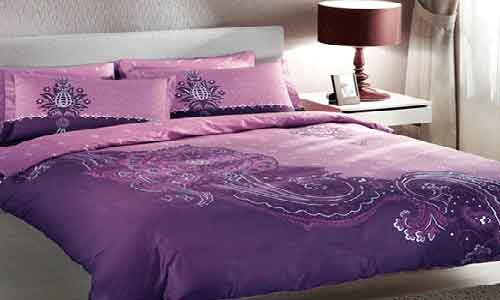 constitute the countries with the largest volumes of bed linen consumption. The highest annual rates of growth in terms of bed linen consumption from 2007 to 2016 were recorded in the UK, with an average annual rate of +1.9 per cent. Meanwhile, consumption in France (+0.8 per cent), Italy (+0.4 per cent) and Germany (-0.5 per cent) remained relatively stable from 2007 to 2016. Levels of per capita consumption in the leading consuming countries were equivalent to the EU-average level of 1.0 kg/year; the highest per capita consumption was recorded in the UK (1.3 kg/person), where it grew steadily from 2007-2016.
In 2016, the volume of total production for bed linen stood at 134,000 tons. Overall, the volume of bed linen production decreased from 2007 to 2016, however, it rebounded slightly over the last three years; prior to that, it declined steadily from 2007-2013. Portugal (32 per cent of the total output), Italy (19 per cent) and Germany (14 per cent) constituted the countries with the highest levels of production in 2016, together accounting for 65 per cent of the total volume of production. In Portugal, bed linen production increased by +3.5 per cent annually from 2007 to 2016. Meanwhile, in Italy, production (-3.5 per cent per year) decreased over the period under review, and in Germany, it remained relatively stable over the period under review.
Major markets
The share of extra-EU imports in European consumption reached 80 per cent in 2016, against 71 per cent in 2007; indicating increasing reliance of European consumers on imported products, mainly from Pakistan, China and Turkey. Despite improved production figures over the past three years, high reliance on imports is expected to continue in the medium term. In 2016, bed linen exports in the EU was 208,000 tons, which was equal to €1.9B. Germany (43,000 tons), the Netherlands (24,000 tons), Portugal (23,000 tons) and Belgium (22,000 tons) constituted the main suppliers of bed linen among the EU members, with a combined share of 54 per cent of total exports in 2016. Among these countries, the Netherlands (+16.0 per cent per year) and Germany (+12.6 per cent per year) were as the fastest growing suppliers from 2007 to 2016, while exports from Portugal reduced on an average -2.2 per cent over the same period. While the share of Germany (+12 percentage points) and the Netherlands (+8 percentage points) increased significantly, the shares of Portugal (-6 percentage points) and Belgium (-3 percentage points) illustrated a negative dynamic.
Import scenario
In 2016, bed linen imports into the EU were 559,000 tons, which equated €3.8 billion. Germany (20 per cent of the total figure), the UK (16 per cent) and France (12 per cent) remain the main destinations of bed linen imports. Germany recorded the highest rates of growth in terms of EU imports, with a CAGR of +2.8 per cent. It was followed by the UK (+1.6 per cent) and France (+1.3 per cent). In 2016, the volume of extra-EU imports for bed linen stood at 394,000 tons, 8 per cent more than the previous year.
Textiles Ministry promotes ‘Make in India’ through local sourcing
Public Sector Undertakings (PSUs) have been asked to push up their participation in improving livelihood for local artisans by purchasing textile and fabric requirements ‘locally’. This was stated in a proposal to upsurge domestic sourcing, to make it authorized, recently the Textile Ministry issued a letter in this regard.
Ministries have also been asked to share details on how much non-local content do the government and departments buy from the textile sector to comprehend and measure the difference, with specifics on total expense on local and non-local textile buys.
Government carrier Air India is already using khadi’s utility kit for its business-class passengers. The Airports Authority of India (AAI) is also promoting local artisans in various ways. Promotion of local culture at the upcoming airports is also under consideration at AAI.
As per the Textile Ministry the increase in purchase from the local craftsperson by government departments and ministries under the ‘Make in India’ scheme, a flagship program of the Centre that is meant to safeguard growth of the country’s manufacturing sector, will ultimately result in more job creation. Currently there are more than 45 million people directly employed with textile industry – which is also the biggest employment generators in the country.
Rwanda, US in dispute over second-hand garments
In March 2018, the USTR had warned Rwanda it would lose some benefits under the African Growth and Opportunity Act (AGOA), America's flagship trade legislation for Africa, in 60 days after it increased tariffs on second-hand clothes to support its local garment industry. The row is further straining Washington's relations with Africa at a time when it is being aggressively courted by America's global competitors, not least China.
The Rwanda government is trying to attract companies targeting the export market, like US designer Kate Spade which assembles high-end handbags in Rwanda. This strategy nation has flourished elsewhere in Africa under AGOA, with duty-free exports from the continent to the US market almost quadrupling to over $1 billion since the law was enacted. The ultimatum from the office of the USTR, however, has thrown up a potential roadblock to further growth.
Retailers thronging Europe to open stores
European cities are the preferred new destination for international retailer expansion, attracting 43 per cent of new retail brands in 2016, up from 36 per cent on the previous year.
This is attributed to European retailers redirecting their focus on expansion in their home continent rather than in locations with expensive currencies. On a city level, Hong Kong has retained its position as the world’s most popular destination for retailer expansion in 2016 attracting 87 new retailers.
Hong Kong is closely followed by London which has witnessed the second highest presence of new retailer entrants, with a total of 65 international retailers opening stores in London for the first time in 2016. London is followed by Dubai who welcomed 59 new entrants. Doha moved up six places from last year’s new entrants ranking to take fourth place with 58 new retail brands and Tokyo being the fifth most sought after market with 48 new entrants to make up the top five most targeted retail cities globally.
Paris has jumped to seventh place attracting 36 new retailers as the French capital continues to attract international retailers due to its strong tourism market and stable economy. About 33 per cent of the new retailers to Paris are specialist clothing retailers.
Maharashtra acts against Bt cotton seed variety
Maharashtra has made it mandatory for original seed producing and marketing companies to sell only one variety of Bt cotton seed with one brand name. This is an attempt to tighten vigil over Bt cotton varieties being sold in the market under different brand names. Bt cotton seeds of varieties un-approved by the Genetic Engineering Approval Committee (GEAC) were being sold in the market. Further, there were instances in which one variety of Bt cotton seed was being sold using different brand names.
After a review, the state has allowed only 370 varieties of 42 companies to be sold in the kharif 2018 season. As much as 98 per cent of the cotton area in Maharashtra is under Bt cotton varieties. These Bt cotton varieties are approved by GEAC. Till last year, apart from the original producer company, co-marketing companies also used to sell these approved varieties of Bt cotton seeds.
From now on original producer company of seeds should print in bold letters the GEAC-approved name of a variety on its packet. The original producer company can print its own brand name also. However, for one variety, there should be only one brand name. Co-marketing companies also should use the packing and label used by the original producer company. As such, henceforth, each variety will be sold with only one brand name.
Irish fashion comes in focus
In 2018, the Irish fashion industry is going international. The visual language of Irish fashion has become a global entity. The landscape is small but incredibly promising. Designers across the island are producing world-class fashion, yet few people outside Ireland own a piece of Irish fashion or can name an Irish designer. The Aran jumper, a traditional type of knit sweater, hails from the Aran Islands on the west coast of Ireland; the cable-knit design is world-renowned. The playful patterns of Orla Kiely are emblematic of Irish houseware and interior design. And, of course, there's the Tara Brooch, an iconic, seventh-century Celtic totem which now lives among other significant ancient jewelry items in Ireland's national archives.
A camaraderie exists between the pool of successful Irish designers as they often participate in collaborative events celebrating and spotlighting Irish fashion. Irish colleges are launching the careers of many future stars. Past graduates include Jill de Burca, Emma Manley and Natalie B. Coleman. There is much work being done in universities around Ireland to foster new Irish designers; the next generation of Irish creative talent is bright. However, there needs to be more support in the form of funding and grants to truly secure the future of Irish design.