FW
Marks & Spencer clothes gross sales slide again
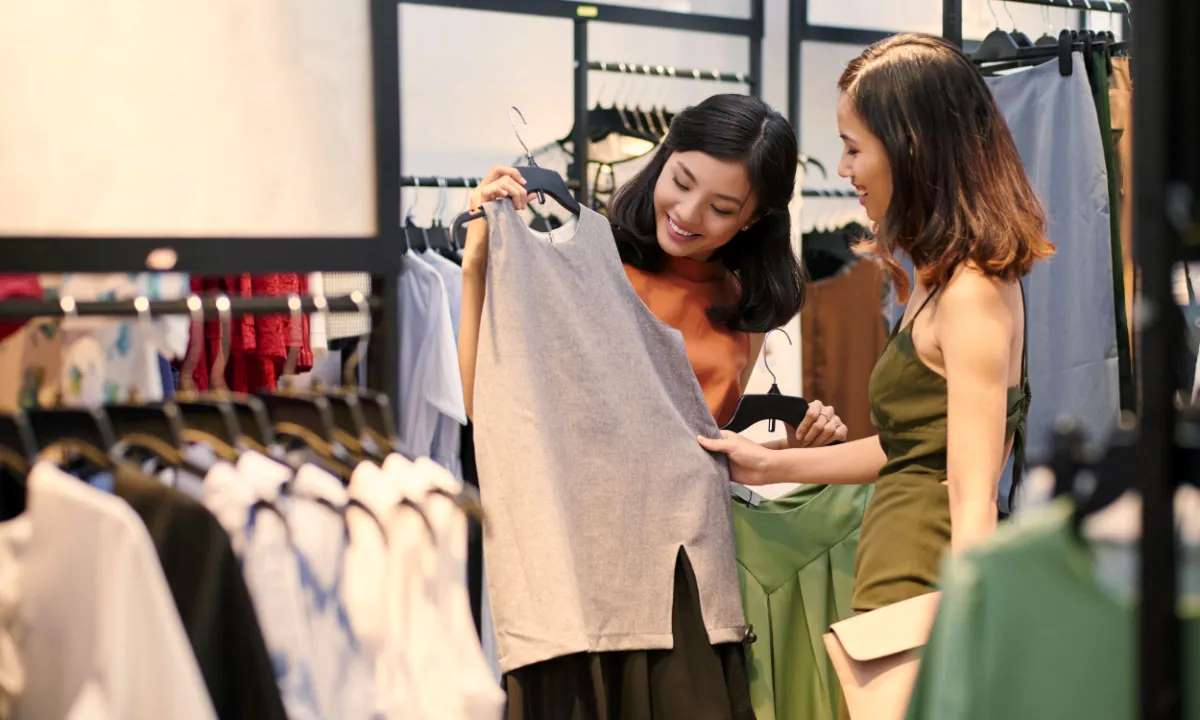
Marks & Spencer clothing sales fall again after the retailer‘s director of clothing and beauty left last month. This slide comes after the director of clothing and beauty, Jo Jenkins, resigned to join White Stuff. The British retail giant reported like-for-like sales fell 2.8 per cent in its clothing wing over the 13 weeks to December 30 in a ‘mixed‘ quarter for the group.
Steve Rowe, Chief Executive of M&S, noted, “M&S had a mixed quarter with better Christmas trading in both businesses going some way to offset a weak clothing market in October and on-going under-performance in our food like-for-like sales.” M&S said its food halls also reported “on-going under-performance” with like-for-like sales down 0.4 per cent in the quarter. In October 2017, director of women’s wear, lingerie & beauty, Jenkins, left her post ‘disappointed‘ to have not been selected for the role of MD for Clothing, Home & Beauty.
In November, it was revealed that Marks & Spencer attempted to speed up the closure of 100 stores or departments selling clothes and home products. This measure was undertaken as part of a methodology to cut costs, shut underperforming outlets and encourage a move to shopping online. M&S is also planning to slow down the opening of new Simply Food outlets and offer more value products post analysis that families are finding it hard to pay premium prices. M&S disclosed that profits in the first half of the financial year dropped by 5.3 per cent to £219.1 million.
LVMH partners Station F to launch luxury high-tech program
Post L’Oréal, it is now LVMH's turn to partner Station F. Together, the French luxury goods giant and Parisian start-up incubator have set up a new luxury and high-tech program, featuring 23 start-ups from all over the world working on innovative solutions for the luxury market.
This news was discovered in a tweet by Station F — the world's largest business incubator — based in a former Parisian rail freight depot known Halle Freyssinet. The project's start and other details will be revealed in spring.
The program is reportedly designed to support emerging companies developing high-tech solutions for the luxury industry, tapping the expertise of LVMH which has recently opened an academy of leather goods and jewellery craftsmanship in Florence. The luxury group is following in the footsteps of L’Oréal, which picked Station F to monitor promising digital beauty start-ups, becoming the latest partner of the incubator founded by Xavier Niel.
Bangladesh: High-value apparels to help attain $50b exports target
Bangladesh apparels may need to focus more on high-value apparel items and explore new export destinations to achieve the goal of $50 billion export income by 2021. The suggestions came at the inaugural ceremony of a day-long 'Textile Youth Leadership Summit 2018' in Dhaka. President of Institution of Textile Engineers and Technologists (ITET) Shafiqur Rahman attended 10th founding anniversary the opening ceremony as the chief guest, while Pro-Vice Chancellor of BGMEA University of Fashion and Technology (BUFT) Ayub Nabi Khan chaired the function.
Shafiqur Rahman stated while the country's economy is now mostly dependant on the apparel sector, the country still lacks required number of skilled professionals including textiles engineers. For this reason, the sector has to spend millions of dollars on employing foreign experts. It is high time to produce more textile engineers and other experts to bridge the gap, says Shafiqur
He urged the participants to develop their skill in line with the industrial demand. Hundreds of textile engineering students and young professionals attended the summit. In his speech, Rahman said growth of the country's apparel sector had been slowing down in recent years due to several reasons. He further added that transformation in various issues including productivity, competitiveness and innovation is required to sustain the growth momentum.
European fashion brands renege on Transparency Pledge
Campaigners are demanding two of Europe’s biggest fashion brands should make transparency part of their New Year’s resolutions by revealing where their clothes are made. Activists have been delivering gift boxes containing almost 70,000 signatures to Armani and Primark stores in European cities, asking the two brands to publish information on the factories they source from, including addresses and numbers of workers.
The signatures have already been hand-delivered to shops in cities, including Hanover and Antwerp, with international labour rights alliance Clean Clothes Campaign, which co-organised the action, sharing photos of the gift-giving on social media.
In a statement Clean Clothes Campaign said it would continue delivering signatures to the luxury Italian and budget Irish labels as well as American brands Walmart, Forever 21 and Urban Outfitters. The NGO said the brands were “considered to be among the most secretive about their supply chain data” and had refused to sign the Transparency Pledge, which is considered a minimum gold standard of transparency for the garment industry.
Advocacy coordinator Ben Vanpeperstraete noted, “Any brand that refuses to share information about their supply chain should be a huge red flag for consumers. What are these brands hiding? Do they even know where their clothes are coming from?”
“If brands are taking the necessary steps to prevent labour abuses in their supply chains, then they should eagerly want to share detailed information about the factories and workers who make their clothes with the public,” he added.
Armani announced, “The Armani Group has been and is actively working on all Corporate Social Responsibility aspects of its activity in line with the official international conventions and with the highest industry standards.”
“The Group requires that the same standards and commitments above all the utter respect of human rights, are fulfilled in its supply chain.” It added.
The brand promised that it would “progressively” report all available data on its website. Primark said it regularly shared information about its supply chain. “We take the issue of transparency seriously, and recognise that there is always more work to be done in ensuring our products are made with respect for workers’ rights and the environment, as well as how we communicate our work in this area.”
Vietnam textile production fails to meet garment requirements
Vu Huy Dong, General Director, Damsan JSC says Vietnam is still facing many problems in textile production, as fabric determines the cost and quality of finished garment products hence textiles still cannot meet garment requirements. As [rt Nguyen Son Deputy Chair of the Vietnam Cotton and Spinning Association (VCOSA) the state-owned enterprises and foreign-invested enterprises only undertake favorable links in the textile and garment supply chain, while private businesses take difficult work.
Vietnam has to import 65-70 per cent of fabric every year, it exports two-thirds of yarn output. This means that Vietnam has yarn in excess but not enough fabric. In 2016, Vietnam’s fabric imports increased 3.2 per cent compared with 2015, though garment export value decreased by $23.84 billion, of which fabric export turnover accounted for 43.9 per cent, down by 0.1 per cent.
The state has policies to help the development of supporting industries, but there is no specific policy designed for the spinning and cotton industry. Vitas, affirming that textile and garment companies are facing difficulties, have made many proposals to the government. It has asked to amend Decree 60 on the conditions for granting licenses to import printing machines.
Under the current regulation, businesses owners must have junior college or higher-level degrees. If not, they have to attend MIC’s training courses majoring in printing to be able to import printers. The association has also asked to remove the decision on raising the import tariff on polyester from zero to 2 per cent, stating that most Vietnamese enterprises have to import the product. In addition, it had asked Hai Phong City to reconsider port fees to help enterprises cut production costs.
Vietnam domestic fashion industry floundering with influx of global brands
With the arrival of foreign fashion brands, analysts say Vietnam’s fashion industry is floundering. Many fashion brands have come to Vietnam, resulting in ‘fast fashion’ trend among Vietnamese youth. In early September, the Swedish brand H&M opened its shop in HCMC. Earlier, Zara opened one outlet in Hanoi and another in HCMC. Zara’s first shop in HCMC reported revenue of VND5.5 billion on the opening day, the highest among Zara’s shops overseas.
The success of Zara in Vietnam has prompted Inditex, the group which owns Zara Bershka, Stradivarius, Massimo Dutti and Oysho, to bringing other brands to Vietnam. Reports say that Stripe International from Japan is going to take over Vietnamese NEM. Nguyen Tiep, PR Director of NEM, confirmed the two sides are negotiating Stripe’s capital contributions. Vietnam began seeing a tsunami of foreign brands since early 2015, when tariff was cut. There are around 200 foreign fashion brands in Vietnam. The huge influx of foreign brands shows the country is an attractive market. According to Vinatex, the domestic garment market is valued at $4.5 billion and has a growth at 20 per cent per annum. Vietnamese spend VND100 trillion on clothes each year. A Nielsen report reveals clothing is the third priority item among Vietnamese, post food and savings.
Despite the fact that the market is huge and promising, domestic fashion brands are facing problems. Well-known brands such as Ninomaxx, Blue Exchange, Viet Thy, Foci, Sifa, PT 2000, Sea Collection and Dan Chau, which had hundreds of shops, have reduced their network. In 2013, Ninomaxx, which felt the impact of foreign companies, decided to change its shop model into a one-stop shop Ninomaxx Concept and restructured the company. Ninomaxx’s Chair Nguyen Huu Phung says the company had to carry out reform on products, distribution, customer service and labour. The brand is currently down to 60 shops as against 200 earlier.
VF Corp and NC State University’s strategic, multi-year partnership
VF Corporation and North Carolina State University recently announced a collaborative, strategic partnership in support of student development at NC State University and advance apparel and textiles innovation within VF. Steve Rendle, Chairman, President and CEO, VF exults, “VF is proud to partner with NC State University, one of the world’s top Universities and home to the only College in the US devoted entirely to textiles. Through our shared expertise in research and consumer insights, we aim to stimulate apparel innovation while also developing a consistent pipeline of exceptional leaders for our company.”
The College of Textiles and VF have a long-standing relationship. Under this new multi-year agreement, the partnership is further bonded by NC State’s Poole College of Management, which brings particular expertise in business analytics and supply chain management.
The partnership will: offer a variety of undergraduate and graduate education and training activities for students in the colleges, including internships, student projects and competitions; facilitate industry-leading research that will elevate apparel and textile products and experiences; provide executive education opportunities for VF associates; and establish a VF presence on Centennial Campus, NC State’s nationally recognised research campus
David Hinks, Dean at the College of Textiles was also happy with this arrangement, “With many College of Textiles alumni working and thriving at VF, we could not be more pleased to be building on our partnership. The addition of VF on campus and the ability of students and faculty from both the College of Textiles and Poole College of Management to work shoulder-to-shoulder with VF personnel will bring new avenues to advance textiles, apparel and footwear.”
Turkish delight over ecolabel launch
The Turkish Ministry of Environment and Urbanisation has introduced the country’s ecolabel certification which will be applicable to textiles manufactured in Turkey. The legislation is being introduced to encourage energy efficiency, waste minimisation and sustainable production. Its said to have been aligned with the existing EU ecolabelling legislation. Two textile companies from the country have been granted the ecolabel certification as the new system of classification has been launched at a ceremony in Ankara.
The ecolabel system will examine all stages of a company’s production processes, including selection and procurement of raw materials. The EU Ecolabel for clothing, bed linen and indoor textiles is a voluntary eco-labelling scheme from the European Commission which encouraging the use of sustainable practices in textile manufacturing. Every product and service placed on the market in the European Economic Area – the EU, including Iceland, Lichtenstein and Norway – that meets EUs Ecolabel criteria for that product/service would be certified with the EU Ecolabel.
A competition was held to decide on a logo for the Turkish ecolabel project, with the final design being chosen from 85 submissions.
Indian textiles export target of $45 billion likely to be missed
The textiles industry, has been struggling due to increasing competition from neighbouring countries like Bangladesh, Indonesia and Vietnam, along with rising imports and sundry problems such as GST. Now, experts say due to these factors, the hope of achieving its total export target of $45 billion in the current fiscal is difficult. Sanjay Kumar Jain, Chairman, Confederation of Indian Textile Industry (CITI) evaluated, exports were down in October, November and December. If the trend continues, the projected textile export target of $45 billion in the current fiscal will be unachievable. The industry may even find it difficult to attain last fiscal’s export of $40 billion. While rupee appreciation is one major factor, another looming threat is a further rise in cotton prices, which has gone up from Rs 37,500 a candy in November to Rs 41,500 now. Given the fluctuation in both rupee and cotton prices, exporters are unable to take orders or fix any price point to do jobs. Textile exports from India, include ready-made and knitwear garments, cotton yarn, fabrics, made-ups, handicraft items, man-made yarns, fabrics and jute products.
Russia's RFID tags on fur set for geographic/sector expansion
One year post the use of RFID marker chips to track and identify fur garments within Russia and neighbouring Belarus, the initiative is a great success. So, the scheme is now likely to be extended to cover the movement of fur products within the other three member states of the Eurasian Economic Union – Armenia, Kyrgyzstan and Kazakhstan.
Since January 2017, all new fur garments within Russia and Belarus came fitted with a irremovable Radio Frequency Identification (RFID) chip, which was designed to curb the extensive practice of illicitly importing such items to avoid paying duty. The success of the scheme was reflected in the exponential rise in declared volume of imported fur items.
The total number of declared garments rose from 1,07,000 in 2016 to 1,76,000 in 2017. In the case of headwear, the increase was even more dramatic, with the number of such items declared rising from 1,21,000 to 3,46,000. Taken together, this amounted to a 65 per cent growth in the number of declared items across the two countries and the two categories.
Inevitably, this has led to the overall value ascribed to the fur trade in these two markets being substantially upgraded. On the logistics side, given that locally-produced items are also tagged, it has been seen that the system is well suited to keep track of around four million individual units.
Following the success of the scheme, the system was extended to Kazakhstan in December last year, with Armenia set to be similarly enrolled before the end of this month. Under the terms of an agreement signed by all EEU members, Kyrgyzstan is obliged to sign up to the system by 1 July this year. In addition to the geographic expansion of the initiative, the Eurasian Economic Commission, the EEUs executive, is also looking to extend the use of RFID technology into other product categories simultaneously, plans are under consideration to expand its geographic reach still further, with the system ultimately seen as covering a range of product categories across a footprint that stretches from Central Asia to the EU border and from the Baltics to the Russian Far East.