FW
Levi Strauss makes top level executive changes
To increase focus on the direct-to-consumer channels, Levi Strauss & Co. has announced several changes in its leadership. Chief marketing officer Jen Sev is now being promoted as brand President effective from November 30. In this new position, Sey will lead the Levi Strauss’s marketing, design, merchandizing and brand experience operations and bring them all in one place.
Levi Strauss has also decided to promote Liz O’Neill as the chief operations officer. She will oversee the ongoing rollout of the company’s F.L.X. technology, while driving digitization, sustainability and agility in its global supply chain. Similarly, Seth Ellison, previously executive vice president and president, Europe will be promoted to chief commercial officer (CCO), where he will lead the company’s global commercial operations.
Finally, Marc Rosen, Executive Vice President and President, Americas, will take on additional responsibility of the new Digital Enterprise Office. Earlier this month, Levi Strauss announced a surprise profit thanks to a surge in online sales. The company also benefited from important wholesale partnerships and the success of new product categories.
Polyprint SA showcases direct-to-garment products at Innovate Virtual Trade Show
Specialized direct-to-garment (DTG) printer manufacturer, Polyprint SA is showcasing latest products at Innovate Virtual Trade Show, on from October 15-30, 2020. As per Kohan Textile Journal, Polyprint will exhibit solutions including TexJet shortee2 and TexJet echo. However, the main attraction will be the new automatic pre-treatment machine-PreTreater Pro:
Launched in July 2020, PreTreater Pro is the key to top-quality prints, consistency in repeated jobs and improved washability, while saving on liquids. Its 41x60cm true spray area, precision spraying capabilities with ‘Linear’ & ‘Grid’ edit modes, accurate liquid quantity selection per ml, 4 large diameter flat nozzles for uniform spraying and an auto re-circulation system for liquid homogeneity will seamlessly prepare garments for amazing prints.
The tradeshow will enable attendees to interact with industry professionals through live chat, witness its latest technological breakthroughs at our booth and schedule video meetings to address their every question.
Through this event, organizers World Textile Information Network (WTiN) plan to reconnect its visitors and exhibitors to reconnect, without limitations.
Pitti Immagine urges government for practical and sustainable solutions
Raffaello Napoleone, CEO, Pitti Immagine has urged the Italian government to find sustainable and practical solutions for current problems by involving local entities and regions. He said cancellation of events reinforces the uncertain climate and risks stopping the preparation phase leaving little time for companies and buyers to plan and organize their travels and participation in trade shows.
Napolean said they have already taken necessary measures as per strictest security protocols requested by authorities. They plan to trace buyers’ path, their accesses to sites and plan pavilions and booths. They have also devised fittings in order to guarantee distancing. Pitti Immagine has also collaborated with Florence hotels and restaurants to guarantee the safest conditions as international trade shows aimed at economic insiders only are controlled and planned events with minimal accident rates. The collections that will be presented in these months will be sold starting from next fall.
LVMH seeks to reduce Tiffany’s deal price
LVMH has urged Tiffany’s to reduce its deal price to enable LVMH to buy the US jeweler. The original price for the deal was $135 per share, or about $16 billion in total. By taking control of Tiffany, LVMH would gain better access to the worldwide luxury jewelry market. Reduction in deal price would allow the companies to avoid a courtroom battle after the deal they struck a year ago turned sour amid COVID-19’s upheaval of global luxury spending.
LVMH had argued that Tiffany has botched its response to COVID-19 and this has created a material adverse effect that will allow it to invalidate the agreement. Tiffany had countered that its sales are improving and the deal should proceed as planned. The deal had been cleared by European Union antitrust officials earlier this week. However, LVMH applied for the regulatory review saying that it was unable to complete the transaction due to the French government’s request to delay it.
The Louis Vuitton owner said that its move to proceed with the EU filing for regulatory approval showed that it was acting in good faith, which Tiffany had earlier questioned.
Bangladesh government restores 40 per cent RMG orders
The government in Bangladesh has managed to restore 40 per cent RMG orders cancelled by foreign buyers amid the coronavirus pandemic. This was possible because prime minister talked to the heads of the states urging them to make sure the supply chain of RMG products was not affected, informed AK Abdul Momen, Foreign Minister while inaugurating an art exhibition, "Art Against Corona", at the Bangladesh Shilpakala Academy.
Momen said, Bangladesh RMGF sector was performing better than other times, with Bangladesh exporting more than $3 billion worth of RMG products each month at the moment. Bangladesh’s GDP was also growing at the highest rate in Asia. Currently, the GDP is growing at 5.2 per cent, although the World Bank and IMF projected it to be between 1.38 to 3.38 per cent this year.
Denim demand to bounce back soon: Experts
As per a 2019 report from Business of Fashion and McKinsey, denim production and consumption in India is increasing at a CAGR of 15 per cent. The pandemic has challenged the fashion sector in the nation. Executives from three Indian denim mills shared their views on the current denim industry at a Carved in Blue webinar recently.
Aamir Akhtar, CEO, Arvind , noted that as brands still hold their spring inventory and plan to repurpose the same, they aren’t buying new. However, capacity at several mills still remains underutilized. Over the next six months, most Indian mills won’t surpass a capacity of 45-55 per cent, said Aditya Goyal, CEO and Managing Director, Anuhba Industries.
However, demand in rural areas has been increasing where denim is being purchased as a workwear essential. These individuals are able to sell their goods and have received support from the government. Meanwhile, cities are taking longer to bounce back and make denim purchases since workers are unemployed and businesses are struggling. Because of this, commoditized denim is rebounding at a greater rate than fashion denim.
Even though consumers’ stay-at-home lifestyles have caused denim sales to take a hit, denim mills expect demand for denim to bounce back soon. It cannot be challenged by anything but itself, asserted Subir Mukherjee, Business Head, Bhaskar Denim.
Knitted apparel exports to decline 2.29 per cent by 2022
As per TexPro, exports of knitted apparels are expected to decline by 2.29 per cent to $220,388.87 million in 2022. The global export of knitted attire grew by 1.53 per cent from $222,156.94 million in 2017 to $225,563.75 million in 2019. Complete exports dropped by 2.52 per cent in 2019 over the earlier 12 months.
The worldwide import worth of knitted attire surged by 5.39 per cent to $207,090.81 million in 2019 Complete imports decreased marginally 1.63 per cent in 2019 over the earlier 12 months and is anticipated to plunge to $2,04,811.15 million in 2022 with a charge of 1.10 per cent from 2019.
China ($77,578.24 million), Vietnam ($15,363.12 million), Germany ($11,345.81 million) and Italy ($10,738.62 million) were the most important exporters of knitted apparels throughout the globe in 2019. Their exports collectively comprised 50.99 per cent of complete export. These had been adopted by Turkey ($9,197.28 million), India ($7,882.22 million) and Cambodia ($7,842.53 million).
Denim Premiere Vision transforms upcoming edition into an online event
Denim Premiere Vision has transformed its forthcoming autumn edition into an online event ‘Denim Digital Week’ to be held from November 30 to December 4. The show was originally scheduled at the Areba Berlin on November 24-25. Denim Digital Week is designed to enable exhibitors, whether fabric manufacturers, garment manufacturers, launderers, finishers, accessories producers or technology firms, to unveil their Spring/Summer 2022 collections.
The event will have two trend workshops are scheduled on December 1 and 2, one led by Première Vision staff and the other by Lucia Rosin of creative studio Meidea. There will be a round-table debate on the future of the denim sector, and two creativity workshops led by Alessio Berto. Finally, the inescapable issue of sustainable development will be the subject of two ‘Smart Talks’ conferences. The program has been formulated to enable industry operators and labels to prepare their next collections.
Centric Brands appoints Mark Schneider new chairman
American brand licensing company Centric Brands LLC has appointed Marc Schneider, former CEO, of Kenneth Cole Productions, the new chairman of its board of directors. Schneider has over 35 years of experience in brand building and global business. Prior to being the CEO of Kenneth Cole, a position which he held from 2015 until February this year, he was group president of heritage brands at PVH Corp, the parent company of Calvin Klein and Tommy Hilfiger, for eight years.
His previous stints include senior vice president at Timberland, EVP for merchandising, marketing and planning at Melville Corporation and group vice president at Macy’s. Since February 2020, he has served as a principal at JKLM Advisors LLC and as a senior advisor at TZP Group.
Along with the Centric Brands board, Schneider is also a member of the board of directors of NYC-based luxury mattress company Saatva and Ohio-based footwear and handbag maker RG Barry. Headquartered in New York, Centric owns the Zac Posen, Hudson, Robert Graham, Swims and Avirex brands, and holds a wide range of licenses for labels including Calvin Klein, Tommy Hilfiger, Nautica and Under Armour.
Having filed for Chapter 11 bankruptcy due to the pressures of the Covid-19 pandemic in May, the company emerged from the process under new management earlier this month.
Strategic restructuring, innovation to drive China’s textile & clothing growth
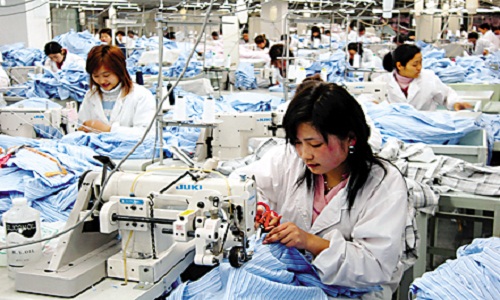 COVID-19 forced Indian textile industry to transfer a large number of textile orders to Chinese factories for production. For example, all orders received by 100 New Delhi factories were transferred to China. To fulfill these orders, Chinese factories are opening new production lines and expanding their staff.
India’s share in China’s pie
Alibaba international station figures reveal, since May, China recorded 100 per cent increase in fabrics and textile raw material orders. It also witnessed 200 per cent increase in apparel orders. In the first three quarters of this fiscal, China’s total import and export volume increased 0.7 per cent to reach 23.12 trillion yuan with Indian textile orders playing a significant role in this.
The Indian textile and clothing industry is worth $ 250 billion. It is also one of the largest sources of forex income and accounts for about 15 per cent of India's total export revenue. From 2000-2018, the industry attracted FDI worth $2.97 billion. However, the pandemic stalled India’s progress and many of factories could not start work as scheduled. As a result, many orders were transferred to China which not only has a high degree of industrial automation but also could complete these orders in shortest possible time.
Boom time for Chinese exports
The Chinese textile and clothing industry has been growing well since May. Exports have been increasing with volume of textiles from the General Administration of Customs increasing by 3.29 per cent to 215.8 per cent in the first half of this year. From January to September, China's textile exports reached $117.95 billion and the export growth rate increased by 5.9 percentage points compared with the first half of the year. According to the General Administration of Customs, since the second half of the year, China’s clothing exports too have improved. The volume of its clothing exports increased 6.5 per cent in September to $15.23 billion.
In general, the Southeast Asian textile and apparel industry is benefiting from the Christmas season in the West. Some factory owners in the region have received orders from European and American countries.
India benefits from low costs
The Indian textile and apparel industry is also benefitting with high orders. The industry offers several advantages with labor cost, energy cost, land cost, government tax, tariff and environmental protection. The gross profit margin of local textile and garment enterprises in Southeast Asia is 5 per cent higher than that of domestic enterprises. Hence, a lot of orders from this region are likely to return to India and Southeast Asia once the outbreak is over. As demand from Europe and the US has not yet recovered, domestic Chinese enterprises need to balance their short-term interests and long-term strategies.
At present, the demand for medium and low-end textile products is low-end in China. Designers in the country favor new elastic fabrics like T400 and T800. Sun Ruizhe, President, China Textile Industry Federation, has advised domestic fabric enterprises to foray into the middle and high-end fabric markets.
Local fashion e-commerce stabilizes China’s foreign trade
The increasing proportion of cross-border e-commerce exports is helping China stabilize its foreign trade. The country is also benefitting from its local fashion e-commerce users. To explore these benefits, Chinese enterprises need to deepen brand building and gradually move from being flow and product oriented to being brand oriented.
The Chinese clothing industry has entered a new stage of strategic restructuring and innovation and reform, and currently leads the global clothing industry reform, says China Garments Association.