FW
COVID 19: Traditional textile, apparel retailers to suffer most as demand slows
 Private consumption accounts for about 58 per cent of India’s GDP, which is likely to grow to around $3,000 billion by the end of FY20. Of this, about 48 per cent is spent on merchandise shopping while the remaining $875 billion is spent on a range of services. Traditional mom & pop stores form the largest share of sales. India currently has 17 million independent retailers which are likely to grow to 20 million by 2025.
Food and grocery to remain unaffected
Among these, food and grocery retailers will hold the largest share. These retailers currently account for about $550 billion of the $825 billion consumer spending on merchandise. Even in future, this spending is likely to be least affected, either in terms of volume consumed across different sub-segments, or on retail channels selling food and grocery.
Unsold inventories to eat into textile and apparel retailers’ profits
The next big category, in consumer expenditure is textile and apparel which accounts for about $65 billion of spending on merchandise. This category is likely to suffer the most from the pandemic as manufacturers are likely to be saddled with unsold inventory. Consumers are unlikely to spend on clothing and accessories even after the nationwide lockdown ends on May 4, 2020.
Easy going for consumer electronics and home furnishings
The consumer electronics and durables segment — worth about $50 billion, will be least impacted. It is also likely to be the first sector to bounce back during the upcoming festival season between September-October 2020. Sellers of home furnishings and other lifestyle products will also have a relatively easy FY21 as consumption by volume will not decline drastically during the entire April 2020-March 2021 period.
Finances of all big retailers are likely to be stressed in FY21 and FY22. However, traditional and independent retailers are likely to be least affected as they own their stores, have few employees and can quickly recalibrate their inventories to align with consumer demand or preference.
Brick & mortar stores face fixed costs, zero sales
Most affected by the pandemic will be organized brick-and-mortar retailers as they had to either shut down or hardly got footfalls due to restrictions on the movement of people. These retailers have high fixed costs by way of rentals and common area maintenance charges. They also have to pay salaries at retail front end, head-office staff, and utilities.
In the next six-eight quarters, monthly sales of most organized retailers will be reduced though they will still have to incur the same (or nearly the same) monthly fixed costs. They may also have to face margin erosion when they are compelled to liquidate some of their inventory through aggressive discounts.
The situation is likely to be similar for e-commerce players too. As consumer sentiment is likely to be depressed for months to come, their monthly gross margin intake will be severely affected though their fixed costs are likely to remain nearly the same.
FDI to boost future retail growth
Therefore, the government should allow 100 per cent foreign direct investment in all retail formats and all channels. Its policies should not hinder the growth of the sector even as it works to raise capital and merge/sell businesses within India or anywhere else.
ITMA ASIA + CITME rescheduled
 In light of the current coronavirus (Covid-19) pandemic, ITMA ASIA + CITME 2020 has been rescheduled, despite receiving strong response from exhibitors. Originally slated to be held in October, the combined show will now take place from 12 to 16 June 2021 at the National Exhibition and Convention Centre (NECC), Shanghai.
According to show owners CEMATEX and Chinese partners, the Sub-Council of Textile Industry, CCPIT (CCPIT-Tex), China Textile Machinery Association (CTMA) and China Exhibition Centre Group Corporation (CIEC), the postponement is necessary due to the coronavirus pandemic.
Fritz P. Mayer, President of CEMATEX, said: “We seek your understanding as this decision has been made with the safety and health concerns of our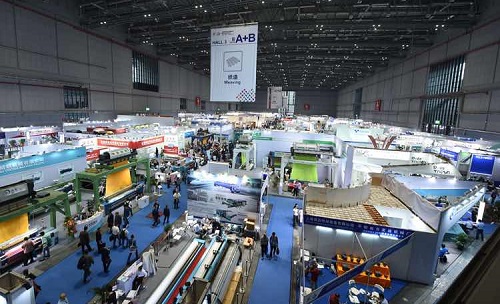 participants and partners in mind. The global economy has been severely affected by the pandemic. On a positive note, the International Monetary Fund has predicted that there would be global economic growth at 5.8 per cent next year. Hence, it is more prudent to look at a date around mid of next year.”
Added Wang Shutian, Honorary President of China Textile Machinery Association (CTMA), “The outbreak of the coronavirus has caused a severe impact on global economy, and also affected the manufacturing sector. Our exhibitors, especially those from other parts of the world, are deeply affected by the lockdowns. Therefore, we believe that the combined show with the new exhibition dates would be timely when the global economy is predicted to improve. We would like to thank the exhibitors who have applied for space for their strong vote of confidence in the combined show.”
In spite of the pandemic, at the close of space application, almost all the space reserved at NECC has been filled. The show owners will create a wait list for the late applicants and if necessary, to secure additional exhibition space from the venue to accommodate more exhibitors.
Buyers to ITMA ASIA + CITME 2020 can expect to meet industry leaders who will showcase a wide array of latest technology solutions that will help textile makers to become more competitive.
ITMA ASIA + CITME 2020 is organised by Beijing Textile Machinery International Exhibition Co Ltd and co-organised by ITMA Services. Japan Textile Machinery Association is a special partner of the show.
The last ITMA ASIA + CITME combined show in 2018 welcomed the participation of 1,733 exhibitors from 28 countries and economies and registered visitorship of over 100,000 from 116 countries and regions.
Uzbekistan explores export opportunities iin Japan
In a recently held video conference with Masahiro Yagi, president of Yagiharu Co., Uzbek officials discussed the supply of textile items to Japan and options for exporting goods using various transportation modes. Yagi said a trial batch of textile products from Uzbekistan had been delivered to Japan. Both sides agreed to continue joint work.
Members of the Uztextilprom Association will participate in future video conferences, according to a report in an Uzbek media outlet.
The parties also considered the possibility of Yagi's visit to Uzbekistan in September 2021 to continue negotiations and discuss relevant agreements.
The LYCRA Company to showcase stretch, performance innovations at Kingpins 24
The LYCRA Company, a leader in sustainable solution for the apparel industry, will exhibit its latest development in stretch and performance at the Kingpins 24 livestream event to be held on April 22 and 23, 2020. With many events being cancelled due to the pandemic, organizers have chosen to conduct their events virtually. The Kingpins spring denim event, scheduled to be held in Amsterdam, is one such show that is being transitioned into a digital event.
LYCRA’s offerings are developed using the pre- and post-consumer content under the EcoMade family of fibres. The latest development includes LYCRA EcoMade fiber developed partly using pre-consumed material. The fiber fulfils the GRS standard and holds all the performance and qualities like the other LYCRA fibre. The other offerings include LYCRA® T400® EcoMade fibre manufactured using post-consumer material and features high stretch and shape retention properties.
The COOLMAX EcoMade technology is also one of their performance-based polyester fibre innovations made using 100 per cent post-consumer recycled material and designed to keep the wearer cool and dry, while THERMOLITE® EcoMade fibre is an alternative for lightweight warmth.
Furthermore, the company will also be giving presentations on “Sustainable Stretch- Get the Facts” discussing sustainability and will be showing videos on The LYCRA Company’s Planet Agenda sustainability platform and LYCRA® EcoMade fibre during the event.
The event will have panel discussions, exhibitors’ presentation and interviews on topics like sustainability and corporate social responsibility.
Technology and innovations to aid retailers amid COVID 19
Coronavirus has grounded the retail industry to a halt. An article published in Business Insider says to deal with this crisis, brands and retailers should adopt technologies that speed innovation in design decisions.
Without physical samples, showrooms, markets, line reviews or in-store testing, smart retailers and brands should implement 3D-enabled digital product development, more agile sourcing with differentiated development tracks, options for smaller, closer production runs and a more transparent, smart-connected supply chain and improved production automation. It is also important for retailers and brands to leverage new data now.
It will likely be months before the retail industry can return to some semblance of normal. And the new version of normal will likely looks much different than the version from January. That said, understanding customer expectations on styles and prices will likely remain at the foundation of success for those retailers. Therefore, retailers/brands should look at seasonless retail. In fact, runway brands and designers were already moving to seasonless fashion. The concept is backed by sustainability and growth of global consumers whose seasons can look very different depending on where they live.
Mulberry to harmonize the prices of leather goods
Mulberry has decided to harmonize the prices of its leather goods for customers, whether they’re shopping online or offline in Shanghai, London or Los Angeles. The brand began rolling out global pricing last year with the launch of its collaboration with Acne Studios, and continued in that vein with the ecoconscious M Collection that was introduced earlier this year. The new, standard pricing will be achieved by bringing international stickers in line with UK ones, inclusive of any local sales taxes, VAT or duties.
The rollout will begin with the leather goods categories, which account for approximately 90 percent of the brand’s revenues, with further categories to follow. Global prices for leather goods will be in place by the end of April.
The shift is facilitated by the fact that some 95 percent of Mulberry’s sales are direct-to-consumer via its omnichannel business model. Mulberry’s move is unusual as luxury and high-end brands are often cagey with their pricing strategies, tweaking them quietly and regularly to compensate for exchange rate fluctuations, duties and travel patterns.
Lee announces global sustainability goals
Apparel brand Lee has announced its first-ever global sustainability goals. Established under Lee’s recently launched global sustainability platform, the company’s new goals focus on pursuing more sustainable solutions for apparel development and production. Lee’s four global sustainability include powering 100 per cent of all owned and operated facilities with renewable energy by 2025; utilizing more than 50 per cent sustainable synthetics by 2025; sourcing 100 per cent sustainably grown or recycled cotton by 2025 and increasing Indigood dyed products every year through 2025
These global goals are put into place to reduce the company’s environmental and social impacts. They also build on Lee’s latest sustainably focused product launches and partnerships Lee isn’t the only apparel company looking towards a sustainable future of manufacturing. In July 2019, competitor Levi Struss Co signed a $2.3 million cooperation agreement with the International Finance Corporation (IFC), a member of the World Bank Group. The deal is expected to help the denim maker meet its goals for reducing greenhouse gas emissions and water use in its supply chain.
By 2025, Levi Strauss is committed to achieving a 90 per cent reduction in greenhouse gas emissions in their owned-and-operated facilities, 100 per cent renewable energy in their owned-and-operated facilities, and a 40 per cent reduction in greenhouse gas emissions across their whole global supply chain.
Gap to issue new bonds to get through COVID-19 crisis
Gap Inc plans to issue new bonds backed by assets including real estate as one financing option to get it through the coronavirus pandemic. The San Francisco-based retailer had about $1.2 billion of long-term debt, not including liabilities from its leases, as of year-end.
Gap has almost 4,000 locations in 42 countries, of which 3,345 were company-operated, according to its latest quarterly results. Its brands include Gap, Banana Republic, Old Navy, Athleta, Intermix, Hill City and children’s clothing chain Janie and Jack. The company’s shares declined about 56 per cent this year, giving it a market value of $2.9 billion.
The brand continues to sell through its online business, which generated more than $4 billion in net sales in fiscal 2019, according to its website. It also announced a series of proactive financial measures to counter expected losses from the closures and strengthen its balance sheet, including the deferral of its April dividend payment. The retailer also drew down completely on its $500 million revolving credit facility. The retailer values its non-retail real estate assets at more than US$1.4 billion, and is in talks with its bank lenders about obtaining asset-based loans.
C.L.A.S.S. to host smart voices for Earth Day
C.L.A.S.S. is set to host Smart Voices, a virtual program of talks bringing together innovators, thinkers, artists, institutional bodies, companies, and athletes, from April 20-29, 2020, on the occasion of Earth Day and Fashion Revolution Week. C.L.A.S.S. is the eco-platform that brings forward new sustainable values in the fashion and textile business.
As always, during the Fashion Revolution Week, C.L.A.S.S. joins the virtual flash mob and shares the encouraging messages and images from its partners, friends and fans who respond to Fashion Revolution’s global call #WhoMadeMyClothes C.L.A.S.S. engages in video conversations either on its Instagram page (@classecohub, Instagram TV) either on different video chat platforms, the company said in a press release.
During the week, The Smart Source - C.L.A.S.S.’ inspirational materials’ bank and samples’ eshop – will offer special promotions. Designers, students and professionals can discover, order, and test the ultimate innovations. Olivini leads the first of two talks highlighting cutting-edge smart ingredients for fashion. He will present some of the smartest materials on the market to sustainable platform VIC, Very Important Choice, which empowers circular economy by allowing responsible consumers to rent sanitised sustainable clothes.
Burberry launches sustainable collecetion ‘ReBurberry Edit’
A relatively early adopter of environmentally sound practices, Burberry has launched ReBurberry Edit, a selection of 26 styles from its spring 2020 collection made from sustainable materials. It includes a range of capes, parkas, trench coats, eyewear, and accessories created from scraps, industrial plastics, and other recycled materials or natural fibers. The line also features pistachio-colored tags informing consumers that items are environmentally up to snuff and are constructed in facilities that compensate workers fairly.
Nowadays, the masses are better informed of the adverse effects that fashion has on the environment. This is why they are looking for transparency in the way items are produced and assembled. And with initiatives like ReBurberry Edit, Burberry is checking all the boxes, giving shoppers more incentive to not only invest in its collections but into buying sustainable products in general.