FW
Tommy Hilfiger, shares finalists of the 2019 Tommy Hilfiger Fashion Frontier Challenge
The global program uplifts to support entrepreneurial start-up and scale-up businesses developing solutions that promote inclusive and positive change in fashion.
The selection of finalists is a next step in the journey to identify and champion innovative opportunities that support the advancement of the industry. On February 13, 2020, the six finalists will visit Tommy Hilfiger’s Campus of the Future in Amsterdam, the Netherlands, to pitch their business concepts to a jury of internal and external business and sustainability leaders at the global Tommy Hilfiger Fashion Frontier Challenge Final Event.
Over a multi-step four-month process, over 420 applicants were narrowed down to six finalists who were invited to develop and refine their business plans with the support of a dedicated team of social entrepreneur experts at the Campus of the Future.
The finalists include Bangladesh-based scale-up, Apon Wellbeing, opens fair-priced shops carrying daily necessities inside factories, with products offered at a 10% discount to external prices and a points scheme that workers collect for free health-insurance and health services.
American scale-up, Stony Creek Colors, offers natural indigo sustainable crops to small and mid-size tobacco farmers who are at risk of losing their income due to falling tobacco sales. The cash crop provided by Stony Creek Colors enables the farmers to retain their livelihood.
Dutch start-up, A Beautiful Mess, runs a creative space to assist refugees in realizing social and economic independence by creating sustainable apparel products.
U.S.-based Start-up Company Lab 141 creates small batches of made-to-fit clothing using 3D printing. Through these methods, Lab 141 is promoting and bringing to life the concept of “sizeless” fashion.
Indian scale-up pajama company Sudara develops professional and sewing skills in women who have escaped from or are at high risk of being sex trafficked.
Hailing from France, scale-up company Constant & Zoe creates functional and fashionable clothing for men, women and children with disabilities.
Articulating sustainability with contemporary design
Designer Priyanka Prasann recently launched Navi Mumbai’s first multi-designer store called Uru. The exquisite store houses remarkable Made-in-India luxury clothes, home décor, stunning furnishings, art, accessories and artefacts, sourced directly from runway designers, artists, expert craftspeople and talent from across the country.
Priyanka Prasann, Owner of Uru said, “Since URU is a display of an eclectic plethora of sustainable, eco and upcycled clothing and accessories along with unique artisanal pieces from the remotest of craft clusters, we’ve tried to maintain that all the designers work with these ideologies. The products have to be affordable, sustainable products should not be overpriced.”
URU offers an open floor featuring modern yet warm interiors along with a dynamic, interactive space apt for pop-ups, workshops, launches, networking soirees and more. The store is a 600 sq ft space of design and art and the aura oozes sophistication and glamour right from the first step in, befitting Navi Mumbai’s evolving tastes like it truly deserves.
Recently URU launched Gauahar Khan’s newest clothing line ‘Gauahargeous’. Talking more about it, Priyanka shares, “Gauahargeous as a collection is true to its name. It makes you feel gorgeous. The entire range of festive clothing is so easy to style and very versatile. You will surely get a lot of use out of each outfit as they can be used as a set and separates too. The collection is made keeping in mind the latest trends and upcoming designs, so we're sure it will be loved by our customers.”
Scoop announces AW20 campaign associating with The Aspinall Foundation
From February 9th to 11th 2020, the UK’s leading premium contemporary womenswear trade show will take place at Old Billingsgate Market in the heart of the City, offering an exclusive edit of forward-thinking designers’ inspirational collections, as well as a partnership with internationally renowned animal conservation charity The Aspinall Foundation to support its mission to halt the extinction of rare and endangered animals.
This season’s colourful campaign image, created by Ratti S.p.A. Como, is inspired by the vibrancy, exotic jungles and ecology of India, as well as Founder Karen Radley’s love of elephants. Featuring a highly decorated Asiatic Elephant, a Royal Bengal tiger, and other animals, the dramatic artwork will feature across the show on posters, show bags, catalogues and Scoop scarves.
Scoop and art coexist symbiotically at the Saatchi Gallery so for AW20 Karen Radley, keen to continue to celebrate art at Old Billingsgate, has invited Ibizan artist Oliver Merlin to install an exhibition of his latest work.
Scoop is renowned internationally for its exclusive presentation and expertly curated edit of fashion designers and labels from Britain and the rest of the world, many of whom select the show as their launch pad. The show welcomes premium department stores from across the globe including Harvey Nichols, Brown Thomas, John Lewis, Voisins, Galeries Lafayette, Beymen and Le Bon Marche as well as independent boutiques such as Aria Boutique, Found, Iris Fashion, Jules B, and Sue Parkinson.
The AW20 edition will showcase Scoop take over the Grand Hall; undoubtedly Old Billingsgate’s largest and most impressive space. The ornate sky-lit ceiling allows for designer collections to be seen in their best light, whilst the architecture and impressive proportions of the space guarantee inspiration and an unforgettable experience.
Menswear week on in Paris
Paris Menswear Week fall/winter 2020-21 is being held from January 13 to 20, 2020. The show features 53 catwalk shows as opposed to 60 last season. In addition, there will be nearly 20 off-calendar shows. The fashion week's new edition will feature leading labels as well as the major luxury houses. The number of labels vying to show off-calendar is rising exponentially.
Among the names showcasing are Givenchy and Jacquemus. This brand will present the men’s and women’s collections in a single show. This season, the Paris menswear calendar will include four new names: Rhude, Botter, Rochas Homme and Craig Green. Rhude, founded in the US in 2018, is a blend of couture and street wear. Rochas will present its new menswear, styled for the last two seasons by Italian designer Federico Curradi. Designer duo Rushemy Botter and Lisi Herrebrugh, also the creative directors of Nina Ricci, will show for the first time in Paris their label Botter. Casablanca, the label by French-Moroccan designer Charaf Tajer, will show off-calendar. Among other off-calendar shows are those by Kidill, Louis Gabriel Nouchi, Natasha Zinko, Basscoutur, Taakk, Tatras, Boramy Viguier, Klaesi Holdener, Lazoschmidl, Gunther and Geoffrey B. Small.
Lululemon expects 20 per cent revenue jump
Lululemon expects a revenue increase by 20.5 per cent. In 2019, Lululemon initiated a strategic transformation plan to accelerate its international expansion and diversify its clothing line to include men’s wear. The Canadian fashion and sporting company improved its initial economic forecasts between October and December. Lululemon planned to reach a maximum of 1,330 million dollars in the fourth quarter of 2019. However, its revenues are set to reach 1,380 million dollars.
Lululemon Athletica has acquired a stake in 7mesh. Lululemon makes performance gear for sports like yoga and running. And 7mesh, also based in Canada, makes cycling apparel like jackets and shorts. Lululemon wants to dispel the impression that it does only yoga gear and is a yoga-inspired apparel maker. In recent years, it has sought to sell more clothes meant for running, swimming, and even outer wear. New ventures like 7mesh are part of Lululemon’s ten-year plan to generate 50 per cent of net new profitability from businesses and product categories where it doesn't currently compete.
Athletic apparel has become a very crowded market and sales and traffic trends have put pressure on yoga-inspired manufacturers like Lululemon. Because athletic apparel has become increasingly trendy, a number of non-traditional players have jumped into the category and started competing with the legacy players.
Bangladesh sets up leather parks
Bangladesh will set up three footwear and leather goods industrial parks. The aim is to meet local demand for footwear and leather goods as well as to boost export earnings. Investments in these three proposed industrial parks will highlight industries like footwear and leather goods especially handbags, belts and wallets.
There is a huge demand for footwear and leather goods in Bangladesh and a big chunk of these goods is being imported from China. This initiative is expected to lower reliance on imports. Each of the three industrial parks will be environment-friendly, having a competitive edge and with international standards where there will be facilities for a training institute, CETP and other facilities.
Exports of leather and leather goods from Bangladesh have rebounded after more than two years due to higher shipments to non-traditional markets. The value addition to leather products is another reason behind the positive export trend. Work orders are expected to further increase after a certification is attained from the global rights body Labor Working Group. The LWG certification is awarded to companies based on points awarded for factors such as treatment and less use of water, solid waste management, chemical use and labor welfare.
Tie-ups help fashion brands in China
Fashion brands and platforms have turned to collaborations in China, particularly when trying to introduce themselves to the market for the first time. Since China is a unique market, collaborating with other brands already popular in China can help newcomers figure out who their audience is and the best way to reach them. The percentage of fashion brands promoting brand collaborations on the Chinese social network Weibo jumped up from 62 per cent in the first quarter of 2018 to 80 per cent by the midpoint of 2019.
As the Chinese market continues to slow down after several years of being the fastest growing market in fashion, these collaborations can provide the necessary boost brands need to keep Chinese customers engaged. Customers of European luxury brands in China tend to be 10 years younger than their customers in Europe, so a different strategy is required.
Thanks to China’s unique cultural sensibilities, and various platforms to advertise and sell on, many brands have found that hiring locals with first-hand knowledge of the market is crucial. The retail environment in China is very competitive and very fast. Brands always want to create a buzz. It also helps them reach new customers.
Chinese cotton yarn imports rise
China’s cotton yarn imports in December were up 19.33 per cent year on year and 3.81 per cent month on month. China imports yarn from Pakistan, Vietnam, India, Uzbekistan, Indonesia and Taiwan. Arrival of Vietnamese cotton yarn in December is estimated at 75.6 kilo tons; Indian cotton yarn was 28.3 kilo tons; Pakistan 29 kilo tons; Uzbekistan 20 kilo tons; Indonesian cotton yarn at 8 kilo tons, Taiwanese cotton yarn 6 kilo tons and that of other regions and countries at 10.3 kilo tons.
Chinese cotton yarn prices were stable in December as market confidence recovered amid low inventory. The market sentiment turned bullish. Sales of traders improved and inventory declined. Foreign spinners, taking those in Vietnam as an example, raised prices continually as US cotton prices moved up, and the sales were still under pressure. If cotton yarn prices cannot increase following cotton prices, spinners will stay burdened. Cotton futures rebounded, but cotton yarn spot prices only increased slightly, which meant lower profits for spinners.
China was a major buyer of Indian cotton yarn. But of late, its share has dwindled to less than one-fifth. The recent slide can be attributed to overall macroeconomic conditions globally, the falling manufacturing sector in China, and most crucial the US-China trade war.
Trade war affect, Sri Lanka’s apparel exports up two per cent in November
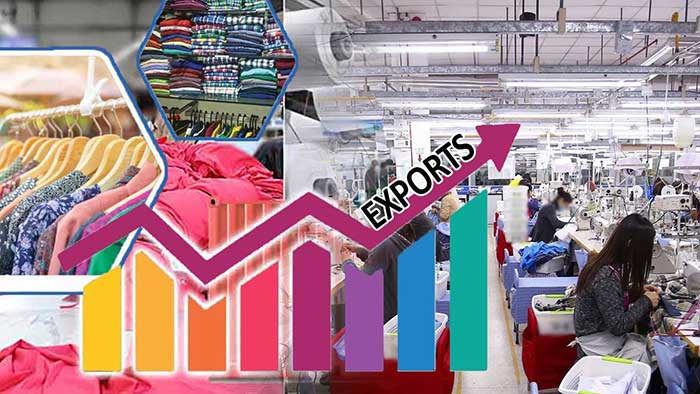
Sri Lanka’s apparel exports grew 2.8 per cent in November 2019. This is due to an increase in production capacity and a re-routing of supply chains amid the US-China trade war. The trade war to some extent helped with orders diverted to Sri Lanka. Apparel exports to the European Union grew 10.99 per cent in November 2019 compared to the same period in 2018. Sri Lanka’s total apparel exports from January to November 2019 grew 5.8 per cent. Apparel exports to the EU from January to November 2019 rose 5.7 per cent.
Exports to the EU have increased with continued leverage of GSP Plus preferential tariff benefits and market certainty with Brexit coming to a conclusion. However, Sri Lanka’s exports to the US in November fell 4.8 per cent though exports to the US for the period January to November 2019 recorded a growth of 3.7 per cent. The fall in exports to the US in November was due to continuous slowdown in sales of Victoria’s Secret, which is a large customer of Sri Lanka. Victoria’s Secret posted a seven per cent fall in same-store sales in the US and Canada in the third quarter. Victoria’s Secret has been bleeding sales and divesting its brand portfolio due to changing consumer tastes.
Germany to The International Cotton Conference in March
The International Cotton Conference will be held in Germany from March 25 to 27, 2020. Up to 500 participants from all continents of the world are expected, with science and trade equally represented. The conference will begin with keynote speakers focusing on the status quo and the challenges of the cotton industry. One topic will be the circular economy. The conference will be dealing with the life cycle of natural and renewable raw materials in the sense of a circular economy. Forms of growing raw material, of processing the raw material and its reusability in the sense of resource conservation will be procedurally looked at. For the first time, a guest country will be presented at the upcoming conference. Ethiopia has been chosen as a country where cotton is produced as well as processed. The focus is directed at a developing or emerging country where much has been recently brought on the way in order to further develop existing structures in cotton growing and cotton processing in a positive way.
Professionals from trade, acquisition, design, product management or textile engineering of cotton will get a first-hand inside view of the global cotton and textile industry. There will be lectures on topics relevant to the supply chain.