FW
Sustainability, inclusivity, some top searches in brands: Study
Sustainability, inclusivity and the new sharing economy are among the movements that impacted fashion this year, says fashion search platform Lyst. Personal values are trumping fashion trends. Searches including sustainability-related keywords increased 75 per cent. Sustainable denim and sneakers were the most wanted product categories.
Several major players launched eco-conscious initiatives this year. The way consumers shopped in 2019 reinforced this new sustainable mindset. Luxury resale saw a 225 per cent increase in searches. Rental business became more accessible as brands like Urban Outfitters, American Eagle and Bloomingdale’s introduced the model into their strategies. And as consumers warmed up to responsible fashion, they embraced new notions of gender, diversity and representation. Searches for adaptive fashion rose 80 per cent, while searches for modest fashion increased 80 per cent. There was also a 52 per cent increase in searches for the terms genderless and gender neutral with fashion. Denim brands offered selvedge slim leg jeans, painter pants and work pants for men and women.
Consumers sought out designers and retailers that aligned with their values and in response some of the world’s most powerful brands launched diversity campaigns and programs to promote inclusivity. Gucci and Chanel introduced newly created roles to enhance diversity and inclusion. LVMH signed the UN standards of conduct for business, which fights against discrimination toward LGBT people.
Argentina revives textile glory
Over the last decade Argentina’s textile and apparel sector has shrunk roughly 50 per cent. Argentina is Latin America’s third largest economy. The textile and apparel industry employed up to 1.5 million people compared to 7,00,000 currently. Revenues are roughly 50 per cent below a decade ago.
Plans to help shore up the sector include credits or loans to boost flagging production, efforts to stabilize the currency to rally exports and tax cuts for small businesses. Taxes for small and midsize businesses are expected to drop to 20 per cent from 30 per cent. If all goes as planned, the industry should grow to make 157 million pieces in 2020, up five per cent against this year. But lifting the country from its deep economic downturn will take time. A key way to bolster the sector’s fortunes will come from resurrecting past export stars such as high-end pullovers or hoodies, premium wool sweaters or leather jackets, which once sold strongly overseas.
Part of that effort should also include helping battered labels regain their footing. Gaucho-Buenos Aires, a high-end leather goods and ready-to-wear label, just launched online in the US. The brand is using Argentina’s cowboy culture to make leather products with a contemporary twist.
ISKO launches new recycling program
ISKO denim mill has recently welcomed to its family of innovations it’s most revolutionarily responsible yet R-TWOTM. This concept was essential to the development of the SS21 fabrics collection featuring an across-the-board employment of the “reused and recycled” program throughout ISKOTM’s denim offer, confirming once again the company’s commitment to environmental and social responsibility.
Preventing over-sourcing, avoiding waste. In keeping with ISKO’s Responsible InnovationTM approach, this concept deals with the most critical matter that apparel supply chains are currently faced with: using more then what actually needed.
ISKO R-TWOTM reduces the amount of raw material sourced by relying on a blend of reused cotton and recycled polyester, improving sourcing efficiency throughout the entire field-to- fabric production. This cutting-edge program effectively tackles over-sourcing – the leading issue when it comes to waste hierarchy.
Processing resources during the processing of raw cotton into yarn, for every 100 kilos of cotton approximately 10% is lost. ISKO collects it and prevents it from becoming waste, adding it back into the spinning process obtaining cotton that is fully tracked, documented and audited.
Depending on the content percentages, for the recycled polyester ISKO can provide either the Recycled Claim Standard (RCS) or Global Recycled Standard (GRS) certifications, both of which track the recycled raw material through the supply chain from input to final product to verify its integrity.
This verification process has been invented by ISKO in partnership with its yarn supplier Sanko, offering full clarity into the traceability of reused cotton from field to fabric. It is also certified with the Content Claim Standard or CCS of the Textile Exchange.
On the other hand, recycled polyester comes from clear plastic bottles or, alternatively, it can come from other certified waste: in either case the source material is collected, sorted, stripped of labels and caps, and cleaned. This material is then ground into plastic pellets that can then be re-spun into new fiber filaments, which are then blended with the reused cotton to create R-TWOTM fabrics.
The R-TWOTM program was developed to keep on delivering a futuristic and innovative sustainable approach, one where ISKO rethinks its sourcing strategies and refuses to source more raw materials than what actually needed.
EXCLUSIVE Q&A: Pham Sanh Chau, Vietnam’s Ambassador to India
‘We need to make everyone realise India’s potential as a good cotton supplier’
 India’s share in the global textile and clothing exports has increased modestly to 4 per cent in last two decades. Meanwhile, Bangladesh and Vietnam’s share has grown 6.5 per cent and 5.9 per cent, respectively. China’s share in global exports in 2017 declined from 36.7 per cent to 34.9 per cent amidst brewing trade conflicts. Moreover, with ever rising labour cost, textile and apparel manufacturing is moving out of China slowly but steadily, thereby creating space for countries likes of Bangladesh, Vietnam and India. Trade facts indicate that both Bangladesh and Vietnam are likely to garner the lion’s share of this trade. On the other hand, the Indian industry continues to struggle with sluggish growth due to lack of reforms in Indian textile sector.
At the recent Vietnam Trade, Investment & Promotion road show held in India Fashionatingworld speaks exclusively to Pham Sanh Chau, Vietnam’s Ambassador to India about the road show and opportunities it offers to develop trade relations between the two countries.
What prospects do you see in bilateral trade between India and Vietnam in the short and midterm?
There is a lot of untapped potential for business between these two countries. We are organising a month long program to promote our country in India. We have a delegation of 26 people at the event while several others will follow in coming weeks. In all, 33 events are chalked out.
What kind of response is the road show generating?
The outcome of this initiative has been very positive and we hope to sign a few MoUs that will materialise into concrete projects and contracts.
Is this the first time such a comprehensive exercise has been taken up?
Yes, an event for such a long duration is being held for the first time. I came to India a year ago and have since then been organising many events for investment, trade and tourism purposes. However, this is the first compact event that covers all topics in one session and is promoted in different states and cities.
Is this initiative unique to India only or is it being done in other countries also?
This initiative is unique only to India only as it is a huge country and we aim to cover even remote province or states of India from Dharmshala in Himachal Pradesh to Imphal in Manipur. Only two or three other countries in the world can match the size and scale of India including the United Sates, China and Russia. Though our current trade with China is worth nearly $100 million with India we are still aiming to reach $15 million by next year. This offers a huge scope to explore trade potential with India.
Which areas need to be improved upon?
First, we need to upgrade our tourism facilities as now there is a direct flight connectivity to Vietnam. Secondly, we need to export a lot of machinery, electrical goods and pharmaceutical raw materials. We can also invest in software, information technology or copper in the country. Software giant HCL recently opened an agency in Vietnam and plans to invest aggressively in the country.
What is your take on textile trade between the two countries?
Vietnam, being a big garment exporter, imports a lot of cotton. We have a separate section on cotton and encourage young Indians to explore export opportunities in Vietnam.
Where do you place India within the textile import space?
As we import a lot of cotton from China, this is the right moment to set the balance straight in cotton and yarn imports, which is weighted in favour of China. We need to make everyone realise that India is a good cotton supplier. Changing mindsets is not easy. Though it is convenient for us to trade with China due to its close proximity, we have now launched two airlines which have made it easier for us to trade with India. We now need to make people realise India’s potential as a good garment and yarn supplier, which is not an easy task.
Biocraft Laboratories completes production cycle of recombinant spider silkworms
Prodigy Textiles, the Vietnamese subsidiary of Kraig Biocraft Laboratories, Inc. the leading developer of spider silk based fibers, recently completed the first cycle of silk moth mating and egg production scale-up, at the Quang Nam factory.
The Prodigy Textiles operations team finished removing the cocoons from mounting frames on November 6, 2019 and silk moths began emerging by November 9th. The breeding of the emerged moths is complete, with the specialized silkworm eggs now in incubation and are expected to emerge shortly. Each female silk moth lays upwards of 200-500 eggs and, as previously announced, all of them emerged silk moths were dedicated to breeding stock expansion to rapidly scale up the company’s silk production capacity.
In the coming weeks, the company expects to hatch and rear this second round of silkworms, then harvest the resulting cocoons for production of the first recombinant spider silk threads manufactured in Vietnam. The Company will contract with a nearby reeling facility to convert the cocoons into finished silk yarn, which has already been committed to a textile manufacture for further fabric and product development.
The company plans to continue to expand its throughput, over the next several quarters, as it builds up its capacity, expand operations, and prepares to ship materials to its collaborators and potential customers.
Messe Frankfurt India to present India's first technical textile hackathon at Techtextil India 2019
"To look into the critical challenges of sustainable urban living, Messe Frankfurt India will host India's first Technical Textile Hackathon on November 22. The hackathon titled "Techtextil NEXT" will build an eco-system that supports India's technical textile start-ups and enables them to develop products and prototypes with Technical Textiles, driving innovations in the industry."
 To look into the critical challenges of sustainable urban living, Messe Frankfurt India will host India's first Technical Textile Hackathon on November 22. The hackathon titled "Techtextil NEXT" will build an eco-system that supports India's technical textile start-ups and enables them to develop products and prototypes with Technical Textiles, driving innovations in the industry.
Showcasing the supply-chain of fibre to innovation & start-ups to investor stage, India's first Technical Textile Hackathon aims to potentially build business models that can be funded, scaled, and taken globally. The hackathon is expected to bring India's top 10 technical textile start-ups under one roof. While the manufacturing side will be represented by companies of specialty fibres, yarns, textiles, fabrics, products along with brands and traders, the entrepreneur side will cover SME's, start-up ecosystems and accelerators.
Build up in association with Ideas that Scale as the knowledge partner, the intense 3-hour solution-driven session at the Techtextil NEXT Hackathon will take up topics centered around India's challenges of sustainability such as ocean littering, plastic recycling, and waste disposal, and drive concepts for start-ups to collaborate with industry stakeholders to develop focused solutions using "technical textiles".
Techtextil India is India's leading trade fair for technical textiles and nonwovens covering the chain of technical textiles and its 12 application areas of Agrotech, Buildtech, Clothtech, Geotech, Hometech, Indutech, Medtech, Mobiltech, Oekotech, Packtech, Protech, and Sport-tech.
Technical Textile is increasingly penetrating every aspect of our daily lives such as medical masks, car seats, trekking gears, specialised sport-wear, etc without most of us noticing. What we don't realise is that we are surrounded by textiles like nonwoven fabric in every single way. The future with smart wearable textiles is also near.
The 7th edition of this event already has a strong line-up of participation from 185 companies from 12 countries including Austria, Belgium, China, France, Germany, Italy, Korea, the Netherlands, Saudi Arabia, Spain, and China/Taiwan. Some of the industry's key players such as Aditya Birla Yarns (P T Elegant), Archroma, Coated Sales, Ginni Filaments, Lenzing Ag India, Montex Glass Fiber, Reliance Industries Ltd, Saint Gobain among others will have their latest technical textile innovations spread across the exhibition space covering these application areas.
With textile stakeholders and key decision-makers on the floor, the concurrent Hackathon can enable stakeholders to engage in sustained dialogue and drive innovations in India's technical textiles industry.
The organizers believe the collaborations can potentially lead to the development of multiple market strategies.
Raj Manek, Executive Director, and Board Member, Messe Frankfurt Asia Holdings elaborated: "While Techtextil India exhibition highlights innovations in the sector, the Techtextil NEXT Hackathon is a concerted an effort to tackle today's urban living challenges with next-generation solutions. The platform has the potential to present transformative ideas."
India needs to adopt a cautious approach to RCEP
"The subsidies given by its government and loans granted with low interest rates helped the Chinese textile industry to emerge as one of the top industries in the world. This coupled with zero per cent duty through the RCEP free trade agreement is likely to provide China with an open market, affecting medium and small textile players in India who are majorly dependent on the domestic market."
 The subsidies given by its government and loans granted with low interest rates helped the Chinese textile industry to emerge as one of the top industries in the world. This coupled with zero per cent duty through the RCEP free trade agreement is likely to provide China with an open market, affecting medium and small textile players in India who are majorly dependent on the domestic market.
During the last five years, India’s trade deficit with China increased to a whopping $711.298 billion. Imported Chinese goods are creating a havoc in the Indian system due to their gross undervaluation’ through congenital ‘mis-declaration. These grossly undervalued Chinese goods enter the Indian market through a fake certificate-of-origin of goods issued by a third country. This monopolised entry of Chinese goods renders the valuation rule inadequate, ineffective and obsolete.
Hasty decisions lead to a huge trade deficit
The Indian customs department is the most frontline professional organisation. However, custom officers are rarely consulted during the formulation of international trade policy or concluding multi-nation commercial agreements between India and foreign countries. The hasty decisions made by the government without a detailed analysis and feedback on real issues from ‘actual’ professionals are resulting in a humongous trade deficit with very little possibility of things improving in the near future.
To grant further duty concessions to these Chinese goods will therefore, prove disastrous for the Indian industry as it will result in loss of tax, closure of industry, loss of jobs, rise of unemployment; social unrest; and finally, loss of foreign investors’ confidence.
Signing RCEP to result in huge losses
Ludhiana-based garment makers are seeking protection against cheap Chinese imports as they fear a huge industrial collapse and loss of employment. It is being realised that signing the RCEP agreement under such circumstances will result in huge losses for the Indian textile industry as not only do Chinese manufacturers and traders offer cheaper fabrics but the Chinese government also grants subsidies and loans to the textile industry at low interest rates.
China adopted a policy of currency devaluation between 1980 and 1992, to ‘promote exports and to restrain imports so as to improve China’s current account position.’ From the ratio of $1: 1.53 Chinese yuan in 1980, the latter had fallen to 8.72 yuan to a dollar. As a result, the country’s trade deficit of $7.7 billion in 1988 turned into a trade surplus of $8.74 billion in 1990 and by year end, its foreign exchange reserves rose to $28.6 billion. Today, that figure has swollen to $3 plus trillion.
To sustain this growth, China now aims to include India in the RCEP. India, therefore, needs to adopt a cautious approach as even a wrong decision can prove highly disastrous for its domestic market.
ZDHC to host conference for the domestic apparel industry
Extending its regional activity chain, the ZDHC Foundation will host a conference with the theme ‘Anchoring the ZDHC Programme in the domestic apparel industry’ on December 10, 2019 at The Courtyard Marriott in Mumbai, India.
The conference will highlight the issue of safe chemical usage in supply chain of Indian domestic apparel brands and will create awareness of the ZDHC Programme by sharing experiences of stakeholders in the apparel and textile sector through presentations and panel discussions. It will cover various industry topics ranging from product safety Indian regulations and enforcements, leveraging sustainability and chemical management for growth and market differentiation in the fashion business. Also, topics like chemical management in the apparel value chain perspectives from brands and chemical industry; how can the chemical industry offer sustainable products to the textile industry; success stories in implementing best practices in chemical management, will be discussed.
The vision of ZDHC is focused on the implementation of sustainable chemistry, driving innovations and environmental best practices in the textile, apparel, and leather and footwear value chains through collaborative engagement, standard-setting, and implementation projects.
Australian brands turn against animal cruelty
Brands are moving away from using wool from mulesed sheep. By July 2023, 100 per cent of wool used by the retailer Target for clothing and bedding will be either from farms certified under the Responsible Wool Standard or equivalent standard, from farms fully traceable and verified as non-mulesed, or from recycled wool materials.
Most Australian Merinos are still mulesed. More than two billion animals end up in fashion supply chains every year. Many of them endure pain, fear and stress due to cruel mutilation practices and inadequate living conditions for the sake of clothing. Australian brands are starting to take steps toward prioritising animal welfare. Shoppers want kinder clothing and many brands are now listening. Only 55 per cent of Australians are aware of animal cruelty in the fashion industry. Of those that do know, 93 per cent are concerned about the animals used within at least one fashion category. Robust fashion policies are being aimed at reducing animal welfare risk and improving supply chain transparency. Brands want to be seen as opting to use only fabrics or textiles which do not allow for cruel animal practices or treatment while also striving for positive environmental and human welfare attributes.
Yarn Expo Spring 2020 to serve as a springboard for exhibitors and visitors
"The global textile trade in the past year has experienced recorded growth since 2012, and China was among the top three largest exporters and importers of textiles. As a result, suppliers are striving to meet robust demand with innovation and eco-friendly solutions. Yarn Expo Spring will present as an the ideal sourcing platform for the industry by attracting worldwide suppliers with the potential to explore new partnerships and markets in China and globally while offering buyers strong product diversity and updated market information"
 Yarn Expo Spring, to be held from March 11 to 13, 2020 at the National Exhibition and Convention Center in Shanghai, will serve as serves as a fast-developing springboard for exhibitors to attract Chinese and international buyers.
As per the World Trade Organisation, the global textile trade in the past year has experienced recorded growth since 2012, and China was among the top three largest exporters and importers of textiles. As a result, suppliers are striving to meet robust demand with innovation and eco-friendly solutions. Yarn Expo Spring will present as an the ideal sourcing platform for the industry by attracting worldwide suppliers with the potential to explore new partnerships and markets in China and globally while offering buyers strong product diversity and updated market information.
Multiplicity of the leading fair
Eco-friendly solutions and innovations across all product categories will continue to be a major trend at Yarn Expo Spring 2020, with highlighted domestic zones including natural cotton, quality wool, green linen, chemical fibre and specialty yarn. In particular, the Fancy and Specialty Yarn Zone will feature the Fancy Yarn Vision display area, which was first introduced at Yarn Expo Autumn 2019. Meanwhile, international pavilions and zones showcasing an increasing number of strong suppliers include India Pavilion and the Pakistan Zone.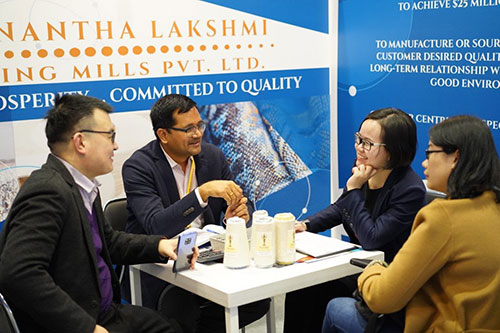
Ravindranathan Narayanasamy, Director of the Cotton Textiles Export Promotion Council (TEXPROCIL), organisers of India Pavilion describes the fair as a key place to do business face-to-face in China: “The visitors to Yarn Expo are very professional and match our exhibitors’ expectations. Some large Chinese importers visited our booths, and I’ve noticed this edition there are a lot of new importers who haven’t bought from India before.” He also acknowledges the increase and diversity in visitors: “In addition to the local market, we have seen a lot more overseas buyers, from Korea, Japan, the US, a lot from Europe and some from Russia. We’re really happy with our participation in the fair as this is a global meeting point. This is definitely the best fair in China, and one of the best in the world.”
Yarn Expo Spring and the other four concurrent fairs will bring the whole textile supply chain to one ground to enable their exhibitors and visitors to strengthen business contacts and discover new opportunities in the industry together.