FW
In first half of year, Gap faces excess inventory
Gap performed poorly in the first half of the year. The operating model improvement process at the company’s namesake brand has been fraught with inventory problems. As a result, the company was saddled with excess inventory coming into the first quarter, which consequently impacted the company’s sales from this brand as well as its ability to optimize its margins, since it forced the brand to be more promotional.
Overall gross margins fell 10 basis points in Q2. Looking ahead, the company has cut 30 per cent styles heading into the second half of the financial year, which should help to improve the performance.
The company has one platform for all of its brands, ensuring customers can purchase items for any of them in one place. This has also ensured its new brands get the recognition that would not have been possible if they had had a separate web presence. An upshot of this is that the company was able to deliver strong growth from its online and mobile channels in the second quarter. The company has also focused its investment into the native mobile apps and on improving site speed. These factors should ensure the growth of this segment in the future.
Africa turns fashion pioneer
Africa’s role as both a consumer and a producer of fashion is on the rise. Powered by e-commerce and social media, demand for African fashion is likely to go up among the continent’s growing middle class, which is the fastest growing in the world, with consumer spending expected to hit $1.4 trillion by 2020.
South Africa and Nigeria are the continent’s top fashion markets but Ethiopia, Lesotho, Kenya, Mauritius and Swaziland are leaders in textile and apparel exports. Extremely talented young entrepreneurs have begun to gain global recognition as they pioneer strategies to market and brand fashion concepts grounded in cultural heritage.
The African textile and fashion industry is raising its profile in the international stage. It wants Africa to be seen not just as a new source of labor but as a source of creativity and innovation with talented entrepreneurs that can serve local, regional and global markets. Fashion in Africa is a multi-billion dollar industry that creates millions of jobs, particularly, for women and young people. The country is aiming at exporting finished textile products. The world fashion industry is expected to double in the next decade.
Bangladesh turns apparel frontrunner in high-end clothing
Bangladesh is one of the most preferred sourcing destinations owing to its low cost manufacturing. While this was true for low-end apparels till now, its competitive advantage is making way for high-end clothing as well. The country’s exports and sustainability have both grown faster than those of most of its global counterparts.
Bangladesh’s clothing manufacturers have been quite aggressive in making their factories greener. For starters, the top three LEED certified factories in the world are based in Bangladesh, the country has seven out of the top ten LEED certified apparel manufacturing plants. There are 67 factories in Bangladesh that are LEED certified, and 222 factories are on their way to becoming LEED certified.
Going by the trend, it will soon become the country with the most environment-friendly apparel industry and be an example for others to follow. Concepts such as lean manufacturing have improved efficiency. Among other things, the country’s success can be attributed to the academic institutions that have come up to address the demand for apparel education. In the past, their aim was to just provide basic education on merchandising but with industry expansion the curriculum has expanded to include engineering concentrations, part-time intensive diploma programs, and high-end fashion.
Bangladesh accessory makers ramp up production
Makers of garment accessories in Bangladesh are gearing up to meet the demand of apparel sector. They are emphasising more on producing high-quality accessory items to establish the sector as an individual industry rather than a backward integration of the readymade garment industry.
About 100 new factories have started operations this year. Currently, around 1,700 factories are producing accessory items in the country. Bangladesh produces and exports accessories like woven labels, leather badges, stone and metal motifs, rubber patches, gum tapes, satin and cotton ribbon hangers, price tags, and buttons and zippers. In all, accessory makers and packagers supply 34 types of products.
The sector contributes 15 to 20 per cent of the net export earnings of the readymade garment sector. Bangladesh also exports accessories to the Middle East, South Africa, Sri Lanka, Malaysia, Europe, Vietnam, Cambodia, and Laos. Accessory items also meet the demand of the country’s agro-business and plastic sectors.
The industry wants cash incentives on exports. Since banks charge double-digit interest rates on loans from businesses, this increases the cost of doing business. China is the biggest player in manufacturing garment accessory items in the world. Bangladesh holds the second position. The market for garment accessories in Asia alone is worth $24 billion.
Buyer-Seller Meet to promote India-Scandinavia trade relations
 The Export Promotion Council for Handicrafts (EPCH) with the support of Embassy of India in Denmark and office of Development Commissioner (Handicrafts) organised a Buyer-Seller Meet from November 19-20, 2018 in Copenhagen, Denmark. The council is the nodal agency for the promotion and development of handicrafts exports from India to various destinations of the world.
Matching Indian companies with their Scandinavian counterparts
The Buyer-Seller-Meet is a B2B exhibition for order booking for future sourcing of foreign buyers in Denmark. It was inaugurated Ajit Gupte, Ambassador of India in Denmark alongwith and OP Prahladka, Chairman, EPCH and Rakesh Kumar, Executive Director, PCH. It is being attended by 26 Indian exporters who are displaying a wide range of Indian handicrafts, home furnishings, floorings & textiles, Indian houseware & decoratives, fashion accessories shawls, scarves, bags, fashion garments and Christmas décor from PAN India basis.
The objective of this Buyer-Seller Meet is to match Indian companies with the Scandinavian companies interested in sourcing Indian handicrafts, home furnishings, floorings & textiles, houseware & decoratives, fashion accessories shawls, scarves, bags, fashion garments and Christmas décor, gifts, lifestyle products for the Scandinavian market thereby creating a ‘Brand Image” of Indian handicrafts amongst Scandinavian buyers.
Potential market for Indian handicrafts
The main exports markets for Indian handicrafts are USA followed by EU, Middle East and Far East. However, Scandinavian countries are emerging as a new potential destination for exports of handicrafts. Indian craftsmanship, ethnic designs and colors are unique and have no comparison with products from other countries. The range produced in India is very large and wide and the quality and price structure varies from high-end market to middle end market.
The Scandinavian countries are the potential markets for the Indian handicrafts. The exports of handicrafts from India are at US$ million 3573.49 in 2017-2018. The exports of India handicrafts to Denmark was of US$ 26.50 million during the 2016-17 which increased to USD 28.94 million during 2017-18 registering a growth of 9.19 per cent.
Rakesh Kumar, Executive Director-EPCH hoped that with the overwhelming response and buyers turn out at Buyer-seller-meet will further lead to a growth in Indo-Danish Trade relations in the year ahead.
Melbourne’s International Sourcing Expo opens today with strong Indian participation
"The 9th edition of the International Sourcing Expo, co-located with the 3rd edition of the Footwear and Leather Show will be held from November 20-22, 2018 at the Melbourne Convention & Exhibition Centre. The three day event will be Australia’s premier international sourcing show for apparel, textiles, footwear and leather products. The trade-only event will occupy 16,500 gross sq. mt. space showcasing the full spectrum of product and service offerings from off-the-shelf clothing to made-to-order pieces, fabric and functional textiles. It will attract over 700 textile, apparel and footwear manufacturers and agents from 18 countries."
 The 9th edition of the International Sourcing Expo, co-located with the 3rd edition of the Footwear and Leather Show will be held from November 20-22, 2018 at the Melbourne Convention & Exhibition Centre. The three day event will be Australia’s premier international sourcing show for apparel, textiles, footwear and leather products. The trade-only event will occupy 16,500 gross sq. mt. space showcasing the full spectrum of product and service offerings from off-the-shelf clothing to made-to-order pieces, fabric and functional textiles. It will attract over 700 textile, apparel and footwear manufacturers and agents from 18 countries.
Indian involvement
Indian participation across both the International Sourcing Expo and Footwear and Leather Show continues to be by far the largest among all attending nations with 130 companies attending. Led by key export organisations, these Indian contingents of suppliers will attract sourcing managers from Australia’s large fashion retailers, niche fashion brands, online outlets and designers.
Apparel Export Promotion Council, Wool and Woolen Export Promotion Council, and Handloom Export Promotion Council will add to the Indian participation with their dedicated pavilions that represent suppliers, and their industry, at the International Sourcing Expo. The Council of Leather Exports will lead their industry contingent at the Footwear and Leather Show with 30 suppliers joining the pavilion. They will hold the largest pavilion at Footwear and Leather Show Australia for the third consecutive year.
A comprehensive learning program
The three-day Global Sourcing Seminar Program led by industry experts will provide a comprehensive program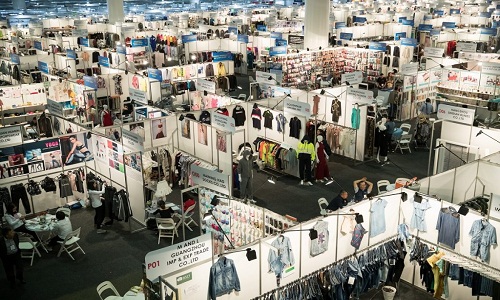 of learning for both exhibitors and visitors. From WGSN’S international denim trends, insights into the main Asian fashion supply industries, the Modern Slavery Act, ethical sourcing advice, help for fashion start-ups, international fashion and footwear insights and more, the seminar series will cater to various needs of industry professionals.
The two-day seminar program, on its first day will detail the potential and prospects of the local sector, both on the domestic and export front, investment opportunities and FDI incentives offered by the Indian government. Mukhtarul Amin, Chairman, Council Leather Exports India, will deliver an expert view of the Indian leather and footwear sector.
The second day of the seminar program will include an exhibitor-focussed seminar presented by senior retail consultant Sarah Gale to provide a comprehensive overview of the Australian market, and seasonality within different regions.
Global Runway, a major attraction
To be held exclusive for the first time as a part of the show, the Global Runway will draw significant attention and showcase collections by both emerging and established Australian and international designers. These runway shows will be held by Australian Fashion Council and designers from Indonesia and China.
Global Business Matching to fast-track buyer/seller experience
The 3rd edition of Australia’s only dedicated Footwear and Leather Show and the 9th edition of International Sourcing Expo Australia will introduce an online business matching program to fast-track buyer/seller experience. The program uses a powerful recommendation engine to match buyers and sellers. Exhibitors can connect with relevant buyers and attendees for private networking opportunities and meetings at their stand or in a business matching lounge.
US refuses to back off on trade dispute
The US has refused to back down from its ongoing trade dispute with China. Instead it has warned of doubling existing tariffs on Chinese imports and says it will take decisive action to address its imbalance with China. The country has imposed tariffs on $250 billion worth of Chinese imports this year to force concessions on a list of demands that would change the terms of trade between the two countries.
The current tariff rate is set at 10 per cent but is due to increase to 25 per cent on January 1, if a deal is not struck in the meantime. China has responded with a subtle warning the US risks closing itself off from the world and has been joined by a number of other Asia-Pacific leaders in urging free trade.
China is willing to expand imports from the US if the US is willing to meet it half way in trade negotiations. For China boosting imports is an established strategy and China doesn’t want to escalate trade tensions with the US. The country has offered to boost purchases of US goods by about $25 billion this year ahead of a mid-June deadline for imposing tariffs on Chinese imports.
Rise in KG Denim net sales
During the period ended September 30, 2018, KG Denim’s net sales were Rs 183.60 crores as compared to Rs 162.23 crores during the period ended September 30, 2017. Net profit was Rs 6.41 crores for the period ended September 30, 2018, as against a net loss of Rs 0.47 crores for the period ended September 30, 2017.
EPS for the period ended September 30, 2018, was Rs 2.50 as compared to Rs 0.18 for the period ended September 30, 2017. Net sales during the six month period ended September 30, 2018, were Rs 345.20 crores as compared to Rs 310.64 crores during the six month period ended September 30, 2017.
Net profit was Rs 6.89 crores for the six month period ended September 30, 2018, as against Rs 0.44 crores for the six month period ended September 30, 2017. EPS was Rs 2.68 for the six month period ended September 30, 2018, as compared to Rs 0.17 for the six month period ended September 30, 2017.
KG Denim is a denim and apparel fabric manufacturer. The company’s product divisions include denim, apparel fabric and home textiles. Its denim products include authentic ring denims, selvedge denim, organic/bio denims, tencel denim, printed denim and coated denim. The apparel fabric products include stretch twills, jean twills, and stretch, with or without Lycra.
India: Tirupur hopes for FTA with Russia
Knitwear industrialists in Tirupur feel a free trade agreement (FTA) with Russia will help them. Russia imported knitwear garments worth Rs 241 crores and woven garments worth Rs 295 crores from India in 2017-18. Russia has a similar treaty with Bangladesh that allows for duty-free imports of readymade garments.
India and Russia plan to strengthen economic cooperation in the coming decades. The areas under focus include Indian pharmaceutical plants in Russia, long-term leasing of agricultural land in Russia’s Far East, export of automobile components from India and entry of new Indian textile players in Russia.
The list also includes heavy engineering under the Make in India initiative, investments by leading Indian IT firms in Russian tech parks, entering the infrastructure market in Russia, collaboration in mining and metallurgy sector, and joint collaboration in the Arctic sector.
Indian pharmaceutical companies are looking at the possibility of setting up plants in Russia. Agriculture and food processing sector is one of the emerging areas of cooperation. There is considerable demand for import of agricultural products, mainly fresh vegetables and fruits from India. One of the reasons for the inability of Indian exporters to cater to this demand is the logistics. One solution proposed could be direct long-term contracts between major supermarket chains in Russia and major exporters from India.
India’s apparel exports increases 54 per cent in October
Apparel exports increased by 54 per cent in rupee terms in October compared to the same month last year; in dollar terms it increased by 36 per cent for the same period. Total textile and apparel exports grew by 38 per cent in rupee terms and 22 per cent in dollar terms for the same period. A big reason for this increase was the drop in exports last year due to the impact of GST introduction along with rupee depreciation.
According to Sanjay K Jain, Chairman of Confederation of Indian Textile Industry (CITI), the IIP data for textiles and clothing saw a year-on-year growth during September this year from a year earlier. Textile manufacturing increased 5.4 per cent in September 2018 year-on-year whereas manufacturing of wearing apparel increased by 20.9 per cent for the same period.