FW
Fashion accessories face supply chain issues with ongoing tariff wars
"In recent years, these companies have been facing many challenges from the Chinese markets. Prices are increasing, minimum units required are rising, there are worker shortages, late shipments and factories are closing. Although some large companies have begun shifting production elsewhere to find cheaper labor costs and factories that could meet their needs, many companies that had well established supply chains, have not established back-up plans or searched for new countries for sourcing."
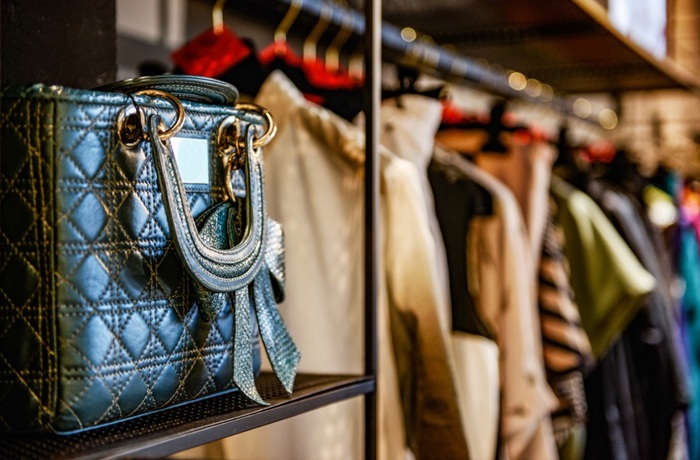
 For long, fashion accessories companies have relied on Chinese factories to make their products. Twenty-five years ago, fashion jewelry shifted production from the US to Asia and as other categories, such as handbags, grew in importance, the factories overseas became the go-to places to manufacture.
In recent years, these companies have been facing many challenges from the Chinese markets. Prices are increasing, minimum units required are rising, there are worker shortages, late shipments and factories are closing. Although some large companies have begun shifting production elsewhere to find cheaper labor costs and factories that could meet their needs, many companies that had well established supply chains, have not established back-up plans or searched for new countries for sourcing.
Chinese companies face staggering taxes
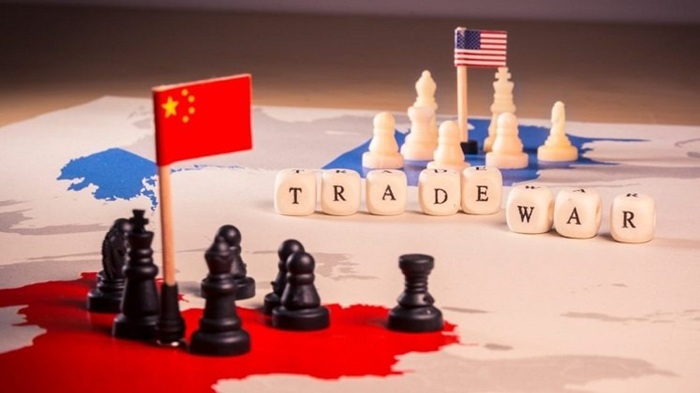
Chinese companies making luggage, handbags, backpacks, wallets, purses, hats, belts and similar items are suddenly facing staggering duties as a side effect of the tariff war. With purchase orders shipping between September 24, 2018, and January 1, 2019, they will now pay an additional 10 per cent duty, and goods shipping after January 1, 2019, will be subject to an additional 15 per cent tariff —making for an additional 25 per cent total.
The majority of goods imported by these Chinese companies were already taxed at tariff rates ranging from 16 to 20 per cent of the imported value. The addition of another tariff has created cumulative tariff rates that exceed 30 per cent and go as high as 45 per cent. This subjects handbags and luggage items to the highest tariff rates of any product imported into the United States. In fact, these rates are on par, or higher than, goods from countries that do not have normal trade relation, such as Cuba and North Korea.
Decreased margins for US retail companies
The US retail industry for accessories is already under financial stress as sales have been down over the past two years and many of the larger retailers have consolidated or closed retail locations. In the short term, these companies will have decreased margins, but in the long term, the cost increase will be passed along to consumers.
While there are many categories that are not currently impacted by these tariffs, such as footwear, jewelry and apparel, they will be included in future tariff announcements. There is no timeframe, no schedule and no assurances of a new trade agreement with China in the near future.
India emerges an alternative to China
India will become an alternative to China for production of these categories of goods. There are a few US-based resources that are likely to expand but in order to mitigate the long-term effects of tariffs, the US is aggressively exploring other options for its members and associated companies.
Indian factories are continuing to expand their capabilities and quality, with many becoming increasingly design focused. And in many Indian factories founded in the late 80s and 90s, second generation leaders are taking the helm, bringing with them a global perspective, innovative ideas and an understanding of how their businesses must change to provide solutions for brands and thrive in this ever-changing market.
The tariffs have highlighted lack of diversity in the US supply chain. The lesson that US must learn is that in order to be successful the US companies, alongwith a healthy stock portfolio, also need to have a healthy sourcing portfolio.
EPCH holds expo in Sweden
 A Buyer-Seller Meet is being held in Sweden, November 22 to 23, 2018, by the Export Promotion Council for Handicrafts (EPCH).
EPCH is the nodal agency for the promotion and development of handicrafts exports from India to various destinations of the world.
More than 25 Indian exporters are participating in this BSM and displaying a wide range of Indian handicrafts, home furnishings, floorings and textiles, houseware and decoratives, fashion accessories, shawls, scarves, bags, fashion garments from India. The Buyer Seller Meet is a B2B exhibition for booking orders for future sourcing of foreign buyers in Sweden.
With premium products to suit contemporary demands, manufacturers in India focus on freshness and new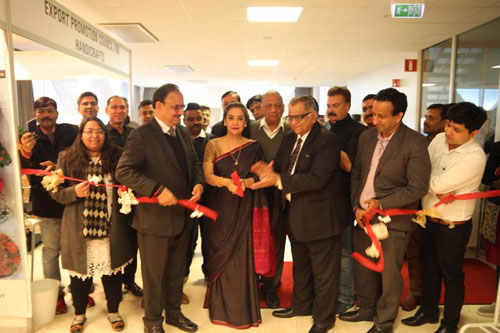 thinking. India’s exports to the Scandinavian region have seen a healthy and consistent growth with Indian manufacturers and exporters growing knowledge of market trends and consumer preferences.
The main export markets for Indian handicrafts are the US followed by the EU, Middle East and the Far East. However, Scandinavian countries are emerging as a new potential destination for exports of handicrafts. Indian craftsmanship, ethnic designs and colors are unique and have no comparison with products from other countries. The range produced in India is very large and wide and the quality and price structure varies from high-end market to middle end market.
Todd Dalhausser appointed President of VF Corps brand Altra
VF Corporation, a global leader in branded lifestyle apparel, footwear and accessories has appointed Todd Dalhausser, Brand President, Altra®, effective immediately. He will report to Steve Murray, Vice President, Strategic Products.
Dalhausser was earlier employed with Wolverine Worldwide, where he served as Senior Vice President of Sales for Saucony North America, one of the leading brands in the Running Specialty sector. He managed Saucony/Hind’s apparel business, where he oversaw design, development and product merchandising. He also held similar positions for both Vans® and Reebok.
The appointment of Dalhausser as President of the Altra® brand provides an opportunity for Brian Beckstead, co-founder of Altra®, to assume a new role as Founder and Chief Marketing Officer. In this role, Beckstead will be responsible for all Product and Marketing for the brand. Beckstead will report to Dalhausser.
Applied DNA Sciences develops denim tags that survive harsh processing
The tags of Applied DNA Sciences (APDN) can be used to authenticate denim products, even when subjected to harsh processing. The tags added to the denim material prior to stone and bleach washings used in the production of finished garments are still detectable afterwards. They remain intact and are suitable for high quality forensic scale analysis after processing.
Denim undergoes the harshest treatment among apparel products. APDN provides its tags to companies in the textiles industry. This technology enables brands and manufacturers to track their fibers from the farm through to the finished product, allowing for a more transparent supply chain.
Traceability can also help verify certain sustainability claims about commodities and products, helping ensure good practices and respect for people and the environment in supply chains. In future, Applied DNA Sciences will tag cotton intended for denim use, as well as other premium fibers such as wool, cashmere, manmade fibers like viscose, nylon, and recycled polyester, and bio-based fibers. The company has a defined goal of having 3,00,000,000 sq. ft. of DNA-tagged leather under contract over the next five years.
There has been a lack of commercially available test methods to determine where denim fibers are grown, and this is a concern to manufacturers, as global counterfeiting continues to escalate.
VTG 2018 and VitaTex organised in HCM City
The 18th Vietnam International Textile & Garment Industry Exhibition (VTG 2018) and the Vietnam International Textile and Apparel Accessories Exhibition (VitaTex) were organised on November 21, 2018 in HCM City. The events featured over 500 exhibitors including 100 brands from 13 countries and territories: Bangladesh, mainland China, Germany, Hong Kong, India, Indonesia, Japan, South Korea, Malaysia, Singapore, Taiwan, Turkey and Việt Nam.
Many sewing machines brands from mainland China and Hong Kong such as Adler, Leman, Siruba and others were also present at the expo. The events will include a number of seminars on issues like: the US-China trade war, a study of effective competitive strategy of garment company in Việt Nam, solutions for saving energy in the textile industry, automation, digitalisation, and challenges facing the Việt Nam textile and garment industry.
The expos are organised by Vinexad National Trade Fair & Advertising JSC, Yorkers Trade & Marketing Service Co Ltd, Guangdong Sewing Equipment Chamber Commerce and Paper Communication Exhibition Services, and the Hong Kong Apparel Machinery Association.
Nigeria to revive country’s textile industry
The Nigerian government vows to revive the country’s textile sector. Textile Company, the Vlisco Group will invest US $ 200 million in a textile factory in Nigeria. The President plans to encourage the cultivation of cotton in the country as it would offer jobs to thousands of people thereby keeping farmers busy as well as enhancing the economy of the nation.
Further, the government also plans to change the supply chain from Asia to Nigeria. It wants to promote the use of Nigerian cotton and also encourage the creative industries in the country to find a voice.
Nigeria revives cotton strength
Cotton production in Nigeria has fallen. Among the reasons for this fall are: absence of improved seeds, pest infestation, price fluctuation, and a dearth of ginneries and textile mills. The cotton industry in Nigeria used to be very viable, employing a large number of people.
But this became history right from the 1990s. The capacity utilization which was more than 63 per cent dipped considerably. The number of textile mills dropped. The entire industry has virtually become moribund. Production of cotton in Nigeria is dominated by small scale farmers.
Now efforts are being made to develop improved seeds for farmers to increase productivity, in addition to the development of Bt cotton, a genetically modified, pest resistant plant cotton variety that will increase yield. Bt cotton is expected to be made available for farmers in the next planting season.
The expectation is if farmers have access to Bt cotton, the issue of pest infestation and low yield will become a thing of the past, thereby boosting activities in the entire value chain. Farmers are also looking for viable markets. They say allowing foreign markets to determine the price of the produce has helped in killing the cotton industry in the country.
Uniqlo’s denim are all about three fs: fabric, fit and finishing
Denim has become a very important segment for Uniqlo. But Uniqlo doesn’t follow denim trends such as busted knees or heavy patchworks. It’s about everyday staples such as skinnies, straight legs and boyfriend jeans with decent washes and treatments.
The retailer is known for its offer in basic jeans, designed in line with the whole collection‘s basic approach. Uniqlo aims for innovation in new technologies and generally invests in developments. In 2016 mother company Fast Retailing set up the Jeans Innovation Center in Los Angeles, a lab to develop new technologies in terms of the three fs–fabric, fit and finishing.
In the past, Fast Retailing had outsourced the production of samples and other operations to external manufacturers, but with this new center the company will now be able to manage the entire process in-house with the aim to considerably enhance the speed and quality of the products. In addition, the facility will focus on environmentally friendly processing and production methods, conducting R&D on chemicals and techniques used for fading and distressing of jeans.
All Uniqlo stores follow strict rules of arranging product groups, knitwear, T-shirts, underwear or jeans. Everything is either hanging or neatly folded and accurately stacked, showing the Japanese attention to detail and perfection.
Apparel Textile Sourcing Miami to be held in May
Apparel Textile Sourcing Miami will be held from May 20 to 22, 2019. This is the second edition of Florida’s first ever international apparel and textile show. It is the largest apparel and textile sourcing show in the southern US and Latin America.
Dozens of apparel and textile organizations – from some 15 countries –will have a presence at the show. ATSM 2019 event, which presents three days of networking, seminars and fashion shows and connects Southeastern US, the Americas and the Caribbean to the production world of apparel, textile, and fashion – will host more than 300 international and domestic manufacturing companies exhibiting a wide range of products and process solutions in the field of manufacturing and sourcing services.
The 2019 event is expected to double in size from this year’s inaugural show. Apparel Textile Sourcing Miami is expected to attract a large number of domestic and international industry decision makers and promote Florida as a premier destination for the industry and stimulate the local economy.
The China Chamber of Commerce for Import and Export of Textile and Apparel, the largest textile and apparel trade agency in the world, supports ATSM. ATSM’s sister shows are Apparel Textile Sourcing Canada and Apparel Textile Sourcing Germany.
Levi Strauss plans IPO in 2019
Levi Strauss is planning an initial public offering. The company is likely to go public in the first quarter of 2019 and is aiming to debut with a valuation of about five billion dollars. This could be the company's return to the public markets, nearly five decades after going private.
The company first went public in 1971, but descendants of Levi Strauss, the creator of the blue jeans, took the company private shortly after. For the latest quarter the company’s sales rose ten per cent and net income jumped 44 per cent, mainly due to demand for its jeans at both retail stores and online.
Levi Strauss has undertaken a series of leadership moves designed to streamline decision-making and consolidate accountability for core business growth drivers. The company has established a new strategy and analytics organization, elevating the importance of data and analytics and pairing it with strategy to shape the future. This addition reflects the company’s belief that it has an untapped competitive advantage in unleashing the power of data and analytics.
The expansion of its retail network along with the emergence of digital has increasingly given the company a direct relationship with consumers — one that did not exist when the company was exclusively a wholesaler.