

The US apparel sourcing market has entered 2026 with a sharp demand decline but an equally important shift in supplier preference. Latest OTEXA data for January shows total apparel imports falling to $6.22 billion, down 13.51 per cent year-on-year from $7.19 billion, confirming that American retailers remain in a cautious buying cycle shaped by inventory discipline, compliance risk and tariff-led sourcing diversification.
The headline decline, however, only partly explains what is happening beneath the surface. Import volume dropped 17.09 per cent, a steeper fall than value, while average unit prices rose 4.31 per cent. This difference points to a clear change in sourcing economics: the US is importing fewer garments, but each unit is landing at a higher cost. The increase is less about consumer willingness to pay and more about costs built into the supply chain through tariffs, forced-labor compliance checks, route diversification and a shift away from legacy low-cost hubs.
Supplier rankings shift
The January country table shows a decisive redrawing of sourcing priorities. Vietnam has consolidated its position as the largest apparel supplier to the U.S., with imports rising 3.09 per cent to $1.49 billion and volume up 3.72 per cent. The marginal 0.60 per cent decline in unit price indicates Vietnam is scaling without sacrificing price competitiveness, reinforcing its role as the primary beneficiary of the US shift away from China.
Table: US apparel imports (Jan 2026 analysis)
|
Country |
Value ($mn) |
Value growth |
Volume growth (SME) |
Unit price growth |
|
World Total |
6,221.60 |
-13.51% |
-17.09% |
+4.31% |
|
Vietnam |
1,489.47 |
+3.09% |
+3.72% |
-0.60% |
|
China |
603.92 |
-62.32% |
-51.23% |
-22.74% |
|
Bangladesh |
791.77 |
-0.90% |
+1.18% |
-2.06% |
|
India |
385.41 |
-18.30% |
-15.37% |
-3.45% |
|
Cambodia |
406.84 |
+25.35% |
+27.84% |
-1.95% |
|
Indonesia |
446.54 |
+7.22% |
+9.67% |
-2.23% |
|
Pakistan |
173.29 |
-3.50% |
-3.78% |
+0.29% |
Source: OTEXA
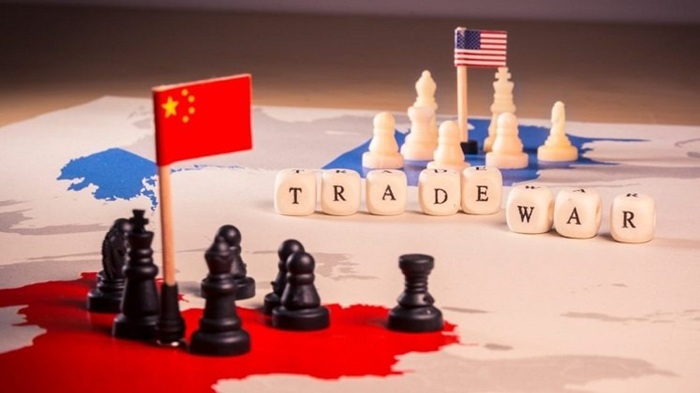
The sharpest disruption remains China’s collapse, where import value fell 62.32 per cent and volume dropped 51.23 per cent. The associated 22.74 per cent decline in unit price suggests Chinese exporters are cutting aggressively to defend share, yet even deep price reductions are failing to offset geopolitical and regulatory pressure. The scale of the fall makes this less of a cyclical dip and more of a structural retreat.
The table also highlights the rapid rise of secondary ASEAN sourcing bases. Cambodia posted 25.35 per cent value growth alongside a 27.84 per cent increase in volume, making it one of the strongest gainers in the dataset. Indonesia followed with 7.22 per cent growth in value and 9.67 per cent in volume, confirming that US buyers are widening their sourcing spread across Southeast Asia rather than relying on a single replacement for China.
The pricing divide
One of the most important signals in the table is the disconnect between falling global volume and rising US unit prices. Unlike Europe, where slowing demand has triggered supplier discounting, the US market is showing a different cost structure. Compliance-linked sourcing barriers, including forced labor scrutiny and tariff exposure, are raising the effective cost of market access.
This explains why unit prices can rise even as order books weaken. Buyers are not simply purchasing less; they are paying more for traceable, lower-risk and geopolitically safer supply. The result is a market where resilience now carries a measurable premium.
India’s controlled retreat
India’s January performance reflects a regulated rather than distressed correction. Export value to the US declined 18.30 per cent to $385.41 million, while volume was down 15.37 per cent. Yet the 3.45 per cent decline in unit price is significantly more moderate than China’s sharp reset, indicating that Indian exporters are defending margins instead of chasing volume at any cost.
The table suggests India is preserving its position in cotton-rich categories, embellished womenswear, woven garments and select higher-value segments where reliability matters more than pure price competition. This is a critical distinction in a contracting market. Rather than entering a discount cycle, Indian suppliers appear to be protecting category strength and price discipline. For India’s exporters, this strategy aligns with a broader long-term play: staying relevant in value-added sourcing while benefiting from brands’ need for diversified non-China capacity.
Bangladesh holds the basics base
Bangladesh’s numbers tell a different story. Import value slipped only 0.90 per cent to $791.77 million, while volume still grew 1.18 per cent. The modest 2.06 per cent decline in unit price indicates tactical pricing support to retain orders in mass basic categories. This balance between stable value and positive volume growth underscores Bangladesh’s continued role as the preferred source for essential apparel lines. Even in a shrinking US import market, buyers are preserving scale in replenishment-driven basics, and Bangladesh remains central to that model. The resilience shows that competitive pricing, large-scale capacity and reliability in core categories continue to provide Dhaka with defensive strength.
Three distinct supply chain models
The country-level data now points to three operating models shaping US sourcing in 2026. The first is the scale transfer model, led by Vietnam and Cambodia, where supply is rapidly absorbing volume exiting China. The second is the volume defence model, represented by Bangladesh, where slight price flexibility protects large basic programs. The third is the value-preservation model, where India and Pakistan are focusing on category specialization and price floors rather than aggressive markdowns.
This segmentation is significant because it shows sourcing is no longer being decided on labor arbitrage alone. Compliance credibility, tariff exposure, political stability and category expertise are now core variables in vendor selection.
What 2026 looks like
The rest of 2026 is likely to be defined by what can best be described as sourcing risk engineering. US brands are moving beyond cost-led vendor decisions and building portfolios that can withstand tariff shocks, customs scrutiny and geopolitical disruption. The January OTEXA table makes one trend unmistakable: the era of single-country dependence is ending faster than expected. China’s steep decline has increased a redistribution of orders across Southeast Asia and selective South Asian specialists.
For exporters, the question is no longer who can produce the cheapest garment. It is who can deliver compliance assurance, political reliability and cost predictability in a volatile global trade environment. In that framework, the winners of 2026 will be those positioned not merely as manufacturers, but as low-risk sourcing partners.











