FW
India: Amended TUFS offers wider financial gains to textile industry
"The Union Ministry of Textiles recently introduced Amended Technology Upgradation Funds Scheme (ATUFS) that will offer wider financial and operational benefits to all textile players. The scheme, first introduced in 1999, to improve operational efficiency of textile units, was later upgraded to encourage new investments in the sector. The scheme has so far, attracted billions of rupees in investment. Under this scheme, co-operative banks can lend money to textile units for technology upgradation. The scheme, set to benefit the synthetic textile sector immensely, has also been extended to limited liability partnership (LLP) firms."
 The Union Ministry of Textiles recently introduced Amended Technology Upgradation Funds Scheme (ATUFS) that will offer wider financial and operational benefits to all textile players. The scheme, first introduced in 1999, to improve operational efficiency of textile units, was later upgraded to encourage new investments in the sector. The scheme has so far, attracted billions of rupees in investment. Under this scheme, co-operative banks can lend money to textile units for technology upgradation. The scheme, set to benefit the synthetic textile sector immensely, has also been extended to limited liability partnership (LLP) firms.
Roadblocks in the way
The ATUFS was launched in place of erstwhile Technology Upgradation Fund Scheme (TUFS) in 2016 for seven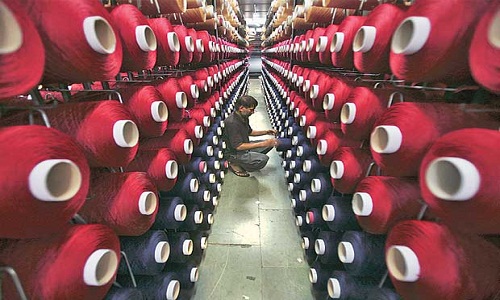 years ending March 2022. The financial and operational parameters and implementation mechanism for ATUS were notified in February 2016. The government provides credit-linked subsidy under the scheme.
Interestingly, the scheme was fraught with difficulties. Therefore, the Ministry of Textiles allowed, for the first time textile units to benefit from this scheme in addition to other benefits availed from the state governments.
Subsidy prospects
Under the new scheme, those who had applied for unique identification number (UID) under revised and restructured technology upgradation fund scheme (RRTUFS) before January 12, 2016 but UIDs could not be issued due to non-availability of funds, will be given a one-time opportunity to apply for subsidy under ATUFS.
The revised technology specification for machinery of the eligible segments would be prescribed annually in advance by the technical advisory and monitoring committee (TAMC) effective from April 1 of the year. The revised guidelines will allow textile commissioner to constitute a technical committee which will assist the TAMC to prepare an indicative list of machinery manufacturers. The committee will meet monthly to update the list of machineries and manufacturers. Most importantly, accessories, attachments, sample machines and spares procured from other manufacturers enlisted in the indicative list will also be eligible for subsidy up 20 per cent of basic cost of machinery.
Except in the case of merger, acquisition, amalgamation or takeover of an entity, the plant and machinery bought with TUFS subsidy shall not be disposed off before 10 years of the date of purchase without prior approval of the textile commissioner.
Government initiatives
The government has been assisting textile players with timely policy support. In June last year, it announced a Rs 60-billion package which helped attract Rs 270 billion fresh investment till early March 2018.
Apex industry body, the Confederation of Indian Textiles Industry (CITI), reported a 4 per cent decline in textile and apparel exports at Rs 2,279 billion for the financial year 2017-18 from Rs 2,382 billion the previous year. While textile exports declined marginally by one per cent to Rs 1,202 billion at the end of fiscal 2018 from Rs 1,217 billion a year ago, apparel exports saw a sharp drop of 8 per cent to Rs 1,077 billion as against Rs 1,165 billion in the fiscal 2017.
India: 18th Knit Show brings positivity to the Tirupur market
The 18th Knit Show, a three day-long event organised from August, 5-7, with more than 300 exhibitors, has brought positivity in Tirupur’s apparel and textile industry. Top technology companies, like Dhaval Colour Chem (DCC), Grafica Flextronica, Mehala Machines, Kansai Special, Cheran Machines, and Zedex, from different segments of textile and apparel industry, displayed their latest offerings at the show. Cutting room solution, circular and flat knitting machines, sewing, printing (digital as well as screen printing) fabric and trim companies too participated in the event.
Exhibitors said market in Tirupur is now picking up as they expected good business in coming days. Exhibitors also informed since last two months, they have been getting good inquiries from apparel manufacturers. Many small and as big companies’ shared the positive reflection in their markets revealing their plans of expanding capacity. Companies like Zydex Industries, EPTA India are also working aggressively on future projects.
India: GCCI urges AMC to utilise textile mills land for small biz
The Gujarat Chamber of Commerce and Industry (GCCI) has urged the the Ahmedabad Municipal Corporation (AMC) to utlise land lying unused in old textile mills to convert into mini industrial estates for small businesses. This will reduce the capital cost of investors so that even small-scale entrepreneurs can afford them, or else the cost of land would exceed other costs, making the project unviable. GCCI also asked the AMC to improve the road, water supply, and sewage infrastructure in industrial estates of Naroda, Vatva, Odhav, Narol, and Kathwada.
The apex body for trade and industry also suggested proper planning should be undertaken for parking of vehicles while allowing construction of commercial and residential buildings in the city. The chamber complained that illegal parking fee is being charged increasingly at many places in the city. With a view to ease commuting of industry workers, the GCCI urged the AMC to increase the frequency of buses where the workers are in significant numbers.
New Zealand’s Marino wool the perfect insulator
New Zealand Merino Company has forged a partnership with Havelock Wool, an American wool insulation company. The US insulation market is huge. Havelock Wool, launched in 2013, sees a need and demand for a better insulation option since the products available are driven by manufacturers’ race to keep costs down. Also materials in homes contribute to poor indoor air quality, much worse than the air outside. So those who spend much of their time indoors are vulnerable. And wool responds to the challenges in the built environment by managing moisture, absorbing indoor air contaminants and noise.
Though wool insulation is a premium product, targeted at high-end consumers, and there are some economic hurdles to negotiate, wool is seen as a natural high performance option. Supporting traditional uses for wool, New Zealand is seeking out new markets and categories to realise the true value of ethically grown, sustainable New Zealand wool fiber. The aim is to reposition wool fiber as a premium natural alternative to toxic synthetic fiber. And that is being done by focusing on a strategic alignment with leading global brands to tell a positive New Zealand wool story to the world.
Turkey exports 9 per cent world’s denim fabrics
One of the world’s major denim fabric production hubs, Turkey’s exports of denim fabrics makes up 9 per cent from the country’s exports of textile products. Its share among the world exports of denim fabrics is, however, around 9 per cent reveals Turkish Statistical Institute (TUIK) figures. Turkey exported around $378.3 million worth of denim in 2015 and in 2016 it exported $393.6 million worth of denims. In 2017, this number decreased by 6.4 per cent and amounted to $368.5 million.
Turkey exports denim fabrics mainly to North Africa, Europe and the Far East. Tunisia, Egypt, Italy, Morocco and Bangladesh are the five major markets. In 2017, Turkey exported $52 million worth of denim fabrics to Tunisia. The same year, exports to Egypt were $47.4 million. Exports to the third biggest market – Italy – wa $40 million. These three countries share around 38 per cent in Turkey's exports of denim fabrics.
Trump defends import tariffs, feels US has upper hand now
President Donald Trump defended the tariffs that have inflamed US tensions with China and Europe. He believes these duties were working well and imported goods should either be taxed or they should be made in the US. He also suggested duties enable US to pay down considerable amounts of the $21trillion debt that has been accumulated while reducing taxes for Americans.
The Congressional Budget Office predicts that the cuts, when combined with new federal spending, will push the US budget deficit to $1 trillion in 2020. That’s forced the US Treasury to lift note and bond sales to levels last seen in the aftermath of the recession that ended in 2009. Stating that the tariffs have had a tremendous impact on the US steel industry, Trump expressed his desire to open six or seven new steel mills.
Oerlikon Q2 sales up 36 per cent
For the second quarter, Oerlikon’s order intake increased year-on-year by 26.8 per cent while sales went up by 36.6 per cent. Ebitda for the second quarter corresponded to a margin of 17.1 per cent. Ebit was 10.8 per cent of sales. The second quarter performance resulted in an improved rolling 12-month return on capital employed of 10.7 per cent. In the first half of 2018, the group’s order intake increased year-on-year by 35.4 per cent while sales came in 38.5 per cent higher than the prior year.
With top-line increase, ebitda for the half year corresponded to a margin of 16.4 per cent. Ebit was 10.1 per cent of sales. Net income for the first half of the year increased significantly by 136.2 per cent year-on-year. In the first six months of 2018, Oerlikon’s service business contributed to 39 per cent of total group sales. Based on the strong set of results in the first half of 2018, Oerlikon is confident it will be able to sustain growth and is thus raising its outlook for the year.
For the full year 2018 continued operations, group ebitda margin is expected to exceed 15.5 per cent after accounting for increased operating expenses from higher investments.
Next edition of Morocco Fashion Tex to be held in March 2019
Morocco Fashion and Tex will be held March 28 to 31, 2019. This is a fashion, textile and accessories fair, a platform for exchange not only at the national level but also on an international scale. The last edition was attended by over 350 exhibitors from Morocco, Turkey, China, Pakistan, Taiwan, Portugal, Germany. Also it witnessed about 15,000 trade visitors from Morocco, West Africa, North Africa, the Middle East, the Gulf and Europe.
This platform enables national and international companies from different industrial sectors to show and promote their skills, to meet partners and to discover the new trends and techniques of the sector. The fair contributes to the development of Moroccan expertise in textile sector by consolidating Morocco's competitiveness and making the country an international reference and an African regional hub of the sector.
The event is an unique opportunity for fashion, textile, accessories, ready-to-wear professionals, importers, exporters, manufacturers and distributors to weave B2B relationships in this sector which is in constant evolution. Moroccan fabric imports are exempt from tax. This accelerates the export of ready-to-wear. Exhibits will include: textiles, leather clothing, nightwear, shoes, bags, cosmetics, yarn, wool, knitted fabric, women’s and men’s clothing, denim, lingerie, sportswear, children’s clothing, accessories and more.
Monfort’s eco innovations a boost for denim manufacturers
Monfort, the number one supplier of finishing ranges to the global denim industry, has come up with the latest Monfort Eco Line. It’s already being used by several leading manufacturers in both Asia and South America. The potential of Industry 4.0, in combination with the drive to reduce waste and minimise raw materials use, has led to some significant new developments by Monforts. The Qualitex 800 control system, along with the Web-UI app, allows remote visualisation of Monforts technologies via smart phones and tablet devices. Qualitex 800 has all the intuitive features operators will be familiar with from touchscreen devices. It makes navigation extremely easy for operators, cutting down the time required for becoming familiar with a new system and allowing complete control of all machine parameters.
Resource efficiency is addressed via the latest technologies such as the company’s Eco Line for denim, based on two key technology advances – Eco Applicator for minimum application of the selected finishing chemicals and ThermoStretch.
As an alternative to conventional padding, especially for wet-in-wet solutions, the Monforts Eco Applicator can significantly reduce the amount of finishing chemicals required prior to the stretching and skewing of the denim fabric. The Eco Applicator significantly reduces energy costs.
The Monforts ThermoStretch unit meanwhile carries out the skewing (weft straightening), stretching and drying in a continuous process. Monforts offers completely integrated coating lines from a single source. Its latest coating heads are being tailored to drying technology for maximum benefits.
India doubles import duties on a range of textile products
India has raised import duty on 328 lines of textile products from 10 to 20 per cent. The increase in customs duties would provide much needed edge to local manufacturers as imported products currently are much cheaper than the ones locally manufactured. This step would ensure nearly 10.5 crore people receive employment as an increase in manufacturing activity will help create jobs in the sector.
The revised duties will help boost domestic manufacturing but least developed countries including Bangladesh will continue to enjoy duty free access to Indian markets. Bangladesh is the largest supplier of most of the goods on which duties are doubled. Due to the high incidence of levies and duties, manmade fiber costs 20 per cent to 30 per cent more as against cheap imports from countries such as China.
Earlier in July, import duty on over 50 textile products including jackets, suits and carpets was doubled. The step was seen as a move aimed at promoting domestic manufacturing. Through a notification, the Central Board of Indirect Taxes and Customs had hiked import duties as well as raised the ad valorem rate for certain items.