FW

Source Fashion, recognized as one of Europe's rapidly growing sourcing shows, has joined forces with retail trends consultancy Insider Trends to delve into transparency and accountability within the retail industry. The collaborative initiative aims to unveil a comprehensive Transparency Report and host a corresponding webinar.
Suzanne Ellingham, Director of Sourcing at Source Fashion, emphasizes the Transparency Report will explore sustainability prospects in an industry often fixated on promoting new products. The report seeks to provide meaningful and straightforward insights into the future of the retail sector.
Scheduled for launch on November 30, 2023, the Transparency Report will be presented through a webinar by Jack Stratten, Head of Trends at Insider Trends. Stratten will offer an overview of the UK retail market, analyze consumer trends, delve into opportunities within the fashion landscape, and underscore the significance of sustainable and ethical sourcing for UK consumers.
Additionally, Source Fashion, in collaboration with independent economics research consultancy Retail Economics, is delivering ongoing retail trends and insights.
India has signed a Supply Chain Agreement within the Indo-Pacific Economic Framework for Prosperity (IIPEF) alongside 13 partner countries. The IIPEF, initiated by the US in collaboration with Indo-Pacific countries in 2022 in Tokyo, is built on four pillars: Trade (Pillar I), Supply Chains (Pillar II), Clean Economy (Pillar III), and Fair Economy (Pillar IV).
This agreement involves 14 partner nations, including Australia, Brunei, Fiji, India, Indonesia, Japan, Republic of Korea, Malaysia, New Zealand, Philippines, Singapore, Thailand, and Vietnam. The objectives encompass consolidating economic development and promoting peace and prosperity in the region.
India holds an observer status in Pillar I while actively participating in Pillars II to IV. The agreement is anticipated to facilitate increased information sharing among partners, enabling asset recovery, and strengthening cross-border investigations and prosecutions. According to Goyal, this move will enhance the collective effort to combat corruption, money laundering, and terrorism financing in the Indo-Pacific region.
Experts are advising Vietnamese enterprises to boost their imports of raw materials from the UK to leverage the favorable tariffs provided by the UK-Việt Nam Free Trade Agreement (UKVFTA). Under the UKVFTA, Viet Nam can eliminate 48.5 per cent of tariffs starting from January 1, 2021; 91.8 per cent of tariffs from January 1, 2027, and 98.3 per cent from January 1, 2029. Additionally, 1.7 per cent of tariffs can be eased through tariff rate quotas or are not entitled to preferential treatment.
Since January 1, 2021, the agreement has allowed Viet Nam to remove 61 per cent of tariff lines for machinery and appliances imported from the UK, with plans to extend this benefit to all other products after nine years. Commencing from January 1, 2021, Viet Nam has already abolished 80 per cent of tariffs on raw materials for textiles, garments, and footwear, with intentions to eliminate tariffs on all other products within four to six years.
As per General Department of Customs statistics, Viet Nam imported goods worth nearly $373 million from the UK, comparable to the same period in 2022. Major imports from the UK included machinery, equipment, tools, and spare parts (24 per cent); raw materials for textiles, garments, leather, and shoes (5.2 per cent) among others.
A recent survey by Vietnam Report indicates 72.7 per cent of Vietnamese businesses are planning to diversify their supply sources, particularly for imported raw materials in the future. Their objective is to secure new suppliers offering competitive prices.
In the first nine months of 2023, Japan witnessed a notable 4.08 per cent in apparel imports, reaching a total of $16.66 billion. Particularly in September, Japan imported apparels worth $2.63 billion, indicating a significant month-on-month growth of 17.41 per cent compared to the previous year. However, it's important to highlight the volume of these imports decreased by 3.95 per cent in September 2023 compared to the same month previous year.
China retained its position as the leading apparel exporter to Japan between January and September 2023, with exports totaling $8.70 billion. Nevertheless, this marked a decline of 3.38 per cent from the previous year. Vietnam emerged as the second-largest exporter, with 13.28 per cent increase, amounting to $2.82 billion during the same period.
Japan's apparel imports from Bangladesh, India, Pakistan, and Indonesia also saw a rise in value during this timeframe, despite a decrease in volume.
Kao Kim Hourn, Secretary-General of ASEAN, has advocated for India to reconsider joining the Regional Comprehensive Economic Partnership (RCEP).
This, Kao believes, would open up greater market access for India, given the longstanding collaboration between India and ASEAN across diverse sectors such as space, investment, tourism, and defense.
The RCEP, a free trade agreement signed in November 2020, includes 10 ASEAN members and five of the bloc's dialogue partners, making up around 30 per cent of the global GDP and representing 30 per cent of the world's population.
Although India had previously opted out of the RCEP due to concerns about potential negative impacts on its economy, Kao suggests, given India's maritime nature, collaboration with ASEAN in the maritime sector is a viable option. Additionally, he envisions potential partnerships in the digital economy, sustainability, renewable energy, people-to-people exchanges, and connectivity.
Kao also advocates for a liberal aviation pact to facilitate increased direct flights between India and ASEAN nations, aiming to bolster the ties between the two regions.

The disconcerting image of landfills resembling towering piles of discarded clothing indicates the global fashion industry is grappling with substantial hurdles on its path to greater environmental consciousness. Whether ascribed to the ramifications of fast fashion or the sway of social media-driven ‘retail therapy’, where clothing becomes a form of self-prescribed comfort, the undeniable truth is that overconsumption and overproduction are intricately linked. This cycle demands an immediate disruption, as dissatisfaction mounts globally with the perceived lack of strides by the fashion industry in realizing its environmental objectives.
OC&C, a worldwide strategic consulting firm specializing in retail and various industries, has collaborated with trend forecasting firm WGSN to release a report addressing this critical issue. The report proposes harnessing technology to alleviate the overproduction of ready-made garments can yield increased efficiency, reduce waste, and guide the industry toward more environmentally sustainable practices.
As per Mairi Fairley of the OC&C the significant pressure faced by fashion brands, contending with escalating complexities in business models, surging cost inflation, and the imperative to operate in a more sustainable manner. The report underscores the pressing need for the fashion industry to embrace technological solutions as a decisive step towards objectively transitioning to greener practices.
Adopt AI-driven technology for green goals
The OC&C study suggests that a practical initial step is to transition the planning cycle and purchasing process to be more responsive to demand. This shift not only allows for substantial margin gains but also facilitates a reduction in unnecessary waste and CO2 emissions. The report's primary findings present compelling reasons for the fashion industry to consider.
The study highlights, brands typically anticipate fashion trends before placing orders. Aligning imports with these ‘hot’ items can potentially boost profit margins by 1 to 3 per cent. Moreover, closely monitoring orders based on predicted or current trends can result in a production reduction of 5 to 15 per cent. Streamlining production in this manner can lead to a 3 per cent decrease in carbon emissions.
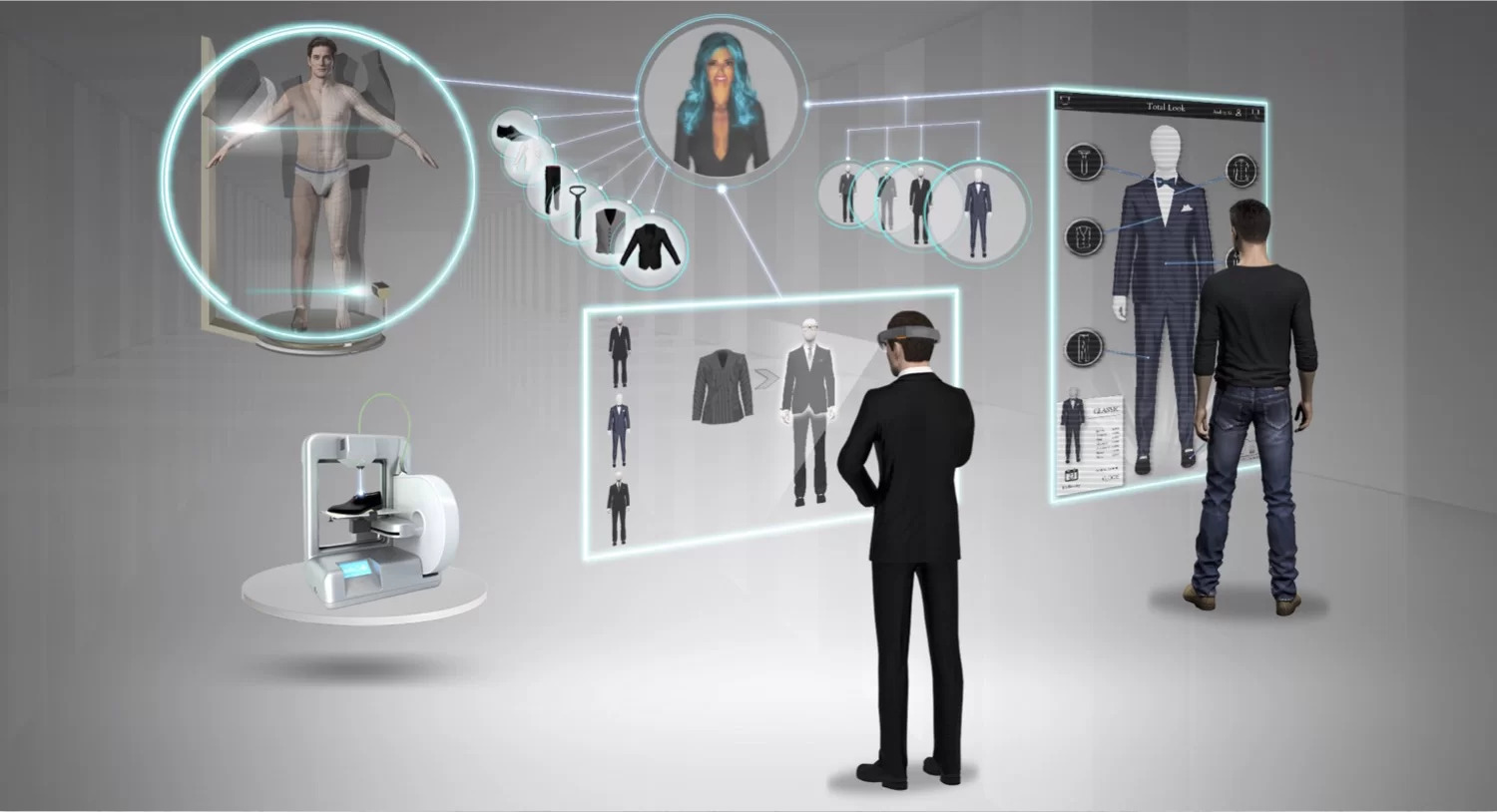
AI-driven technology emerges as a valuable tool to assist brands in making informed purchase decisions. By leveraging AI to develop purchase models capable of predicting consumer buying trends, brands can utilize data from online and in-store sales to enable efficient inventory management. Another recommendation is aimed at reducing carbon footprint and optimizing logistics costs, emphasizes the creation of supply chains that are geographically close to a brand's primary markets.
Limited time left for net positivity
The fashion sector is under a ticking clock, with only seven years remaining until 2030—the deadline for meeting the United Nations' Sustainable Development Goals. The Global Fashion Summit, held in Boston in September 2023, unveiled ‘The Fashion CEO Agenda of 2023’, a succinct report aimed at guiding the establishment and implementation of leadership strategies. These strategies are designed to propel the fashion sector towards a net positive impact, ensuring that it contributes more to society, the environment, and the global economy than it extracts. The report emphasizes the urgency for industry leaders and affiliated organizations in the fashion industry to act promptly and earnestly in achieving the UN's sustainability goals by 2030.
In an industry grappling with the complexities of overconsumption, a focused approach on technology-predicted streamlined production holds the promise of not only enhancing operational efficiencies and profit margins but also contributing to the gradual absorption of discarded clothing through fashion's embrace of circularity.
The Lycra Company has appointed Gary Smith as its new Chief Executive Officer, effective November 27. He replaces, Dean Williams, acting CEO since August. Smith will also assume additional responsibility of the chief financial officer and assist with the brand’s transition. His role as the new CEO will include leading Lycra's global organisation.
With over 25 years of experience in the consumer products industry, Smith was earlier engaged with Hatteras Yachts, a custom motor and sports fishing yacht company, as the CEO. At Hatteras Yachts, he led the turnaround and subsequent sale of the company. He has also worked as the CEO of Polartec, and spearheaded transformation efforts at the textile company. As the previous president of The Timberland Company, Smith spearheaded its outdoor group.
The Lycra Company produces fiber and technology solutions for the apparel and personal care industries. Its brand portfolio include: Lycra, LycraHyFit, T400, CoolMax, Thermolite, Elaspan, Supplex, and Tactel.
Prominent Spanish company Jeanologia unveiled its groundbreaking innovations at ITMA Asia 2023, on from November 19-23 at the Shanghai National Convention and Exhibition Center. This exhibition provides Jeanologia with a platform to present cutting-edge technologies that have the potential to revolutionize the Chinese textile industry.
Jeanologia’s innovations focus on the creation of garments with minimal water usage, zero discharges, and leverage digitization and hyper-automation. Among the featured technologies is the atmospheric washing process, showcasing the company's proprietary G2 ozone technology with the patented INDRA system. Additionally, Jeanologia is introducing its latest advancement in laser technology, the Flash system, a sophisticated combination of hardware and software featuring an intelligent algorithm that dynamically controls laser energy, significantly accelerating garment marking.
Another noteworthy innovation on display is the Colorbox technology for garment dyeing. With this advancement, Jeanologia transforms the conventional method of garment dyeing into an environmentally friendly, efficient, and faster process. Overall, Jeanologia's presence at ITMA Asia 2023 underscores its commitment to driving positive changes in the textile industry through sustainable and innovative solutions.
The upcoming 20th edition of Colombo Fashion Week (CFW), or the Luxury Resortwear edition, is set to prioritize circularity and fashion as a soft power. Scheduled for November 29-30, 2023, the event will not only showcase sophisticated resortwear and occasionwear but also mark the relaunch of the Fashion Design Council of Sri Lanka (FDCL).
Ten designers, including Charini Suriyage, Amilani Perera, Asanka De Mel, Fouzul Hameed, Dinushi Pamunuwa, Kamil Hewawitharana, and Karma, will present their collections over the two-day event. The show will attract prominent designers from India, Bangladesh, and Pakistan.
Colombo Fashion Week will host a Circular Design Mindset, a sustainability workshop organized under the Responsible Fashion Council. Sanjaya Senarath, Chief Marketing Officer of Nations Trust Bank, notes the partnership underscores the commitment to support emerging entrepreneurs in Sri Lanka's fashion industry, providing an opportunity for the bank's high-end card segment to engage with the fashion presented by CFW.
The Luxury Resortwear edition has secured partnerships with Shangri-La Colombo, Nations Trust Bank, American Express, Lakme, Tressemme, Vision Care, Hameedia, Ramani Salons, Wijeya Newspaper, Hardtalk, and Emerging Media.
Scheduled from February 22-24, 2024, the 20th edition of the International Istanbul Yarn Fair, one of the largest global event in the yarn industry, will take place at the Tuyap Fair Convention and Congress Center in Istanbul. Anticipating the participation of over 600 companies and more than 15,000 professional visitors, this event is poised to be a major gathering within the industry. In comparison, the 19th edition, held from June 1-3, 2023, saw 58 companies and representatives from 22 countries, attracting 12,677 sectoral professionals from 86 countries.
Organized by Tüyap Fair and Exhibition Organization the fair is an important platform for leading industry brands to exhibit their products, facilitating their access to both domestic and international markets. The event features a diverse array of exhibitors from four continents.
A broad range of products will be showcased at the fair, including, but not limited to, cotton yarns, elastane yarns, wool yarns, acrylic yarns, viscose yarns, polyester yarns, silk yarns, nylon yarns, textured yarns, fancy yarns, organic yarns, polypropylene yarns, regenerated yarns, metallic yarns, technical yarns, hand knitting yarns, fibers, bobbins, spools, reels, textile dyes, and chemicals. The fair serves as a comprehensive platform for industry professionals to explore the latest trends and innovations in the yarn sector.