FW

The Myanmar Textile and Machinery Fair 2023 will take place in Yangon from December 8 to 10, 2023, organized by the Myanmar Garment Manufacturers Association (MGMA). In collaboration with the Chinese Textile and Garment Association in Myanmar, the event aims to enhance cooperation between the textile and garment industries of both countries.
Daw Khine Khine New, Secretary General, MGMA, anticipates the fair will serve as a platform for Myanmar to showcase its fashion market in collaboration with international partners. The exhibition will feature garments, shoes, and bags from 25 Chinese brands, fostering opportunities for local small and medium-sized enterprises to promote their products.
The Confederation of India Textile Industry (CITI) latest analysis of the Indian textile and apparel (T&A) sector’s performance in October 2023 has highlighted what experts have been saying about the sector’s export capabilities, mirrored by financial stocks of reputable manufacturers.
October 2023 enabled textile exports to gain 24 per cent over the same month in 2022 while the cumulative exports of T&A grew 10. 44 per cent in October 2023 compared to October 2022. However, the cumulative T&A exports have actually underperformed in the six-month period of April and October 2023 by 6.67 per cent compared to the same period in 2022 and by 15.55 per cent in the same period of 2021. While textile sector’s exports look buoyant, the opposite is true for apparel sector. The analysis shows a depressed industry that is unable to cross the threshold to growth. In October 2023, apparel exports decreased 8.08 per cent.
Mixed overall performance
The last six months have not been kind. This year, between April and October textile exporters saw a cumulative negative growth of 0.41 while apparel sector saw a larger negative growth of 14.58 per cent. Compared to the same six months in 2021, this year export of textiles was negative by 19.55 per cent apparel expots was negative by 8.8 per cent. The silver lining is the T&A sector’s contribution to the nation’s entire export in 2021 was 9.7 per cent which fell 2022 to 7.31 per cent but rose slightly this year to 7.6 per cent. On the other hand, popular Indian raw cotton and waste had the worst export performance with a whopping decline of 78.69 per cent compared to same period in 2022.
The overall state of depressed exports was mirrored in the manufacturing sector. Despite export orders declining, the domestic apparel market was projecting a windfall due to the festive season. However, this windfall didn’t turn out to be as expected. A reputable Coimbatore-based manufacturer attributed several reasons for this decline in manufacturing and exports. First, the Quality Control Order recently introduced by the government, which mandates a Bureau of Indian Standards certification for man-made fibre, including those that are imported, has led to steep decline in exports as textile manufacturers are unable to source these raw materials as per government specifications in the international markets.
Implication for the workforce
The president of Tiruppur Exporters Association, KM Subramaniam is confident the drop in exports is a temporary phase. He feels while most garment exporters have reduced workers’ shifts or done away with overtime as production has gone into a loss, so far workers have not lost jobs and the recent announcement of drawback in duty hikes is expected to revive exports and hopefully have factories running in profitably again.
While this may sound optimistic, there are others who don’t necessarily reciprocate Subramaniam’s optimism. Clothing Manufacturers Association of India (CMAI) Chief Mentor Rahul Mehta says, the domestic market has been slow since mid-March and compared to last year growth is flat. If low production trend continues for another couple of months, he feels job losses are inevitable after the end of the festive season.
The CITI monthly report indicates a mixed performance, whilst some recent reports have presented doom and gloom. Indeed there is not much clarity on how the sector will pan out by the end of this fiscal. If demand revives in Western markets India’s apparel exports can surely look up.
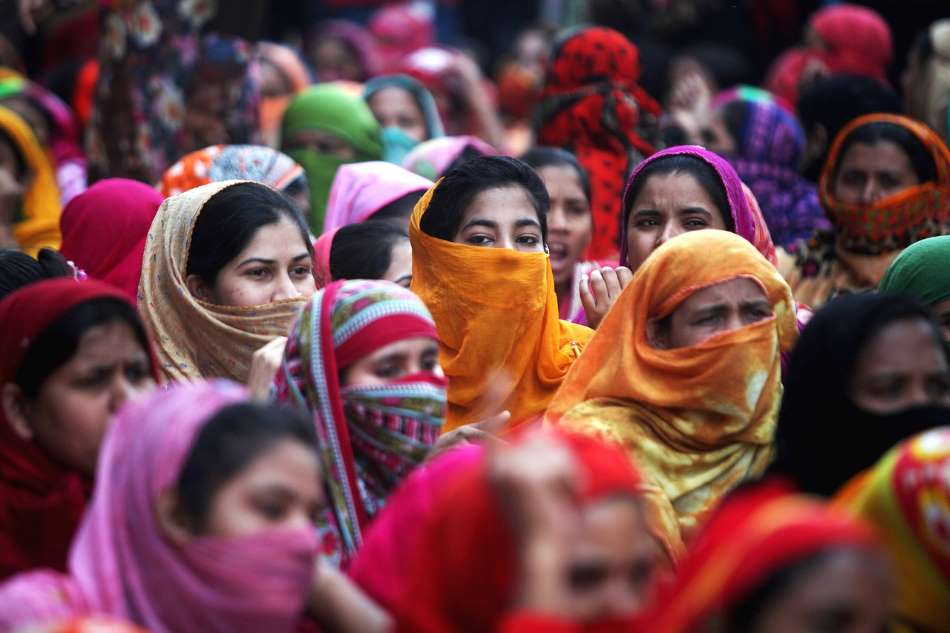
Apparel retailers in the US and Europe , as the primary buyers of Bangladesh- garments have agreed to accept higher prices to help factories offset wage increases along with helping the daily survival of low-income workers, in a humanitarian move. Bangladesh factories that employ low-wage workers --mainly women -- have always been at the core of the garment industry, which employs over four million people who have always borne the brunt of a failing economy.
Many global fashion retailers such as Abercrombie &Fitch, Lulumon, H&M and Gap among others have told the Bangladesh government they were keen for workers' wages to rise as the country’s inflation rate is at an alarming 9 per cent between 2022 and 2023, the highest in over a decade. Looking for peaceful negotiations and calling for the new minimum wage to cover the basic needs of factory workers, many retail companies belonging to the American Apparel and Footwear Association (AAFA,) which represents US brands are now aggressively suggesting a more frequent and timelier minimum wage review.
“Ideally this wage level, which in Bangladesh informs the calculation of all wage levels, would be reviewed annually, not every five years. Ensuring timely reviews and, as needed, increases in these levels, is a critical part of the suite of better buying practices that responsible brands are deploying,” opined Nate Herman, Senior Vice President of Policy of AAFA.
Workers pay hike to undermines factory owners profits
Factory owners are not too happy as this hike-which comes just ahead of general elections in January 2024, would dip into their profits as costs could rise by 5-6 per cent. Wage cost is almost 10-13 per cent of total manufacturing costs which is already a deterrent in a post-Covid export market.
Last few weeks saw clashes between the police and factory workers, as the government’s wage board had announced just $113 increase a month for the workers from the first week of December. However, this did not go down well with impoverished factory workers.
As per the International Labour Organization (ILO), even with this increase, Bangladeshi workers will receive far less than other Asian garment supplier countries such as Vietnam with an average monthly wage of $275, and Cambodia with $250, which is low enough compared to Western counterparts.
Protest levels increase as responsible purchasing practices happen
This kind of protests in Bangladesh was not seen in a decade since the infamous Rana Plaza collapse and the government. There was an apprehension this unrest could shy away Western buyerss to other sourcing destinations. However, BGMEA was ultimately successful in getting minimum wages for workers in Bangladesh increased to Tk 12,500, equivalent to around $113.63, from Tk 8,000 at present. In a letter to the American Apparel & Footwear Association (AAFA), the BGMEA president Faruque Hassan also sought higher prices from retailers and brands such as AEO Inc, Adidas, Amer Exports, Hugo Boss. Under Armour, etc in line with the hike in the wages.
The US and EU are now finally committed to far more responsible purchasing practices to support the wage increases and to implement an annual minimum wage review mechanism so that the lower-middle classes are affected by changing macroeconomic and geo-political conditions. It is not fair that the workers are penalized while there is growth in the general value of the garment industry with RMG exports accounting for 35.1 per cent of Bangladesh’s annual GDP. As McKinsey says garment exports from Bangladesh have jumped from $14.6 billion in 2011 to $33.1 billion but this is not reflecting in the living standards of the lower middle classes.
Adidas faces renewed criticism over its treatment of workers in the supply chain, as activist group Yes Men, in collaboration with labor organizations from the Pay Your Workers Coalition, orchestrates a second major hoax within a year. At the Web Summit in Lisbon, activists posing as Adidas representatives announced a virtual currency payment system for workers, creating a fictional "adiVerse" for virtual luxuries.
This follows a previous hoax during Berlin Fashion Week, where a false statement claimed the appointment of a former garment worker as co-CEO and hinted at Adidas signing the legally binding Pay Your Workers - Respect Labour Rights agreement.
The Pay Your Workers campaign targets Adidas for its failure to ensure full payments to workers during the pandemic, citing a 2021 report by Public Eye revealing over $11 million in pandemic-era wage theft owed to garment workers.
The Hulu Garment factory in Cambodia, producing Adidas clothes, has been embroiled in a dispute for more than $1 million in unpaid severance pay since April 2020. Activists criticize Adidas for prioritizing sponsorships, like the FIFA Qatar debacle, over workers' rightful claims in countries such as Cambodia and Indonesia.
Christie Miedema, from Clean Clothes Campaign, accuses Adidas of neglecting workers' rights and failing to guarantee fair wages, particularly for women of color in the supply chain. Despite ongoing calls and protests, Adidas has not signed the Pay Your Workers agreement, leaving workers vulnerable in times of crisis.
The Yes Men's actions align with persistent pressure on Adidas since 2022, with global labor rights organizations urging the company to address issues and prioritize fair compensation for workers.
Gap Inc. showcased its ability to navigate a challenging retail landscape in its Q3 2023 financial results, revealing a 7% decline in net sales compared to the previous year, primarily impacted by the sale of Gap China. Despite this, the company reported market share gains and notable improvements in gross and operating margins, signaling operational and financial discipline under CEO Richard Dickson.
The Q3 report highlighted a diversified brand performance. Old Navy maintained stability with a 1% increase in comparable sales, driven by strength in women's and kids' categories. Conversely, Gap and Banana Republic faced headwinds, experiencing sales declines of 15% and 11%, respectively. Athleta struggled the most, with an 18% drop in net sales and a 19% decline in comparable sales, attributed to challenges in overcoming last year's elevated discount levels.
While online sales decreased by 8%, representing 38% of total net sales, the company reported a gross margin expansion of 41.3%, showcasing resilience in a competitive market. The positive cash flow and increased cash and equivalents by 99% further underscore Gap Inc.'s financial stability.
Looking ahead, the company reaffirms its full-year revenue outlook, balancing progress with a cautious view of the economic climate. With an additional week in Q4 expected to positively impact net sales, Gap Inc. aims to navigate the retail landscape, closing 350 Gap and Banana Republic stores in North America by fiscal year-end.
Burberry, the luxury fashion group, has issued a warning about potential failure to meet its annual full-year revenue targets if the recent global slowdown in demand persists. In the second quarter, the brand's like-for-like (LFL) sales growth plummeted to just 1per cent, a significant decline from the robust 18 per cent recorded in the first three months, with slowing growth observed in all regions.
Asia Pacific experienced a substantial downturn in LFL growth, dropping from 36 per cent in the first quarter to 2 per cent in the second. The Americas also witnessed a worsening situation, with growth declining from -8 to -10 per cent, while in Europe, the Middle East, India, and Africa, LFL growth steeped from 17 to 10 per cent.
For the overall group, LFLs registered at 10 per cent during the six months ending in September. Revenues grew by 4 per cent to just under £1.4 billion, but operating profits declined by 15 per cent to £223 million.
If the current market challenges persist, the group anticipates adjusted operating profit to decline to nearly £552 million instead of the previously expected top-end figure of £668 million.
Furthermore, Burberry expects a currency headwind of £110 million to revenue and approximately £60 million to adjusted operating profit, though this is less than the previously guided amount.
Prominent textiles company Trident Ltd has reported a 25 per cent increase in revenue during the September quarter, reaching Rs 17.97 crore compared to Rs 14.39 crore in the same period last year. The company's consolidated net profit for the quarter surged to Rs 90 crore from Rs 37 crore in the corresponding quarter of the previous fiscal year.
In addition to its financial growth, Trident achieved a significant milestone by securing a patent for 'Terry fabric weave and resulting terry fabric' from The Patent Office, Government of India. This patent will empower the company to produce towels with enhanced material efficiencies, pull resistance, absorbency, softness, and uniformity of texture.
As one of the major players in the home textile sector in India, Trident, based in Punjab, currently operates through 400 stores across the country. The company aims to double its store network in the coming year.
In its larger initiative to change people’s fashion consumption habits, Paris-based resale site, Vestiaire Collective has decided to ban 30 fast fashion brands from being bought, sold or listed on its site. As a part of its crackdown, the luxury resale platform has decided to ban brands like H&M, Zara, Uniqlo, Abercrombie & Fitch, Gap and Urban Outfitters.
This is the second phase of its three-year plan to revitalise the platform. In the first phase, the resale platform removed products from retailers including Boohoo, Pretty Little Thing, Asos and Shein from its site.
Vestiaire says, the first phase of the ban has already had helped to attract 70 per cent of impacted members back to the platform to shop for higher-quality items. The company has partnered ‘The Or Foundation’ to raise awareness of the global textile waste problem and lobby governments on policy change.
Vestiaire has also banned brands like Mango, American Apparel, Benetton, Bershka, Calzedonia, Desigual, Intimissimi, Hollister, Disney, Jennyfer, Monki, Old Navy, Only, OVS, Oysho, Piazza Italia, Pull & Bear, Reserved, Stradivarius, Tally Weijl, Weekday, Tom Tailor, US Polo Assn and Vero Moda.
Meanwhile, Vestiaire Collective is launching a global campaign, ‘Think First, Buy Second’, to bring about a bigger cultural change. The campaign will include AI-enhanced visuals of piles of clothes accumulated in some of the most popular locations of the Global North, such as Times Square and the Eiffel Tower. It will stimulate people to think about the hazardous effects of textile waste piling up near their locations.
The campaign aims to evaluate the current practices of fashion partners and influencers and encourage them to only buy more secondhand clothes.
The upcoming Garment Show of India in 2023 is set to take place from December 11 to 13 in Noida. Organized by Perfect Sourcing, this global sourcing exhibition will showcase a diverse range of product categories viz: western wear, ethnic wear, accessories, and manufacturing goods. The event will also offer business seminars and networking opportunities, providing a platform for manufacturers and retailers to stay abreast of emerging industry trends and the latest technological developments.
With the support of the Sourcing Consultants Association and the 'One District One Product' scheme of Uttar Pradesh, the event has garnered participation from the Wool and Woolens Export Promotion Council and the Noida Apparel Export Cluster. The Wool and Woolens Export Promotion Council will serve as the media partner for the event.
The success of the 2022 edition, as indicated in the 'Post Show Report' released on November 15, highlighted positive experiences for both exhibitors and visitors. The organizers wrote on Facebook, the event fostered strong bonding and transparency, elevating relationships to new heights.
Pitti Uomo, the leading showcase for men's fast fashion, is set to broaden its reach with an international guest lineup and global projects at its 105th edition scheduled from January 9 to 12, 2024. Featuring nearly 835 exhibitors presenting their Autumn/Winter 2024/25 collections, the show will embrace a diverse representation, with 43 per cent of exhibitors coming from abroad, marking a significant increase from previous editions.
The theme for this edition is ‘Time’ with the slogan ‘Pitti Time’ exploring the significance of time in the realm of fashion. The event will be structured around five main sections, including the coveted ‘Futuro Maschile’ highlighting contemporary menswear, and the ‘Fantastic Classic’ focusing on the evolution of classic style. Additionally, the ‘Dynamic Attitude’ section will cater to major sports and street wear brands, while ‘Superstyling’ will feature avant-garde and niche brands. The ‘I Go Out’ section will showcase a contemporary outdoor look, featuring accessories for the outdoor lifestyle.
While the ‘S Style’ project has been suspended, new sections like PittiPets, dedicated to the world of pets, and Vintage Hub Circular Fashion, promoting upcycling and the second-hand market, have been introduced.
The show will also debut ‘Neudeutsch’ a project highlighting the German new wave, and will focus on French brands. A new initiative, ‘No Nation Fashion X Polimoda’ promoted by the United Nations International Organisation for Migration (IOM), aims to encourage the integration of migrants.
Returning from the previous year, ‘Detroitissimi’ will feature eight brands from Detroit and Michigan, celebrating the creativity of these American manufacturing districts. Special projects by international brands, including Guess unveiling its new Guess Jeans range and Dutch jeans manufacturer G-Star Raw collaborating with Dutch artist-designer Maarten Baas, will also be showcased.