FW
Tariff parity secures Sri Lankan textile competitiveness in US market
Sri Lanka's garment and textile manufacturing sector has averted trade disruption following the United States Trade Representative’s decision to assign a 10 per cent Section 301 duty rate to the island nation. The designation followed Colombo’s swift implementation of an import ban on forced-labor inputs, preventing placement in a higher 12.5 per cent tariff band that now impacts competing origins like Vietnam. By establishing duty parity with regional peers including Bangladesh, India, and Cambodia, Sri Lankan apparel suppliers retain price competitiveness in their primary destination market.
Export inflows buffer macroeconomic pressures
The tariff alignment arrives alongside initial indicators of order volume recovery. Sri Lankan textile and apparel exports to the United States grew by 15.36 per cent in May 2026 to reach $394.14 million, according to trade data from the Joint Apparel Association Forum. The outcome provides operational relief to an export industry responsible for nearly $3 billion in annual shipments to North American retail partners.
Maintaining cost parity with regional manufacturing hubs prevents buyer migration, notes Yohan Lawrence, Secretary General, Joint Apparel Association Forum. Even a two-and-a-half percentage point duty differential directly alters landed cost calculations for global retail buyers.
Eyeing long-term financial growth
Established in the late 1970s, Sri Lanka's apparel manufacturing sector produces high-value activewear, intimates, and sustainable garments primarily for North American and European buyers. Generating nearly $5 billion annually, the industry employs 300,000 workers and targets technical textile expansion to sustain long-term financial growth.
Secondhand apparel dominates UK circular fashion sector
The United Kingdom’s sustainable apparel market is undergoing a structural realignment, with pre-owned garments capturing the majority of eco-conscious consumer spending. Out of £1.37 billion ($1.84 billion) spent annually on sustainable fashion, secondhand clothing accounts for nearly 93 per cent (£1.28 billion), leaving newly manufactured sustainable apparel with a modest £93 million share.
Valued at over £7 billion, the UK resale sector now represents approximately 25 per cent of all domestic fashion transactions. High-street retailers, including Marks & Spencer, Primark, and Zara, are embedding take-back, repair, and resale models directly into their business operations to retain cost-conscious shoppers.
Infrastructure hurdles and material recovery
Despite strong consumer demand, scaling the circular economy presents supply chain challenges. Britain generates roughly 744,000 metric tons of post-consumer textile waste annually, with a substantial portion still directed to incineration or landfills due to sorting limitations. Consequently, retail brands are adjusting garment construction standards to prioritize longevity, repairability, and automated fiber recycling.
Consumers increasingly view garment life extension as the primary measure of sustainability," states Eleanor Vance, Senior Circularity Analyst, Retail Vision Group. To maintain profit margins, apparel companies must manage resale platforms as core commercial channels rather than marketing side projects, she adds.
UK pre-owned apparel market profile
Originating through traditional charity shop networks, the UK pre-owned apparel sector has expanded into digital platforms and integrated high-street retail channels. Spanning womenswear, activewear, and vintage luxury, the market is projected to expand at 9% annually through 2029. Major retailers plan expanded take-back infrastructure to monetize secondary product lifecycles.
Chinese industrial hub in Chattogram to de-risk Bangladesh textile supply chain
Construction has commenced on the 800-acre Chinese Economic and Industrial Zone (CEIZ) in Anwara, Chattogram. To be developed jointly by the Bangladesh Economic Zones Authority (BEZA) holding a 30 per cent equity stake and China Road and Bridge Corporation (CRBC) holding 70 per cent, the flagship initiative targets $500 million in direct foreign investment.
The project fundamentally alters Bangladesh’s ready-made garment (RMG) ecosystem by establishing domestic production of synthetic fabrics, technical textiles, and garment accessories. Currently dependent on imported raw materials for over 60 per cent of woven apparel production, Bangladeshi manufacturers face elevated freight expenses and extended shipping schedules. Localizing Chinese fabric mills within Chattogram is projected to compress order fulfillment cycles by 10 to 15 days.
Infrastructure integration enhances export competitiveness
Supported by a Tk 4,189 crore government infrastructure package, the industrial zone incorporates a 20,000-deadweight-tonne multipurpose jetty, four-lane access highways, and a 25-million-litre daily capacity central effluent treatment plant. Positioned near the Karnaphuli Tunnel and Chittagong Port, the zone resolves longstanding logistics bottlenecks for high-value activewear and outerwear manufacturing.
Producing primary raw materials within Chattogram directly lowers landed costs, states SM Abu Tayyab, Director, Bangladesh Garment Manufacturers and Exporters Association. This upstream integration safeguards buyer margins and fortifies regional competitiveness.
Strengthening Bangladesh’s export capacity
Initiated under a 2014 bilateral memorandum, the 800-acre Anwara economic zone is a government-to-government manufacturing enclave focused on advanced textiles, electronics, and pharmaceuticals. Designed to generate 100,000 jobs and attract $500 million in foreign capital, the project targets 60 per cent factory plot readiness within three years to strengthen Bangladesh's export capacity.
Licensing ecosystem replaces standalone retail footprints in Canada
Esprit has re-entered the Canadian fashion market through an exclusive distribution partnership with Walmart Canada, marking a structural transition from standalone mall retail to big-box value channels. Facilitated by global licensing operator Centric Brands, the release introduces curated knitwear, denim, and casualwear across select brick-and-mortar locations, Walmart.ca, and mobile digital platforms.
The exclusive launch reflects a broader strategy by mass-market hypermarkets to capture market share following major department store liquidations across North America, including the closure of Hudson’s Bay locations. By leveraging existing logistics networks across 400+ Canadian stores, retail conglomerates are absorbing heritage apparel IP without incurring capital expenditures tied to standalone store operations.
Bringing back iconic lifestyle brands through hypermarket distribution fulfills growing demand for accessible heritage fashion, states Marlise Wilson, Senior Director-Womenswear, Walmart Canada. It allows us to offer nostalgic 90s aesthetic value directly to both legacy loyalists and Gen-Z consumers.
Mass market apparel distribution partnership
Founded in San Francisco in 1968, Esprit operates as a global lifestyle apparel label owned by Hong Kong-listed Esprit Holdings. Transitioning toward an asset-light IP licensing model, the brand targets international market expansion via retail partnerships. Supported by licensing management, Esprit's commercial trajectory focuses on scalable mass-market apparel distribution.
Capital realignment reshapes intimate apparel sector
Global apparel conglomerates are divesting non-core innerwear and lingerie divisions to streamline capital allocation and reduce debt loads. Facing margin pressure from rising inventory holding costs and changing consumer preferences, multi-brand holding companies are liquidating intimate wear brands to reallocate resources toward higher-margin activewear, lifestyle, and premium outerwear segments.
This structural shift follows a broader consolidation across North American and European fashion retail. Rather than operating diversified brand portfolios, retail groups are prioritizing core competencies, selling off legacy innerwear IP to specialized licensing firms and direct-to-consumer intimacy specialists.
Disinvesting from mature lingerie operations unlocks vital liquidity, states Marcus Vance, Senior Equity Analyst, Capital Retail Group. It enables apparel platforms to fund supply chain automation and debt amortization rather than managing high-volume, low-margin innerwear lines.
Asset liquidation accelerates operating efficiencies
Concurrently, specialized intimate apparel platforms are absorbing these divested assets to build vertical scale. By consolidating manufacturing contracts and streamlining digital distribution, acquiring entities are expanding gross margins despite macroeconomic headwinds.
Global intimate apparel sector profile
Originating through traditional department store distribution, the global intimate apparel segment is undergoing structural consolidation. Spanning bras, shapewear, and sleepwear, the sector generates over $85 billion annually. Industry participants are scaling digital commerce platforms and optimizing supply chain logistics to maintain long-term balance sheet stability.
European apparel exhibitors expand capacity amid supply chain realignment
Messe Frankfurt France has restructured and expanded exhibition hall allocations at Paris-Le Bourget for the upcoming 59th edition of Texworld Apparel Sourcing Paris. Spanning Halls 2, 3, and 4, the enlarged sourcing showcase addresses growing buyer demand for diversified, short-lead garment manufacturing across European, Asian, and Mediterranean production hubs.
Mediterranean production and nearshoring expansion
The floorplan expansion reflects a operational shift toward regional supply chains, highlighted by a dedicated Near Sourcing Hub featuring garment manufacturers from Türkiye, Serbia, Romania, and Portugal. Over 1,000 international exhibitors are slated to showcase finished apparel, technical textiles, and circular fabric blends. The expanded floor layout creates distinct commercial zones for sportswear, high-volume womenswear, and specialized leather goods.
European fashion brands are prioritizing sourcing partners that combine flexible order quantities with shortened delivery windows, states Julien Schmoll, Marketing and Communications Director, Messe Frankfurt France. Sourcing case studies from European mid-market retailers reveal, shifting 20 per cent of knitwear production to nearshore Mediterranean suppliers reduces inventory holding risks by up to 14 days. Despite elevated freight logistics costs and raw material price volatility, expanded trade exhibition floors offer global apparel buyers crucial avenues to optimize supply chain resilience.
Strategic sourcing infrastructure
Messe Frankfurt France operates as the French subsidiary of Messe Frankfurt Group, managing premier international trade exhibitions for textiles, finished garments, and fashion technology. Serving global apparel brands, retail buyers, and textile manufacturers, the organizer connects Asian, European, and Mediterranean supply chains. It continues expanding its sourcing networks across major commercial centers to support global textile trade growth.
India's textile exporters win competitive advantage in new US tariff regime
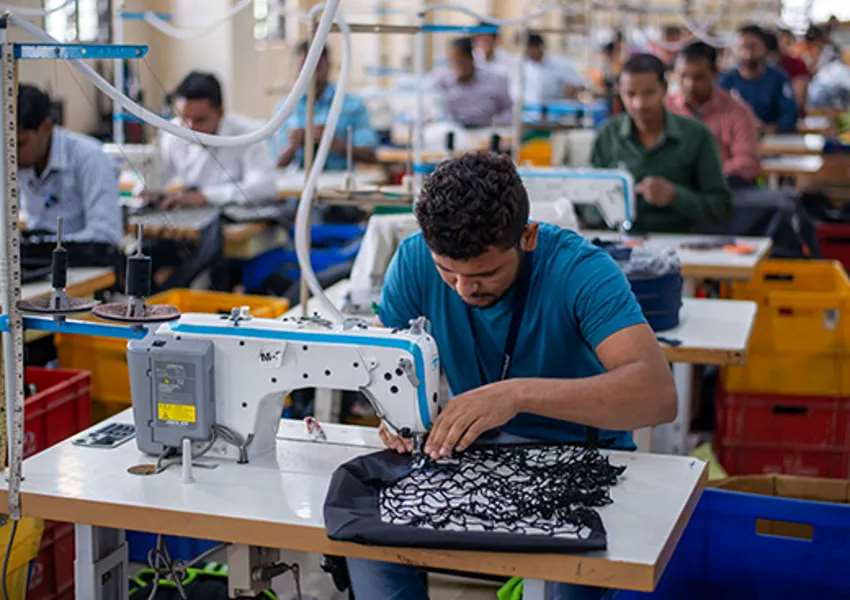
A sweeping overhaul of US trade policy has created one of the most competitive openings for India's textile and apparel exporters in recent years. Finalizing a new Section 301 tariff framework targeting imports from 60 countries, Washington has not merely altered customs duties, it has reset sourcing economics across the global fashion supply chain.
For India, the outcome is especially important. While the country's textile industry escaped higher proposed tariffs after diplomatic engagement and policy reforms, several of its largest Asian competitors now face steeper duties. The resulting price differential could influence procurement strategies for American retailers facing persistent margin pressures.
Tariff gap creates pricing edge
On July 24, 2026, the Office of the United States Trade Representative (USTR) announced permanent additional tariffs under Section 301 of the Trade Act of 1974 following investigations into forced labour practices and import restrictions. The new framework replaces temporary levies with a long-term tariff structure intended to reshape global manufacturing supply chains.
India was initially expected to face an additional 12.5 per cent tariff. However, following amendments to India's Foreign Trade Policy prohibiting goods produced through forced labour, the final duty was reduced to 10 per cent, the same rate already applicable under the previous temporary regime. The real commercial advantage lies in comparison with East Asian competitors. Vietnam and China now face 12.5 per cent additional tariffs, giving Indian exporters a 250-basis-point cost advantage in the US market.
Table: US Section 301 additional tariff structure
|
Country |
Initial proposal |
Final section 301 tariff |
Competitive position |
|
India |
12.50% |
10.00% |
Advantage over East Asia |
|
Bangladesh |
10.00% |
10.00% |
At par with India |
|
Cambodia |
10.00% |
10.00% |
At par with India |
|
Pakistan |
10.00% |
10.00% |
At par with India |
|
United Kingdom |
10.00% |
10.00% |
At par with India |
|
Vietnam |
12.50% |
12.50% |
250 bps disadvantage |
|
China |
12.50% |
12.50% |
250 bps disadvantage |
Note: Additional Section 301 duties apply over existing MFN (Most-Favored-Nation) tariffs.
Buyers recalculate sourcing
The US remains India's largest textile export destination, accounting for approximately $10.5-$11 billion in annual purchases and nearly one-third of India's textile export earnings. Although a 2.5 per cent tariff differential may appear modest, it becomes significant when applied across billion-dollar sourcing programmes.
Apparel retailers operating on thin margins continuously increase landed costs, making even small pricing advantages capable of influencing vendor selection.
Experts point out the revised tariff structure strengthens India's relative competitiveness. Confederation of Indian Textile Industry (CITI) chairman Ashwin Chandran says while the forced labour investigations require continued diplomatic engagement, the final tariff outcome positions India favourably against East Asian competitors.
CITI secretary general Chandrima Chatterjee opines that American sourcing teams now have a measurable financial incentive to diversify procurement towards Indian suppliers, particularly for cotton yarn, woven fabrics and ready-made garments.
Exports remains broad
India's export strength spans multiple product categories, reducing dependence on any single segment while supporting its long-term ambition of becoming a $100 billion textile exporter by 2030.
Table: India’ textile & apparel exports
|
Product category |
FY26 export value |
share |
|
Ready-Made Garments |
$14.53 bn |
45% |
|
Cotton Textiles & Yarn |
$9.36 bn |
29% |
|
Man-Made Fibre Textiles |
$4.82 bn |
15% |
|
Home Textiles, Jute & Others |
$3.92 bn |
11% |
|
Total FY26 Exports |
$32.63 bn |
100% |
|
Government Target (2030) |
$100.00 bn |
— |
Economics of a tariff advantage
The financial implications become clearer at the factory level. Consider a Tirupur-based apparel manufacturer exporting six million knitted cotton garments annually to the US at an average FOB value of $8 per piece. Under India's final 10 perc ent tariff, the additional duty amounts to $0.80 per garment. A comparable shipment from Vietnam incurs a $1.00 tariff. Across the entire order, this seemingly small 20-cent difference generates $1.2 million in landed-cost savings for the US buyer.
Table: Unit cost comparison
|
Sourcing parameter |
India (10%) |
Vietnam (12.5%) |
|
FOB Value Per Unit |
$8.00 |
$8.00 |
|
Section 301 Tariff |
$0.80 |
$1.00 |
|
Landed Cost (excluding MFN) |
$8.80 |
$9.00 |
|
Total Contract Value |
$52.8 mn |
$54.0 mn |
|
Buyer Benefit |
$1.2 mn savings |
Higher cost |
For global retailers placing multi-season orders, these savings can help offset freight volatility while improving merchandising margins, making Indian suppliers increasingly attractive.
Compliance becomes the new battleground
The tariff advantage, however, is not guaranteed to remain uncontested. The USTR has simultaneously introduced three-year Tariff Rate Quotas (TRQs) for Bangladesh, Cambodia, Indonesia and Malaysia. Once implemented, qualifying textile exports using US-produced cotton and textile inputs will be eligible for duty-free access within specified quotas. Although Bangladesh and Cambodia currently have tariff parity with India, these quota mechanisms could gradually redirect portions of apparel manufacturing and cotton sourcing toward competing countries.
Equally important are the compliance obligations attached to the new trade framework. Because the tariffs stem from forced labour enforcement, US Customs and Border Protection is expected to intensify farm-to-factory traceability requirements. Exporters will need verified chain-of-custody documentation covering cotton sourcing, spinning, weaving and garment manufacturing. Digital traceability systems, supplier audits and transparent documentation are therefore becoming commercial necessities rather than sustainability initiatives.
Opportunity depends on execution
India's tariff advantage offers a meaningful competitive opening, but history suggests that lower duties alone rarely transform export performance. Success will depend on how effectively manufacturers combine cost competitiveness with reliable delivery, production scale and supply chain transparency. Retailers are unlikely to shift sourcing purely because of tariffs; they will expect suppliers to demonstrate compliance, consistency and operational resilience.
For India's textile industry, the latest US trade reset provides favourable conditions. Converting that relative pricing advantage into sustained export growth will require disciplined execution across the entire value chain from cotton farms to finished garments.
Yarn Expo Autumn: A vital barometer for fiber innovation

Global apparel brands and textile manufacturers are rapidly re-engineering their procurement strategies, pivoting from traditional commodity fibers toward high-tenacity, circular, and eco-certified materials. This structural realignment comes as international regulatory frameworks—most notably the European Union’s Ecodesign for Sustainable Products Regulation (ESPR)—enforce strict material traceability and recycled content thresholds across imported textiles.
Scheduled to take place from August 25 to 27, 2026, at the National Exhibition and Convention Center in Shanghai, Yarn Expo Autumn will occupy 27,000 sq m of exhibition space. Organized jointly by Messe Frankfurt (HK) and CCPIT-Tex, the trade summit serves as a vital barometer for fiber innovation, and seasonal procurement budgets across the global textile value chain.
Dedicated sourcing zones target specialized industrial demand
To help procurement decision-makers navigate volatile raw material costs and evolving consumer preferences, the 2026 event structures its 580-plus international exhibitors across seven specialized product zones: Cashmere, Cotton, Chemical Fiber, Fancy Yarn, Linen, Wool, and the International Yarn Zone. Exhibitor showcases reflect a clear industry move toward technical functionality and eco-design. Indonesia’s PT. Indo-Rama Synthetics Tbk is scaling output of recycled polyester (rPET) staple fibers and specialized filament yarns, offering high-tensile alternatives for activewear and industrial textiles. Similarly, New Zealand’s Woolyarns is showcasing its Perino luxury blends, combining ultra-fine merino wool with specialty fibers to deliver lightweight thermal durability for luxury knitwear.
Natural Bast fibers and specialty yarns gain market share
In parallel, natural bast fibers are capturing expanded market share as apparel mills seek biodegradable alternatives to synthetic blends. Egypt’s Sematex For Flax Products is expanding international distribution of wet-spun and dry-spun linen yarns, targeting premium woven and home textile collections. Meanwhile, the UK-based Lurex Company continues to lead the high-end decorative sector with certified, holographic, and recycled metallic yarns tailored for luxury fashion houses. To maximize transactional efficiency across these diverse categories, event organizers are deploying a VIP Business Matching Program, featuring targeted B2B meetings and travel incentives to streamline direct contract negotiations between brand sourcing directors and spinning mills.
Creating a unified Asian sourcing hub with concurrent trade fairs
By co-locating alongside major industry trade fairs - including Intertextile Shanghai Apparel Fabrics (Autumn Edition), CHIC (China International Fashion Fair), and the PH Value Knitting Fair -- Yarn Expo Autumn forms a comprehensive vertical sourcing ecosystem. This co-located structure allows retail buyers, garment factories, and fabric mills to resolve supply chain requirements from raw fiber selection to finished garment production in a single itinerary.
With China accounting for roughly 40 per cent to 45 per cent of worldwide textile exports, the Shanghai gathering provides essential market intelligence for fashion enterprises managing risk, raw material inflation, and global sustainability mandates heading into the 2027 retail year.
Organized by Messe Frankfurt (HK) in partnership with Chinese textile trade associations, Yarn Expo Autumn is Asia’s premier trade fair for fibers and yarns. Held annually in Shanghai, the platform connects over 500 international suppliers with 22,000-plus trade buyers. It targets sustainable, functional, and natural yarn innovations to drive global supply chain integration.
Asos, Adidas Originals expand partnership into menswear
London-based pure-play online retailer Asos has extended its exclusive design collaboration with Adidas Originals into menswear, following three sell-out womenswear collections. Launching globally on July 30, 2026 - with early access for Asos.World loyalty members on July 29 - the debut line reinterprets classic sportswear silhouettes, including the Firebird tracksuit, using tailored check fabrications, overshirts, and preppy knits.
Fronted by Noni Madueke, Arsenal and England footballer, the collection targets fashion-conscious male consumers seeking sport-lifestyle apparel. To enhance customer engagement and boost conversion rates, Asos is integrating AI-powered virtual try-on features across selected digital store looks.
Monetizing co-branded customer acquisition
The expansion into menswear leverages strong customer acquisition metrics from prior collaborative drops. Previous collection iterations drove a 57 per cent increase in new and reactivated shoppers compared to the initial launch, while delivering a 32 per cent sales lift across the broader Adidas brand portfolio on the platform. Vanessa Spence, Executive Vice President - Brand & Creative, Asos, states, the success of the previous collections gave us the confidence to push the partnership further, reinterpreting iconic Adidas Originals silhouettes through our British fashion lens. Capturing elevated menswear demand enables Asos to strengthen full-price retail performance and drive higher basket values.
Focusing on inventory reduction and sales conversion
Founded in London in 2000, Asos plc operates a global online fashion platform serving young adult consumers across key international markets. Offering own-brand apparel alongside curated third-party labels, the group is executing an operational efficiency strategy focused on inventory reduction, full-price sales conversion, and multi-brand partnership monetization.
Luxury conglomerates expand direct retail control to drive H1 revenue growth
Global luxury fashion groups are restructuring wholesale channels in favor of tightly controlled direct-to-consumer (DTC) footprints to protect brand equity and capture higher margins.
Demonstrating the commercial viability of this model, Ermenegildo Zegna Group reported a 9.3 per cent rise in organic revenue to €987.3 million ($1.12 billion) in H1, FY26, with Q2 top-line expansion increasing by 11 per cent to €517.1 million. DTC revenue increased by 17.3 per cent organically during Q2 to reach €410.9 million, accounting for 86 per cent of total branded sales. Regional demand accelerated across key overseas hubs, led by a 21.8 per cent organic growth in the Americas and a stabilized 8.6 per cent organic recovery in Greater China.
Pruning wholesale operations to deepen experiential engagement
The intentional contraction of wholesale order books - down 9.5 per cent organically across the group's branded product lines in Q2 - reflects a strategic transition toward boutique activations and client-centric flagship models. Mainstay label Zegna achieved a 16.5 per cent organic sales gain to €324.3 million in Q2, while Thom Browne and Tom Ford Fashion delivered positive DTC growth that offset deliberate wholesale rationalization. This performance reflects the strength of our customer-centric model, with direct-to-consumer revenue growing organically by 17% in the quarter and all brands delivering double-digit growth, states Ermenegildo ‘Gildo’ Zegna, Executive Chairman, Ermenegildo Zegna Group.
Focusing on vertical integration and market expansion
Ermenegildo Zegna Group is an Italian luxury fashion house specializing in menswear, high-end tailoring, and technical fabrics. Operating 346 directly managed boutiques across the Zegna and Thom Browne portfolios, the group focuses on global market expansion and vertical integration. Founded in 1910 in Trivero, Italy, the NYSE-listed conglomerate maintains strong financial stability with sustained mid-single-digit sales momentum.