FW
Momad accelerates apparel sourcing cycles in inaugural July edition
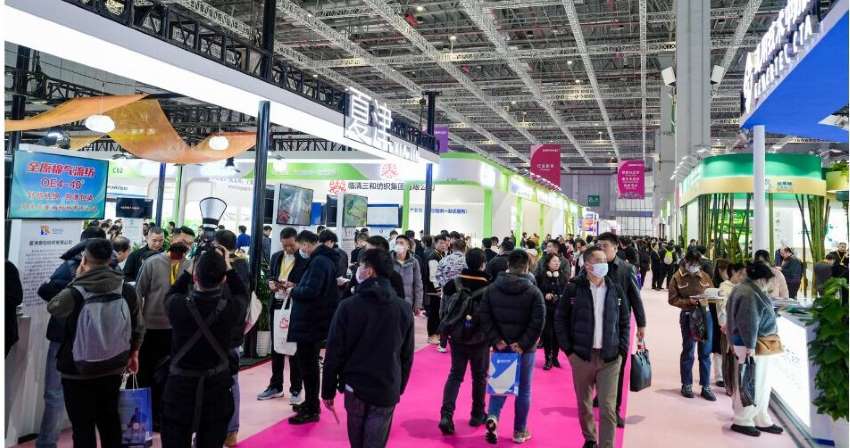
The conclusion of Momad’s first-ever July edition at IFEMA Madrid marks a strategic shift in European apparel and textile trade logistics. By moving its traditional autumn sourcing window forward to July 23–25, the international fashion show enabled over 300 exhibiting brands and 7,000 professional buyers to negotiate seasonal procurement earlier in the commercial cycle. This schedule change addresses lingering supply chain lead-time constraints, allowing garment manufacturers and multi-brand retailers to finalize fabric allocations and production runs well ahead of spring delivery deadlines.
Sustainable fabrics and resortwear drive buyer demand
Commercial activity centered on eco-friendly textiles, resort wear, and technical swimwear collections. Participation across the Sustainable Experience zone increased as brands integrated certified organic cotton, recycled synthetic yarn, and low-water dye processes to fulfill tightening European Union eco-design directives. Moving our presentation to July provided crucial runway for raw material sourcing and order fulfillment, noted Julia Martinez, Director - Commercial Operations. Retailers secured inventory early, mitigating mid-season inventory shortfalls across key Mediterranean markets, she added.
A unified fashion showcase
Organized biannually by IFEMA Madrid, Momad operates as Spain's premier trade platform for apparel, footwear, and textile accessories across European and Latin American markets. Established as a unified fashion showcase, the event targets 5 per cent annual visitor growth, backed by stable regional exhibition revenue performance.
Luxury houses expand direct manufacturing to capture $500 billion market
Global personal luxury goods spending is climbing toward $500 billion, driven by structural demand for high-craftsmanship apparel and leather goods. To protect margins and navigate supply disruptions, major European luxury conglomerates are aggressively acquiring specialized manufacturing hubs across Italy and France. Rather than relying on third-party suppliers, heritage Maisons are integrating regional spinning, weaving, and leather-tanning facilities directly into their retail infrastructure to maintain rigorous quality standards and comply with the EU’s Digital Product Passport mandates.
Experiential retail expansion targets high-growth hubs
While traditional wholesale distribution contracts, store-based flagship retail accounts for over 62 per cent of global luxury transactions. Conglomerates are expanding high-concept boutique networks across emerging luxury capitals in South Korea, China, and the Middle East to capture affluent Gen Z and Millennial spending. Direct ownership of the production line allows luxury houses to shorten collection lead times and deliver tailored, hyper-exclusive ranges directly to flagship stores, noted an equity analyst tracking luxury retail supply chains. Mounting compliance overheads and rising raw material costs remain persistent operational pressures across luxury manufacturing networks.
Personal luxury sector baseline
The personal luxury sector encompasses high-fashion apparel, leather goods, fine jewelry, and luxury timepieces. Primary consumer markets include North America, Europe, East Asia, and emerging Middle Eastern nodes. Expanding through direct-to-consumer flagship retail and digital integration, the sector projects steady 4–5 per cent annual growth, supported by centuries of European artisanal heritage.
Eco-chemistry and digital printing accelerate expansion of textile dyes market
The global textile dyes market is expanding from $13.13 billion in 2025 to $19.74 billion by 2035, growing at a CAGR of 4.16 per cent annually. Rather than relying solhely on volume expansion in commodity synthetic colorants, dyestuff manufacturers are reallocating capital toward eco-friendly formulations, digital inkjet inks, and waterless supercritical carbon dioxide dyeing systems. Strict environmental regulations, including Zero Liquid Discharge mandates in South Asia and revised chemical compliance rules across Europe, are accelerating the retirement of high-effluent conventional dye baths. Consequently, reactive dyes - valued for superior wash fastness and covalent bonding with cellulosic fibers = secured a dominant 31 per cent market share in 2025.
Regional processing shift expands Asia-Pacific dominance
Asia-Pacific continues to command global dyestuff consumption, driven by dense textile finishing clusters across China, India, and Vietnam. Viscose substrate processing accounts for 24 per cent of overall dye revenues due to high color absorption rates, while polyester applications maintain steady growth in activewear. To meet stringent global brand compliance, major dyestuff producers are deploying low-salt, bio-based colorant platforms. For instance, the DyStar Group recently introduced plant-derived dye series targeting fast-fashion supply chains to lower effluent chemical oxygen demand. Adopting closed-loop dye chemistry allows fabric processors to fulfill strict brand sustainability benchmarks without compromising shade reproducibility, noted a senior chemical analyst tracking industrial textile processing.
Global dyestuff industry profile
The global textile dyestuff sector manufactures reactive, disperse, and specialty colorants for apparel and home furnishings. Serving processing hubs in Asia-Pacific, Europe, and North America, producers are accelerating low-impact and waterless formulations. Backed by centuries of chemical synthesis evolution, the industry projects stable 4.16 per cent annual growth through 2035.
Bio-based polymer demand rises as Sorona and WGSN Map 2027 material trends
Global synthetic fiber supply chains face mounting structural pressure as apparel brands transition from fossil-derived synthetics to bio-intelligent polymers. A collaborative report by Sorona and trend authority WGSN outlines three key material trajectories through 2027 - New Nature, Climate Flex, and Sensory Empowerment. These directions emphasize hybrid circular constructions that pair bio-based polymers with natural fibers like wool and cotton. By incorporating 37 per cent plant-based Bio-PDO, Sorona replaces petroleum feedstocks while delivering inherent stretch recovery and dimensional stability without elastane degradation.
Market projections reflect shifting consumer fiber priorities
Data indicates, the global bio-based materials market will reach $285.3 billion by 2029, expanding at a 14.5 per cent CAGR. Consumer demand for non-synthetic compositions is accelerating, evidenced by annual search increases of 61per cent for wool base layers and 21per cent for cotton leggings. Integrating bio-based building blocks into standard yarn spinning allows mills to meet strict carbon targets without sacrificing textile performance, states a senior material strategist involved in the study. While feedstock scalability and chemical processing costs remain key operational barriers, commercial adoption across activewear and tailored woven segments continues expanding rapidly across Asian and European manufacturing hubs.
Maintaining strong revenue growth
Developed by Covation Biomaterials, Sorona manufactures 37 per cent bio-based polymers for apparel, carpets, and automotive textiles. Serving global knitting and weaving mills across North America, Europe, and Asia, the brand expands via its Common Thread Certification Program. Commercialized over 25 years ago, it maintains strong revenue growth through sustainable polymer innovations.
Bangladesh T&A sector charts roadmap to elevate domestic cotton production
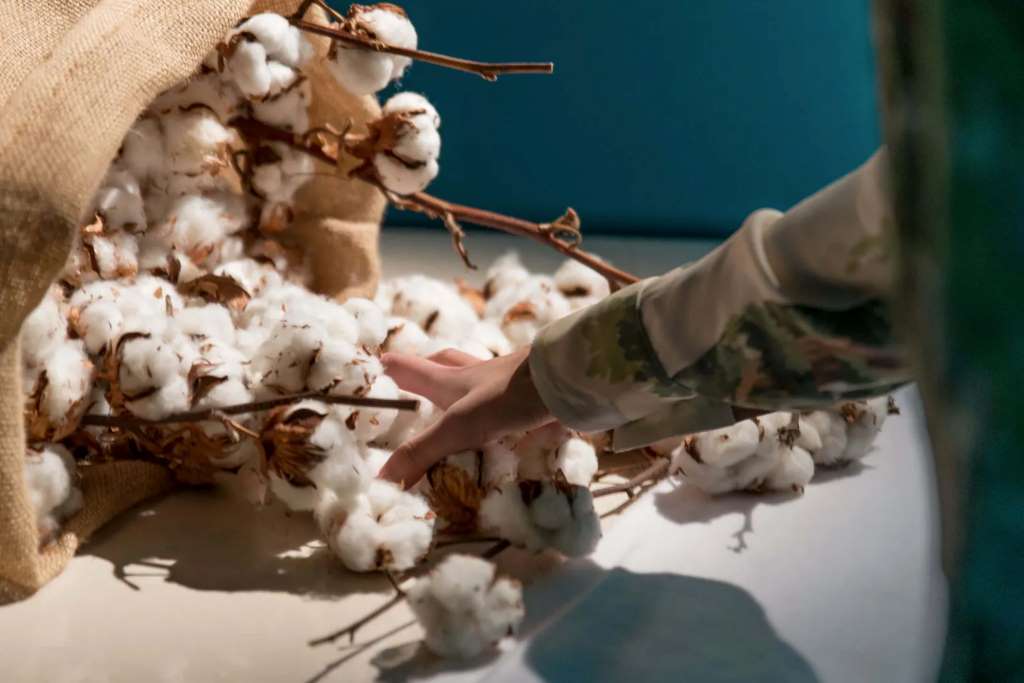
Bangladesh’s textile and apparel sector is executing a strategic long-range roadmap to elevate domestic cotton lint production to 1.9 million bales by 2050, with an interim milestone of 500,000 bales by 2030. Currently producing over 224,000 bales annually - meeting roughly 16 per cent of domestic mill requirements - the initiative seeks to insulate the nation’s 9-million-bale readymade garment (RMG) manufacturing hub from foreign exchange vulnerabilities. In FY25–26, raw cotton imports reached 7.3 million bales, costing approximately Tk 45,000 crore. By scaling domestic cultivation across 200,000 potential hectares in uncultivated char lands and the Barind region, the Cotton Development Board (CDB) aims to save Tk 800 crore annually in foreign currency by 2030 without displacing primary food crops.
Hybrid yields and farmer incentives fuel supply resilience
To accelerate field adoption, the government allocated Tk 20 crore in direct incentives for FY2026–27, providing high-yield hybrid seeds, inputs, and farmer-card credit access to 25,000 marginal growers. Every kilogram of locally harvested lint saves roughly $4 in foreign exchange while yielding strong commercial returns for growers, states Md Rezaul Amin, Executive Director, CDB. Despite land constraints and long growing cycles posing operational challenges, integrating biotechnology and high-density hybrid varieties offers local spinning mills a predictable, cost-competitive raw material base.
Bangladesh cotton development board strategic mandate
Under the leadership of the Ministry of Agriculture, the Cotton Development Board (CDB) conducts research, seed distribution, and agronomic support for domestic cotton production. Serving regional spinning and apparel supply chains, it plans to expand commercial acreage toward 200,000 hectares. Formed in 1972, the agency advances raw material self-reliance to strengthen textile export competitiveness.
Luxury houses expand direct manufacturing to capture $500 billion market
Global personal luxury goods spending is climbing toward $500 billion, driven by structural demand for high-craftsmanship apparel and leather goods. To protect margins and navigate supply disruptions, major European luxury conglomerates are aggressively acquiring specialized manufacturing hubs across Italy and France. Rather than relying on third-party suppliers, heritage Maisons are integrating regional spinning, weaving, and leather-tanning facilities directly into their retail infrastructure to maintain rigorous quality standards and comply with the EU’s Digital Product Passport mandates.
Experiential retail expansion targets high-growth hubs
While traditional wholesale distribution contracts, store-based flagship retail accounts for over 62 per cent of global luxury transactions. Conglomerates are expanding high-concept boutique networks across emerging luxury capitals in South Korea, China, and the Middle East to capture affluent Gen Z and Millennial spending. Direct ownership of the production line allows luxury houses to shorten collection lead times and deliver tailored, hyper-exclusive ranges directly to flagship stores, noted an equity analyst tracking luxury retail supply chains. Mounting compliance overheads and rising raw material costs remain persistent operational pressures across luxury manufacturing networks.
Personal luxury sector baseline
The personal luxury sector encompasses high-fashion apparel, leather goods, fine jewelry, and luxury timepieces. Primary consumer markets include North America, Europe, East Asia, and emerging Middle Eastern nodes. Expanding through direct-to-consumer flagship retail and digital integration, the sector projects steady 4–5 per cent annual growth, supported by centuries of European artisanal heritage.
Asian spinning investments defy global machinery downturn
Global investments in textile manufacturing equipment are fracturing, with upstream primary spinning capacities expanding while downstream weaving and finishing face severe contractions. According to the 48th annual International Textile Machinery Shipment Statistics for 2025, deliveries of short-staple spindles rose by 3.3 per cent to 6.11 million units, and open-end rotors increased by 3.5 per cent. Conversely, global shipments of shuttle-less looms fell by 27.5 per cent, and circular knitting machines declined by 13 per cent, exposing a strategic recalibration where manufacturers prioritize raw yarn control over immediate finished fabric production.
Regional manufacturing shifts favor Asia
Asia and Oceania consolidated their manufacturing dominance in 2025, absorbing 95 per cent of all new short-staple spindles and shuttle-less looms. China, India, and Vietnam remain the primary growth engines, accelerating their domestic production efficiency. The divergence between upstream yarn manufacturing investments and downstream fabric processing reflects a strategic consolidation. Asian hubs are securing primary fiber capacities to control upstream costs, noted a sector analyst tracking the data. Outside Asia, North America aggressively expanded its primary textile infrastructure, posting a 264 per cent spike in short-staple spindle acquisitions.
Texturing and fabric capacities recalibrate
While natural fiber spinning advanced, synthetic processing slowed. Deliveries of double-heater draw-texturing spindles, heavily utilized for polyester filament production, declined by 22 per cent globally. Similarly, flat knitting machinery shipments decreased by 22 per cent, though fabric finishing equipment increased by 8 per cent. The data indicates, integrated mills are optimizing core yarn outputs and specialized finishing techniques while delaying capital expenditure on intermediate weaving platforms.
Providing strategic intelligence to machinery manufacturers
The International Textile Manufacturers Federation (ITMF) compiles global shipment data across spinning, weaving, and finishing segments to track industrial capital investments.
Established in 1904, the Zurich-based forum represents the international textile value chain, providing strategic intelligence and market forecasting to over 200 allied machinery manufacturers worldwide.
LVMH luxury apparel market rebounds as Dior fuels retail growth
Global luxury flagship LVMH reported a 3 per cent acceleration in organic revenue to €19.5 billion for Q2 2026, signaling a recovery across fashion and retail divisions. The flagship Fashion & Leather Goods division snapped a two-year decline by posting a 1per ent organic growth, propelled by the debut collections of creative director Jonathan Anderson at Christian Dior. Heavy consumer uptake for new leather goods, including the Cigale handbag, helped offset macro headwinds and supply chain recalibrations.
High-end retail strategy gains traction
Despite foreign exchange pressures and regional geopolitical disruptions shaving 1 percentage point off top-line growth, LVMH maintained an operating margin of 22.5 per cent on H1 revenues of €38.6 billion. Experiential retail upgrades led the recovery, with high-concept flagship launches for Louis Vuitton in Beijing and Seoul capturing pent-up Asian luxury demand. Our Maisons, pursuing creative renewal while focusing on product quality, continued to enhance desirability, stated Bernard Arnault, Chairman and CEO, LVMH.
A global benchmark for luxury manufacturing
French conglomerate LVMH operates over 75 heritage brands across haute couture, fine leather goods, specialty watches, and retail. Key markets include North America, Europe, and East Asia. Expanding experiential retail and creative renewals, the group posted stable H1 2026 net profits of €5.7 billion. Founded in 1987, it remains the global benchmark for luxury manufacturing.
Q1 FY27 signals new pattern in textiles as integrated players outpace commodity spinners

The first quarter of FY27 marks a decisive turning point for India's textile industry, revealing a move that extends well beyond cyclical recovery. While stable cotton prices and easing freight costs have provided some relief after a turbulent FY26, the latest financial results indicate that profits is being determined by business models rather than commodity cycles.
The contrast is clear. Integrated textile companies with diversified operations across fabrics, garments, home textiles, technical textiles and branded businesses are giving healthy earnings growth despite modest revenue increase. Meanwhile, companies largely dependent on commodity yarn production continue to grapple with lower spreads, higher finance costs and limited pricing power. The sector's evolution suggests that India's textile leaders are no longer competing primarily on spinning capacity but on their ability to capture more value across the supply chain.
Value addition drives earnings
Across key corporate players in home textiles, integrated spinning/weaving, and technical fabrics, top-line trajectory varied widely. Operational performance was largely dictated by value-addition capabilities and export exposure.
Table: Q1 FY27 financial outlook of leading Indian textile corporates
|
Company |
Revenue YoY |
PAT YoY |
Growth Driver |
|
Welspun Living |
+2.66% |
+27.84% |
US manufacturing expansion and domestic brands |
|
KPR Mill |
+9.73% |
+4.62% |
Vertical integration and captive renewable energy |
|
Arvind Ltd |
+4.11% |
+24.31% |
Advanced Materials and diversified fabric portfolio |
|
Sangam India |
+8.07% |
+1852.38% |
High-capacity synthetic fabric and denim operations |
|
Vardhman Textiles |
+3.11% |
+4.96% |
Processed fabrics offset yarn pressure |
|
Indo Count Industries |
+5.48% |
+36.84% |
Wamsutta relaunch and geographic diversification |
|
Trident |
+4.42% |
+13.02% |
Operational leverage and debt reduction |
|
Nahar Spinning |
+3.05% |
+20.45% |
Cost optimization and integrated operations |
|
Sutlej Textiles |
+4.26% |
Loss |
Margin compression and high finance costs |
The financial picture reinforces a consistent theme: modest revenue growth is translating into disproportionately stronger profits for companies that have expanded into higher-value segments.
Home textile manufacturers, integrated apparel producers and diversified fabric companies generated stronger earnings even without major top-line increase. Their focus on branded products, processing, technical textiles and downstream manufacturing has enabled them to protect margins in an environment where commodity pricing remains subdued. In contrast, businesses concentrated in spinning continue to face intense pressure from volatile yarn-cotton spreads and rising financing costs, limiting earnings despite relatively stable sales.
Integration becomes the competitive edge
Perhaps the clearest lesson from Q1 FY27 is that vertical integration has become the industry's primary competitive advantage. Sangam India exemplifies this change. After finance and depreciation costs sharply reduce profits a year earlier, the company benefited from its expanded synthetic weaving and denim capacities reaching optimal utilization. Instead of selling lower-margin polyester-viscose yarn, the company increasingly converts its own yarn into fabrics and garments, significantly improving profitability. Its announcement of a Rs1,500 crore investment plan further underscores confidence in this integrated model.
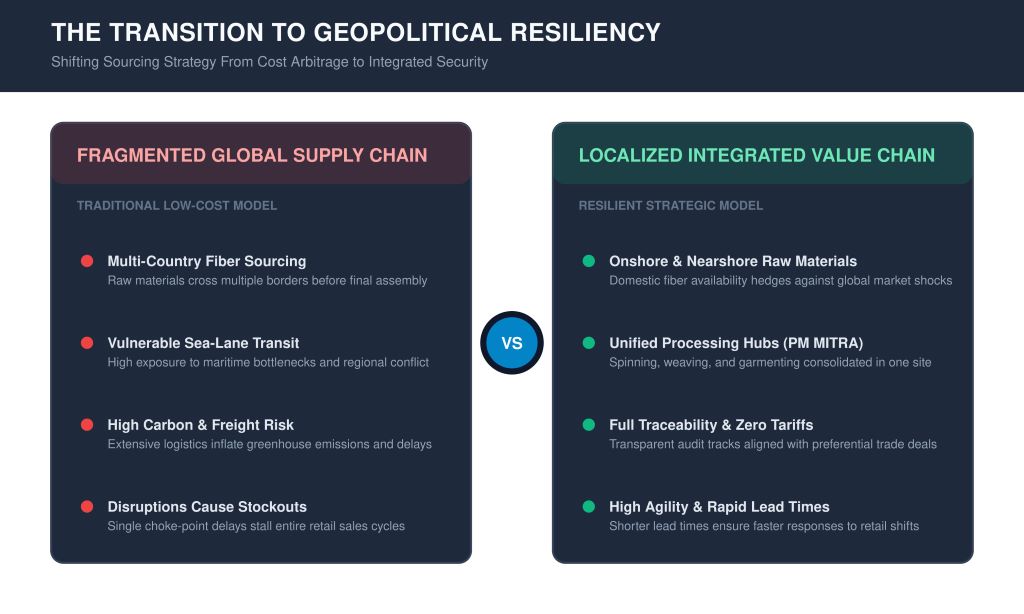
KPR Mill continues to showcase similar resilience. Internal consumption of yarn for garment manufacturing, combined with extensive captive wind and solar power generation, has insulated margins from both raw material and energy cost fluctuations. The emerging pattern suggests that companies capable of controlling multiple stages of production—from fiber to finished products—are increasingly less exposed to the volatility that traditionally characterizes textile markets.
Looking beyond India
Another defining feature of Q1 FY27 is the growing importance of geographic diversification. Global retailers remain cautious following recent disruptions caused by geopolitical tensions, shipping bottlenecks and changing tariff regimes. Rather than relying solely on exports from India, leading manufacturers are creating production footprints closer to key consumer markets.
Welspun Living's investment in a pillow and bedding facility in Nevada reflects this strategic recalibration. Local manufacturing not only reduces delivery timelines but also mitigates tariff uncertainty and supply chain disruptions for its largest export market.
Indo Count Industries is pursuing diversification through market expansion. By increasing the contribution of non-US markets while simultaneously reviving the Wamsutta brand in the United States, the company is reducing dependence on a single geography and building a more balanced revenue portfolio.
These initiatives indicate that global competitiveness is increasingly being shaped by supply chain flexibility rather than manufacturing costs alone.
Beyond apparel
Another notable shift is the movement into technical and industrial textiles. Arvind Limited continues allocating greater resources toward advanced materials used in healthcare, industrial filtration, defense and protective applications. These businesses typically offer higher margins, stronger entry barriers and lower exposure to seasonal apparel demand than traditional denim manufacturing.
This diversification reflects a broader industry realization that long-term earnings stability will increasingly depend on participation in specialized textile segments rather than commodity apparel alone.
Balance sheets matter again
The sector is also showing greater financial discipline than during FY26. Last year, higher freight costs, inventory corrections across Western retailers and longer cash conversion cycles placed significant strain on corporate balance sheets. Q1 FY27 indicates that companies have responded by emphasizing debt reduction, tighter working capital management and operational efficiency.
Welspun Living reduced net debt while improving its cash conversion cycle, illustrating how stronger balance sheet management is complementing operational improvements. Trident also benefited from debt reduction alongside operational leverage, while Vardhman Textiles defended profitability through consistently high capacity utilization and an increasing contribution from processed fabrics and acrylic fiber.
These improvements suggest that financial discipline is becoming as important as production efficiency in sustaining earnings growth.
The next phase
Q1 FY27 confirms that India's textile industry is entering a new competitive era. The defining divide is no longer between exporters and domestic players or between cotton and synthetic producers. Instead, it is between companies that remain exposed to commodity cycles and those that have successfully moved downstream into brands, technical textiles, value-added processing and geographically diversified manufacturing.
As global supply chains continue to evolve, India's strongest textile companies appear increasingly positioned not as commodity suppliers but as integrated manufacturing and consumer businesses. Their ability to combine scale with value addition, operational efficiency and strategic diversification may ultimately determine which players emerge as long-term winners in the next phase of the industry's transformation.
Gujarat textile mills adapt operations amid raw cotton deficit
A 12 per cent contraction in local cotton acreage to 2.36 million hectare, driven by pest resistance and farmer crop shifts toward oilseeds, has curtailed raw lint availability across Western India. Raw cotton prices increased by 13 per cent to Rs 61,000 per candy, pushing yarn costs up 12 per cent while finished fabric realizations remained stagnant. Consequently, weaving clusters in Surat face estimated cumulative losses between Rs 2,500 crore and Rs 3,000 crore, forcing many processing units to reduce daily shifts by 50 per cent. Mills are currently selling below production costs to sustain operations, making temporary capacity curtailments unavoidable, says Ashok Jirawala, President, Federation of Gujarat Weavers Association.
Export realignment and duty relief strategies
Adding to domestic margin compression, updated US Section 301 tariffs enforce an effective 15.5 per cent duty on Indian apparel exports, squeezing profit margins for finished-goods manufacturers in Ahmedabad. To mitigate these pressures, apparel makers are leveraging the Centre's temporary suspension of the 11 percent cotton import duty to procure extra-long staple fibre and expand man-made fibre production. In response, automated weaving facilities are adopting high-speed air-jet machinery to reduce energy overheads and maintain price competitiveness against exporters in Bangladesh and Vietnam.
Regional textile sector profile
Gujarat's textile cluster powers 25 percent of India’s spinning output and one-third of its cotton crop, delivering yarn, denim, and synthetic fabrics globally. Established during the late 19th century, the regional industry is expanding into high-value technical textiles to sustain multi-billion-dollar revenue targets despite short-term market volatility.