FW
Contraction in RMG shipments widens T&A export gap in June 2026
Recent trade data highlights a widening performance gap between India’s textile and apparel sectors. While textile exports, encompassing yarn, fabric, and made-ups, demonstrated a robust 9.64 per cent Y-o-Y growth during June 2026, this progress was offset by a significant 11.25 per cent contraction in RMG shipments.
According to the Confederation of Indian Textile Industry (CITI), this disparity resulted in cumulative textile and apparel (T&A) exports remaining nearly flat, recording a marginal uptick of only 0.21 per cent for the month. This trend has persisted throughout the Q1, FY26 during which apparel shipments faced a 12.44 per cent decline, dragging the overall T&A export growth into negative territory by 2.95 per cent.
Strategic barriers and market outlook
Industry analysts attribute this apparel-led stagnation to persistent global demand volatility and the growing necessity for India to move up the value chain. While manufacturers of technical textiles and high-performance synthetic yarns are benefiting from diversified global sourcing strategies, the garmenting sector continues to grapple with competitive pricing pressures.
Addressing this imbalance is a primary focus at Bharat Tex 2026, where stakeholders are exploring avenues to deepen vertical integration. By aligning domestic production with the sustainability and compliance requirements of Western retail markets, the sector aims to transition from volume-driven exports to high-value-added solutions, essential for regaining momentum in the international marketplace.
Prioritizing export-led growth
The Indian textile sector is a cornerstone of the national economy, encompassing the entire value chain from fiber to fashion. Key markets include the US, EU, and UK, with an increasing focus on technical textiles. The industry is currently prioritizing export-led growth, digital transformation, and sustainable manufacturing to boost long-term competitiveness.
H&M restructures retail operations with shuttering of 128 stores
H&M Group is aggressively refining its global retail footprint, reporting a net reduction of 128 stores as of May 2026 as part of a multi-year organizational restructuring. While the fashion giant continues to shutter underperforming locations, the strategy is focused on enhancing store-level productivity and prioritizing digital-first omnichannel integration. According to the company’s recent six-month report, this portfolio optimization has yielded a significant 160-basis-point expansion in operating margin, reaching 12 per cent in Q2, FY26.
The retailer’s shift emphasizes ‘in-season’ sourcing flexibility, allowing it to respond rapidly to shifting consumer trends without the burden of excess inventory. Data indicates a 10 per cent reduction in stock-in-trade, a testament to improved supply chain precision. Daniel Ervér, CEO, H&M, emphasizes, the organizational transition seeks to move decision-making closer to the customer, thereby increasing local relevance.
By reallocating capital toward high-potential markets - such as recent expansions in Latin America - and upgrading digital infrastructure, the group aims to balance its physical contraction with qualitative growth. This recalibration is essential for competing against ultra-low-cost digital entrants while maintaining the company’s commitment to sustainable, high-value apparel production in an increasingly volatile global macroeconomic climate.
A Swedish multinational clothing company, the H&M Group operates a global retail network across multiple brands, including H&M, COS, and Arket. Its core business is fast fashion, focusing on design-led apparel and home textiles. The group is currently streamlining its physical footprint while scaling omnichannel and sustainable sourcing capabilities.
Can trade deals and manufacturing reforms deliver India's textile vision?
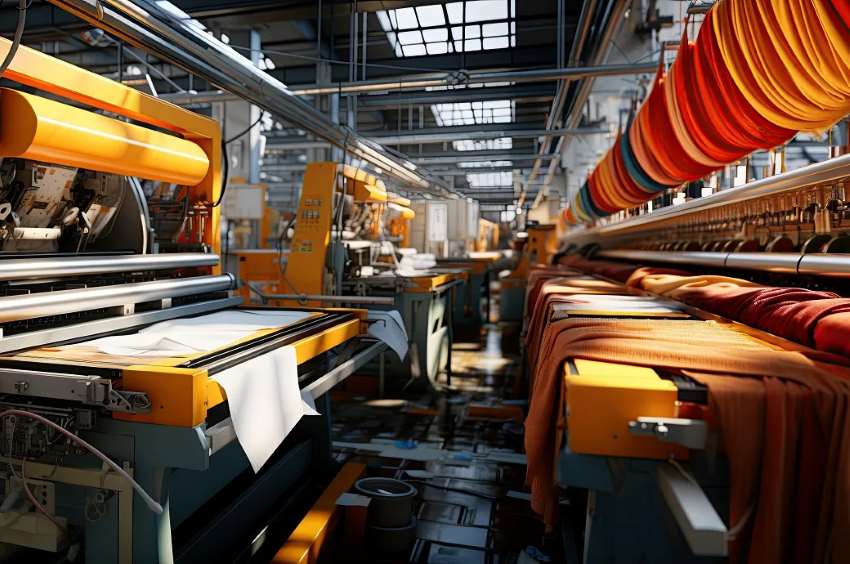
India's textile and apparel industry has entered one of its strongest revival phases after several difficult years marked by pandemic disruptions, higher freight costs, weak consumer demand in Western markets and persistent inflation. Fresh trade agreements, improving global demand and renewed domestic investment have significantly improved industry sentiment, prompting brokerages to forecast a sharp recovery in revenues and profitability over the next few years.
Yet the industry's biggest milestone remains far more ambitious than its immediate recovery. The government has set a target of building a $350 billion textile and apparel ecosystem by 2030, nearly doubling the sector's current size. While recent policy reforms have strengthened the industry's long-term prospects, the arithmetic behind this target suggests that achieving it within the proposed timeline remains highly challenging.
The growth equation
As per Ministry of Textiles and industry data, India's textile sector is currently valued at roughly $190 billion. Reaching $350 billion requires simultaneous expansion of both domestic consumption and exports.
|
Segment |
Current size (Est. 2025-26) |
2030 Target |
Required CAGR |
Drivers |
|
Domestic Market |
$152 bn |
$250 bn |
10.5% |
E-commerce, premiumisation, technical textiles |
|
Exports |
$38 bn |
$100 bn |
21.4% |
FTAs, tariff advantages, China+1 sourcing |
|
Total Industry |
$190 bn |
$350 bn |
16.5% |
Combined domestic and export expansion |
The domestic market appears to be the more achievable component. Rising incomes, urban consumption and digital commerce continue to support demand. Online fashion retail has crossed $14.8 billion, accounting for nearly 22 per cent of apparel sales, while household spending on home furnishings has steadily increased. Technical textiles have also emerged as a major growth engine, expanding rapidly under the National Technical Textiles Mission into sectors such as healthcare, automotive and industrial applications. Exports, however, represent the far steeper challenge. Annual shipments currently stand at around $38 billion, meaning exports must almost triple within five years to achieve the government's objective.
Trade deals change the scenario
Several structural developments have substantially strengthened India's export competitiveness. The implementation of the India-UK Comprehensive Economic and Trade Agreement (CETA) and the conclusion of the India-EU trade negotiations remove tariff disadvantages that had long favoured competitors such as Bangladesh. At the same time, changes in US tariff structures have narrowed India's duty gap while increasing costs for rival sourcing destinations including Bangladesh and Vietnam.
Global sourcing strategies have also shifted. Restrictions on cotton originating from China's Xinjiang region, combined with political instability in Bangladesh and Pakistan, have accelerated the China Plus One sourcing strategy among international retailers. Large Indian manufacturers are positioned as reliable alternatives for global apparel brands seeking diversified supply chains. These developments have triggered fresh capacity expansion across leading exporters and revived investment sentiment throughout the industry.
Years of structural reform
The current recovery did not emerge overnight. It reflects nearly a decade of policy interventions designed to modernise India's textile value chain. The post-pandemic years initially saw demand rebound sharply before being undermined by supply chain disruptions, record freight costs and volatile cotton prices.
From 2023 onwards, the government's Production Linked Incentive (PLI) scheme for man-made fibres and technical textiles, along with the rollout of seven PM MITRA mega textile parks, began attracting significant private investment into integrated manufacturing facilities. By 2025, global retail inventories had largely normalised, while trade agreements with EFTA countries and raw cotton duty adjustments helped stabilise the domestic industry. The momentum accelerated further in 2026 as multiple trade agreements came into force and export orders broadened across global markets.
Persistent structural challenges
Despite improving fundamentals, several long-standing weaknesses continue to constrain India's global competitiveness. The first is raw material costs. Domestic polyester staple fibre prices remain substantially higher than competing markets such as China and Vietnam, while viscose staple fibre also carries a notable premium. Industry participants argue that Quality Control Orders, although designed to improve product standards, have also restricted access to specialised imported fibres required for high-value apparel manufacturing.
The second challenge is India's continued dependence on cotton. Global apparel demand has steadily shifted towards synthetic and performance fabrics, which now account for nearly two-thirds of worldwide fibre consumption. India's exports, however, remain heavily concentrated in cotton products, while man-made fibre exports continue to represent a relatively small share. Transitioning existing spinning and processing capacity towards synthetic textiles requires significant capital investment that many smaller manufacturers cannot afford.
Manufacturing fragmentation represents another major obstacle. Most Indian garment factories operate with only a few hundred sewing machines, whereas facilities in Vietnam and Bangladesh often run several thousand. As international retailers increasingly consolidate their supplier networks, fragmented production limits India's ability to secure very large sourcing contracts.
India's largest textile companies are responding through consolidation and vertical integration. Ready-made garment exporters such as Gokaldas Exports and Pearl Global have adopted multi-country manufacturing strategies, allowing them to diversify production while maintaining supply reliability for global retailers.
Meanwhile, integrated manufacturers such as KPR Mill and Welspun Living control multiple stages of production from spinning and weaving to garment manufacturing and finished home textiles. This integrated model reduces logistics costs, improves operational efficiency and strengthens margins despite fluctuations in raw material prices.
Sustainability has also become a competitive advantage. Investments in traceable cotton, recycled polyester and environmentally compliant manufacturing processes are helping Indian exporters align with increasingly stringent sourcing standards across Europe and North America.
A strong foundation, but a longer timeline
India's textile industry today is structurally stronger than it has been in decades. PM MITRA parks promise integrated manufacturing ecosystems, new trade agreements provide valuable tariff advantages, and a relatively weaker rupee continues to support export competitiveness.
However, reaching $350 billion by 2030 requires sustained annual growth exceeding 16 per cent across the entire industry an exceptionally demanding target for a sector still addressing structural issues in raw materials, synthetic fibre production and manufacturing scale. The industry's direction is clearly positive, supported by favourable global supply chain shifts and substantial policy backing. The more realistic expectation, however, is that India may achieve the $350 billion milestone closer to 2033-35, once these structural bottlenecks are progressively addressed.
Rather than a cyclical recovery, India's textile industry is undergoing a fundamental transformation. If current reforms continue and manufacturing competitiveness improves, the country will be well positioned to emerge as one of the world's most significant integrated textile and apparel hubs over the coming decade.
Vietnam apparel sector navigates global turbulence through operational precision
As the global textile landscape faces heightened uncertainty, Vietnamese manufacturers are reinforcing their resilience through rigorous risk management and strategic production agility. Industry data from H1, FY26 indicates an export turnover of $22.2 billion, a 1.7 per cent Y-o-Y increase. However, industry leaders remain vigilant as subdued consumer demand in major markets, such as the United States and Japan, forces a departure from traditional volume-based growth. To counter these headwinds, enterprises are increasingly adopting ‘dual transition’ strategies - integrating digitalization with sustainable manufacturing—to meet stringent environmental, social, and governance (ESG) standards that have become prerequisites for maintaining market access.
Shifting toward high-value added production
Recognizing that reliance on low-cost labor is no longer a sustainable competitive advantage, the sector is prioritizing higher-value segments. This shift is evident in the transition toward Free on Board (FOB) and Original Design Manufacturing (ODM) models, which allow for better margins and stronger integration into global supply chains. According to Vinatex, a key objective for the remainder of 2026 is the establishment of centralized data centers to enhance decision-making and detect operational risks early. By reducing dependence on imported raw materials- which currently constitute 60-70 per cent of production costs - and investing in automation to boost productivity by an estimated 20-30 per cent, Vietnamese firms are positioning themselves to withstand external shocks while maintaining their status as a premier global sourcing hub.
Focusing on Green technology and high-tech automation
Vietnam is a global manufacturing powerhouse for textiles, garments, and footwear, serving major international brands. The sector focuses on knitted and woven apparel, targeting an annual export value of $48 billion for 2026. Growth plans center on green technology, domestic raw material integration, and high-tech automation.
Vietnam apparel sector navigates global turbulence through operational precision
As the global textile landscape faces heightened uncertainty, Vietnamese manufacturers are reinforcing their resilience through rigorous risk management and strategic production agility. Industry data from H1, FY26 indicates an export turnover of $22.2 billion, a 1.7 per cent Y-o-Y increase. However, industry leaders remain vigilant as subdued consumer demand in major markets, such as the United States and Japan, forces a departure from traditional volume-based growth. To counter these headwinds, enterprises are increasingly adopting ‘dual transition’ strategies - integrating digitalization with sustainable manufacturing—to meet stringent environmental, social, and governance (ESG) standards that have become prerequisites for maintaining market access.
Shifting toward high-value added production
Recognizing that reliance on low-cost labor is no longer a sustainable competitive advantage, the sector is prioritizing higher-value segments. This shift is evident in the transition toward Free on Board (FOB) and Original Design Manufacturing (ODM) models, which allow for better margins and stronger integration into global supply chains. According to Vinatex, a key objective for the remainder of 2026 is the establishment of centralized data centers to enhance decision-making and detect operational risks early. By reducing dependence on imported raw materials- which currently constitute 60-70 per cent of production costs - and investing in automation to boost productivity by an estimated 20-30 per cent, Vietnamese firms are positioning themselves to withstand external shocks while maintaining their status as a premier global sourcing hub.
Focusing on Green technology and high-tech automation
Vietnam is a global manufacturing powerhouse for textiles, garments, and footwear, serving major international brands. The sector focuses on knitted and woven apparel, targeting an annual export value of $48 billion for 2026. Growth plans center on green technology, domestic raw material integration, and high-tech automation.
Jordan T&A sector defies market turbulence as exports rise
Jordan’s textile and apparel sector demonstrated significant resilience, with exports totaling $751 million during the January–April 2026 period. Despite a fluctuating global trade landscape, the industry remains a cornerstone of the national economy. Recent trade data highlights a robust performance driven by high demand for knitted and woven garments in international markets. Industry analysts observe, while traditional markets like the United States remain central to Jordan’s trade strategy, there is a clear imperative to diversify destinations to mitigate dependency. The sector’s ability to maintain high export volumes underscores the effectiveness of its manufacturing base, which increasingly leverages favorable trade agreements to secure a competitive edge against regional peers.
Modernizing for long-term competitiveness
To sustain this momentum, Jordan is aggressively aligning its production capabilities with international compliance and sustainability benchmarks. In collaboration with the International Labour Organization, the government has launched a multi-phase technical cooperation program (2026–2028) to boost labor governance, workplace safety, and fair recruitment practices. These enhancements are critical, as global buyers prioritize ethically sourced, high-quality garments. By integrating digitalization and sustainable manufacturing, Jordanian enterprises are positioning themselves to climb the value chain, ensuring that the apparel industry remains a high-growth pillar within the nation’s Economic Modernisation Vision.
Aiming for $8 billion T&A exports by 2033
The Jordanian textile and apparel industry acts as a major manufacturing powerhouse, providing end-to-end solutions for global fashion brands. It contributes approximately $2.3 billion to annual exports and supports 76,000 jobs. Current growth plans prioritize green technology and value-added manufacturing, aiming to reach $8 billion in exports by 2033.
Hirdaramani Apparel to transform textile waste into ceiling panels
Hirdaramani Apparel is spearheading a transformative industrial shift by repurposing textile byproduct into high-performance ceiling panels. Partnering with the University of Moratuwa’s Pro Green Lab, the manufacturer is transitioning from traditional waste management toward material upcycling. This three-year research endeavor addresses the burgeoning crisis of textile-to-landfill volume by engineering discarded fibers into durable, lightweight construction alternatives. The move signals a strategic departure from conventional waste disposal, positioning textile scrap as a primary raw material for the building sector.
Scalability and market viability
Industry analysts note, while circularity is a common corporate goal, applying it to non-apparel sectors remains a major opportunity. By targeting the eco-friendly ceiling panel market, Hirdaramani seeks to normalize ‘industrial symbiosis’ between fashion and construction. This initiative integrates scientific rigor with industrial requirements, setting a new benchmark for material innovation, states Madhawa Atapattu, Managing Director, Hirdaramani Apparel. With global demand for sustainable building materials rising, the project focuses on achieving industrial-scale production. Success here would provide a scalable blueprint for manufacturers worldwide, proving that textile waste can transition from a liability to a commercially viable resource, ultimately reducing the carbon footprint of both apparel production and commercial construction.
End-to-end solutions for international fashion brands
Hirdaramani Apparel is a prominent global manufacturer providing end-to-end solutions for major international fashion brands. Headquartered in Sri Lanka, the company specializes in apparel production across various categories. Under its Future First Sustainability Roadmap, Hirdaramani focuses on aggressive decarbonization and circular manufacturing, aiming to secure long-term industrial growth.
BGMEA, HSBC to tap export opportunities across Asia with new Apparel Roadshow
In a strategic endeavor to fortify Bangladesh’s position within the global apparel supply chain, the Bangladesh Garment Manufacturers and Exporters Association (BGMEA) and HSBC have formalized a partnership to launch a high-profile Apparel Roadshow in Hong Kong. As global trade dynamics shift - evidenced by recent fluctuations in major markets - this initiative is designed to transition the industry from a reliance on traditional export destinations toward untapped opportunities across the Asian region. By connecting domestic manufacturers directly with international brands and strategic business partners, the project seeks to move beyond traditional volume-based competition and establish Bangladesh as a versatile, innovation-driven supplier.
Leveraging banking intelligence for growth
The collaboration capitalizes on HSBC’s extensive global banking network to provide local exporters with institutional credibility and market insights. Global buyers heavily value HSBC’s assessments, remarks Mahmud Hasan Khan, President, BGMEA, highlighting, the initiative will specifically target sourcing partners who have yet to engage significantly with Bangladeshi factories. For the banking sector, this move underscores a long-term commitment to the industry's sustainable modernization. Md Mahbub ur Rahman, CEO, HSBC Bangladesh emphasizes, future competitiveness hinges on comprehensive research into evolving buyer behaviors and a disciplined focus on supply chain efficiency, ensuring that Bangladesh captures a larger share of global apparel trade.
Backbone of the national economy
The Bangladesh RMG industry serves as the backbone of the national economy, accounting for over 84 per cent of export earnings. Specializing in knitwear and woven garments, the sector is currently targeting $50 billion in annual exports for 2026, with a long-term vision of reaching $100 billion by 2030.
Women’s wear power global apparel growth as big brands rework retail strategies

For years, the world's largest apparel companies built their businesses around men's denim, workwear and outdoor clothing. That strategy is now chagning. As global fashion growth moderates and consumers become more selective with discretionary spending, heritage brands are redirecting investments towards women's apparel, a segment offering higher spending potential, stronger product diversification and better long-term profitability.
Companies like Levi Strauss & Co., VF Corporation and Columbia Sportswear are redesigning merchandise, store layouts and marketing strategies to capture a larger share of women consumers, who now are the industry's most attractive growth opportunity.
Bigger market, bigger opportunity
The financial logic is compelling. Industry estimates suggest the US women's apparel market is around 70 per cent bigger than the men's market, while female shoppers spend between 1.7 and two times more annually on clothing than their male counterparts. At a time when the global fashion industry continues to experience only modest growth, companies are prioritising categories capable of delivering organic revenue growth without altering brand identity. According to McKinsey's State of Fashion 2026 report, brands are entering the women's lifestyle and technical apparel category to improve margins and diversify revenue streams amid value-conscious consumer behaviour.
|
Market segment |
Annual spend multiplier |
Core growth velocity (Q1 2026) |
Primary product catalyst |
|
Women's Apparel |
1.7x to 2.0x vs. Men |
+13.0% (Category Leader) |
Elevated Silhouettes & Non-Denim Tops |
|
Men's Apparel |
Baseline |
+7.0% (Category Leader) |
Standard Denim & Core Utility |
The data illustrates why women's apparel has become central to long-term growth strategies rather than a complementary business segment.
Levi's changes the blueprint
Levi Strauss has emerged as one of the strongest examples of this transformation. Under Chief Executive Michelle Gass, the company's ‘Win With Her’ initiative has shifted women's apparel from a secondary business into one of its principal growth engines. Women's products now contribute 38 per cent of Levi's total revenue, compared to roughly one-third in 2022. The company ultimately aims to achieve an equal revenue split between men's and women's businesses. The strategy is already producing measurable results. During the first quarter of fiscal 2026, Levi's women's business grew 13 per cent, significantly outperforming the men's division, which saw 7 per cent growth.
Growth has come from broadening the assortment beyond denim into tops, dresses and lifestyle collections while redesigning stores around complete outfit merchandising. By placing women's collections prominently at store entrances and encouraging head-to-toe purchases, Levi's has increased average transaction values. Marketing has reinforced the commercial push. Collaborations with global cultural icons such as Beyoncé have strengthened the brand's appeal among younger female consumers while supporting premium positioning. Investors have rewarded the strategy, with Levi's shares rising 66 per cent since early 2024.
Outdoor brands follow suit
VF Corp is pursuing a similar strategy across its portfolio of brands, including The North Face, Timberland and Vans. Chief Executive Bracken Darrell views female consumers as important not only because of their own purchasing power but also because they influence household buying decisions and broader fashion trends. The company's largest opportunity lies within The North Face, which generated 42 per cent of VF's $9.6 billion fiscal 2026 revenue. Management believes the outdoor brand can eventually double annual sales from $4 billion to $8 billion, with women's products expected to contribute more than $2 billion of that expansion.
To support this ambition, The North Face is combining technical performance with fashion-led design, extending premium collections such as the Advanced Mountain Kit into women's assortments while collaborating with lifestyle brands including Skims. Across the wider portfolio, Timberland has introduced more fashion-oriented platform footwear, while Vans is experimenting with pearlised finishes and shoe accessories aimed at younger consumers influenced by social media trends.
Activewear extends the runway
Columbia Sportswear is applying a similar strategy within the outdoor apparel market. The global women's activewear market is expected to reach $140.62 billion in 2026, supported by changing consumer habits where nearly half of female shoppers now wear activewear for everyday activities rather than exclusively for sport. Recognising this behavioural shift, Columbia is repositioning itself beyond traditional hiking and fishing apparel towards fashion-oriented outerwear.
The company's Amaze Puff Jacket became a commercial success by combining functional performance with contemporary styling, attracting new customers and generating strong digital engagement. Encouraged by demand, Columbia plans to increase the Amaze franchise into products designed for multiple seasons. The diversification is particularly important as the company forecasts modest revenue growth of 1-3 per cent this fiscal year following a 3 per cent decline previously. Lifestyle-focused women's collections are expected to support both revenue recovery and margin expansion.
A long-term retail shift
The transition underway extends well beyond launching new product lines. It reflects a broader reallocation of capital across design, merchandising, marketing and retail operations. Women's apparel offers brands more frequent purchase cycles, greater opportunities for seasonal innovation and higher average spending than many traditional menswear categories. As a result, companies are restructuring retail spaces, expanding lifestyle assortments and investing more heavily in female-focused marketing campaigns.
For global apparel companies facing slower growth and evolving consumer preferences, women's fashion is now becoming the primary platform for sustainable expansion. The shift signals not only changing consumer demand but also a redefinition of how legacy brands plan to generate revenue, improve margins and remain culturally relevant in an increasingly competitive fashion marketplace.
CSRC approves debut Shein IPO in Hong Kong
After enduring significant geopolitical headwinds and failed attempts to list in both New York and London, China Securities Regulatory Commission (CSRC) has approved Shein debut IPO in Hong Kong. Issued on July 10, 2026, this regulatory clearance marks a decisive turn for the company’s long-protracted effort to enter public capital markets. By choosing the Hong Kong Stock Exchange, the retailer appears to be reconciling its global operational footprint with the stringent oversight requirements of its country of origin.
Strategic realignment amid market volatility
The path to this listing has necessitated a profound adjustment in corporate expectations. While private fundraising rounds once valued the e-commerce giant as high as US$ 100 billion in 2022, current market projections for the upcoming IPO range between US$ 40 billion and US$ 50 billion. This valuation shift reflects both a pragmatic response to cooling investor sentiment regarding fast-fashion growth and the mounting pressure of heightened global trade scrutiny. As the company prepares for potential investor roadshows in the coming months, stakeholders remain focused on how Shein will navigate the erosion of its ‘de minimis’ duty-free shipping advantages in key markets like the United States and Europe. Addressing these margin pressures-alongside ongoing ESG investigations concerning supply chain transparency—will be critical to sustaining investor interest during the debut.
Operational focus and corporate background
Shein operates an ultra-fast-fashion e-commerce platform that utilizes an on-demand, small-batch manufacturing model to rapidly test and scale apparel designs. The company serves a global customer base across over 150 countries, primarily marketing low-cost clothing and accessories to price-sensitive younger demographics. Founded in China and currently headquartered in Singapore, the firm is now focusing on optimizing its supply chain and proving long-term profitability amidst intense international regulatory examination and evolving import tariff structures
Source Fashion sets new international apparel sourcing benchmark at latest edition
Concluding its most successful edition to date, Source Fashion established a new commercial benchmark for international apparel sourcing. The firm’s transition to the Excel London venue resulted in a 20 per cent rise in high-value buyer attendance - defined as procurement specialists with personal budget responsibilities exceeding £250,000. The event hosted over 305 exhibitors from 19 countries, drawing buying teams from major retailers including Next, John Lewis, Tesco, and Reiss, who convened to refine supply chain strategies amidst a complex global economic environment.
Domestic production gains global visibility
A defining characteristic of this season was the renewed commercial interest in British manufacturing. Through live demonstrations at ‘The Factory’ by Apparel Tasker and dedicated showcases, domestic producers successfully challenged industry perceptions regarding the scalability of UK-based garment production. Exhibitors such as Knitster and Courtney & Co reported high-quality engagement with premium brands like Harvey Nichols, signaling a shift in sourcing preferences. By placing British craftsmanship alongside international manufacturers, the exhibition provided a platform for UK factories to demonstrate technical expertise and operational transparency, which are increasingly critical requirements for brands seeking to mitigate geopolitical and logistical risks in their supply chains.
Prioritizing agility and supplier partnership
The content program underscored a move toward actionable sourcing strategies, particularly regarding the optimization of Minimum Order Quantities (MOQs). Panels featuring industry leaders from Neem London and Never Fully Dressed emphasized, modern sourcing success depends on long-term supplier alignment rather than purely transactional volume. This pragmatic approach to supply chain management - focusing on flexibility, cash flow efficiency, and responsive manufacturing - reflects the broader industry transition toward circularity and risk reduction. Suzanne Ellingham, Event Director confirms, this momentum will drive further expansion in January 2027, with plans to incorporate new international pavilions from Sri Lanka, Jordan, and Egypt, alongside an augmented textiles portfolio to meet evolving buyer demand.
A global exhibition platform, Source Fashion connects international textile and apparel manufacturers with retailers and brands. It emphasizes sustainable sourcing, transparency, and supply chain resilience. The event facilitates B2B networking, industry insights, and technical showcases, positioning itself as a key venue for modern fashion procurement and strategic manufacturing partnerships.