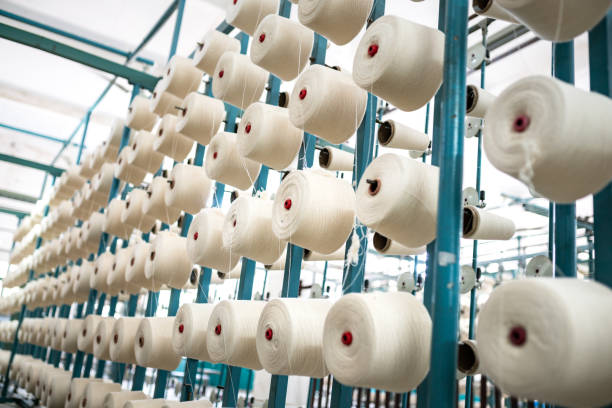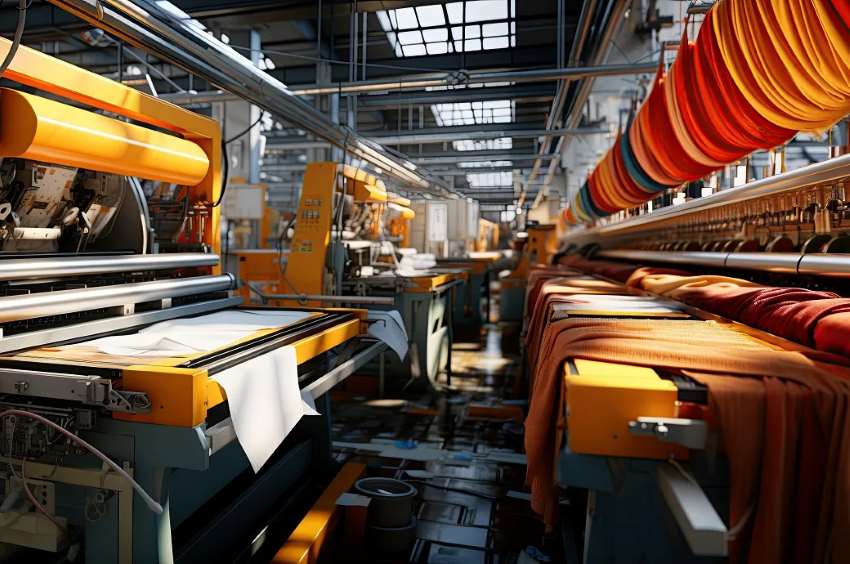
India's textile and apparel industry has entered one of its strongest revival phases after several difficult years marked by pandemic disruptions, higher freight costs, weak consumer demand in Western markets and persistent inflation. Fresh trade agreements, improving global demand and renewed domestic investment have significantly improved industry sentiment, prompting brokerages to forecast a sharp recovery in revenues and profitability over the next few years.
Yet the industry's biggest milestone remains far more ambitious than its immediate recovery. The government has set a target of building a $350 billion textile and apparel ecosystem by 2030, nearly doubling the sector's current size. While recent policy reforms have strengthened the industry's long-term prospects, the arithmetic behind this target suggests that achieving it within the proposed timeline remains highly challenging.
The growth equation
As per Ministry of Textiles and industry data, India's textile sector is currently valued at roughly $190 billion. Reaching $350 billion requires simultaneous expansion of both domestic consumption and exports.
|
Segment |
Current size (Est. 2025-26) |
2030 Target |
Required CAGR |
Drivers |
|
Domestic Market |
$152 bn |
$250 bn |
10.5% |
E-commerce, premiumisation, technical textiles |
|
Exports |
$38 bn |
$100 bn |
21.4% |
FTAs, tariff advantages, China+1 sourcing |
|
Total Industry |
$190 bn |
$350 bn |
16.5% |
Combined domestic and export expansion |
The domestic market appears to be the more achievable component. Rising incomes, urban consumption and digital commerce continue to support demand. Online fashion retail has crossed $14.8 billion, accounting for nearly 22 per cent of apparel sales, while household spending on home furnishings has steadily increased. Technical textiles have also emerged as a major growth engine, expanding rapidly under the National Technical Textiles Mission into sectors such as healthcare, automotive and industrial applications. Exports, however, represent the far steeper challenge. Annual shipments currently stand at around $38 billion, meaning exports must almost triple within five years to achieve the government's objective.
Trade deals change the scenario
Several structural developments have substantially strengthened India's export competitiveness. The implementation of the India-UK Comprehensive Economic and Trade Agreement (CETA) and the conclusion of the India-EU trade negotiations remove tariff disadvantages that had long favoured competitors such as Bangladesh. At the same time, changes in US tariff structures have narrowed India's duty gap while increasing costs for rival sourcing destinations including Bangladesh and Vietnam.
Global sourcing strategies have also shifted. Restrictions on cotton originating from China's Xinjiang region, combined with political instability in Bangladesh and Pakistan, have accelerated the China Plus One sourcing strategy among international retailers. Large Indian manufacturers are positioned as reliable alternatives for global apparel brands seeking diversified supply chains. These developments have triggered fresh capacity expansion across leading exporters and revived investment sentiment throughout the industry.
Years of structural reform
The current recovery did not emerge overnight. It reflects nearly a decade of policy interventions designed to modernise India's textile value chain. The post-pandemic years initially saw demand rebound sharply before being undermined by supply chain disruptions, record freight costs and volatile cotton prices.
From 2023 onwards, the government's Production Linked Incentive (PLI) scheme for man-made fibres and technical textiles, along with the rollout of seven PM MITRA mega textile parks, began attracting significant private investment into integrated manufacturing facilities. By 2025, global retail inventories had largely normalised, while trade agreements with EFTA countries and raw cotton duty adjustments helped stabilise the domestic industry. The momentum accelerated further in 2026 as multiple trade agreements came into force and export orders broadened across global markets.
Persistent structural challenges
Despite improving fundamentals, several long-standing weaknesses continue to constrain India's global competitiveness. The first is raw material costs. Domestic polyester staple fibre prices remain substantially higher than competing markets such as China and Vietnam, while viscose staple fibre also carries a notable premium. Industry participants argue that Quality Control Orders, although designed to improve product standards, have also restricted access to specialised imported fibres required for high-value apparel manufacturing.
The second challenge is India's continued dependence on cotton. Global apparel demand has steadily shifted towards synthetic and performance fabrics, which now account for nearly two-thirds of worldwide fibre consumption. India's exports, however, remain heavily concentrated in cotton products, while man-made fibre exports continue to represent a relatively small share. Transitioning existing spinning and processing capacity towards synthetic textiles requires significant capital investment that many smaller manufacturers cannot afford.
Manufacturing fragmentation represents another major obstacle. Most Indian garment factories operate with only a few hundred sewing machines, whereas facilities in Vietnam and Bangladesh often run several thousand. As international retailers increasingly consolidate their supplier networks, fragmented production limits India's ability to secure very large sourcing contracts.
India's largest textile companies are responding through consolidation and vertical integration. Ready-made garment exporters such as Gokaldas Exports and Pearl Global have adopted multi-country manufacturing strategies, allowing them to diversify production while maintaining supply reliability for global retailers.
Meanwhile, integrated manufacturers such as KPR Mill and Welspun Living control multiple stages of production from spinning and weaving to garment manufacturing and finished home textiles. This integrated model reduces logistics costs, improves operational efficiency and strengthens margins despite fluctuations in raw material prices.
Sustainability has also become a competitive advantage. Investments in traceable cotton, recycled polyester and environmentally compliant manufacturing processes are helping Indian exporters align with increasingly stringent sourcing standards across Europe and North America.
A strong foundation, but a longer timeline
India's textile industry today is structurally stronger than it has been in decades. PM MITRA parks promise integrated manufacturing ecosystems, new trade agreements provide valuable tariff advantages, and a relatively weaker rupee continues to support export competitiveness.
However, reaching $350 billion by 2030 requires sustained annual growth exceeding 16 per cent across the entire industry an exceptionally demanding target for a sector still addressing structural issues in raw materials, synthetic fibre production and manufacturing scale. The industry's direction is clearly positive, supported by favourable global supply chain shifts and substantial policy backing. The more realistic expectation, however, is that India may achieve the $350 billion milestone closer to 2033-35, once these structural bottlenecks are progressively addressed.
Rather than a cyclical recovery, India's textile industry is undergoing a fundamental transformation. If current reforms continue and manufacturing competitiveness improves, the country will be well positioned to emerge as one of the world's most significant integrated textile and apparel hubs over the coming decade.