

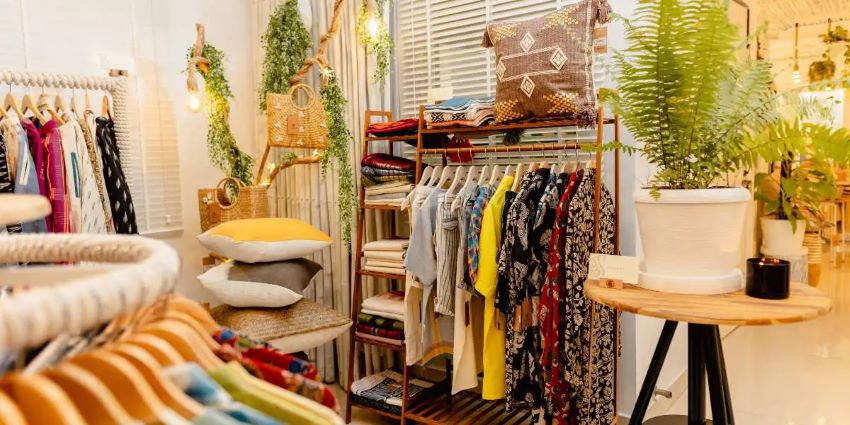
For years, the world's largest apparel companies built their businesses around men's denim, workwear and outdoor clothing. That strategy is now chagning. As global fashion growth moderates and consumers become more selective with discretionary spending, heritage brands are redirecting investments towards women's apparel, a segment offering higher spending potential, stronger product diversification and better long-term profitability.
Companies like Levi Strauss & Co., VF Corporation and Columbia Sportswear are redesigning merchandise, store layouts and marketing strategies to capture a larger share of women consumers, who now are the industry's most attractive growth opportunity.
Bigger market, bigger opportunity
The financial logic is compelling. Industry estimates suggest the US women's apparel market is around 70 per cent bigger than the men's market, while female shoppers spend between 1.7 and two times more annually on clothing than their male counterparts. At a time when the global fashion industry continues to experience only modest growth, companies are prioritising categories capable of delivering organic revenue growth without altering brand identity. According to McKinsey's State of Fashion 2026 report, brands are entering the women's lifestyle and technical apparel category to improve margins and diversify revenue streams amid value-conscious consumer behaviour.
|
Market segment |
Annual spend multiplier |
Core growth velocity (Q1 2026) |
Primary product catalyst |
|
Women's Apparel |
1.7x to 2.0x vs. Men |
+13.0% (Category Leader) |
Elevated Silhouettes & Non-Denim Tops |
|
Men's Apparel |
Baseline |
+7.0% (Category Leader) |
Standard Denim & Core Utility |
The data illustrates why women's apparel has become central to long-term growth strategies rather than a complementary business segment.
Levi's changes the blueprint
Levi Strauss has emerged as one of the strongest examples of this transformation. Under Chief Executive Michelle Gass, the company's ‘Win With Her’ initiative has shifted women's apparel from a secondary business into one of its principal growth engines. Women's products now contribute 38 per cent of Levi's total revenue, compared to roughly one-third in 2022. The company ultimately aims to achieve an equal revenue split between men's and women's businesses. The strategy is already producing measurable results. During the first quarter of fiscal 2026, Levi's women's business grew 13 per cent, significantly outperforming the men's division, which saw 7 per cent growth.
Growth has come from broadening the assortment beyond denim into tops, dresses and lifestyle collections while redesigning stores around complete outfit merchandising. By placing women's collections prominently at store entrances and encouraging head-to-toe purchases, Levi's has increased average transaction values. Marketing has reinforced the commercial push. Collaborations with global cultural icons such as Beyoncé have strengthened the brand's appeal among younger female consumers while supporting premium positioning. Investors have rewarded the strategy, with Levi's shares rising 66 per cent since early 2024.
Outdoor brands follow suit
VF Corp is pursuing a similar strategy across its portfolio of brands, including The North Face, Timberland and Vans. Chief Executive Bracken Darrell views female consumers as important not only because of their own purchasing power but also because they influence household buying decisions and broader fashion trends. The company's largest opportunity lies within The North Face, which generated 42 per cent of VF's $9.6 billion fiscal 2026 revenue. Management believes the outdoor brand can eventually double annual sales from $4 billion to $8 billion, with women's products expected to contribute more than $2 billion of that expansion.
To support this ambition, The North Face is combining technical performance with fashion-led design, extending premium collections such as the Advanced Mountain Kit into women's assortments while collaborating with lifestyle brands including Skims. Across the wider portfolio, Timberland has introduced more fashion-oriented platform footwear, while Vans is experimenting with pearlised finishes and shoe accessories aimed at younger consumers influenced by social media trends.
Activewear extends the runway
Columbia Sportswear is applying a similar strategy within the outdoor apparel market. The global women's activewear market is expected to reach $140.62 billion in 2026, supported by changing consumer habits where nearly half of female shoppers now wear activewear for everyday activities rather than exclusively for sport. Recognising this behavioural shift, Columbia is repositioning itself beyond traditional hiking and fishing apparel towards fashion-oriented outerwear.
The company's Amaze Puff Jacket became a commercial success by combining functional performance with contemporary styling, attracting new customers and generating strong digital engagement. Encouraged by demand, Columbia plans to increase the Amaze franchise into products designed for multiple seasons. The diversification is particularly important as the company forecasts modest revenue growth of 1-3 per cent this fiscal year following a 3 per cent decline previously. Lifestyle-focused women's collections are expected to support both revenue recovery and margin expansion.
A long-term retail shift
The transition underway extends well beyond launching new product lines. It reflects a broader reallocation of capital across design, merchandising, marketing and retail operations. Women's apparel offers brands more frequent purchase cycles, greater opportunities for seasonal innovation and higher average spending than many traditional menswear categories. As a result, companies are restructuring retail spaces, expanding lifestyle assortments and investing more heavily in female-focused marketing campaigns.
For global apparel companies facing slower growth and evolving consumer preferences, women's fashion is now becoming the primary platform for sustainable expansion. The shift signals not only changing consumer demand but also a redefinition of how legacy brands plan to generate revenue, improve margins and remain culturally relevant in an increasingly competitive fashion marketplace.











