FW
India safeguards textile margins with export incentives
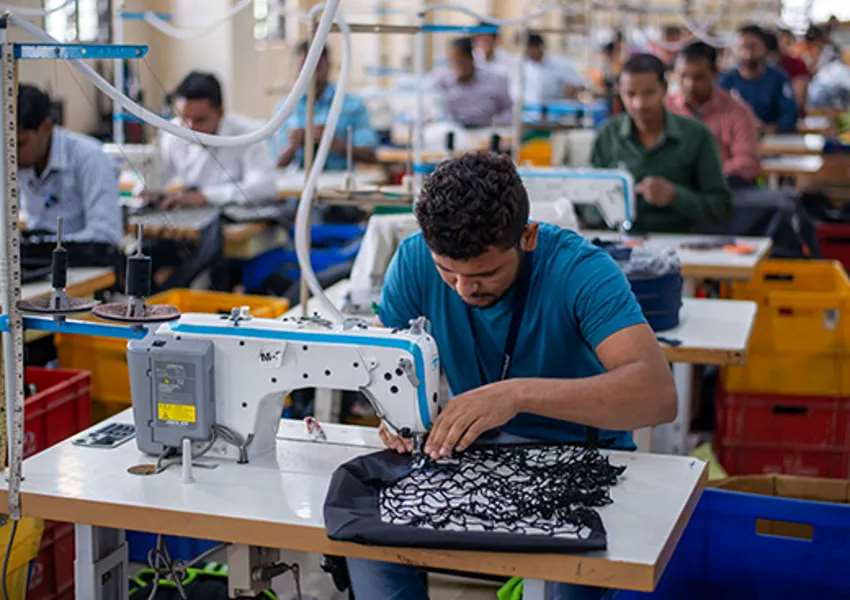
The Ministry of Textiles has officially prolonged the Rebate of State and Central Taxes and Levies scheme through September 30, 2026, ensuring uninterrupted fiscal support for domestic apparel and made-ups exporters. Operating on the principle of zero-rating exports, the mechanism reimburses hidden tax burdens that are not otherwise neutralized, maintaining pricing parity for Indian manufacturers within western retail markets.
Simultaneously, the administration has extended the parallel Remission of Duties and Taxes on Exported Products framework to cover non-apparel categories across the broader textile value chain. Providing long-term regulatory visibility allows small and medium manufacturing enterprises to secure international orders with absolute confidence in their cost structures, notes Rajesh Mehta, a New Delhi-based senior export consultant specializing in trade policy.
Mitigating raw material deficits through duty relief
Complementing these fiscal rebates, targeted customs exemptions on imported raw cotton have eliminated a critical cost barrier for domestic spinning mills managing domestic supply deficits.
With domestic cotton production registering at roughly 31.1 million bales against consumption demand of 31.8 million bales, the temporary removal of basic customs duties has effectively neutralized a 11 per cent tariff burden on necessary raw material imports. Industry stakeholders indicate that these synchronized policy interventions arrive at an opportune moment to protect operating margins as international buyers demand aggressive pricing flexibility. By combining short-term tax remissions with long-term capital investments driven by the Production-Linked Incentive framework, the Indian textile sector aims to accelerate export momentum following a period of moderated growth.
Primary pillar of national economy
India's textile and apparel sector serves as a primary pillar of the national manufacturing economy, driving extensive employment across labor-intensive processing and garmenting clusters. The industry encompasses comprehensive value-chain operations ranging from cotton cultivation and yarn spinning to advanced technical textiles and finished retail apparel exports.
The Lycra Company strengthens India textile reach through Radcco partnership
The Lycra Company has appointed Radcco as its authorized distributor in India, strengthening its supply chain for performance fibers as domestic demand for value-added textiles gathers momentum. The partnership is expected to improve access to Lycra fiber technologies for spinning mills, fabric manufacturers and apparel brands, particularly across the activewear, intimate apparel, denim and athleisure segments, where stretch and comfort continue to influence sourcing decisions.
India's technical textile and performance apparel markets are witnessing sustained investment, supported by rising exports, increasing consumer preference for functional clothing and capacity expansion among textile manufacturers. The company’s collaboration with Radcco enhances service capabilities and enables quicker market access for customers seeking innovative fibre solutions, a spokesperson for The Lycra Company said. Radcco added, its established industry network will help accelerate the adoption of premium stretch technologies across India's textile value chain.
Performance textiles gain commercial importance
Industry estimates suggest, India's technical textiles market is expected to maintain healthy growth over the coming years, aided by government incentives, manufacturing modernisation and greater demand for functional fabrics. Textile experts believe premium fibre technologies are becoming increasingly important as apparel exporters compete on quality, durability and sustainability rather than price alone.
A notable example is the rapid expansion of India's activewear and performance apparel sector, where brands are introducing fabrics with moisture management, stretch recovery and long-lasting comfort to meet evolving domestic and international consumer expectations. This trend is encouraging mills to invest in advanced yarns and fabric engineering to secure higher-value export opportunities.
Expanding fiber innovation in India
The Lycra Company develops advanced fiber and technology solutions for apparel, hosiery, denim, activewear and intimate wear markets worldwide. The company has built a strong presence through innovation-led textile partnerships since introducing Lycra fiber decades ago.
With India emerging as a major textile manufacturing hub, the company continues expanding its commercial network to support long-term growth and strengthen engagement with mills, brands and garment manufacturers.
Sri Lanka to protect apparel competitiveness with US tariff reduction
Sri Lanka has successfully secured a competitive 10 per cent tariff rate for its exports to the United States following intensive bilateral negotiations, averting a steep economic disadvantage for its core manufacturing sector. The Joint Apparel Association Forum commended the administration of Anura Kumara Dissanayake, President and diplomatic missions for driving the diplomatic push that aligned the nation with regional textile competitors like India, Pakistan, and Bangladesh. Industry leaders noted that maintaining parity in trade terms is vital to prevent order migration to rival sourcing destinations in a fiercely contested global marketplace.
Preserving export growth and mitigating market pressures
With the United States representing the primary destination for the island nation's garment shipments, avoiding higher trade levies safeguards billions of dollars in annual export revenue. Treasury and trade delegations emphasized that the lowered barrier preserves employment stability across local manufacturing facilities. However, stakeholders stressed that sustained compliance with ethical labor standards and continuous productivity enhancements remain essential to capitalize on this diplomatic breakthrough and secure long-term market share.
Leading export earner and largest formal employer
The Joint Apparel Association Forum serves as the apex body representing Sri Lanka's apparel and textile manufacturing sector. The industry acts as the country's leading export earner and largest formal employer, supplying major global fashion retailers while prioritizing sustainable production practices across international markets.
India leads global fashion web traffic boom as digital shopping habits evolve

India's digital garment trade has struck an operational turning point, as local shoppers logged 1.4 billion average monthly visits to fashion websites during the first quarter of 2026. Data from mobile and web intelligence tracker Sensor Tower reveals a 98.3 per cent year-on-year increase, cementing the country's status as the absolute leader in global digital fashion traffic growth. This growth outpaced every major global marketplace, leaving the world's next-largest market, the US, far behind in direct volume metrics. The numbers signal an adjustment in how the modern Indian consumer navigates retail channels, leaning heavily into browser-based journeys to finalise their apparel investments.
India sets the pace
India emerged as one of the world's fastest-growing fashion e-commerce markets, comfortably outperforming mature retail economies. While markets such as Germany and the US continued to post steady gains, India's near doubling of web traffic underlines the rapid expansion of its digital consumer base.
Table: Global Q1 2026 e-commerce growth
|
Region/ Market |
Fashion web traffic growth (YoY) |
Category growth driver |
Market maturity status |
|
Pakistan |
+109.3% |
Traditional & Fast Fashion |
Fast-Emerging |
|
India |
+98.3% |
Value Apparel & Cosmetics |
Leading Growth Engine |
|
Türkiye |
+57.8% |
Local Apparel Manufacturing |
Emerging |
|
Brazil |
+51.0% |
Fast-Fashion Cross-Border |
Emerging |
|
Germany |
+18.2% |
Premium Footwear & Sportswear |
Mature |
|
United States |
+14.7% |
Premium Labels & Basics |
Mature |
India's performance comes as global fashion website visits climbed from 5.25 billion in early 2024 to 9.2 billion during the first quarter of 2026, accounting for 12.6 per cent of worldwide e-commerce activity.
Browsers gain ground
The data suggests the long-held app-first strategy is gradually giving way to browser-led discovery. Global unique web visitors increased 64.3 per cent over the period, while app downloads rose only 6.1 per cent and total time spent on shopping apps declined by 5.2 per cent. Consumers are increasingly beginning their shopping journeys through search engines, social media links and creator recommendations rather than downloading dedicated retail applications. This behaviour enables quicker price comparisons, broader product discovery and easier navigation across brands before making purchase decisions.
For retailers, rising customer acquisition costs through app ecosystems are making organic web traffic a more attractive and cost-efficient channel. As a result, brands are strengthening their browser experiences alongside their mobile applications to capture consumers earlier in the purchase journey.
Competition intensifies
India's two largest fashion marketplaces continue to pursue contrasting growth strategies. Walmart-backed Myntra reinforced its leadership by crossing 90 million monthly active app users in March 2026 while accounting for more than 45 per cent of marketplace transactions. Consumer panel data from Vumonic shows Myntra's repeat purchase rate improved to 51.79 per cent during the first quarter of 2026, reflecting growing customer loyalty.
Reliance Retail-owned AJIO, meanwhile, prioritised profits over market share. Although its marketplace share eased to 27.62 per cent, the platform increased its average order value by 61 per cent year-on-year, with average baskets rising from around Rs 2,000 to Rs 3,200. Promotional campaigns such as the Big Bold Sale and Best Brands Sale helped attract higher-value shoppers, while holiday promotions generated a 50 per cent increase in unique web visitors.
Globally, fast-fashion retailer Shein continued to dominate cross-border fashion traffic with website visitors growing 70 per cent year-on-year, while platforms including Nykaa Fashion and Nike also recorded strong gains through their web channels.
Omnichannel becomes essential
The rapid growth in digital demand is reshaping fulfilment strategies across India's apparel sector. Retailers are using omnichannel distribution models, with nearly 50.8 per cent of apparel transactions now fulfilled through integrated store and warehouse networks. Instead of shipping every order from central warehouses, retailers are dispatching products directly from nearby physical stores to improve delivery speed and inventory utilisation.
Consumer shopping patterns are evolving as well. Technology platform Fynd reports that browsing activity peaks around 10 p.m., making late evenings the highest-converting period for fashion purchases. Mondays have also overtaken weekends as the busiest day for completed transactions, highlighting changing lifestyles among urban professionals.
Equally significant is the shift towards content-led commerce. Social platforms, creator networks and affiliate marketing channels are increasingly directing shoppers to product pages, reducing dependence on conventional search-based discovery.
Beyond the metros
Nykaa's performance illustrates how retailers are adapting to India's next phase of digital growth. The company reported FY2026 revenue exceeding ₹100 billion, while net profit rose 183 per cent year-on-year to Rs 2.04 billion. Much of this momentum came from creator-driven traffic through platforms such as Wishlink and Instagram, demonstrating the growing importance of social commerce in customer acquisition. The company also strengthened direct consumer engagement by reducing outbound traffic to Amazon, suggesting greater customer confidence in purchasing directly through Nykaa's own platform.
Perhaps the most notable strategic shift was geographic. Nykaa reduced advertising intensity across major metropolitan cities while increasing its marketing presence in Tier-II, III markets, where ad impression share rose from 57.2-61.9 per cent. The move reflects the growing spending power of consumers outside India's largest urban centres.
The next growth engine
India's digital retail momentum extends beyond fashion. General marketplace websites recorded 21.1 per cent growth in traffic, while beauty and cosmetics platforms delivered an industry-leading 116 per cent increase in web visits during the year. Across all retail categories, Indian consumers generated approximately 58 billion website visits over the 12 months ending in the first quarter of 2026, up 28 per cent year-on-year.
As digital discovery shifts toward browsers, creators and regional consumers, India's fashion retailers are entering a new phase of competition where web experience, omnichannel execution and content-driven engagement are becoming as important as assortment and pricing. For brands looking to capture the country's next wave of online shoppers, the browser has become the new storefront.
Global apparel trade turns direct as brands bypass traditional distribution networks
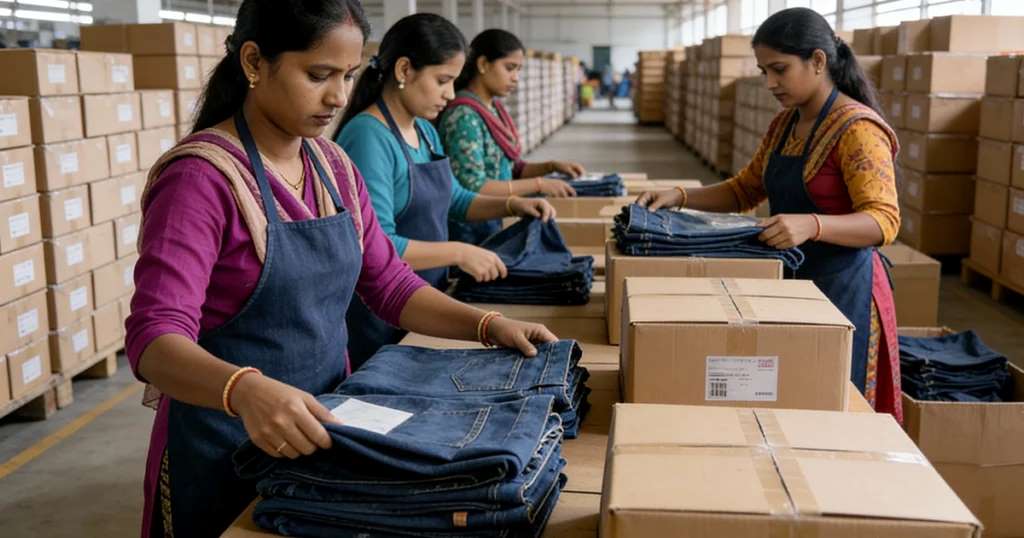
Geopolitical uncertainty, changing tariff regimes and volatile freight costs are forcing manufacturers to rethink how garments reach global consumers. Instead of relying on traditional wholesale distribution networks, an increasing number of apparel exporters are shipping products directly to overseas customers through cross-border direct-to-consumer (D2C) channels.
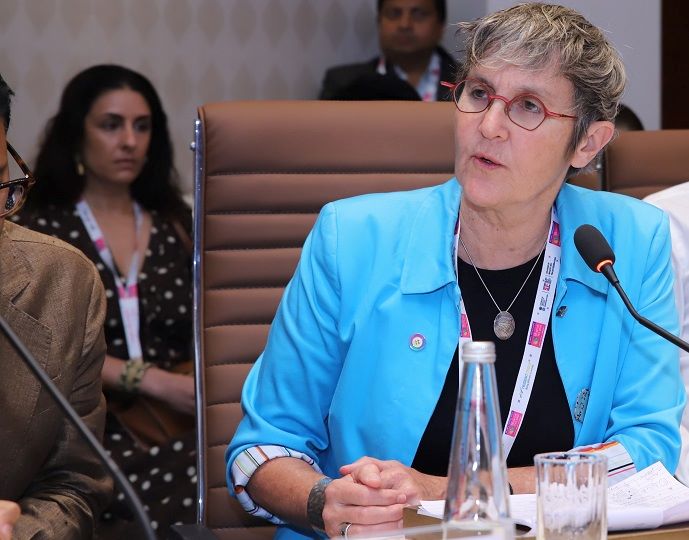
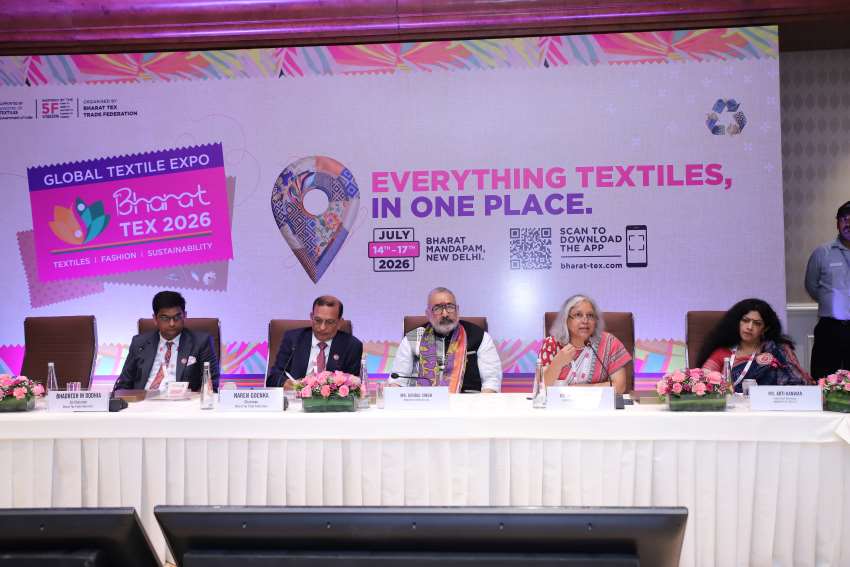
The shift emerged as a key theme at Bharat Tex 2026 in New Delhi, where policymakers, manufacturers and global industry leaders examined how macroeconomic pressures are reshaping global textile trade. While worldwide fibre consumption continues to rise, driven by population growth and affordable clothing, apparel trade has slowed as consumers remain cautious about discretionary spending.
Matthijs Crietee, Secretary General of the International Apparel Federation (IAF), observed that geopolitical developments are creating uncertainty across global markets, encouraging brands to increase direct-to-consumer shipments. According to him, although global demand for apparel continues to grow, consumer hesitation during uncertain economic conditions has weakened conventional international apparel trade.
Distribution costs is the competitive battleground
Stakeholders argue that manufacturing efficiency alone is no longer sufficient to remain competitive. The largest expenses now lie beyond factory gates, in marketing, inventory management, warehousing and retail distribution.
Crietee noted that luxury apparel has been particularly affected by restrained consumer spending, while the broader apparel industry is searching for new cost efficiencies. He emphasised that manufacturers and retailers must collaborate more closely to create leaner supply chains capable of reducing selling costs rather than simply lowering production expenses.
Free Trade Agreements (FTAs) continue to offer valuable duty-free market access, but experts point out preferential tariffs cannot substitute for operational excellence. Exporters must simultaneously strengthen product development, customer acquisition and supply chain capabilities if they want to expand globally.
This changing economics is also altering the physical movement of garments. Rather than shipping bulk consignments through importers and retailers, manufacturers increasingly dispatch individual orders through international express logistics directly to consumers. The result is shorter supply chains, lower intermediary costs and greater control over customer relationships.
|
Traditional export model |
Cross-border d2c model |
|
Factory → Port → Distributor → Retailer → Consumer |
Factory → Air Express Hub → International Consumer |
Domestic market supports global ambitions
India enters this phase with an important advantage, a rapidly growing domestic apparel market. According to Crietee, India's apparel consumption is growing at nearly 5 per cent annually, while domestic direct-to-consumer commerce is also increasing. He described the Indian textile sector as exceptionally diverse and dynamic after interacting with delegations during Bharat Tex 2026, expressing confidence in the industry's long-term growth potential.
The exhibition itself reflected India's growing global importance. Bharat Tex 2026 attracted nearly 95,000 business visitors, generated more than $2.8 billion worth of trade enquiries and secured textile investment commitments of approximately Rs 43 billion (around $1.7 billion).
Beyond trade discussions, exhibitors showcased technologies designed specifically for digital commerce. Gokaldas Exports partnered PointAI to introduce virtual trial standees powered by simulation physics that allow shoppers to visualise garment fit and fabric drape using digital twins. Such technologies aim to reduce product returns, a major operational challenge for cross-border online apparel sales.
Value addition India's biggest export opportunity
Despite India's manufacturing scale, analysts believe significant export potential remains untapped because substantial share of fabrics are exported before being converted into finished garments. India's domestic apparel market continues to grow at roughly 5 per cent annually, while the country accounts for only around 3 per cent of global apparel exports compared to Bangladesh's 9.5 per cent and Vietnam's 7.3 per cent. At the same time, India enjoys one of the world's highest domestic value addition rates in textile exports at 83.2 per cent.
Table: Performance shift, cost to capability
|
Indicator |
Industry value |
|
India Domestic Apparel Growth |
5% Annually |
|
Global Apparel Export Share (India) |
3% (vs. Bangladesh 9.5%, Vietnam 7.3%) |
|
Domestic Value Addition |
83.2% (Highest globally in textile exports) |
|
Export Concentration |
52% of exports come from just 134 product categories |
|
Unrealized Value Gap |
35-45% of fabric exported raw without garment conversion |
However, export concentration remains high, with nearly 52 per cent of textile exports originating from just 134 product categories. Reports by Vector Consulting Group estimate that exporting unfinished fabrics instead of value-added garments results in a missed export opportunity worth between $3 billion and $7 billion annually. Industry bodies therefore advocate moving beyond volume-led manufacturing towards capabilities centred on digital traceability, sustainability, circular production and integrated cross-border e-commerce.
Building brands instead of remaining anonymous suppliers
The evolution of global e-commerce is also changing how exporters compete. Instead of operating solely as contract manufacturers, companies are increasingly being encouraged to build internationally recognised consumer brands. Speaking during a session on international retail expansion, Srinidhi Kalvapudi, Country Head of Amazon Global Selling, argued that developing brand equity has become essential for long-term export growth. Amazon Global Selling now supports more than two lakh Indian sellers, including regional artisans and small businesses, enabling them to reach overseas consumers directly through cross-border digital marketplaces.
The operational challenge, however, remains execution. Shipping individual orders from manufacturing centres such as Bengaluru or Coimbatore to customers in Europe or North America demands sophisticated logistics coordination, customs compliance and rapid fulfilment capabilities.
Manufacturers capable of mastering these requirements stand to capture retail margins that traditionally accrued to distributors and intermediaries while simultaneously strengthening direct relationships with consumers.
As geopolitical uncertainty continues to reshape international trade, the future competitiveness of apparel exporters is likely to depend less on producing garments at the lowest possible cost and more on owning customer relationships through digitally enabled, cross-border direct-to-consumer business models. India, supported by a growing domestic market and expanding digital capabilities, appears well positioned to benefit from this structural shift.
Sanganer textile cluster to complete full effluent network coverage
Industrial wastewater management within Jaipur’s renowned Sanganer textile cluster is advancing toward complete regulatory integration. With 758 of the 892 member textile units already linked to the Common Effluent Treatment Plant network, state authorities have targeted August for full connectivity upon finalizing the critical pumping station at Brahmanon Ki Guwar. Executed by Sanganer Enviro Project Development alongside the Rajasthan State Pollution Control Board, the initiative enforces a mission-mode approach mandated during high-level state reviews to eliminate unmonitored discharge.
While a fraction of processing units previously relied on conventional tanker transportation to clear liquid waste, expanding industrial scale rendered temporary logistics inadequate for high-volume textile processing. Comprehensive pipeline integration ensures, local block-printing and dyeing operations comply with environmental frameworks without compromising production timelines, noted a senior state environment official. Overcoming prior infrastructural delays following tribunal clearances, the operationalization of the network secures long-term ecological compliance, boosting the export viability of Sanganer’s heritage handcrafted fabrics across international markets.
Fiber producers accelerate bio-based and high-tenacity innovations
Following recent global trade expositions, Indian fiber and spinning manufacturers are intensely accelerating investments in green chemistry, bio-based polymers, and high-tenacity synthetic yarns. Faced with fluctuating crude oil benchmarks and tightening raw material supplies, domestic spinning mills are steering production toward sustainable alternatives to protect operating margins while addressing strict international environmental regulations.
Industry leaders are scaling output of mechanically recycled cotton and advanced bio-synthetics to meet accelerating demand from global apparel brands. Embracing green chemistry and circular fiber configurations is no longer an optional differentiator; it is a baseline requirement for maintaining export competitiveness across European and North American markets, states Rajiv Mehta, Director - Synthetic Fibers, Northern Spinners Association.
This strategic shift coincides with rising feedstock values, prompting mills to diversify portfolios away from conventional cotton toward high-margin technical yarns. Consequently, domestic fiber producers are successfully securing long-term supply agreements with export-oriented garment manufacturers navigating evolving trade dynamics.
Sanathan Textiles nears commercial launch of expanded technical yarn capacity
Sanathan Textiles is in the final execution phase for its technical textiles yarn manufacturing expansion at its Silvassa facility, successfully elevating output capacity from 9,000 metric tons per annum to 18,000 metric tons per annum. With civil construction finalized and advanced machinery fully installed, commercial production is scheduled to commence in August 2026.
The strategic scale-up targets high-margin specialized sectors, addressing rising domestic and export demand across automotive, defense, infrastructure, healthcare, and protective safety wear. Expanding the company’s specialized technical yarn footprint enables it to capture higher value-addition segments while diversifying their product mix beyond conventional textiles, notes Jude D'souza, Company Secretary and Compliance Officer. This operational milestone complements the company's broader manufacturing roadmap, reinforcing structural growth as downstream industries increasingly demand high-tenacity, specialized filament yarns.
A prominent Indian yarn manufacturer, Sanathan Textiles operates across polyester filament, cotton, and technical textile segments. Serving over 7,000 customers globally across 27 countries, the company focuses on scaling specialized value-added output, backed by advanced automated facilities in Silvassa and Punjab, delivering steady financial and operational performance.
Indian polyester and poly-cotton yarns strengthen amid firm upstream costs
Indian polyester and polyester-cotton (PC) spun yarn markets have demonstrated notable resilience, posting steady gains driven by firming raw material costs and sustained domestic offtake. While global synthetic fiber indicators experienced minor fluctuations, domestic trading hubs across Bhiwandi, Surat, and Ahmedabad reported firmer mill offers for poly-blend configurations, supported by robust demand from powerloom weavers and regional knitting clusters.
The upward pricing momentum is closely tied to rising feedstock values and stronger cotton floor prices. Following recent upward adjustments by the Cotton Corporation of India (CCI) in weekly raw cotton auctions, spinning mills processing blended yarns have adjusted price realizations upward to protect operating margins. Market participants note, 32s and 40s poly-cotton blends have witnessed increased procurement interest from export-oriented garment manufacturers seeking cost-effective alternatives to 100 per cent natural fibers.
Demand across blended categories remains stable as downstream fabric manufacturers lock in forward contracts ahead of the upcoming festive season inventory cycle, states Rameshwar Agarwal, a veteran textile merchant in western India. Although fluctuating crude oil benchmarks introduce cost volatility for upstream polyester staples, balanced inventory levels across major spinning mills have prevented speculative dips, ensuring a stable pricing environment for the domestic weaving sector.
CMAI unveils blueprint for global apparel dominance at Bharat Tex 2026
The Clothing Manufacturers Association of India (CMAI) concluded its high-profile engagement at Bharat Tex 2026 by establishing a definitive agenda for the country’s textile and apparel sector. Moving past traditional volume-based metrics, the association facilitated a major strategic rollout alongside the Global Alliance for Textile Sustainability (GATS), focusing heavily on building robust infrastructure to meet stringent international compliance regulations. Industry leaders emphasized, future export expansion relies on deep technological integration and absolute supply chain transparency rather than basic manufacturing scale.
Navigating evolving regulatory pressures
International sourcing demands have shifted dramatically due to stringent environmental policies enforced across Western markets, including the European Union's Ecodesign for Sustainable Products Regulation and mandatory Digital Product Passports. To address these challenges directly, CMAI curated specialized zones like the Eco-Stitch Sustainability & Circularity Hub, demonstrating how domestic garment makers can successfully convert waste management and circular economies into commercial advantages. Global buyers are evaluating sourcing destinations through the strict lens of transparency and regulatory preparedness, notes Santosh Katariya, President, CMAI.
Unlocking value through strategic blueprints
Underscoring this operational evolution, the apex body launched the India Textiles & Apparel CXO Blueprint 2030, projecting that an optimized circular ecosystem could unlock approximately $9.4 billion in economic value. The framework addresses critical sector hurdles, identifying artificial intelligence adoption, automated manufacturing, and comprehensive traceability as non-negotiable priorities. By coupling these technological upgrades with expanding bilateral trade agreements, Indian apparel enterprises are actively positioning themselves to capture a significantly larger share of the $250 billion domestic market and premium global retail segments.
CMAI at a glance
The Clothing Manufacturers Association of India operates as the premier representative body for the nation's domestic apparel sector, championing policy reforms and modern manufacturing standards. Representing thousands of member brands and manufacturers across core product categories like mainstream fashion, innerwear, and sleepwear, the organization directs its long-term growth plans toward elevating export capabilities and accelerating digital transformation. Historically recognized for unifying India's fragmented garment ecosystem, CMAI continues to drive robust financial performance and structural resilience across the supply chain.