Geopolitical uncertainty, changing tariff regimes and volatile freight costs are forcing manufacturers to rethink how garments reach global consumers. Instead of relying on traditional wholesale distribution networks, an increasing number of apparel exporters are shipping products directly to overseas customers through cross-border direct-to-consumer (D2C) channels.
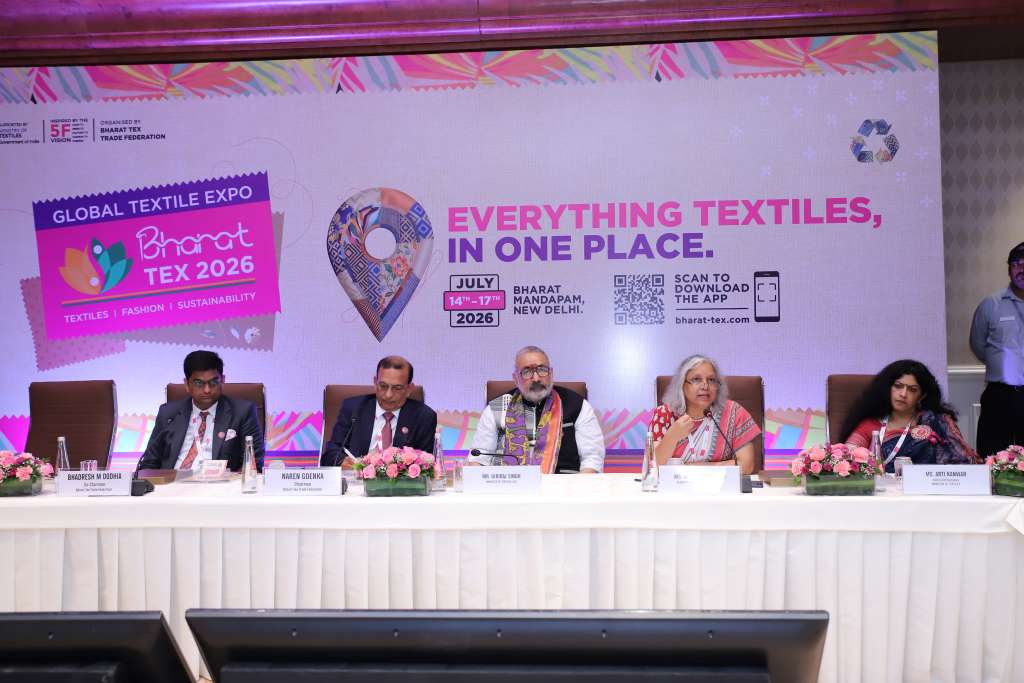
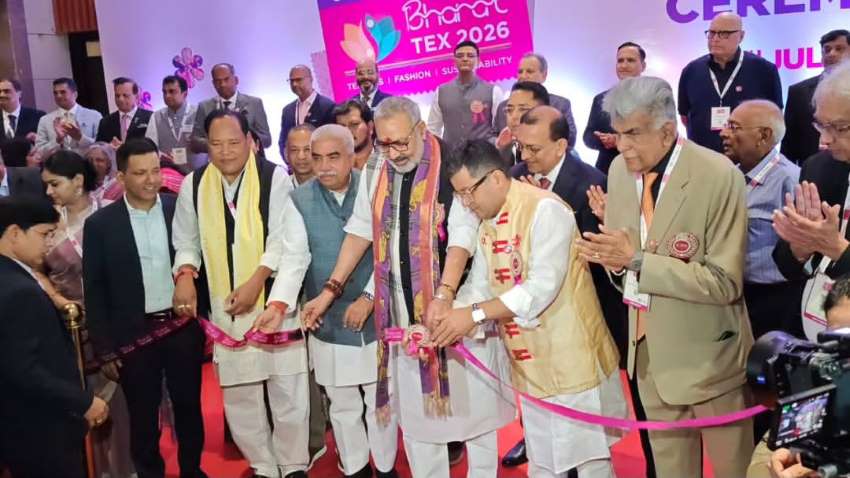
The shift emerged as a key theme at Bharat Tex 2026 in New Delhi, where policymakers, manufacturers and global industry leaders examined how macroeconomic pressures are reshaping global textile trade. While worldwide fibre consumption continues to rise, driven by population growth and affordable clothing, apparel trade has slowed as consumers remain cautious about discretionary spending.
Matthijs Crietee, Secretary General of the International Apparel Federation (IAF), observed that geopolitical developments are creating uncertainty across global markets, encouraging brands to increase direct-to-consumer shipments. According to him, although global demand for apparel continues to grow, consumer hesitation during uncertain economic conditions has weakened conventional international apparel trade.
Distribution costs is the competitive battleground
Stakeholders argue that manufacturing efficiency alone is no longer sufficient to remain competitive. The largest expenses now lie beyond factory gates, in marketing, inventory management, warehousing and retail distribution.
Crietee noted that luxury apparel has been particularly affected by restrained consumer spending, while the broader apparel industry is searching for new cost efficiencies. He emphasised that manufacturers and retailers must collaborate more closely to create leaner supply chains capable of reducing selling costs rather than simply lowering production expenses.
Free Trade Agreements (FTAs) continue to offer valuable duty-free market access, but experts point out preferential tariffs cannot substitute for operational excellence. Exporters must simultaneously strengthen product development, customer acquisition and supply chain capabilities if they want to expand globally.
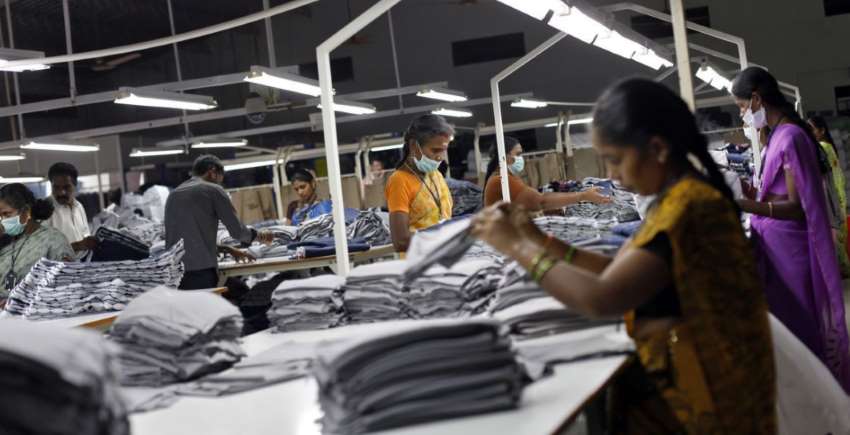
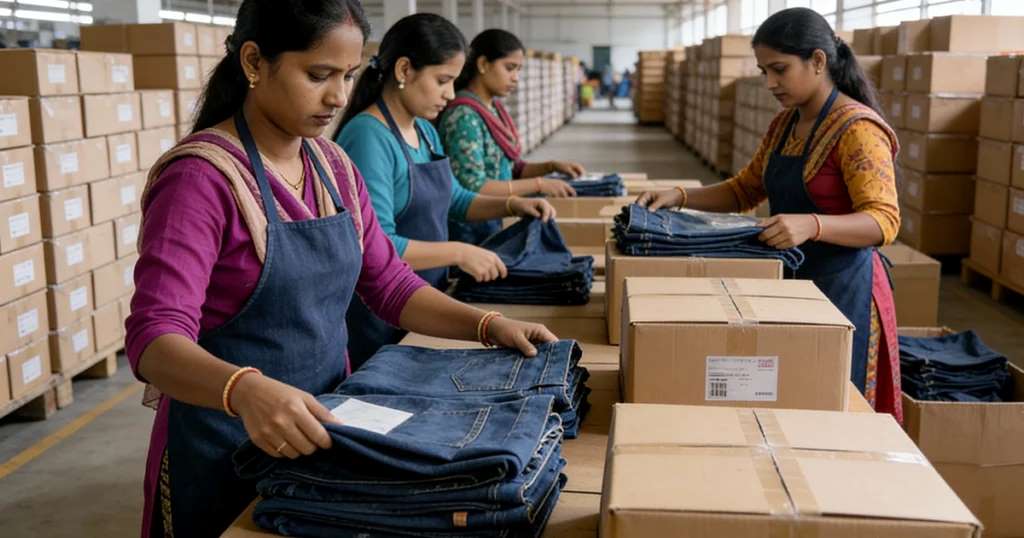
This changing economics is also altering the physical movement of garments. Rather than shipping bulk consignments through importers and retailers, manufacturers increasingly dispatch individual orders through international express logistics directly to consumers. The result is shorter supply chains, lower intermediary costs and greater control over customer relationships.
|
Traditional export model |
Cross-border d2c model |
|
Factory → Port → Distributor → Retailer → Consumer |
Factory → Air Express Hub → International Consumer |
Domestic market supports global ambitions
India enters this phase with an important advantage, a rapidly growing domestic apparel market. According to Crietee, India's apparel consumption is growing at nearly 5 per cent annually, while domestic direct-to-consumer commerce is also increasing. He described the Indian textile sector as exceptionally diverse and dynamic after interacting with delegations during Bharat Tex 2026, expressing confidence in the industry's long-term growth potential.
The exhibition itself reflected India's growing global importance. Bharat Tex 2026 attracted nearly 95,000 business visitors, generated more than $2.8 billion worth of trade enquiries and secured textile investment commitments of approximately Rs 43 billion (around $1.7 billion).
Beyond trade discussions, exhibitors showcased technologies designed specifically for digital commerce. Gokaldas Exports partnered PointAI to introduce virtual trial standees powered by simulation physics that allow shoppers to visualise garment fit and fabric drape using digital twins. Such technologies aim to reduce product returns, a major operational challenge for cross-border online apparel sales.
Value addition India's biggest export opportunity
Despite India's manufacturing scale, analysts believe significant export potential remains untapped because substantial share of fabrics are exported before being converted into finished garments. India's domestic apparel market continues to grow at roughly 5 per cent annually, while the country accounts for only around 3 per cent of global apparel exports compared to Bangladesh's 9.5 per cent and Vietnam's 7.3 per cent. At the same time, India enjoys one of the world's highest domestic value addition rates in textile exports at 83.2 per cent.
Table: Performance shift, cost to capability
|
Indicator |
Industry value |
|
India Domestic Apparel Growth |
5% Annually |
|
Global Apparel Export Share (India) |
3% (vs. Bangladesh 9.5%, Vietnam 7.3%) |
|
Domestic Value Addition |
83.2% (Highest globally in textile exports) |
|
Export Concentration |
52% of exports come from just 134 product categories |
|
Unrealized Value Gap |
35-45% of fabric exported raw without garment conversion |
However, export concentration remains high, with nearly 52 per cent of textile exports originating from just 134 product categories. Reports by Vector Consulting Group estimate that exporting unfinished fabrics instead of value-added garments results in a missed export opportunity worth between $3 billion and $7 billion annually. Industry bodies therefore advocate moving beyond volume-led manufacturing towards capabilities centred on digital traceability, sustainability, circular production and integrated cross-border e-commerce.
Building brands instead of remaining anonymous suppliers
The evolution of global e-commerce is also changing how exporters compete. Instead of operating solely as contract manufacturers, companies are increasingly being encouraged to build internationally recognised consumer brands. Speaking during a session on international retail expansion, Srinidhi Kalvapudi, Country Head of Amazon Global Selling, argued that developing brand equity has become essential for long-term export growth. Amazon Global Selling now supports more than two lakh Indian sellers, including regional artisans and small businesses, enabling them to reach overseas consumers directly through cross-border digital marketplaces.
The operational challenge, however, remains execution. Shipping individual orders from manufacturing centres such as Bengaluru or Coimbatore to customers in Europe or North America demands sophisticated logistics coordination, customs compliance and rapid fulfilment capabilities.
Manufacturers capable of mastering these requirements stand to capture retail margins that traditionally accrued to distributors and intermediaries while simultaneously strengthening direct relationships with consumers.
As geopolitical uncertainty continues to reshape international trade, the future competitiveness of apparel exporters is likely to depend less on producing garments at the lowest possible cost and more on owning customer relationships through digitally enabled, cross-border direct-to-consumer business models. India, supported by a growing domestic market and expanding digital capabilities, appears well positioned to benefit from this structural shift.