The global textile industry is entering a decade where commercial economics, rather than fiber heritage, dictates sourcing decisions. The latest joint report by Organisation for Economic Co-operation and Development (OECD) and the UN Food and Agriculture Organization (FAO) highlights, polyester is expected to remain cotton's strongest competitor through 2035, supported by its lower cost base, expanding manufacturing capacity and broad industrial applications.
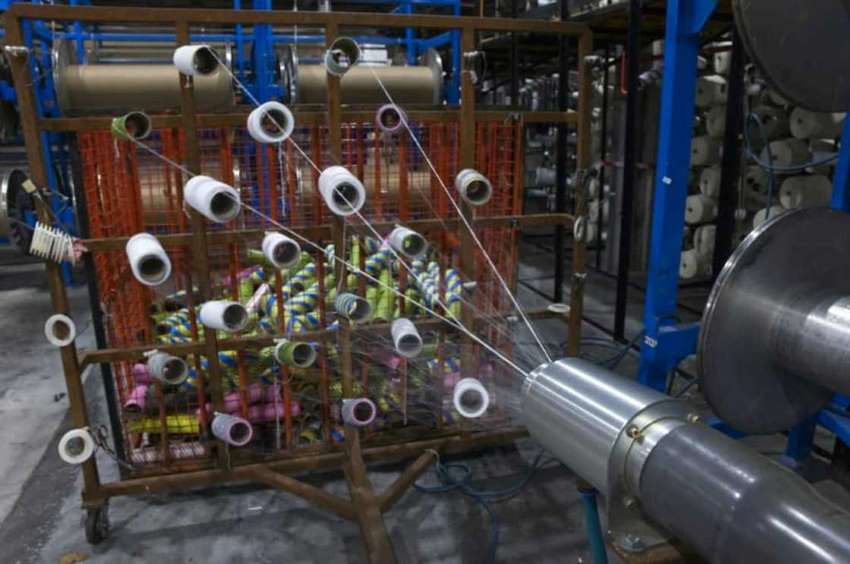
For apparel manufacturers operating under persistent margin pressure, fiber procurement is becoming a financial exercise. Polyester's cost advantage, combined with predictable chemical feedstocks and scalable production, is encouraging mills and brands to reduce their dependence on natural fibers. While cotton demand is projected to keep growing, its pace is unlikely to match the rapid increase of synthetic fiber consumption, particularly in mass-market fashion, sportswear and everyday apparel.
Price gap reshapes procurement
The growing cost differential between cotton and polyester has become one of the biggest drivers behind sourcing decisions. So far, cotton has traded at an average premium of around 77 per cent over polyester, with the gap periodically exceeding 100 per cent. Although petrochemical inputs such as Purified Terephthalic Acid (PTA) and Monoethylene Glycol (MEG) have seen temporary price volatility due to energy costs and shipping disruptions, synthetic fiber production has remained considerably more buoyant than agricultural supply chains.
As a result, mills continue increasing synthetic production, with polyester filament utilisation rates steadily rising beyond 60 per cent. Predictable raw material availability offers manufacturers greater production planning certainty than weather-dependent cotton crops. The long-term sourcing outlook show why synthetic fibers continue gaining ground.
Table: Fiber sourcing outlook
|
Market category |
Core target |
Sourcing impact |
|
Global Raw Cotton Growth |
1.2% CAGR |
Outpaced by synthetic filament adoption rates |
|
Total Production Target |
29.5 mn tonnes by 2034 |
Driven by yield gains over acreage expansion |
|
Global Cotton Trade Growth |
1.6% annual trade volume expansion |
Driven by raw shipments to low-cost Asian mills |
|
Export Consolidation Share |
66% (Two-thirds) global total |
Controlled strictly by Brazil and the United States |
|
Nominal Fiber Price Gap |
77% to 100%+ margin variance |
Favors synthetic procurement for volume retail lines |
The data suggests that even as cotton consumption grows gradually, polyester will continue strengthening its position across global sourcing strategies.
Climate adds pressure
Beyond pricing, climate variability is becoming another disadvantage for cotton. The OECD-FAO outlook projects modest downward pressure on real cotton prices over the coming decade despite mounting production risks. Prolonged drought conditions across the US cotton belt, erratic monsoons in India and broader climate-related disruptions are making cotton yields less predictable. These uncertainties are encouraging mills to diversify fiber compositions rather than rely solely on natural fibers.
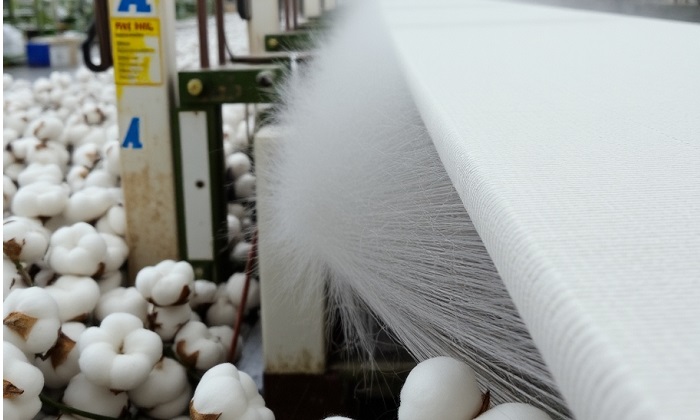
Polyester-cotton blends have consequently become a preferred solution for manufacturers seeking to balance durability, affordability and stable raw material availability. Such blends are being adopted across casualwear, denim and athleisure categories where consumers remain highly price sensitive.
Meanwhile, the concentration of global cotton exports is an additional supply risk. Brazil and the US are expected to account for nearly two-thirds of global raw cotton exports by 2035, increasing sourcing dependence on a relatively small group of exporters. Processing activity, however, will continue shifting toward Asia, with India, Bangladesh and Vietnam expected to strengthen their roles as major textile manufacturing hubs owing to competitive labour costs and expanding industrial capacity.
Sustainability raises polyester's value
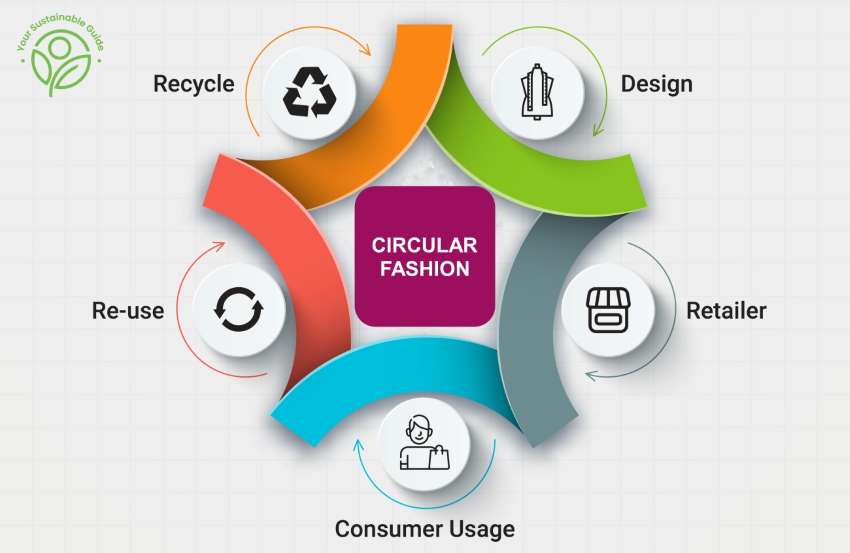
Polyester's commercial advantage is happening concurrently with a parallel sustainability shift. Many global fashion companies are replacing virgin polyester with recycled Polyester Staple Fiber (rPSF) to meet environmental commitments and prepare for stricter regulations governing plastics and carbon emissions. Unlike virgin polyester, however, recycled polyester commands a premium.
Limited feedstock availability, expensive collection systems and processing bottlenecks mean that high-quality rPSF produced from recycled PET bottles typically costs between 10 and 15 per cent more than virgin polyester. Despite the premium, many global apparel companies are absorbing the additional material costs. The investment is being viewed as strategic rather than discretionary, particularly as brands prepare for tightening sustainability regulations and rising consumer demand for lower-impact products across Europe and North America.
Blended the new standard
Recent sourcing decisions by a leading European fast-fashion retailer show the industry's broader change. Facing higher cotton prices during early 2026, some retailers revised specifications for several denim and knitwear collections, replacing 100 per cent combed cotton with a 60:40 poly-cotton blend incorporating mechanically recycled polyester.
The material substitution delivered measurable operational benefits within a single quarter. Yarn procurement costs declined by 14 per cent, while fabric tear strength improved by 22 per cent, reducing manufacturing defects and improving production efficiency. At the same time, partnerships with chemical recycling suppliers enabled the company to retain its sustainability positioning while protecting retail prices from agricultural supply volatility.
This reflects a broader sourcing strategy emerging across the global apparel industry, one that combines cost optimisation with environmental compliance.
Thus the OECD-FAO outlook indicates that polyester's leadership is no longer simply the result of lower prices. Instead, it reflects a transformation across global textile supply chains where procurement priorities revolve around predictable costs, supply reliability, manufacturing scalability and sustainability compliance.
Cotton is expected to remain an essential natural fiber, particularly for premium products and markets that value natural materials. However, growing climate uncertainty, concentrated export supply and persistent price premiums are likely to reinforce polyester's dominance in mainstream apparel production through 2035. For textile manufacturers and retailers alike, future competitiveness will depend less on choosing between natural and synthetic fibers than on optimising the balance between performance, affordability and environmental responsibility.