FW
Indian cotton associations threaten stir over reverse charge
Upcountry associations of all cotton growing states have threatened to hold a token protest on December 15 and go an indefinite strike from December 22 unless the problem of Reverse Charge Mechanism (RCM) is resolved in the coming GST Council meet to be held on December 21. The Cotton Association of India (CAI) convened a joint meeting of the Presidents and Secretaries of upcountry associations in Mumbai on the issue of RCM under GST and to work out appropriate strategies to resolve this issue. The CAI has around 70 ginners as members this meeting was convened to understand this RCM from the ginners’ perspective.
ICA, All Gujarat Cotton Ginners’ Association, Saurashtra Ginners’ Association, Andhra Pradesh Cotton Association and the Cotton Association of Orissa conveyed their support and assured them any decisions taken at this meeting will be acceptable to them. Ravinder Reddy, President, Telangana Cotton Millers & Traders Welfare Association noted the plight of the entire cotton sector across the country and the problem of pending refunds to exporters since July 2017 on account of GST were discussed. Reddy, highlighted the damage caused to the crop and heavy losses suffered by farmers due to pink bollworm and uncertain rains in Telangana.
Manjeet Singh Chawla, President, Madhyanchal Cotton Ginners & Traders Association shared his view that following RCM, huge funds of ginners were blocked and since cotton seed buyers and the buyers of cotton bales were not paying GST to the ginners, this has resulted in blockage of huge funds of the ginners. M. Chawla requested CAI to take up the matter relating to removal of RCM on kapas. He also decried the fact that RCM on cotton has strained relations between spinners and ginners.
Cambodian garment makers appeal for support post EU trade access threat
Cambodian garment manufacturers have appealed to international buyers not to reject the country’s exports amid fears its access to key EU trade preferences could be threatened with the main opposition party being dissolved last month. The US stopped election support for Cambodia, besides the EU threatened trade preferences after the main opposition Cambodia National Rescue Party was dissolved at the behest of the government of authoritarian Prime Minister Hun Sen on Nov. 16.
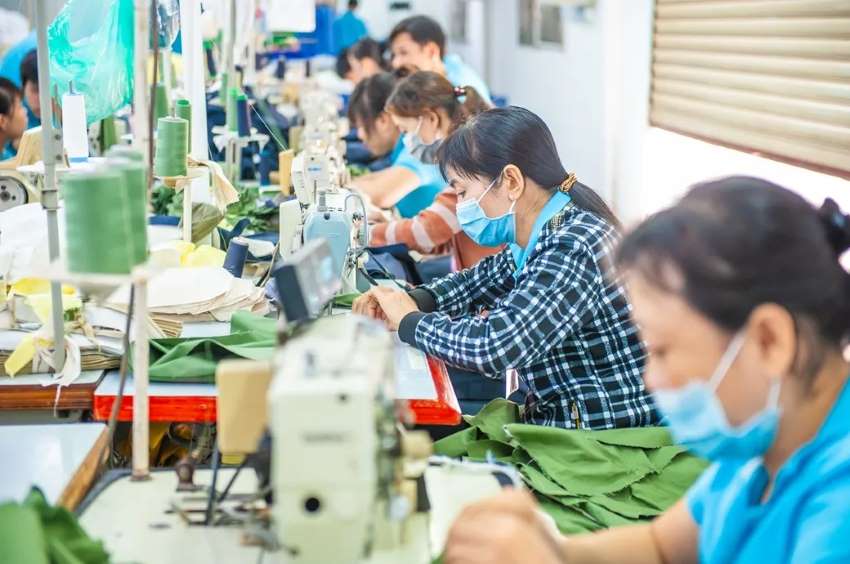
Garment and textile exports which generate $6 billion annually are the country’s largest export, largely due to years of growth. EU countries accounted for around 40 per cent of Cambodia’s exports in 2016 and the US accounted for 20 per cent, while China was third placed at around 6 per cent. Garment Manufacturers Association in Cambodia (GMAC), a representative of 600 factories that employ about 7,00,000 workers, appealed to foreign purchasers to continue supporting Cambodian factories.
GMAC says factory work had ‘lifted millions of people out of poverty’ in their country. Hun Sen, who has been pandering to garment workers in the run-up to the 2018 general election, has said workers would be the ones to suffer if the EU withdraws preferential trade terms.
China, a strong supporter of Hun Sen, has poured money into infrastructure and other investments in Cambodia that has emboldened Hun Sen to brush off criticism from Western donors, however, the EU and the US are key players in Cambodia’s exports and this fact alone gives leverage to call the shots. International brands have also come under greater scrutiny over their supply chains. Iñigo Sáenz Maestre, Press Officer of Sweden’s H&M group, one of the biggest buyers from Cambodia, has said they are concerned about the recent developments in the country.
Asia-Pacific leads in global textile yarn market: Report
The Asia-Pacific region is the leader in the international textile yarn market followed by North America with polyester and cotton being the widely used textile yarn products, notes a report, which sees changing consumption pattern, rising population, disposable income and the rise in demand for clothing and home furnishing products in the Asia-Pacific as the major growth factors.
Increasing investment from big brand manufacturers in the US and Canada is expected to propel growth of the North American market, however, the markets in Latin America and the Middle East are expanding exponentially following the developing apparel industry and high levels of product development, says a report by US-based Zion Market Research. Rapid urbanisation and shift in consumer preference towards affordable and comfortable clothing have enhanced the demand for high-value fabrics such as viscose, silk, and hemp.
Blended varieties of fibres are seeing extensive growth due largely to important features of artificial and natural yarn thus opening up new growth opportunities for the industry. Experts say instability in production of plant and animal source yarn and the strict regulation imposed on the trade of textile yarn products are hindrances.
Cotton crisis looming in Maharashtra with Pink Bollworm infestation
There is a major crisis in the cotton growing region of Maharashtra, and the government is blind to the looming disaster. Field after field in various districts of Vidarbha that planted cotton during the Rabi sowing season have seen their crop infested with the Pink Bollworm and farmers have no clue as to how to resolve the issue. They had recently opted for Bt Cotton after years of fierce resistance when they were finally persuaded and given to understand that this biotechnologically modified seed could resist all pests and diseases.
Last year, farmers in adjoining districts of Telangana noticed the Pink Bollworm had now become resistant to pesticides and the Bt Cotton plant was vulnerable to these pests. Yet, with the Central Institute of Cotton Research (CICR) headquartered in Nagpur, farmers were not given any warning against the likely spread of the Pink Bollworm to neighbouring Vidarbha district.
Cotton farmers have lost 80 to 90 per cent of their crop. Their yield this season is forecast to be around five to six per cent. CICR reports an innovative way to combat the moth is to set pheromone traps across their fields and catch enough of the male of the species to prevent further breeding, however, farmers who have used it reported little or no results.
Farmers are not so uninformed, they say the Union government was aware in August that parts of Andhra Pradesh, Gujarat, Karnataka and Maharashtra had been infested with the Pink Bollworm and ordered seed companies to compensate the affected farmers for their loss, however, it is in November- December that the moths really begin to breed in large numbers
Jeanologia presents sustainable collection with Argentina’s Santista
Jeanologia has combined laser, ozone and eflow, with which it is possible to reduce the consumption of water, energy and chemicals by 60-70 per cent .The company will present this, at Indigo Fest in Buenos Aires. It has developed a fashion collection in a sustainable way with fabrics from Santista Argentina,
Jeanologia applied l light PP, which replaces spraying of permanganate potassium and the light scrapper, which replaces sanding, thus avoiding manual practices that are harmful to the worker. In addition, with the eflow technology the use of pumice stone has been eliminated.
The environmental impact of the collection has been analyzed with the EIM (Environmental Impact Measurement), the company’s software that measures the consumption of water, energy and chemicals in the production process. In this way, all garments in the collection have an EIM score of low environmental impact, since they have managed to reduce water use by 70 per cent and chemicals by 60 per cent, thus contributing to the zero incidence in the environment.
Jeanologia’s intention has been to increase the production capabilities in Argentina, especially in the denim sector, providing advisory services and cutting-edge technology to improve efficiency and end finishes. The Spanish company has been involved in increasing sustainability in denim production since 1993, maintaining respect to workers' health and the environment as a guiding influence.
Mauritius-based CDL Knits/Tropic Knits strikes a new way in textile finishing
Mauritius-based Tropic Knits group’s local ally, CDL Knits resolved a major technology restraint with the help of Germany’s Bruckner textile technologies. Bruckner enabled them to replace an operating system comprising three finishing machines with a single machine without compromise on quality.
The Tropic Knit group gave its testimony on how it queried different companies with the technical problem till it approached Bruckner, which eventually hand-held them till the end in resolving the issue in an efficient and professional manner. The new Bruckner line for knitted fabric which will in future replace CDL’s three finishing machines is a special design: a relaxation dryer with pre-arranged stentering zone. A completely new machine concept has been developed which CDL bought for their production site in Mauritius.
Established 1984, Tropic Knits is a vertically integrated manufacturer of quality jersey-wear garments in the Indian Ocean, with factories in Mauritius and Madagascar. The group is with 3,000 employees one of the biggest producers of high-quality fine knit garments in the Indian Ocean. Well-known international brands from Europe, the United States and South Africa are among the company’s most important customers since many years.
Sri Lanka: EUs preferential access to boost exports
Sri Lankan apparel exports may receive a significant boost through a European Union (EU) decision to permit sourcing of fabric from Indonesia, Thailand and Malaysia as the industry targets $ 5 billion in earnings this year. Sri Lanka Apparel Exporters Association (SLAEA) chairman Felix Fernando, speaking at the 35th Annual General Meeting, said the industry was ‘grateful’ and ‘delighted’ with the restoration of GSP+. Fernando urged the gathering, to maximise the use of GSP+, SLAEA with JAAF requested the Department of Commerce to explore the possibilities of identifying the possibility of making a joint request to the EU between Sri Lanka and selected ASEAN countries to agree on cross regional accumulation of fabric.
From 2004 to 2011 apparel exports grew 50 per cent but over the last six years it has stagnated following the loss of GSP+, noted Fernando, however, in July, August and September 2017 exports have been robust and it is clear that GSP+ is having an effect. Overall exports are expected to surpass the $5 billion mark for the first time due to the boost given by preferential access to the European Union, he added. As the industry will have GSP+ for the entire 2018, an additional increase is expected. Fernando also called for assistance to link Sri Lanka’s apparel industry with the fashion and import industries in Germany to boost engagement and increase exports.
As per the proposals outlined in Budget 2018, the government has realised the limitations in the domestic market and looking at positioning Sri Lanka as an export-oriented hub at the centre of the Indian Ocean. He also hailed shipping liberalisation and said the SLAEA and JAAF publicly support Finance Minister Mangala Samaraweera’s stand. Amendments to the Shop and Office Act were also praised.
H&Ms roadmap on living wages fall by the wayside
On November 25th 2013, H&M released a ‘new roadmap’ designed to start implementing a fair living wage as a part of the company’s corporate social responsibility. The company’s plan is to encourage suppliers to pay employees a ‘fair living wage’ by 2018. This move would benefit around 8,50,000 garment workers. Four years down the line, from a pledge to ensure all workers in its supply chain were paid a ‘fair living wage’, H&Ms pledge is still on the anvil.
The release of the road map coincided with claims that as of 2014 the retailer would develop a pricing methodology to ensure it meets the actual cost of labour. As per the company’s manifesto for improvements to workers’ lives, the firm stated, “By doing this, we secure that we pay a price which enables our suppliers to pay their textile workers a fair living wage and reduce overtime.” However, research from the Clean Clothes Campaign reveal, average wages at H&M supplier factories in Bangladesh, Myanmar, Cambodia and India are marginally higher than national minimum wages. This has led to some claims that H&M is unlikely to fulfil its pledge to pay at least 80 per cent of its garment workers the so-called ‘fair living wage’ by 2018.
H&M certainly has the financial means to ‘walk the talk’ and has stated time and again they want to be a leader in this issue. H&M's net profit for 2016 was over $2 billion and based on calculations from the Clean Clothes Campaign, 1.9 per cent of the company’s net profit from 2016 would pay all its workers in Cambodia the additional $78 every month to receive the ‘fair living wage’.
“We have looked at the numbers and if H&M were to reallocate just one year of its annual advertising budget towards wages, they could pay their Cambodian workers a living wage for 6.5 years," said Ineke Zeldenrust of Clean Clothes Campaign.
Relooping Fashion proposes circular ecosystem for textiles
The Relooping Fashion Initiative has published a report which explains the principles of a circular economy in the textile industry. The report reveals ways to maintain the value of materials, while keeping its impact on the environment to a bare minimum. It covers repair and maintenance; re-use as a product; re-use as material and recycling related activities; and business models for post-consumer/user textiles along the entire value chain.
Relooping Fashion is of the view that different business models need to work together to ensure that a textile circular economy is effective. It further points out that new recycling technology is at the centre of this move to replace virgin materials like cotton. The ecosystem modelling sees a key role in a share system level to include retailers, suppliers, non-profit organisations and governmental departments.
Relooping Fashion said in a statement, “Collaboration is crucial, so that necessary investments can be made to scale up the actions towards a circular economy. Consumers are ready, brands are interested and several parts of the puzzle are being solved. It is our planet that can no longer wait. We hope that this report will give more courage to the growing number of stakeholders to take the necessary next steps and speed up the development of truly circular textile products available to all.”
VF Corp restructures EMEA region leadership structure
VF Corporation is changing the leadership structure of its jeanswear portfolio for Europe, Middle East and Africa (EMEA) region. The company announced that Johan De Niel and Peter Kats have been promoted to VP, Brand Wrangler EMEA and VP, Brand Lee EMEA, respectively and created two new positions: Senior Sales Director of VF Jeanswear EMEA and Senior DTC Director of VF Jeanswear EMEA will be held by Daniel Larsson and Johan Vercammen, respectively.
De Niel and Kats will lead respective design, product, merchandising and marketing teams and will report to Massimo Ferrucci, President, VF Jeanswear EMEA, who will continue to lead the company’s Jeanswear portfolio in Europe. De Niel joined VF in 1981 and has held several leadership positions at Lee. Most recently he served as VP, Product and Marketing. Kats has spent less time at VF, having joined the company in 2013 as VP, Sales at Vans. He joined the Lee team in 2016 as VP, Sales.
Larsson, who joined VF in 2007 and previously served as Strategic Key Accounts Director at The North Face, will lead a unified team for both Lee and Wrangler across the EMEA region as Senior Sales Director of VF Jeanswear. Vercammen will be responsible for direct-to-consumer development in his new role. Vercammen joined VF in 2010 and previously served as DTC Director at Kipling.
Massimo Ferrucci says they are continuously working within the VF global organisation to draw on synergies across brand portfolio. The newly announced management structure will position VF to realise its strategic imperative across our jeanswear brands, bringing them closer to consumers and establishing an stronger foundation for the future of both brands in EMEA.