FW
Agitation in northern states hits Surat textile trade
The ongoing Gurjar agitation in Rajasthan and the farmers’ agitation in Punjab and Haryana has cast a dark shadow on the plans of Surat textile traders as buyers are cancelling orders and transporters are refusing to deliver goods. As per reports, northern states including Delhi, Haryana, Punjab and Rajasthan account for nearly 45 per cent of the total turnover of the textile fabrics supplied from Surat. In the last four days, half a dozen-odd buyers in Punjab and Haryana have cancelled orders to the tune of Rs 10 lakh due to the farmers’ agitation.
Narendra Saboo, President, Surat Mercantile Association says, the agitation has destroyed the city’s textile trade. Only few days are left for the Diwali festival and the supply of goods from Surat has almost stopped. Champalal Bothra, Secretary, Federation of Surat Textile Traders’ Association (FOSTTA) informed, transporters in Surat have completely stopped taking the delivery orders to the northern states due to the ongoing agitations, roadblocks and protests.
Amsterdam public bodies, textile firms collaborate for sustainable denim manufacturing
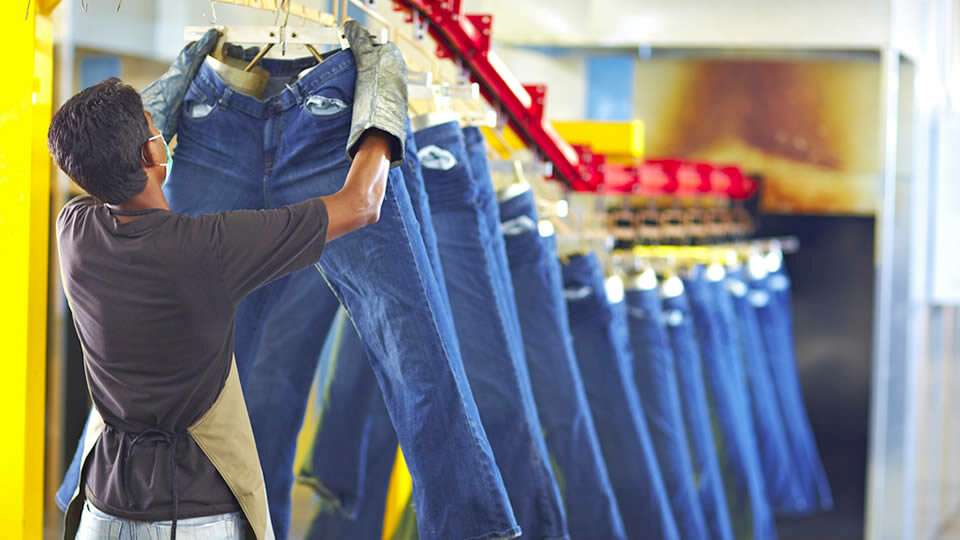
Public bodies and textile firms working across Amsterdam and civic authorities have signed an agreement to manufacture denim products more sustainably. Known as the denim deal, the new international collaboration focuses on making post-consumer textile recycling the new standard in the industry and has been signed by 30 parties.
Signatories to this deal include the Amsterdam city, the Amsterdam Economic Board, the Dutch Ministry of Infrastructure and Water Management and the municipalities of Haarlem and the Zaanstad and brands including Mud Jeans, Kings of Indigo, House of Denim and Scotch & Soda. These signatories have committed to meet certain sustainable standards a part of their operations. This includes agreeing to work as quickly as possible towards a standard of using at least 5 per cent recycled textile in all denim garments.
Scotch & Soda, Mud Jeans and Kuyuchi have also pledged to jointly make three million denim garments containing at least 20 per cent recycled textiles. The city of Amsterdam will support this aim by collecting old textiles from residents and ensuring as many people as possible recycle their denim correctly. The deal will run for three years and at the end of each year a report will be compiled to assess all of the activities undertaken and the results.
Luxury fashion business demands an overhaul
 Pushing industry stalwarts Brooks Brothers and Lord & Taylor to bankruptcy, the global luxury fashion market is crumbling under the weight of the COVID-19 pandemic, says a The New York Times report. Experts are reexamining business models followed by luxury fashion brands. They are also questioning the validity of fashion weeks and urging for a reset of current fashion cycles.
As per Boston Consulting Group estimates, global luxury sales are expected to contract by 25 to 45 per cent this year. The industry is unlikely to achieve pre-pandemic growth levels before 2023 and designers cannot afford to showcase new collections.
Pandemic affects smaller brands as sales drop
At the latest fashion week in New York, small-scale or online only presentations replaced blockbuster catwalk shows. Now, a few Italian and French brands plan to host physical events to showcase their creations. As Antoine Arnault, Head-Communications, LVMH Moët Hennessy Louis Vuitton explains, these shows should not be underestimated as thousands of freelance makeup artists, seamstresses, drivers, security guards and photographers depend on them for their livelihoods.
The pandemic has affected smaller standalone businesses more than large groups like LVMH which recorded a strong uptick in summer sales from Asian countries like Mainland China, Japan and South Korea. However, the group’s fashion and leather goods sales dropped 37 per cent, as international tourism ground to a halt and footfall into global stores was slow to recover.
Turnaround brands remain worst affected
Brands engaged in turnaround efforts like Ferragamo and Burberry have been worst affected by the pandemic. Most of these companies are currently struggling with a large glut of unsold inventory from the spring and summer collections this year. To rid themselves of unsold stocks, brands are using brick and mortar discount outlets and online marektplaces like the Dutch start-up Otrium, said Stefano Todescan, Managing Director, Boston Consulting Group.
Todescan opines, brands that leveraged data to manage stocks fared better. Data usage enabled them to move supplies from the West to better performing regions like the Asian markets. Brands like Hermes and Chanel, who do not offer discounts, are not trend-drive and have a wide product range emerged in particularly good shape.
Analysts expect the importance of Chinese luxury market to grow as North American and European markets continue to remain unpredictable. More offline retailers are expected to go online as consumers move to digital shopping. Amazon aims to collaborate with global luxury brands as it launched a mobile-only luxury store with one brand: Oscar de la Renta.
Brands to fast-track digital commitments
Jose Neves, Chief Executive, Farfetch believes, convenience and safety are the top priorities of customers in 2020, prompting brands to fast-track their digital strategies. The digital marketplace saw a 60 per cent surge in traffic for the second quarter compared to the same period last year — and 500,000 new customers.
TikTok plans to host own online fashion month for a potential audience of roughly 800 million users, with shows by Saint Laurent and JW Anderson. The show will include smaller collections with more timeless pieces. Many brands also expect people to start buying high-priced items despite a severe recession and ongoing layoffs. It is difficult to predict future luxury demand. However, the industry needs to move on and create fashion that lasts for a long time.
UBQ Materials to collaborate with Mainetti for sustainable raw materials
Israel based cleantech company UBQ Materials, which develops technologies to transform waste into sustainable materials, will partner up with multinational retail solutions provider Mainetti. The joint venture will see the companies collaborate on introducing eco-friendly and sustainable raw materials for the global fashion industry and retailers.
Founded in 2012 by Chairman Yehuda Pearl, who also founded Sabra, the leading hummus brand in the U.S.; and CEO Jack Bigio, UBQ’s proprietary technology converts residual household waste into a sustainable bio-based substitute for oil-based plastics.
By diverting landfill-destined waste, UBQ’s solution helps prevent methane emissions, groundwater contamination and other social and environmental harms associated with the proliferation of landfills, all while creating a novel raw material with a climate-positive impact. Essentially, the company turns your unwanted leftovers and trash into turtle-friendly materials for the retail world.
With billions of hangers produced globally each year, the impact that this retail mainstay alone can have on the environment is significant.
The development of Mainetti garment hangers containing UBQ material has resulted in hangers with a significantly reduced carbon footprint. These sustainable products are currently pending Cradle-to-Cradle (C2C) certification, which is a globally recognized measure for the production of safe and eco-friendly products.
Mainetti’s exclusive collaboration with UBQ for hangers offers brands across the fashion and retail industries a cost-effective method to significantly reduce their carbon footprint and a new way to put action towards the current waste crisis.
It also provides these brands with another route to connecting with consumer audiences who are armed with information and whose buying habits are an extension of their environmental values.
Two US yarn producers file petitions against Indonesia, Malaysia for dumping yarn imports
Two major US synthetic yarn producers–Unifi Manufacturing and Nan Ya Plastics Corporation America–recently filed petitions alleging that dumped imports of polyester textured yarn from Indonesia, Malaysia, Thailand and Vietnam are causing material injury to the domestic industry. The purpose of the petitions is to establish conditions of fair competition in the US market.
The petitioning domestic producers have asked the US government to investigate the dumping and injury and to impose anti-dumping duties on the imports of polyester textured yarn from the four countries, according to a press release from international law firm Kelley Drye & Warren LLP.
The products affected by this case are made by Unifi at its production facility in Yadkinville, North Carolina, and by Nan Ya at its production facility in Lake City, South Carolina.
The petitions were filed concurrently with the United States Department of Commerce and the United States International Trade Commission.
The filing is in response to surging volumes of unfairly-priced polyester textured yarn imports from the four nations. In January 2020, anti-dumping and countervailing duty orders were put in place on imports of polyester textured yarn from China and India.
Texbrasil records $840,000 business between July-Aug
Texbrasil (Brazilian Textile and Fashion Industry Internationalization Program), which held a virtual business round between July and August, executed business worth $840,000 from its 179 meetings with 64 buyers.
A total of 22 companies were present on the rounds, among them: 2 Rios, Arrazantty, Bia Brasil, Brandili, Charmosa, CMJ Têxtil, Daniela Tombini, Fakini, Hering, Hy Brasil, Kyly, Upvest (Lua Morena), Mari M, Maria Pavan, Maryssil, Malharia Cristina, Serpentina, Silvia Schaefer, Sling, Texneo, Têxtil J.Serrano and Vitor Zerbinato.
The round was so positive that a second version was announced, this time for buyers from the USA, which will start on October 12. Arrazanty, which recently joined Texbrasil, participated for the first time in an action with the Program, and has already confirmed its presence in the second round.
According to the brand’s executive director, Renan Tolotti, many contacts were made at the event. The company decided to join the Program to expand its sales channels and work on private label services.
Canopy accords highest ranking to Lenzing in hot button category
In its annual ranking of sustainable wood procurement, the Canadian environmental organization Canopy gave highest ranking for its continuous leadership over the last number of years.
The Lenzing Group scored a total of 30.5 points and received for the first time a leading dark green shirt, the highest Hot Button ranking category.
Lenzing once again convinced the non-profit organization Canopy with its innovative vision with regard to circular economy and REFIBRA™ technology, its high level of transparency in wood and pulp sourcing, as well as its active contribution towards protecting forests and preserving biodiversity. In this widely recognized ranking, Canopy grades the world’s 31 largest producers of wood-based fibers with respect to their sustainable wood and pulp sourcing, their efforts with regard to using alternative non-wood feedstock and their achievements for lasting conservation in critical forests around the globe.
Bangladesh: CDB to raise raw cotton production to 20 lakh bales by 2041
At a recent webinar Bangladesh’s Cotton Development Board (CDB), an independent body responsible for Bangladesh cotton industry has affirmed it plans to raise raw cotton production to 20 lakh bales by 2041 from the current annual production of 1.71 lakh bales. Besides raising cotton production acreage to two lakh hectares, and increasing production per hectare up to 10 bales instead of 6.15 bales, CPB also aims to import 71 lakh bales of cotton annually from abroad at a cost of over Tk 30,000 crore.
The webinar was attended by notable personalities like Kai Hughes, Executive Director, International Cotton Advisory Committee (ICAC); Robert D Simpson, FAO Representative, Bangladesh; SM Bakhtiar, Executive Chairman, Bangladesh Agricultural Research Council (BARC), Al Sayeed Negom, Professor, Cotton Research Institute in Egypt and Keshob Kanti, Head-Information, ICAC.
Established on December 14, 1972, by Bangabandhu Sheikh Mujibur Rahman, the Cotton Development Board plans to boost cotton cultivation across the country on agro-forest land, salt, char and hilly areas.
US can target recycling 100 per cent of used clothing and textiles: SMART
The Secondary Materials and Recycled Textiles Association (SMART) says, almost 100 per cent of used clothing and household textiles in the US can be re-used or recycled: 45 per cent are re-used as apparel; 30 per cent are converted into industrial polishing/wiping cloths and 20 per cent are processed into fiber to be manufactured into new products. 95 per cent of all used clothing is recyclable, only 5 per cent is unusable due to mildew or other contamination.
As per reports, the amount of textile waste generated by the US has doubled over the last 20 years. In 2014,16.2 million tons of textile waste was generated, according to the Environmental Protection Agency. Of this amount, 2.62 million tons was recycled, 3.14 million tons was combusted for energy recovery, and 10.46 million tons was sent to the landfill.
Consumers are regarded as the main culprit for throwing away their used clothing, as only 15 per cent of consumer-used clothing is recycled, whereas more than 75 per cent of pre-use clothing is recycled by the manufacturers. The average person buys 60 per cent more items of clothing every year and keeps them for about half as long as 15 years ago, generating a huge amount of waste.
Keqiao Textile Expo attracts 5.1 per cent more visitors
The recently closed 2020 Keqiao Textile Expo (Autumn edition) attracted 5.1 per cent more visitors than previous edition. The event attracted around 46,086 visitors, reports CCF Group. The expo displayed textile materials, fabrics, home textiles, as well as creative design at 1,270 booths at the China Textile City International Convention & Exhibition Centre in Keqiao. Well-known domestic enterprises such as Shaoxing Mulinsen, Zhejiang RGB and Sichuan Chuanmian introduced their latest products at the event.
Looking to be an international, professional, market-oriented and information-empowered event, the expo also launched live streaming, product releasing and online business matchmaking ‘on cloud’, drawing 51,018 buyers including 15,132 foreign buyers to further facilitate international cooperation and trade amid the pandemic.
Supported by the China National Textile And Apparel Council, China General Chamber of Commerce, and organized by the textile sub council of China Council for the Promotion of International Trade and Shaoxing Keqiao management committee and exhibition industry development center, this year’s event implemented strict prevention and control measures to ease epidemic concerns.