


FW
Global Cashmere clothing market to reach $3230 million by 2023
As per a new Global Info Research (GIR) study, global market for Cashmere clothing is expected to grow at a CAGR of roughly 3.8 per cent over the next five years. It is likely to reach $3,230 million in 2023. China accounts for about 70 per cent of cashmere in the world, while Italy was China’s largest export destination, in April 2017; the country imported 98 tons of cashmere from China accounting for 78 per cent of the month’s exports.
China is also the largest consumption market, due to the rapid growth of the national economy as well as people’s gradual improvement of life quality. Many famous brands like Loro Piana and Brunello Cucinelli have targeted this region to launch their products there.
United States also plays an important role in the global cashmere clothing industry. In 2016, the country consumed about 3.5 million units, holding more than 19 per cent share globally. Asia region is the major manufacturing base of Cashmere clothing due to its low labor cost and material cost. Most famous brands have their plants or cooperative manufacturers in the region.
Australia identifies cotton growing areas
Australia has identified the potential for new dams, which could significantly boost the viability of irrigated cropping industries such as cotton. The Australian cotton industry produces about 9,00,000 metric tons of cotton a year, with almost 100 per cent of this exported. Northern Australian farmers are looking to move into growing higher value irrigated crops like cotton.
The Australian cotton industry has for a long time invested in R&D in northern Australia with the aim of expanding where cotton can be successfully and viably grown. Cotton not only produces high-quality fiber that is in demand globally, but for every ton of fiber there is more than a ton of cotton seed produced, which is a highly valued cattle feed in northern Australia.
Potential growth areas for fiber and food production in Australia’s north have been identified. There are more than 1200 cotton farms in Australia. In an average year, Australia’s cotton growers produce enough cotton to clothe 500 million people. The major buyers of Australian cotton are China, Indonesia, Thailand, South Korea, Bangladesh and Japan.
The cotton industry in Australia employs 15 times as many people as grazing does. Australian irrigated lint yields are now the highest of any major cotton producing country in the world.
Denim brand 7 For All Mankind forays into ready-to-wear market
American denim brand 7 For All Mankind is planning to foray into the ready-to-wear market. The jeans maker, who introduced denim priced over $200 is collaborating with London-based fashion label Marques’ Almeida. The 19-piece capsule collection will launch mid-November and include T-shirts, flared trousers and denim jackets. With prices ranging from £80 to £1,450 (about $104 to $1,886), it will be sold at selected retailers, including Selfridges in London and Net-a-Porter.
The collaboration comes ahead of Marques’ Almeida’s move to Paris Fashion Week in September. Launched in 2011 by London-based designers Marta Marques and Paulo Almeida, and propelled by the success of its signature frayed denim pieces, the label won the LVMH Young Fashion Designer Prize in 2015.
The partnership follows a trend where denim brands, such as Acne Studios, Rag & Bone and Frame, are increasingly expanding into ready-to-wear market. According to research firm Euromonitor, the global premium denim market is projected to hit $21.4 billion by the end of 2018. Brands are increasingly weary of remaining in a single category as the market becomes more saturated.
India to emerge a strong market for luxury brands
"Indian luxury market needs to think in terms of size and growth, at least 10 years ahead of its time. Luxury brand Louis Vuitton opened its first store in China in 1992 but could offer reasonable sizes only 20 years later. The brand opened its first store in India in 2003 and is still few years behind when it could offer the right sizes. Standardising luxury by considering optimum price for experiential and personal luxury goods, BCG classifies handbags above €1,000, shoes above €300, restaurants spend of above €150 and wines and spirits – more than €100 as true luxury. The luxury market in India is approximately $12 billion-$15 billion or 1.5 per cent of the world market. China, on the other hand, makes up 40 per cent of the world luxe market."
 Indian luxury market needs to think in terms of size and growth, at least 10 years ahead of its time. Luxury brand Louis Vuitton opened its first store in China in 1992 but could offer reasonable sizes only 20 years later. The brand opened its first store in India in 2003 and is still few years behind when it could offer the right sizes. Standardising luxury by considering optimum price for experiential and personal luxury goods, BCG classifies handbags above €1,000, shoes above €300, restaurants spend of above €150 and wines and spirits – more than €100 as true luxury. The luxury market in India is approximately $12 billion-$15 billion or 1.5 per cent of the world market. China, on the other hand, makes up 40 per cent of the world luxe market.
One of the biggest constraints for Indian luxury market is talent. An important part of the experience is the in-store staff. There are simply not enough trained people available. Even the pool available is more deferential than an informed seller of luxury.
Change in perspectives
Popular perception that luxury consumers are old, live in metros and predominantly female needs to change.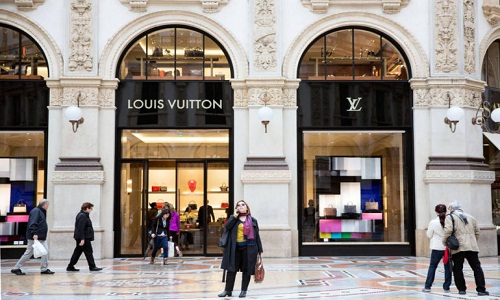 Although dealerships for luxury car showrooms exists in cities like Jalgaon and Coimbatore, but the consumers in most cities do not find the offer in India compelling and end up purchasing goods either in Singapore or London, where they get a better range, service standards and retail environment.
The role of women as prospective buyers in both luxury and premium categories is changing. With the percentage of women getting education rising higher than boys increasing since 2015, the future consumer-base for luxury and premium goods is likely to be female-centric. In China, this segment of young working women is amongst the most important demography in luxury.
The India advantage
The Chinese luxury market is much bigger than the size of Indian luxury market and is growing at a healthy clip. The spread in China is much broader – 50 per cent of luxury consumers are beyond the Top-15 cities. India also being a big country, has a potential of vast spread beyond Tier I cities.
Most global luxury brands worldwide started as craft brands a century or more, ago. Bulgari, for example, was once a single jewellery store and Burberry an outdoor wear manufacturer; today these are global iconic brands across categories. India also has potential to build few luxury brands in future due to its ideal business climate. High end apparel or jewellery, etc are some categories where true Indian luxury brands may emerge. Some brands in India have already started on that journey and are likely to attain global reach and appeal shortly.
Historically, luxury brands invest a lot in print for brand building. In France, LVMH is the biggest print advertiser. In contrast, a lot of brand building in China happens online. India is likely to adopt the mid-approach by focusing less on TV as it finds less relevance in luxury owing to increased fragmentation and also being a low attention medium.
Two Chinese cities to host forthcoming Kingpins China City Tour
Guangzhou and Hangzhou will host Kingpins China City Tour on September 5 and 7. But this time the denim trade show will open its doors to both professionals and consumers with Kingpins Shop in Hangzhou on September 7 and 8.
Kingpins Shop is a two-day, consumer-focused denim festival that aims to create a unique shopping event uniting denim lovers with denim insiders with everything from denim fibers and fabrics to jeans and indigo accessories. Kingpins Hangzhou will focus on the supply-chain side of the denim industry.
Kingpins China City Tour focuses on denim and the denim supply chain (not just mills) as well as its specific mix of exhibitors–which range from key and innovative Chinese resources to prestigious international offerings not available at any other trade show in China.
The exhibitor roster and show floor offerings are identical between Guangzhou and Hangzhou. The organizers had included both Zhengzhou and Shishi in previous Kingpins China City Tours but narrowed their focus to Guangzhou and Hangzhou feeling these two cities merited a deeper focus and exploration as they cater to a majority of the exhibitors' target clients.
There are no plans to add any other cities to the tour in 2019. The event will focus on Guangzhou and Hangzhou for the foreseeable future.
PVH Corp surpasses Wall Street estimates
PVH Corp, the owner of Calvin Klein and Tommy Hilfiger brands, reported earnings of $2.18 per share on revenue of $2.33 billion compared with $1.69 on revenue of $2.07 billion in the previous year’s first quarter. The New York-based company surpassed Wall Street estimates of $2.10 EPS on revenue of $2.29billion. Revenue for its Calvin Klein brand increased by 18 per cent to $ 925 million while Tommy Hilfiger revenue increased by 15 per cent to US$1billion.
The fashion retailer’s brand portfolio also includes Van Heusen, IZOD, ARROW and Warner’s as well as licensed brands such as Michael Kors, Kenneth Cole New York and DKNY. The IZOD brand of the company will expand to Europe this fall and be made available to customers in Spain, Germany, the Netherlands and Scandinavia.
Vietnam’s weak supply chains hinder efficiency
The main disadvantages of the Vietnamese supply chain are its backwardness and lack of consistency. Most Vietnamese enterprises, especially garment and textile firms, participate in secondary supply chains with low added-value. This adds to their logistics expenses. At present, only 21 per cent of small- and medium-sized enterprises are part of the global supply chain, while the figure is 30 per cent in Thailand and 46 per cent in Malaysia.
Expanded costs on logistics have hugely affected garment and textile, footwear, and electronics companies that employ a large number of laborers. They are hugely dependent on input, and produce low added value. Logistics costs in Vietnam account for one-third of selling prices. Investing in logistics and applying lean management can help them optimise the supply chain, solve issues related to warehousing operations and save costs and increase competitive capacity.
Applying technologies to the supply chain can save five per cent of a firm’s costs, narrow expenses to zero per cent, and reduce personnel by 25 to 30 per cent. Garment and textile companies in Vietnam rarely invest in their management systems and only focus on buyers. As of now, 15 per cent of garment and textile firms apply lean management models in their operations.
India: Tirupur-based CS Textile aims for 35 per cent growth
Tirupur-based CS Textile is planning to expand its capacity and expects a growth of 35 per cent in its business. The company is an expert in knitted home furnishing products like dish clothes, tea towels, potholders, gloves, cushions, blankets, throws, net bags, pouf cushions, fitted sheets. Completing 15 years, the company currently has an overall capacity of more than 2 lakh pieces per month.
Having an almost equal share of home furnishing products and sweaters in the total business, CS Textile is planning to expand in both product categories. It will also invest in more advanced machinery for flat as well as circular knitting machines in near future. Further, the company is planning to apply for certification as it already follows all rules and buyers’ conditions of ethical working.
With significant thrust on advanced infrastructure, sustainability, product development and employee-friendly policies, the company uses 100 per cent cotton such as BCI and organic cotton, cotton viscose, mélange, wool, acrylic, and man-made fibre with cotton.
India: TEA’s 28th AGM mulls over challenges facing knitwear exports
The 28th AGM of Tirupur Exporters’ Association (TEA) held recently expressed concerns over the challenges that the apparel industry has been facing both externally and domestically, which could be mitigated with the help of government support and efficiently running the units.
The total apparel exports from India was Rs107,679 crore in 2017-18, compared to Rs 116,508 crore in previous year 2016-17. The all India knitwear exports in 2017-18 declined to Rs 51,526 crore as against Rs 55,150 crore in 2016-17. During this period, Tirupur knitwear exports also declined to Rs 24,000 crore while the share of Tirupur knitwear exports was more or less stable at 46.58 per cent.
The most alarming factor in the last financial year was the continuous decline of exports since October 2017, after three months GST transition period, till March 2018. During this period, from October to March in 2017-18, knitwear exports declined 21 per cent to Rs 22, 317 crore from Rs 28,100 crore in the corresponding period in previous year 2016-17.
PVH Corp to launch heritage brand Izod in Europe
PVH Corporation will soon launch its heritage brand Izod in Europe. The launch will be supported by a focused regional marketing, PR and social influencer campaign, along with a shop in shop system in Spain with additional distribution within Europe, Russia and the Middle East region planned for Spring 2019.
Izod will launch the classic Fall/Winter 2018 American signature lifestyle collection with products including, shirts, polos, T-shirts, sweaters, heavy-weight knits, pants, denim and outdoors for customers in Spain, Germany, the Netherlands and Scandinavia.
The collection will celebrate the brand’s rich all-American heritage, inspired by Ivy league colleges, coastal towns and the grand inland scenery. It is made up of two key capsules: Winter Nautical, featuring college prep and nautical themes, and Explorer, for the quintessential winter look.
Launched in the 1930s, Izod is known for its youthful, energetic, sports-inspired styling. Its collections include men's classic, athletically inspired sportswear, golfwear, jeanswear and performance wear and luxury-style sport collections.











