


FW
Bots will spell job losses in apparel manufacturing countries
Automation is revolutionizing routine manufacturing processes. It’s estimated 56 per cent of workers in key apparel sourcing countries, including Cambodia, Indonesia, Thailand, the Philippines and Vietnam, will lose their jobs to automation by 2040. Because of their reliance on low-skilled labor and the already apparent labor rights violations, these countries will be particularly at risk when the impact of automation starts to fully set in.
The impending job losses bots are set to bring are expected to produce a spike in slavery and labor abuses across global supply chains. Displaced workers without the skills to adapt or the cushion of social security will have to compete for a diminishing supply of low-paid, low-skilled work in what will likely be an increasingly exploitative environment.
While it may not be news that the advent of automation will mean the ouster of certain human manufacturing jobs, the underlying effect on ethical labor has largely gone undiscussed. Automation is revolutionizing routine manufacturing processes and lowering labor costs to the extent that companies in China and even the US may be able to undercut cheaper rivals.
The apparel, textile and footwear industry employs 39 per cent of all manufacturing workers in Vietnam, and the number climbs to a higher 59 per cent for Cambodia. In both countries, 85 per cent of jobs in the sector are at high risk of automation.
Bangladesh needs to focus on producing blended denim
In 2017 Bangladesh’s exports of denim products to the US grew 9.55 per cent compared to 2016. Bangladesh also imports denim fabrics. The top sources of denim imports are: China, Pakistan, Hong Kong, India, Thailand and Turkey.
But Bangladesh produces mostly 100 per cent cotton denim fabrics and not the blended denim variety which has high demand globally. Denim enterprises in Bangladesh will do well if they give due consideration to manufacturing blended denim as well. The Bangladeshi denim sector needs to consider the increasing global market preference for blended denim. Slim fit and stretch jeans are the preferred casual wear for men and women in the West. Fashion trend is shifting towards more body contour, flexibility, ease of wear, breathability and lightness of fabric -- all properties of blended denim. Those currently planning for investment in production of denim fabrics will be better off to include blended denim in their product line.
For cotton denim, the largest exporter to Bangladesh is Pakistan, followed by China and India. For blended denim fabrics, the top exporter to Bangladesh is China. China holds about 70 per cent of the import market share in Bangladesh for blended denim.
American industry fears tariff shocks
The US decision to impose tariff on an additional $200 billion worth of imports from China is expected to hurt American consumers, workers and businesses resulting in inflationary costs throughout the supply chain, ultimately paid for by American consumers. The list includes numerous textile, accessory, and travel goods products such as handbags, hats, and textiles on this additional list of products that will directly impact the American apparel and footwear industry and its retail partners.
More than 84 per cent of US travel goods come from China. The United States may ultimately target over $500 billion worth of Chinese goods, or roughly the total amount that the United States imported from China last year. The US has railed against China for intellectual property theft and barriers to entry for US businesses and a 375 billion dollars US trade deficit with China.
The dispute has roiled financial markets including stocks, currencies and the global trade of commodities from soybeans to coal in recent weeks. While the initial volley of tariffs is not expected to have a major immediate economic impact, the fear is that a prolonged battle would disrupt makers and importers of affected goods in a blow to global trade, investment and growth.
Adidas objects to Rockport bankruptcy sale
Rockport has agreed to a sale to private equity firm Charlesbank Capital Partners, following its bankruptcy. Rockport expects the sale, which will require approval by the court overseeing the shoe seller's Chapter 11 case, to close by July 31. Reebok and its parent Adidas former owners of Rockport that continued an operating relationship with the company after selling it in 2015 have objected to the sale, stating it cannot transfer key assets to Charlesbank while failing to account fully for $54 million owed to the shoe brands.
The German sportswear multinational brought Rockport under the Adidas umbrella in 2005 when it bought Reebok, the brand's parent company since 1986. Adidas, known for actively protecting its intellectual property rights, added in its court papers that it has not yet given consent to Rockport to use its intellectual property rights. The company clarified that it does not object to the sale of the company in itself and actually wants to work together with Rockport, but it does have issues with the current terms proposed to the court.
Technology and its slated expanse for apparel value chain
"Apparel value chain comprises of downstream functions (retailing) managed in advanced economies and upstream functions (manufacturing) managed by least developed economies. Given the small and medium enterprise status of apparel manufacturing and mostly entrepreneurial ventures, cheaper access to technology will be an incentive towards adoption by apparel manufacturing organisations, stresses Dr Prabir Jana, NIFT, Delhi. He says, for the first time, the developed and the developing worlds are creating, collaborating, communicating, and consuming on similar technology platforms, spurring global innovation. Of the 253 ‘unicorns’ tracked by CB Insights, 65 are from China, and 10 from India."
 Apparel value chain comprises of downstream functions (retailing) managed in advanced economies and upstream functions (manufacturing) managed by least developed economies. Given the small and medium enterprise status of apparel manufacturing and mostly entrepreneurial ventures, cheaper access to technology will be an incentive towards adoption by apparel manufacturing organisations, stresses Dr Prabir Jana, NIFT, Delhi. He says, for the first time, the developed and the developing worlds are creating, collaborating, communicating, and consuming on similar technology platforms, spurring global innovation. Of the 253 ‘unicorns’ tracked by CB Insights, 65 are from China, and 10 from India. In the global list, only three unicorn companies are related to clothing, while as many as 35 are e-commerce related. Apparel product development hasn’t still come to terms with the adoption of technology for process improvement.
Alluring advantages
As per Digital IQ survey by PwC, companies that are technology leaders in their industries are twice as likely to achieve rapid revenue and profit growth as the laggards. Originally seen as a tool largely for improving efficiency – doing the same things better and more cheaply – technological innovations are now the fastest means of opening up new revenue streams and transforming traditional industries. Added to that, individual technologies build on each other and amplifying each other’s effects, set the stage for ‘Industry 4.0’. While AI – an emerging technology – is the motive force behind robots, IoT is the key driver behind cyber-physical systems transforming the factory floor into a co-working space with robots. Similarly, Augmented Reality (AR) will give a fillip to training and instruction-related functions and real time physiological data of humans will give fillip to simulation or digital twin technology and so on. The sky is the limit when one wants to opt for technology in apparel value chain.
Artificial Intelligence algorithms are capable of performing tasks which normally would require human intelligence such as visual perception, speech recognition, decision-making, and language translation. AI is an ‘umbrella’ concept that is made up of numerous subfields such as machine learning, which focus on the development of programs that can teach themselves to learn, understand, reason, plan, and act (i.e., become more ‘intelligent’) when exposed to new data in the right quantities. Augmented reality or the addition of information or visuals to the physical world, via graphics and/or audio overlay has the potential to improve the user experience for a task or a product. This ‘augmentation’ of the real world is achieved via supplemental devices that render and display the said information.
Moreover, another rapidly growing technology, blockchain has been rapidly seeping into industries. It is essentially a distributed electronic ledger that uses software algorithms to record and confirm transactions with reliability and anonymity. The record of events is shared between many parties and information once entered cannot be altered, as the downstream chain reinforces upstream transactions. Autonomous land-based vehicles can also prove to be beneficial. These are air unmanned land-based vehicles that move without an on-board human pilot and can be operated autonomously (via on-board computers) on a predefined flight plan or can be controlled remotely. The most popular of all, Internet of Things (IoT) enables devices to be connected and be remotely monitored or controlled. Next comes robots that automate, augment or assist human activities, autonomously or according to set instructions – often a computer programme. Besides these, virtual reality (VR) and 3D printing is increasingly finding space in the apparel industry.
Stretch properties the mainstay in jeans today
"Growing craze for athleisure among millennials is giving tough fight to traditional jeans manufacturers. As Jane Singer, Director and Head of Market Intelligence, Inside Fashion points out the two biggest challenges faced by the denim segment are convincing consumer, who already owns several pairs of jeans, to buy one more pair; and increasing profit margins on products for both retailers and manufacturers. The ‘new consumer’ is more demanding. They read labels, research products before buying, and will return products if they are not satisfied. During a session at Intertextile Shanghai, Singer said new technologies are providing brands with fairly easy ways to elevate their products. Many brands have turned to Lycra T400 technology to add improved stretch and retention to jeans. This has helped to give consumers jeans that fit better."
 Growing craze for athleisure among millennials is giving tough fight to traditional jeans manufacturers. As Jane Singer, Director and Head of Market Intelligence, Inside Fashion points out the two biggest challenges faced by the denim segment are convincing consumer, who already owns several pairs of jeans, to buy one more pair; and increasing profit margins on products for both retailers and manufacturers. The ‘new consumer’ is more demanding. They read labels, research products before buying, and will return products if they are not satisfied. During a session at Intertextile Shanghai, Singer said new technologies are providing brands with fairly easy ways to elevate their products. Many brands have turned to Lycra T400 technology to add improved stretch and retention to jeans. This has helped to give consumers jeans that fit better.
Daniel Fang, Garment Center Marketing Dept Manager, Guangzhou Conshing Clothing Group, feels in recent years, the denim industry has benefitted from the successful use of new technologies throughout the supply chain. The wide use of super-stretch and bi-stretch has greatly improved comfort and shaping performance of denim garments.
Innovation, sustainability key to success
As Amy Wang, GM, Advance Denim observes, advertising and marketing does not equal innovation. There needs to be concerted focus on developing crossover materials and eco-friendly denim fabrics. Even a 1 per cent change in fibre and chemistry can make a huge difference in denim fabrics. Moreover, sustainability is a key concern in the denim sector. For manufacturers, the ultimate goal is to hit sustainability targets without compromising the look and feel that has made denim a consumer favourite.
Newly released Lycra T400 fibre with EcoMade technology is made in part from a combination of recycled PET and plant-based materials. 50 per cent of the fibre is made from recycled materials while another 18 per cent is plant based, bringing the total sustainable content to 68 per cent, according to Jean Hegedus, global segment director – denim & apparel, Invista. LYCRA T400 fibre with EcoMade technology has similar performance to standard Lycra T400 fibre, and the use of recycled PET means that there is less waste going to landfill. Hegedus added that most recycled fibres are not stretch fibres. At the same time, most stretch fibres made partly from renewable sources don’t offer the level of stretch performance that Lycra T400 EcoMade technology offers.
Stretch the mainstay
Almost every consumer today is looking for stretch fabrics, especially in jeans. Even loose silhouettes are looking to stretch fibres to boost shape retention and provide greater comfort to the wearer. Invista offers three options for bi-stretch functionality. Dual Warp technology provides easy-to-control levels of shrinkage and stretch, while retaining the authentic look of the fabric. Easy Set Lycra fibre (T562B) is for fabrics with low to moderate stretch, and offers easy to handle warping, sizing and beaming. Popular Lycra dualFX technology offers excellent growth and shrinkage, even for high stretch fabrics. For true 360-degree flexibility, Lycra XFIT technology is developed to add stretch to the warp for more even stretch in key areas including the seat, thigh and knee. In short, function is replacing fashion as consumers want comfort.
Raw material price hike a cause of worry for apparel industry
"Besides other prevailing challenges, apparel companies need to now tackle steep increase in prices of raw materials as well. As per recent stats, wool prices have soared to record highs this year on booming demand, while a drought in Texas and rising Chinese imports have sent cotton futures to a nearly six-year peak in the US. The price of oil, used to make synthetic fabrics like polyester and rayon, is up over 50 per cent from a year ago."
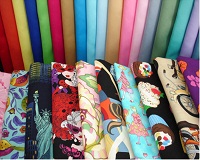 Besides other prevailing challenges, apparel companies need to now tackle steep increase in prices of raw materials as well. As per recent stats, wool prices have soared to record highs this year on booming demand, while a drought in Texas and rising Chinese imports have sent cotton futures to a nearly six-year peak in the US. The price of oil, used to make synthetic fabrics like polyester and rayon, is up over 50 per cent from a year ago.
Retailers, including Abercrombie & Fitch and Ralph Lauren, have already highlighted rising supply chain costs as a potential threat. But they have limited options beyond passing along prices to customers, an unappealing prospect for retailers facing declining mall traffic and increased competition from low-price competitors online. Some, including H&M, are planning steep discounts in coming months to reduce inventories, and could now see rising prices for cotton and polyester squeeze already slim profits. Adam Mansell, Chief Executive of not-for-profit organisation UK Fashion & Textile Association feels margins within the supply chain are incredibly tight. Unless you are supplying top-end luxury goods, it is a very difficult world to be in at the moment.
Reasons for price rise
Cotton prices are jacking up because bad weather is reducing global supplies. Cotlook, an independent analysis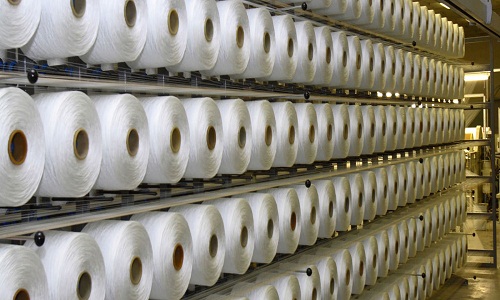 firm, forecasts a decline in the world’s stock of cotton by the end of this year. Chinese textile manufacturers have also begun drawing down massive government stockpiles. Oil prices have risen steadily over the last year, as the Organisation of the Petroleum Exporting Countries as well as Russia have reduced production, and countries like Libya and Venezuela have seen supply outages. Brent crude, an international benchmark, traded at about $78 a barrel on Wednesday, compared to about $50 a barrel a year ago. The fashion industry’s demand for wool is rising faster than farmers can handle. Wayne Gordon, commodities analyst at UBS Global Wealth Management Chief Investment Office, highlighted that you have to have the breeds of sheep, and it takes 2-3 years to have any impact on the market. It will put a pressure onto the fashion industry.
Difficult choice for brand
Indeed brands have a difficult choice to make – raise prices and lose customers or keep customers and accept lower profits. That’s a tough pill to swallow at a time when 700 clothing stores shut down in the UK alone last year, according to Local Data Company data compiled for PwC. At Abercrombie & Fitch, commodities are pushing expenses higher, though the company said transportation costs are a bigger threat right now. John Kernan, an analyst at Cowen, stressed that things are going to get be tougher, they are going to raise prices to offset cost inflation. It will be difficult.
Reimbursement of incentives under the Gujarat Textile Policy limits only to sales
Reimbursement of incentives under the Gujarat Textile Policy 2012, will be limited to sales within the state, and will not cover those made outside, according to the state Industries and Mines Department. A July 7 General Resolution (GR) of the Department states units will not include Integrated Goods and Services Tax (IGST), i.e. GST on inter-state sales. It will be only qualified to avail of reimbursement only for State Goods and Services Tax (SGST).
Textile is the first industry for which the incentive has been announced, while amendment of other policies for replacing VAT incentives with SGST is under process. With the introduction of GST from July 1, 2017, the state government had formed a committee to suggest modalities for SGST incentives. After considering its recommendations, the government has decided to extend SGST incentives in the form of reimbursement under the policy.
The GR also states that the unit shall not be entitled to reimbursement of IGST on inter-state supply, reimbursement of SGST input tax credit utilized for payment of IGST, and reimbursement of IGST input tax credit utilized for SGST payment. Under GST, the tax goes to the state where goods or services are consumed. The tax collected is divided equally between the state and centre.
A large textile process houses would not get any benefit of the policy because of the provision about SGST paid through cash ledger, says GST expert Monish Bhalla. ITC reimbursement is only in case of intra-state supply, which again goes against the ground reality as majority of the large units are either exporting or supplying pan-India. Meena Kaviya, board member of Association of Apparel Manufacturers and Exporters of Gujarat, welcomed the incentives and stated that sops should also be given for sales outside the state.
After many protests textile products were put in the tax bracket of 12 and 18 per cent originally, but majority of the items were moved to GST rate of 5 per cent.
Truetzschler completes 40 years in India
The group makes the complete range of spinning preparation machines for the Indian market and serves customers out of three service centers. In initial years, from 1981 to 1992, the company was mainly concentrated on supplying blow room machines. In 1992, cards were added to the production program and in 2002 draw frames. It was in 2009 that a transition began with supply of the company series of machines to the Indian market under the brand name of Truetzschler. These cutting-edge machines ensure that products and services are of global standards.
For Truetzschler, 2017 was one of the most successful years across the globe. In the spinning sector major markets like India and China invested in spinning whereas new investments also came to Uzbekistan, Vietnam, Pakistan and Bangladesh. The non-woven business also expanded in China and Europe. Spinning and card clothing witnessed significant growth whereas the non-wovens and manmade division was steady.
China continues to be the most dominant market across all business units for Truetzschler worldwide. Currently Truetzschler commands a market share of over 50 per cent in India for blow room machines and cards. Truetzschler is planning to unveil its next round of innovations in products and technology.
Levi Strauss revenues up 17 per cent in Q2
For the Q2 Levi Strauss revenues rose 17 per cent. The San Francisco-based company delivered its third consecutive quarter of double-digit revenue growth, driven by the disciplined execution of its strategies and a more diversified portfolio. The iconic brand also quadrupled its net income for the three month period. Net revenues grew 17 per cent, driven by broad-based brand growth across Levi's brands in all regions and channels. The Americas witnessed 11 per cent growth but clocked a five per cent net income decline in the domestic market, on increased retail expansion and advertising costs.
Internationally, Levi’s soared, particularly in the continent, as both Europe and Asia reported gains of 19 per cent and nine per cent. By category, Levi’s direct-to-consumer revenues grew 19 per cent on a solid sales performance and the expansion of its retail network, as well as e-commerce growth. Total wholesale revenues grew 14 per cent reflecting higher revenues in all regions.
Adjusted EBIT grew 15 per cent reflecting the revenue growth and higher gross margins, while operating income increased 22 per cent. The Levi’s brand collectively operated 53 more own stores at the end of the second quarter than it did a year prior.











