FW
Taiwanese companies present at ISEA
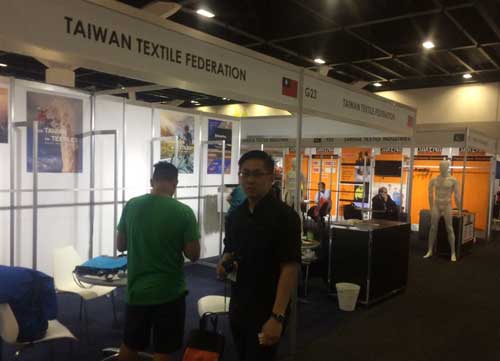
Taiwan Textile Federation is participating at International Sourcing Expo Australia (ISEA) November 2017.
Participating members are 3C-Tex International, which makes synthetic fabrics; Alung, specialising in sweaters/ jumpers for children and women; Cherng Dern Enterprise, which makes functional knit fabrics for sports apparel, shoes and bags; Dragon Times Zipper and Accessories, which specialises in all kinds of accessories for outdoor garments; and Wideplus, which specialises in synthetic woven fabrics from fine denier light weight to intricate dobby designs.
Taiwan’s textile industry has evolved from a mass production textile supplier to a textile innovator equipped with a comprehensive yet integrated value chain.
While traditional textiles still have an important share in Taiwan’s textile output, eco and multifunctional textiles have redefined Taiwan’s status in the global textile market place.
Taiwan Textile Federation was established in 1975 with government guidance and support as well as donations from the textile industry itself. TTF assists the government in bilateral textile quota negotiations and administering the textile export quota. TTF has always aimed at providing a versatile range of services, including market promotion, industrial development, market information, and helping the improvement of design capabilities, production and management. The next year TTF plans to leads a bigger delegation.
Handloom mark ensures authenticity
The Handloom Export Promotion Council (HEPC) is participating at the International Sourcing Expo Australia, Sydney 2017.
The introduction of the handloom mark by the government of India has also helped in establishing a clear identity of genuine handloom products with customers. This guarantees the quality of the product in terms of raw material processing, embellishments, weaving, design, defect-free hand woven authentic niche product and zero effect on environment and other parameters.
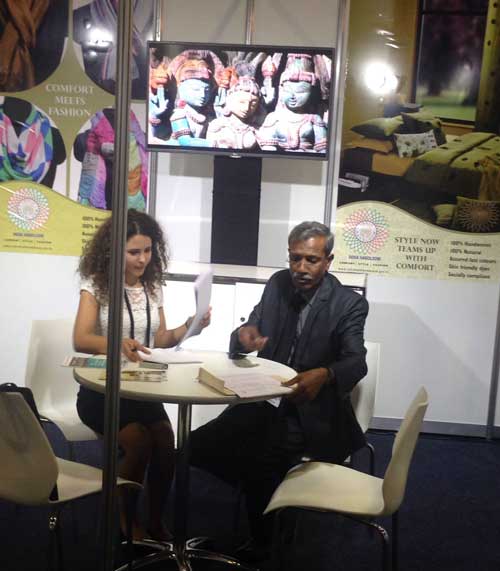
India’s prominent role in textiles stems from its wealth in natural resources, namely silk, cotton and jute. These resources along with traditional skills passed down from generation to generation, adapting and maturing over time, give Indian handloom its uniqueness.
Fabrics woven by hand are popularly known as handloom fabrics. They symbolise the diversity and richness of Indian cultural heritage. For centuries, Indian master weavers have produced some of the world’s most exquisite fabrics on handloom and they continue to do so even today, adapting to the contemporary tastes of the new generation of the new world.
South Africa present at ISEA

South African Footwear and Leather Export Council (SAFLEC) is one of the key associations participating in ISEA (International Sourcing Expo Australia).
SAFLEC has been officially appointed by the South African government to promote, facilitate and export South Africa’s footwear, leather, leather goods and handbags to international markets. SAFLEC represents manufacturers across the country, with an annual production of just under 70 million pairs of footwear. Major export markets include neighboring Africa with other exports to the US, UK and Australia. But Africa accounts for more than 70 per cent of total exports.
Most members of SAFLEC are fully compliant with labor legislation in South Africa. South Africa has a well established footwear industry, both in terms of manufacturing and the import and distribution of global brands. Locally the industry incorporates nearly 175 manufacturers under the National Bargaining Council, while another 60 small, medium and microenterprises operate under it.
The footwear industry in South Africa manufactures a wide range of products including safety and protective footwear, gumboots, men’s and women’s formal and casual footwear, school shoes, slippers, sandals, ballet shoes and children’s shoes.
Assessing value for money

Excerpts from a presentation made by Pinakin Chaubal at International Sourcing Expo Australia in Sydney on November 15, 2017. The speaker shared his views on ready to use strategies when sourcing apparel, accessories, textiles, footwear and leather. He is senior tech advisor at APN.
Textiles, Clothing, Footwear and Leather (TCFL), Personal Protective Equipment (PPE) and associated goods are quite unique in that they draw their worth from two broad metrics – their feel good appeal plus their do good characteristics.
When a prospective buyer is looking at the color, brightness, grain or touching textiles and clothing to ascertain softness, they are assessing its aesthetic properties. Also, everyone expects and pays for these products to hold their shape and color and offer protection against natural elements and so on. Now that’s performance properties.
PPE while primarily performance-focused needs to be integrated with the overall outfit and still needs to have an aesthetic appeal. As against, say, a piece of steel specified by its grade and thickness, TCFL and PPE products make it somewhat complicated for the prospective buyer and even seller to determine what indeed is value for money. That decision-making process can however be simplified with some good business practices.
At APN, we often meet customers who are sourcing from low cost countries, trying to prove how good or cost effective their products are, attempting to take products above the line, developing new products or improving existing ones plus everything in between.
Each of these tasks seems to overwhelm the work teams so much that we consider it our mandate to gently remind them that they indeed have one and only one goal – seeking value for money whether from their production plant, sourcing initiatives, innovation drive or whatever headline they seem to be occupied with. Welcome to the world of assessing value for money.
It takes a well-developed product performance specification and a good verification plan to address these areas. A mature specification ensures that the function and performance of the product are agreed upon by or at the very least known to all parties. Take a cold weather jacket, as an example. It must meet color references, be light weight, offer resistance to cold and wind, be fade resistant, retain shape after cleaning and so on. If it does so to a specified but low level, it will be deemed poor quality. If it does so to a specified and very high level, it is likely to be a gold plated solution that is perhaps too expensive. It must meet aesthetics and performance targets at a level where it meets value for money equation in the target customer’s and consumer’s minds. That is optimum function and performance.
The verification plan needs to ensure that these characteristics are verified using the most appropriate test methods that simulate real use conditions; and at a frequency that assures ongoing quality. From time to time, vigilant buyers ensure that their suppliers do not dilute the product – well known techniques of product dilution include decreasing the number of threads per inch, cutting down the percentage of expensive fiber in a blend and so on. The combination of a well-developed product performance spec and verification plan together ensures that the basics of making value for money decisions are in place. Sadly, this simple reality is sometimes missing or inadequately addressed. If left unaddressed it continues to erode how value for money is addressed, assessed, perceived and communicated.
There is nothing so fundamental as seeking value for money in every product we may associate ourselves with. My message to the industry is simple and straightforward – Make it your business to consistently seek VFM.
G-Star and Archroma launch denim with natural colours
G-Star Raw has launched a capsule collection in partnership with Archroma. The denim is dyed with dyestuffs made from recycled plants and nutshells. The capsule, Earth Colors, is dyed using recycled agricultural waste. The line gets its name because it’s made with 70 to 100 per cent natural colors, generated from things like olives, rosemary, non-edible nutshells and almonds.
The product has minimum eco impact. There’s no land required in order to produce Earth Colors and food consumption is unaffected since only the non-edible parts of the plants are used. They are receptive to ozone and laser finishing technologies which also mean the dyes are designed for optimal performance. The range has mid waist skinny for women in three colors, and super slim for men in three colors.
G-Star Raw is a Dutch designer clothing company, focused on reinvention of denim craftsmanship to create classics. It continuously pushes boundaries and investigates new materials, styles and fits. The design ethos starts with taking responsibility for the social and environmental impact of its products.
Archroma is a color solutions and chemicals company. For 17 years, it has been pioneering change in the areas of formulation, standardization and management of custom colors along the entire textile supply chain.
Zara to pay unpaid Turkey workers at last
Zara will launch a fund for workers in Turkey. These 140 workers were at a factory that closed down without warning. They will be reimbursed for unpaid wages, severance pay and unused vacation time. The popular fast fashion retailer faced criticism when shoppers at an outlet noticed tags attached to garments. These tags were put by unpaid workers, who spelt out their plight in messages.
The total for the 140 workers left with three months of unpaid wages amounts to only 0.01 per cent of Zara’s annual sales. Homegrown brand Zara leads the fashion industry in Spain. Zara is the flagship brand of the Inditex Group. Inditex, which has a market capitalization of 113 billion dollars, is one of the world's largest fashion retailers. It owns 7,405 stores and employs 1,62,450 people. The company has helped to reshape the fashion industry with its ability to quickly produce and turnaround cheaper fashion items.
Some of the world’s biggest brands source garments from Turkey. Among them are Primark, Inditex and H&M. It can be difficult for brands to know exactly what their suppliers are doing. Factories may subcontract work without a brand’s knowledge to meet tight deadlines and Turkey’s proximity to Europe makes it convenient for fulfilling last-minute orders.
India’s nonwoven sector on positive growth mode
Nonwoven is an established sector in developed countries, while some work needs to be done in markets where it is still in its infancy. Internationally, nonwoven sector will experience growth. Affordability and awareness are the two important factors that will push exponential growth in this sector. Govind Periwal, CEO, Pioneer Hygiene Products’ says quantity, consistent quality and affordability are important for the nonwoven and technical textiles sector to grow in developing markets like India.
Pioneer Hygiene Products has a current annual capacity of 6,000 metric tons of PE films and is India’s largest breathable PE film manufacturer. In the past five years, many companies have stepped into India to focus on hygiene products. Global giants like P&G, KC and Unicharm are active players in the market. The issue is slow penetration in rural areas, feels Periwal. When it comes to diapers, pullup pants are gaining momentum, in India.
Hygiene and infrastructural sectors will drive growth of nonwovens. GST, will help with in promoting the nonwovens sector as it will push domestic manufacturing,.
South Africa to host apparel, textiles show
The Apparel, Textile and Footwear (ATF) show will take place in South Africa from November 21 to 23. Buyers from chain stores, independent retailers, boutiques, importers, distributors, factory managers and other decision makers will meet 140 international manufacturers and suppliers from China, South Africa, Indonesia, India, Hong Kong, Bangladesh, Belarus and Estonia.
Manufacturers from China will display a range of products exclusively for Southern African buyers which include fashion garments and footwear, sportswear and sports footwear, safety boots, denim, home textiles, fashion fabrics, yarn, interlinings, trims and fasteners, fashion accessories such as bags and scarves, and much more.
Fashion, lifestyle and pop culture trend analysts will focus on trends from global-to-local, local-to-local and local-to-global perspectives. This will include pioneering African trends and the effect these will have on lifestyle, fashion, advertising, retail and emerging consumer markets.
A presentation will look at the disruptions that businesses and retailers are facing. It will cover areas such as macro trends affecting business and retail; current consumer attitudes, technology and the retail space; the future of retail; the changing face of corporate culture; and evolving company structures.
A cut and paste approach does not always deliver results in South Africa. Consumers’ fashion appreciation is unlike that of other regions. There will be a discussion on the challenges of and opportunities in apparel retail in South Africa.
Pakistan okays cotton imports
Pakistan is likely to allow the textile industry to import cotton to meet its requirements. The industry wants the four per cent customs duty and five per cent sales tax and other non-tariff restrictions on import of cotton to be withdrawn so as to enable the industry to meet its export commitments.
Restrictions on import of cotton from India and Brazil have already spiked the price of local cotton to above Rs 7000 per maund as the country is going to harvest a short crop for the fourth consecutive year. In comparison, Indian cotton is available at around Rs 6000 per maund. Pakistan’s cotton production is estimated to be around 12.6 million bales for 2017-18. Cotton prices in Pakistan will remain on the higher side due to the growing demand for the commodity by textile and spinning sectors and higher costs of imports.
The textile industry is the backbone of Pakistan's economy. It contributes more than a 61 per cent share in the country's exports and is the largest foreign exchange earner and employment generator. The textile sector has been a major beneficiary of GSP Plus. Pakistan’s exports of textiles have increased by 55 per cent in value terms in 2016 over 2013.
October exports down 40 per cent
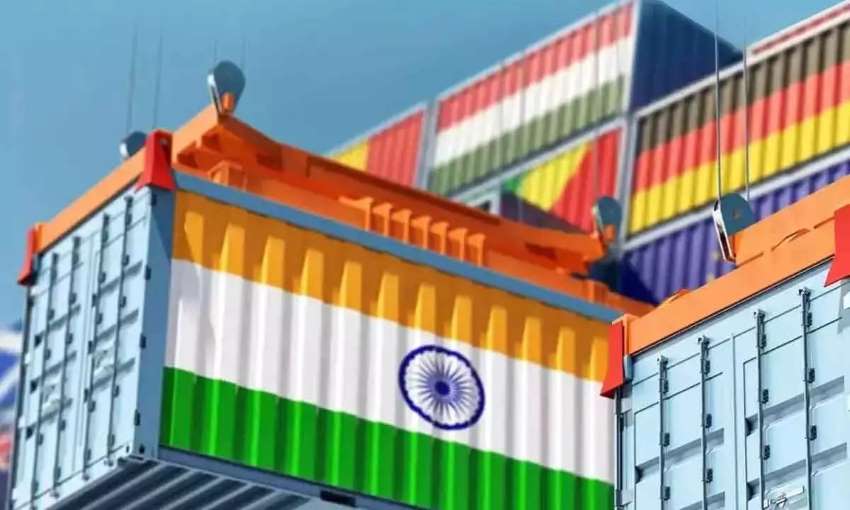
India’s apparel exports fell by 40.75 per cent in October 2017 compared to the same month of the previous year.
Exports of manmade textiles, including yarn, fabric, made-ups etc during the month dropped 8.26 per cent. However, exports of cotton textiles, including yarn, fabric, made-ups, handloom products etc increased by 2.21 per cent.
Exports of jute products, including floor covering, grew by 6.29 per cent while carpet exports dropped 33.03 per cent.
Overall, India’s exports of goods in October 2017 fell by 3.59 per cent compared to October 2016. This brings to an end a 13-month run of continuous increase in exports.
The main reason for the decline in exports is the implementation of GST which led to a shortfall in working capital with exporters.
Cumulative value of exports for the period April-October 2017-18 registered a positive growth of 5.63 per cent over the same period last year.
The value of imports during October 2017 was 4.91 per cent higher over import value in October 2016. Cumulative value of imports for the period April-October 2017-18 registered a positive growth of 17.77 per cent over the same period last year.
In future, India’s apparel exports are expected to increase considerably. Total exports of textiles and apparel are expected to touch 82 billion dollars by 2021.