FW
Material innovation in focus as designer Adriano Goldschmied passes away
The global apparel sector is mourning the loss of Adriano Goldschmied, Visionary Designer, widely recognized as the ‘Godfather of Denim,’ who died at the age of 82. Goldschmied’s influence transformed denim from a utilitarian workwear textile into a high-fashion asset, a shift that currently sustains a global premium denim market valued at approximately $27 billion. By founding era-defining labels such as Diesel, Replay, and AG Adriano Goldschmied, he introduced the concept of ‘premium wash’ and engineered silhouettes that prioritized textile drape and sophisticated finishing. His technical approach to denim - treating the fabric as a medium for artistic distress and tailored fit - established the structural blueprint for modern luxury casualwear.
A legacy of sustainable fiber integration and circularity
Beyond aesthetics, Goldschmied’s later career focused on addressing the environmental challenges of cotton-heavy production. He was a vocal advocate for fiber diversification, integrating Tencel, hemp, and recycled elastane to reduce the water-intensive footprint of traditional indigo dyeing. His recent collaborations emphasized the necessity of circularity, moving the industry toward a closed-loop system. Goldschmied did not just design jeans; he redefined the chemistry of the cloth, noted a senior textile strategist. This focus on material science remains a critical operational pillar for the industry as brands navigate new ESG mandates. His passing marks the end of an era of tactile craftsmanship, leaving a manufacturing legacy that balances heritage aesthetics with modern ecological responsibility.
The legacy of premium denim innovation
Goldschmied was the creative force behind several multi-billion dollar denim brands, primarily serving the European and North American luxury markets. His work pioneered the premium denim category in the 1970s and 1990s. Current industry growth plans in this segment focus on bio-based stretch fibers and waterless dyeing technologies, carrying forward his commitment to textile evolution and high-performance casual apparel.
Remove import duty on raw cotton for FY26-27; urge CAI, SIMA
The Cotton Association of India (CAI) and the Southern India Mills Association (SIMA) have intensified their call for the permanent removal of the 11 per cent import duty on raw cotton as the industry enters the FY26-27.
While a temporary exemption supported the sector through late 2025, the restoration of the 5 per cent Basic Customs Duty (BCD) and 5 per cent Agriculture Infrastructure and Development Cess (AIDC) is creating an inverted duty structure that penalizes high-end garment manufacturers. Industry data for April 2026 indicates, domestic cotton prices remain 10 per cent to 12 per cent higher than international benchmarks, largely due to a decline in domestic pressing estimates, which the CAI recently revised to 320.50 lakh bales for the 2025-26 season.
Bridging the supply-quality gap for global competitiveness
The demand for duty-free access is driven by the textile industry's need for extra-long staple (ELS) cotton and specific grades not currently produced in sufficient quantities within India.
Manufacturers argue, the 11 per cent levy acts as a barrier to fulfilling high-value export orders from the US and EU, particularly as regional competitors like Vietnam and Bangladesh benefit from zero-duty regimes. Maintaining this duty restricts our ability to utilize Free Trade Agreements effectively and prevents Indian mills from functioning as global manufacturing hubs, states a senior textile analyst. The industry estimates, a permanent waiver would stabilize yarn prices and assist in recovering the $18 billion RMG export trajectory, which has faced headwinds from rising logistics and energy costs.
Mitigating risks to the $100 billion export roadmap
As the Ministry of Textiles targets a $100 billion export milestone by 2030, the availability of competitively priced raw material is a critical operational prerequisite. Analysts warn, without duty-free imports, the sector faces an increased risk of order diversion to rival manufacturing clusters. CAI emphasizes, historically, India maintained a zero-duty regime without adversely impacting domestic farmers, as imports primarily satisfy the deficit in high-quality fiber requirements. Ensuring raw material neutrality is now viewed as the primary lever for the 1,200 large-scale spinning and weaving units seeking to modernize their operations under the upcoming Bharat Tex 2026 initiatives.
Established in 1921, the Cotton Association of India is the premier body representing the interests of the entire cotton value chain, from ginners to textile mills. The association provides essential crop estimates, quality testing, and policy advocacy. It currently manages the world’s largest cotton testing network and is instrumental in aligning Indian fiber standards with global ISO and ASTM protocols to support the $350 billion national textile market goal.
Relief window for SEZ units address critical operational bottleneck: AEPC
The one-time relief window introduced by the Ministry of Finance from April 1, 2026 to March 31, 2027 addresses a critical operational bottleneck: underutilized production capacity caused by volatile global demand and West Asia’s geopolitical disruptions, says the Apparel Export Promotion Council (AEPC). This regulatory update allows Special Economic Zone (SEZ) manufacturing units to clear goods into the Domestic Tariff Area (DTA) at concessional customs duty rates, ranging from 5 per cent to 12.5 per cent, the Council adds. . The measure permits units to sell up to 30 per cent of their highest annual export turnover domestically, providing a stabilization mechanism for factories that have seen a 10 per cent to 15 per cent drop in international order books over the last six months, the Council adds.
Safeguarding value addition and domestic parity
To ensure a level playing field for non-SEZ manufacturers, the policy mandates a minimum value addition of 20 per cent on all goods cleared under this window. This requirement prevents SEZs from functioning as mere trading hubs for cheap imports, reinforcing the focus on substantive textile manufacturing. This calibrated flexibility is essential for maintaining employment continuity during a period of global trade stress, stated an AEPC representative.
Industry data for FY26 indicates, while ready-made garment (RMG) exports reached $10.08 billion between April and November, the sector remains sensitive to rising input costs. The relief window is expected to improve liquidity for approximately 1,200 manufacturing units currently navigating high inventory levels and increased logistics expenses.
Strategic alignment with national export targets
This intervention is viewed as a transitional support tool as the industry moves toward the $100 billion export target by 2030. The implementation through a faceless assessment mechanism ensures transparency while allowing firms to pivot - without losing their export-oriented status—toward India’s growing $225 billion domestic market. As manufacturing indices show a modest 1.2 per cent growth, the ability to utilize SEZ infrastructure for local supply chains provides a necessary buffer against external shocks. Analysts suggest this move will consolidate India’s position as a resilient textile hub, balancing domestic consumption with aggressive global expansion plans.
An official body representing Indian apparel exporters, facilitating global trade and policy advocacy, AEPC manages a network of over 8,000 members across major textile hubs. The council is currently driving a $100 billion export roadmap by 2030, focusing on ESG compliance and enhancing the market share of man-made fiber (MMF) garments in the US and EU.
India to insulate apparel export with RoSCTL extension
The Ministry of Textiles aims to insulate India’s apparel export sector from global supply chain volatility by extending Rebate of State and Central Taxes and Levies (RoSCTL) scheme until September 30, 2026. The Ministry aims to lock in the rebate rates between 5.5 per cent and 7 per cent of the Free on Board value for the next two years to provide the cost certainty required to secure high-volume contracts from Western retailers. This policy continuity is particularly significant as manufacturers in competing hubs like Bangladesh navigate domestic industrial unrest, positioning India as a reliable alternative for long-term sourcing.
Capitalizing on duty neutralization to drive scale
The extension addresses a fundamental requirement for the ‘made-ups’ and garment industry: the neutralization of embedded taxes that are not covered under the Goods and Services Tax framework. Industry data suggests, maintaining this liquidity allows exporters to reinvest in vertical integration and sustainable manufacturing technologies. Experts indicate, without this rebate, Indian products would face a 5 per cent to 6 per cent price disadvantage in price-sensitive markets like the EU and the US. This extension is not merely a subsidy but a vital tool for cost-competitiveness that allows exporters to match the aggressive pricing of duty-free nations, noted a senior trade consultant tracking South Asian textile hubs.
Synergy with infrastructure and sustainability goals
Beyond immediate tax relief, the RoSCTL extension integrates with the operationalization of the PM MITRA mega textile parks. This dual approach of fiscal support and infrastructure development aims to assist the sector in reaching its ambitious $100 billion export target by 2030. As global brands increase their focus on ESG compliance, the financial headroom provided by these rebates is expected to facilitate the transition toward circular production models and the adoption of traceable supply chain standards mandated by new international trade regulations.
Operational footprint and future outlook
India is a leading global supplier of cotton garments and home textiles, primarily serving the US and European retail markets. The industry is currently modernizing production facilities to increase the share of man-made fiber exports. Historically a fragmented sector, it is now consolidating to achieve economies of scale and double-digit growth.
Hyosung expands bio-based spandex production to meet rising global ESG mandates
At the Functional Fabric Fair in Portland this week, the world’s leading elastane manufacturer, Hyosung TNC provided a significant progress report on its regen Bio spandex initiative. The company is advancing the industry’s shift away from fossil-based materials by transitioning its feedstock from corn to sugarcane. This move is supported by a $1 billion investment into a fully integrated production ecosystem in Vietnam.
According to third-party Life Cycle Assessment (LCA) data, the manufacture of this sugarcane-based spandex reduces the carbon footprint by approximately 20 per cent compared to conventional options, offering brands a scalable solution to meet upcoming international sustainability reporting requirements.
Infrastructure integration to resolve scalability barriers
A primary challenge for alternative materials has historically been the gap between pilot innovation and industrial-scale availability. Hyosung is addressing this by establishing an end-to-end value chain that converts renewable sugarcane into Bio-BDO and Bio-PTMG - the core intermediates for spandex - within a single manufacturing site. This vertical integration ensures that the bio-based variant maintains the same durability, stretch, and recovery properties as petroleum-derived fibers. We are moving from commitments to action by providing a scalable system where bio-based materials become the baseline for performance apparel, states Sora Yoo, Vice President-Marketing, Hyosung TNC.
Commercial adoption and strategic market positioning
The commercial roadmap for regen Bio expects apparel utilizing these fibers to be available in retail stores by early 2027. This timeline aligns with the sector’s broader transition toward circularity, as firms prepare for mandates such as the EU Digital Product Passport. Beyond spandex, Hyosung is expanding its ‘regen’ portfolio to include 100 per cent post-consumer recycled nylon derived from discarded fishing nets, which reportedly reduces CO2 emissions by 73 per cent. By diversifying its sustainable fiber offerings, the company aims to stabilize its market position amid a complex global trade environment characterized by fluctuating raw material costs.
Hyosung TNC is the world’s largest manufacturer of spandex, commanding a significant global market share through its Creora and regen brands. Headquartered in South Korea, the firm operates an extensive production network across Asia, Europe, and the Americas. For FY2025, the company reported revenues of approximately 7.69 trillion KRW. Its current growth strategy focuses on a $1 billion investment in bio-based intermediates and sustainable textile innovations to achieve a carbon-neutral manufacturing profile.
ICRA sees apparel export recovery in FY27 as margin pressure eases, FTAs gain traction

India’s apparel export sector is moving out of a year defined by tariff-led disruption and into one shaped by market diversification, FTA-led opportunity and cautious balance-sheet repair. The latest ICRA assessment signals that FY2026 was less a year of decline than one of lower growth, margin stress and forced adaptation.
The headline number captures the strain. India’s apparel grew just 1.5 per cent year-on-year in dollar terms during the first 10 months of FY2026, a sharp moderation from the double-digit growth seen earlier. In rupee terms, however, a weaker currency boosted growth to 5.8 per cent, cushioning the financial shock for exporters with high domestic cost bases.
The drag was clearly US-led. With punitive tariff actions weighing on demand, exports to the US declined by around 6 per cent in dollar terms. Yet the slowdown was not broad-based. Increasing shipments to the UK, UAE and other non-traditional destinations prevented a deeper fall, underlining how quickly Indian suppliers have begun to rebalance their market mix.
Margin defence becomes the new growth strategy
The core disruption in FY2026 came from the US tariff overhang. Even where shipment volumes remained supported by longer-term sourcing commitments, pricing came under severe pressure as exporters absorbed part of the tariff burden through rebates and discounts. The result was a clear squeeze on profits.
What makes this period notable is not just the tariff hit itself, but the way it altered behavior. Exporters shifted from growth maximisation to order retention, preferring thinner margins over idle capacity. Indeed, this defensive pricing protected factory utilisation, but pulled sector operating margins down to multi-year lows. The phased rollback of US duties beginning February 2026 has changed the forward view materially. With tariffs expected to normalise closer to 10 per cent by mid-2026, ICRA has upgraded the sector outlook to ‘Stable’ from ‘Negative’. That shift reflects improving visibility on order flows as well as a broader global sourcing realignment.
Table: Financial stress now, operating recovery ahead
|
Financial indicator |
FY2025 (actual) |
FY2026 (estimate) |
FY2027 (projected) |
|
Total Export Value (USD Bn) |
$16.50 |
$16.80 |
$18.50 |
|
Growth Rate (YoY) |
10.20% |
1.80% |
10.10% |
|
Operating Margin (%) |
10.00% |
7.60% |
9.50% |
|
Interest Coverage (x) |
4.6 |
3.2 |
4.7 |
|
Current Ratio |
1.45 |
1.25 |
1.4 |
Source: ICRA Research, March 31, 2026
The financial progression shows a sector that bent but did not break. Export value still inched up from $16.5 billion to an estimated $16.8 billion in FY2026 despite the tariff shock, highlighting resilience in baseline demand and the benefit of market diversification. The real stress is on margins and credits. Operating margin drop from 10 to 7.6 per cent reflects tariff absorption, discount-led order retention and higher freight costs. Interest coverage weakening from 4.6x to 3.2x indicates how earnings pressure fed directly into debt servicing ability. The current ratio decline to 1.25 further suggests working capital tightening as receivable cycles stretched.
The FY2027 recovery path is more constructive. A projected jump to $18.5 billion in exports and margin restoration to 9.5 per cent suggests that normalised tariffs, better demand from Europe and stronger FTA-linked orders could restore operating leverage. Credit quality is also expected to improve sharply, with interest coverage rebounding to 4.7x.
Diversification trade starts paying off
Beyond the cyclical recovery, the larger story is India’s strengthening position in the global China-plus-one sourcing shift. Retailers are increasingly prioritising supply security, compliance visibility and geopolitical risk diversification over pure cost arbitrage. This is where India’s scale and ecosystem depth are beginning to matter more. The ongoing India-UK trade corridor and expected progress on EU-linked trade frameworks are creating fresh headroom for exporters, especially in categories such as winterwear, basics and value-added cotton apparel.
The Tirupur cluster offers the clearest example of this shift. Major exporters in the hub reduced US dependence significantly over the past year and redirected capacity toward the UK, Australia and Southern Hemisphere demand cycles. Even where US revenues declined, total turnover still grew because alternate markets grew faster. This reflects a deeper reset: exporters are no longer treating diversification as optional risk management but as a core revenue architecture.
Europe’s restocking cycle opens a second growth engine
The international demand backdrop is also improving selectively. Global apparel trade remains roughly $550 billion market, with the US and Europe accounting for nearly half of all imports. Europe has emerged as the brighter spot. Imports into the region are estimated to have grown 5-6 per cent year-on-year in 11 months CY2025, driven by nearly 9 per cent growth in the EU as retailers rebuilt inventories. In contrast, US import volumes declined 3-4 per cent, reinforcing the impact of tariff disincentives.
For India, this matters because Europe, including the UK, contributes a share almost equal to the US. A stronger European restocking cycle combined with FTA momentum gives Indian exporters a credible second growth engine just as US uncertainty begins to ease.
Table: Geography risk map of FY2027
|
Export destination |
Share of total (%) |
Risk factor (FY27) |
ICRA sensitivity note |
|
US |
32% |
Policy/Tariff |
High sensitivity to trade law changes. |
|
EU |
28% |
Economic Slump |
Moderate; demand linked to inflation. |
|
UAE & West Asia |
8% |
Logistics |
Critical; transit times could double. |
|
UK & Others |
32% |
Opportunity |
Low; benefits from FTA tailwinds. |
The destination mix highlights why the sector’s recovery remains opportunity-rich but risk-sensitive. The US remains the single largest swing factor, with one-third of exports still vulnerable to tariff or policy shifts. Europe offers volume support but remains tied to consumer inflation and retail replenishment cycles.
The most immediate operational risk lies in West Asia. While the direct export share to UAE and the region is 8 percent, the strategic significance is much larger because key shipping lanes run through the Strait of Hormuz and Red Sea corridors. Any disruption here could reroute cargo, extend lead times and increase working capital lock-up.
This is particularly critical because the sector’s margin recovery assumptions are narrow. A sustained rise in freight rates or shipment delays could easily shave 100 basis points off the projected FY2027 margin recovery.
Deleveraging sets up the next capex cycle
One of the more important takeaways from the ICRA outlook is the expected recovery in credit quality. Total debt to OPBDITA, which had risen to 3.3x during the tariff peak, is projected to moderate to 2.3x in FY2027 as cash flows normalise and profitability improves.
This deleveraging trend suggests exporters used FY2026 not for aggressive expansion but for liquidity preservation and balance-sheet discipline. Capex remained restrained through the year, and that caution is likely to continue until the tariff environment in the US stabilises more durably. That said, a moderate revival in investment is likely in FY2027, especially among larger compliant exporters positioning for incremental UK and EU business.
The Indian apparel exports is therefore entering a new phase. FY2026 proved the sector’s ability to protect volumes under extreme tariff stress. FY2027 will test whether that resilience can be converted into profit growth through FTAs, diversified destination strategy and supply-chain reliability. The turbulence is not over, but the sector is no longer merely surviving it, it is beginning to redesign itself around it.
From Price to Purpose: India’s textile leaders chart a sustainable future at CMAI’s Eco Stitch 2026
The Indian textile industry is standing at a historic crossroads. For decades, the sector has been fueled by its reputation for price competitiveness, but as global markets shift their focus toward ethical consumption, India is rebranding itself as the world’s preferred sourcing destination through a new lens of growth-based sustainability. At the CMAI’s Eco Stitch Conference 2026, held during CMAI FAB show, a high-powered CEO panel titled "Leading the Shift: CEOs Building India's Most Trusted Supply Chains" brought together the industry’s most influential voices to discuss how sustainability is evolving from a boardroom buzzword into a foundational operating system.
The Strategic Shift: Beyond the price tag
The session, moderated by Rahul Mehta, Chief mentor, CMAI, opened with a provocative question: Can India succeed by replacing price competitiveness with sustainability? Vinit Gautam, Founder and CEO of 91 Brands, noted that while Gen Z consumers demand sustainable brands, they are often still hesitant to pay a premium, requiring leaders to find innovation and efficiency within the organization to build a price model that works. This sentiment was echoed by Dr. Naresh Tyagi, Chief Sustainability Officer at ABFRL, who pointed out that the hidden cost of traditional manufacturing, such as the 8,000 liters of water used for a single pair of jeans, makes sustainable practices more cost-effective in the long run when properly accounted for.
The Material Revolution: Circularity at scale
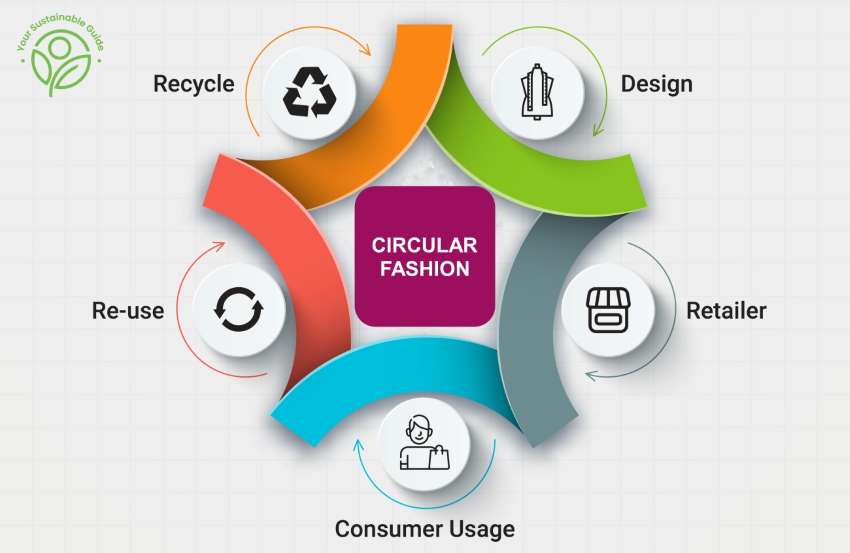
A core theme of the conference was the materials transition, moving away from virgin fibers toward recycled and regenerative alternatives. In the realm of chemical recycling, Manmohan Singh of Aquinda Cellulose highlighted that India is leading the world in utilizing alternate feedstock, such as denim and cotton waste, to regenerate fresh viscose that is indistinguishable from virgin fiber. Regarding zero-waste manufacturing, Dr. Tyagi shared a success story from Peter England, where "Chindi" or fabric waste is collected directly from garment factories and cycled back into fiber production to create a truly circular loop. Addressing denim’s history as a heavy polluter, Subir Mukherjee, CEO, Bhaskar Denim revealed that through "Indigo Room" technology and advanced sizing processes, his firm has slashed virgin fiber usage and moved toward 90% water recycling in the dyeing process.

Repositioning Heritage: The new age of Khadi
Perhaps the most symbolic shift discussed was the modernization of Khadi. Roop Rashi, CEO, Khadi Village Industries, argued that Khadi is the original sustainable technology because it is done by hand, making it inclusive, water-efficient, and resource-efficient by default. To make Khadi aspirational for the new generation, the organization is launching "Navyug Khadi," integrating modern design through collaborations with Lakmé Fashion Week and leading designers to move the fabric from a position of historical romance into the heart of modern high fashion.
Reclaiming the Throne: India’s 22% vision
The consensus among the CEOs was clear: India’s opportunity lies in its history. While India currently contributes 2.8% to global GDP, panellists reminded the audience that centuries ago, India held a 22% share of global trade through its textile prowess. By scaling technologies like chemical recycling and embracing the MSME ministry’s new support schemes, the leaders at Eco Stitch believe India can once again dominate the global stage, not because it is the cheapest, but because it is the most trusted and sustainable. As Dr. Naresh Tyagi summarized, sustainability is about ending the loss of environment, society, and business by cascading change through the entire value chain.
The Eco Stitch Roadmap: Strategies for change
The roadmap for the industry's transformation relies on several key pillars of action that move beyond theoretical discussion into practical application. A major focus is being placed on traceability, where the industry is implementing blockchain technology to provide consumers with transparent proof of origin and accurate carbon footprint data. Simultaneously, the industry is reimagining its social impact by transitioning "Kabaddiwalas" or waste collectors into a formalized and respected part of the industrial ecosystem rather than side-lining them. Environmental goals are also becoming more aggressive, with companies moving toward zero-carbon events and water-positive factory operations. Even the smallest details of the supply chain are being scrutinized; for instance, brands are drastically overhauling packaging strategies, reducing the number of components used for a single shirt from 22 separate items, including various clips and plastics, down to just 7 or 8 essential, recyclable elements to eliminate waste at the source.
Amazon and DOE collaborate to extract battery-grade graphite from textile waste
In a significant departure from traditional downcycling, Amazon has entered a formal partnership with the US Department of Energy’s (DOE) Ames National Laboratory and the Critical Materials Innovation (CMI) Hub to pioneer the recovery of high-value minerals from post-consumer textiles. Announced in late March 2026, the collaboration focuses on a breakthrough process to convert discarded clothing into battery-grade graphite. This initiative targets a critical vulnerability in the global apparel and electronics supply chains, as graphite remains a fundamental component for the lithium-ion batteries powering the modern digital economy. By leveraging its vast reverse logistics network, Amazon aims to intercept a portion of the 92 million tons of textile waste generated annually, redirecting it from landfills toward advanced chemical processing facilities.
Circular innovation and supply chain resilience
The project integrates Amazon’s proprietary AI-driven sorting technologies with the CMI Hub’s materials science expertise to solve the ‘polycotton challenge’ - the historical difficulty of separating blended fibers for high-purity extraction. This collaboration is a natural extension of our commitment to a circular economy, turning innovations into practical solutions that strengthen domestic supply chains, states Tom Lograsso, Director, CMI Hub. Beyond graphite, the partnership is investigating the recovery of gallium and other rare earth elements from integrated wearable tech. As the global demand for lithium is projected to grow 16 per cent Y-o-Y in 2026, this ‘urban mining’ strategy offers a dual benefit: reducing the environmental footprint of the $2.5 trillion fashion industry while securing essential materials for the green energy transition.
Engineering circularity Amazon is a global technology and retail leader committed to reaching net-zero carbon by 2040. Through its Climate Pledge Fund, the company invests in circular design and waste diversion across its logistics and private-label apparel sectors. With a landfill diversion rate reaching 85 per cent in 2025, Amazon continues to scale recovery technologies to support a resilient, sustainable global infrastructure.
Vietnam apparel sector grapples with shipping volatility and rising material costs
Vietnam’s textile and garment sector is navigating a complex operational landscape as escalating Middle East tensions force a radical restructuring of global maritime logistics. Data from the Vietnam Textile and Apparel Association (VITAS) indicates, rerouting vessels around the Cape of Good Hope has extended transit times to the European Union and the US East Coast by 14 to 20 days. This delay is particularly critical for the fast-fashion segment, where seasonal cycles are compressed. Consequently, container freight rates have surged, with some routes seeing surcharges between $2,000 and $4,000 per unit.
Beyond logistics, the crisis is inflating the cost of upstream inputs. As global oil prices remain volatile, the price of synthetic fibers - polyester and nylon - and chemical dyes has increased, straining the margins of Vietnam’s 8,000 factories. To mitigate these headwinds, firms are shifting from CIF (Cost, Insurance, and Freight) to FOB (Free on Board) terms to transfer shipping risks. Many are also diversifying into the ‘Just-in-Case’ model, increasing raw material reserves. Despite a 10 per cent rise in inland costs, Vu Duc Giang, Chairman, VITAS, maintains, the $48 billion export target for 2026 remains viable through aggressive digital transformation and high-value product diversification.
The Vietnam Textile and Apparel Association (VITAS) is the primary representative body for Vietnam’s multi-billion-dollar garment industry. It supports a sector that accounts for approximately 12 per cent of the nation’s GDP, focusing on key markets like the US, EU, and Japan. Founded in 1999, the association currently oversees a strategic push toward $48 billion in annual exports while transitioning toward green manufacturing and sustainable fiber production to ensure long-term global competitiveness.
Better Cotton initiative hits traceability milestone amid global policy shifts
The Better Cotton Initiative (BCI) has officially surpassed a critical 50 per cent threshold for ‘Physical BCI Cotton’ within its global platform, signaling a decisive shift from mass-balance accounting to granular, farm-to-shelf traceability. As of February 3, 2026, the organization confirmed that every supply chain actor sourcing physical cotton under its banner is now fully certified, with over 3,000 entities onboarded. This acceleration is driven by the 2025 launch of the BCI Traceability Platform, an online ecosystem utilized by 13,000 ginners, spinners, and retailers to electronically document volumes. For global apparel manufacturers, this transparency is no longer a luxury but a mechanical necessity to comply with the European Union’s Corporate Sustainability Due Diligence Directive (CSDDD), which mandates rigorous environmental and labor auditing.
Regenerative agriculture as the new production standard
Parallel to its traceability push, BCI has implemented ‘Principles & Criteria v.3.2,’ effective April 1, 2026, which formally transitions the organization into a regenerative standards system. This updated framework requires 2.15 million hectare of managed land to meet enhanced benchmarks for soil health, carbon storage, and biodiversity. The financial implications are significant; BCI Cotton now accounts for 23 per cent of global production - approximately 5.6 million metric tons - despite the conclusion of strategic agreements with regional initiatives like Cotton Made in Africa. By focusing on high-growth production hubs like Brazil and India, BCI is insulating the global supply of sustainable fiber against climate-induced volatility and shifting ESG priorities.
The labeling revolution and market accountability
A pivotal development for 2026 is the mainstream rollout of the BCI Cotton Label, which informs consumers when a product contains at least 30 per cent physical, third-party audited cotton. This follows the EU’s Directive on Empowering Consumers for the Green Transition, which restricts sustainability marketing to labels backed by approved certification schemes. Retailers such as H&M and Inditex are already leveraging this data to mitigate liability risks associated with ‘greenwashing.’ As the industry prepares for the next standard revision in 2028, the focus remains on integrating these digital product passports to streamline procurement cycles in an increasingly cost-sensitive and regulated international market.
Global sustainability standards body
The Better Cotton Initiative (BCI) is the world’s largest cotton sustainability organization, supporting 1.4 million licensed farmers across 15 countries. Operating with a 2030 target to reduce greenhouse gas emissions by 50 per cent per ton of cotton, BCI generates revenue through member fees and volume-based service charges. Founded in 2009, it now oversees nearly a quarter of global cotton production.